June 8, 2026
KPE appoints new senior development manager

KPE appoints new senior development manager

Kajima Properties Europe (“KPE”), the European development, investment and asset management arm of the Nikkei-listed Kajima Corporation, has appointed Ian Patillo as Senior Development Manager, bolstering its London-based development team. Patillo brings a decade of experience in real estate development, land acquisition and project delivery, with a strong track record

Read More »
How Better Cost Planning Improves Outcomes in Building and HVAC Installations

How Better Cost Planning Improves Outcomes in Building and HVAC Installations

Good cost planning leads to better outcomes in building and HVAC installations because it helps projects stay on budget, reduces delays, improves communication, and minimizes unexpected expenses. Accurate planning gives contractors, property owners, and project managers a clearer understanding of costs before work begins. Construction projects rarely fail because of

Read More »
Leading Structural Engineers for Factory and Warehouse Developments

Leading Structural Engineers for Factory and Warehouse Developments

From the outside, factories and warehouses are often just large rectangular buildings sitting on industrial estates, and it’s easy to assume there isn’t much more to it than that. But once you start looking at what’s actually involved, things get a lot more complicated – there are loading requirements, vehicle

Read More »
Latest Issue
Issue 341 : Jun 2026

June 8, 2026

KPE appoints new senior development manager

KPE appoints new senior development manager

Kajima Properties Europe (“KPE”), the European development, investment and asset management arm of the Nikkei-listed Kajima Corporation, has appointed Ian Patillo as Senior Development Manager, bolstering its London-based development team. Patillo brings a decade of experience in real estate development, land acquisition and project delivery, with a strong track record across both the UK and international markets. In his new role, he will focus on planning-led development opportunities in London and the UK, working across KPE’s pipeline of workspace, logistics and living development projects. He joins from Landsec, where he held the role of Development Manager, driving the end-to-end delivery of major schemes across London. His experience encompasses design coordination, planning, legal negotiation, ESG strategy, stakeholder engagement, and financial management, guiding projects from feasibility through to enabling works and early delivery phases. His recent work includes high-profile office-led developments such as Hill House and 55 Old Broad Street in the City of London, with a focus on net-zero carbon and ESG-led outcomes. Prior to this, Patillo held roles at Turner & Townsend and Wesgroup Properties in Vancouver, Canada. At Wesgroup, he was responsible for delivering large-scale master-planned communities and mixed-use developments with a total construction value exceeding £1 billion. Based in KPE’s London office, Patillo will work closely with Phil McLaughlin, Head of Project Management, Tim James, Investment Director, and KPE’s wider development and investment teams. Ian’s initial focus will be leading on two of KPE’s planning-led commercial development projects in central London: 1 St John’s Square in Farringdon and 27 Soho Square in Soho, where KPE intends to undertake a comprehensive reimagining and sensitive expansion of both buildings. Ian Patillo, Senior Development Manager at Kajima Properties Europe, said: “Kajima Properties Europe has built a strong reputation for delivering high-quality, design-led developments, and I’m thrilled to join the team at such a pivotal time for the business, helping leverage my experience to deliver developments across living, logistics and workspace sectors.” John Harcourt, Managing Director at Kajima Properties Europe, added: “Ian’s appointment reflects our continued investment in development talent as we continue to grow our award-winning development capabilities and broaden our scope and reach. Ian’s experience is an excellent fit for the KPE team, and we look forward to his valuable contribution to delivering and growing our development pipeline.” About Kajima Properties Europe KPE is an established UK and European development and investment management business supported by the global strength of its parent company, Kajima Corporation. Founded in Japan in 1840, Kajima Corporation has grown into one of the world’s leading real estate and construction groups, giving KPE the heritage and global reach to deliver with confidence. KPE specialises in developing, repositioning, and investing across sectors where long-term value is identified, spanning logistics, living, and workspace. The business originates and manages investments for both its own balance sheet and investor clients. KPE has an exceptional track record in managing core+ and value-add strategies, outperforming respective benchmarks to ensure investors exceed target returns. www.kajima-properties.co.uk Building, Design & Construction Magazine | The Choice of Industry Professionals

Read More »
How Better Cost Planning Improves Outcomes in Building and HVAC Installations

How Better Cost Planning Improves Outcomes in Building and HVAC Installations

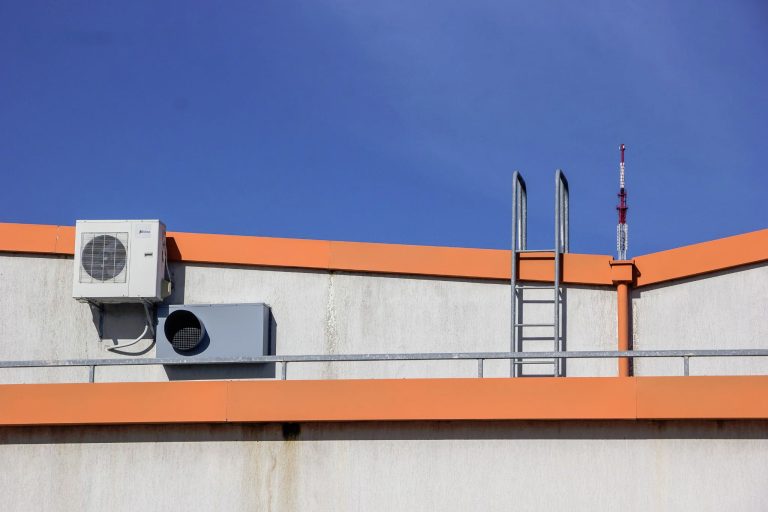
Good cost planning leads to better outcomes in building and HVAC installations because it helps projects stay on budget, reduces delays, improves communication, and minimizes unexpected expenses. Accurate planning gives contractors, property owners, and project managers a clearer understanding of costs before work begins. Construction projects rarely fail because of a single major issue. More often, small budgeting mistakes, inaccurate estimates, and overlooked expenses create problems that grow throughout the project. A strong cost planning process helps teams avoid those setbacks and complete work more efficiently. Why Cost Planning Matters Early Many project challenges begin before construction or installation work starts. Material prices, labor requirements, equipment availability, and site conditions can all influence the final project cost. Early planning allows decision makers to identify potential financial risks before they become expensive problems. Property owners can compare options, contractors can schedule resources effectively, and project teams can create realistic timelines. Improving Accuracy With Detailed Estimates Accurate estimates create a foundation for successful project delivery. When pricing is based on current labor rates, material costs, and project requirements, everyone involved gains a clearer picture of expected expenses. Many HVAC contractors use an HVAC service quote builder to generate professional estimates and improve pricing consistency. Clear estimates help customers understand project costs while reducing confusion during the approval process. Reducing Costly Project Delays Delays often occur when budgets fail to account for necessary materials or unexpected site conditions. Careful planning helps teams identify these factors in advance. Common causes of avoidable project delays include: A realistic budget provides flexibility to address challenges without bringing work to a halt. Better Resource Management Cost planning is not only about controlling spending. Strong budgeting practices also help organizations allocate resources more effectively across multiple projects. Construction and HVAC professionals can make informed decisions regarding: Improved resource management often leads to higher productivity and stronger project performance. Supporting Long-Term Building Performance Building owners often focus on installation costs, but long-term operating expenses can have an even greater financial impact. Effective planning considers both immediate project costs and future maintenance requirements. Energy-efficient HVAC systems, durable building materials, and quality installation practices may require a higher upfront investment. Improving Communication Between Stakeholders Clear budgeting creates transparency among contractors, clients, engineers, architects, and project managers. Everyone works from the same financial expectations and project goals. When stakeholders understand project costs from the beginning, discussions become more productive. Teams can address concerns early and make informed adjustments before they affect schedules or budgets. Making Cost Planning Part Of Every Project Better cost planning improves outcomes in building and HVAC installations by reducing uncertainty, supporting smarter decisions, and helping projects stay on track. Accurate estimates, careful budgeting, and proactive communication create a stronger foundation for successful project delivery.

Read More »
Leading Structural Engineers for Factory and Warehouse Developments

Leading Structural Engineers for Factory and Warehouse Developments

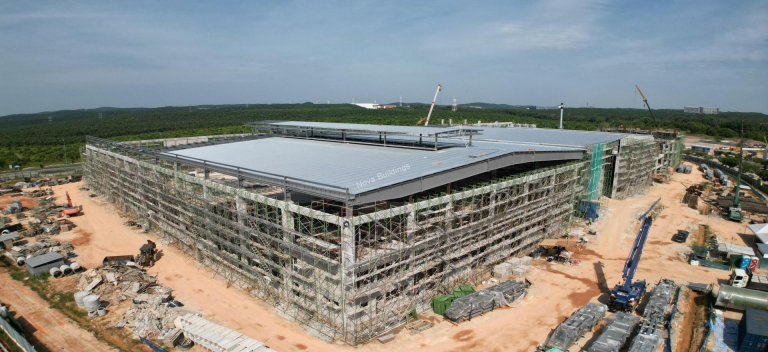
From the outside, factories and warehouses are often just large rectangular buildings sitting on industrial estates, and it’s easy to assume there isn’t much more to it than that. But once you start looking at what’s actually involved, things get a lot more complicated – there are loading requirements, vehicle movements, future expansion plans, drainage, ground conditions, service yards, production equipment, sustainability targets, and a long list of other considerations that all need to fit together to make the place work how you want it to (and how it needs to, come to that). That’s why the structural engineer can be so useful when it comes to helping developers, architects, contractors, and clients work through problems before they become expensive ones, and finding practical solutions when a project inevitably throws up something unexpected. With that in mind, here are some structural engineering firms that know what they’re doing when it comes to factory and warehouse developments. Alan Wood & Partners  Alan Wood & Partners has been around for a long time, and one of the things that stands out is just how much expertise it has in various ways because you can have structural engineering, civil engineering, geotechnical services, project management, and building consultancy, which can make life a lot easier on larger developments where lots of different people need to be involved from the start. That can be very useful on factory and warehouse projects because the building itself is often only part of what’s being delivered, and there are access roads to think about, drainage systems, service yards, ground conditions, and sometimes future expansion plans that need to be considered before construction has even started.  What comes across is a very practical approach to problem-solving here – after all, industrial developments are about creating facilities that work properly every day, often for decades, and that means making sensible decisions from the very beginning. Adept Consulting Engineers  Adept works across a pretty wide range of sectors, and that can actually be a real advantage. The reason is that a lot of the challenges you find on warehouse and factory projects aren’t unique to industrial developments at all, but they might pop up in slightly different ways, of course.  The fact is that a large logistics facility still needs to move vehicles safely around the site, drainage still needs to work properly, future growth still needs to be planned for, and so on, and that’s why having experience in different types of developments means the team has often seen similar issues before, even if the project itself isn’t quite the same.  Acies  Acies talks a lot about buildability, and that’s really relevant when you’re looking at factory and warehouse developments because these projects are often working to very tight programmes. And remember, delays don’t just affect construction – they can affect staffing plans, equipment installation, production schedules, and tenant move-in dates as well (and that’s just the start of your potential problems). That’s why decisions made during the design stage can end up having massive impact because a small change early on might save weeks later in the programme, and that’s often where experts like Acies can add real value. JNP Group JNP Group has worked on a lot of industrial projects over the years, and one thing that becomes obvious quite quickly is that no two facilities are ever quite the same – two warehouse developments might look almost identical from the road, but what’s happening inside them can be completely different, and that can have a huge impact on how the building needs to be designed. Some businesses need vast open spaces with as few columns as possible, others need room for specialist equipment, storage systems, or future alterations that haven’t even been planned yet, and so on. And that’s one of the reasons experience in the industrial sector can be so important because you’re not just designing a building, you’re creating something that needs to work around the way a business operates. JNP Group focuses on understanding what the space needs to be right from the start.  Price & Myers Price & Myers has been involved in such a wide variety of projects over the years that it feels like the company has probably seen most things at least once before, and that’s often useful because industrial developments have a habit of throwing up unexpected challenges, whether that’s an awkward site, unusual requirements from the client, or just trying to make everything work. One thing that’s easy to forget is that warehouse and factory buildings often stay in use for a very long time because when you think about it, businesses change and grow, equipment gets upgraded, and what worked perfectly on day one might need to adapt ten or fifteen years later. That’s why flexibility can be just as important as getting the initial design right, and having experience across lots of different sectors can help with that because it gives engineers a wider frame of reference.  Heyne Tillett Steel Heyne Tillett Steel is probably best known for some of the more eye-catching projects in its portfolio, and at first glance that might not seem particularly relevant to factory and warehouse development, but actually, there are quite a few similarities because both types of project often involve creating large, open spaces that need to work efficiently without being filled with columns and other obstacles.  What makes Heyne Tillett Steel interesting is that it brings experience from loads of other projects, and although that doesn’t mean every warehouse needs to be a landmark building, of course, it does mean the company has plenty of experience finding solutions when a project starts asking for something a little out of the ordinary. Final Thoughts  The thing about factory and warehouse developments is that they tend to evolve as they go along, and what looks simple at the start can end up looking pretty different by the time construction begins. That’s why experience is so important because good structural

Read More »