
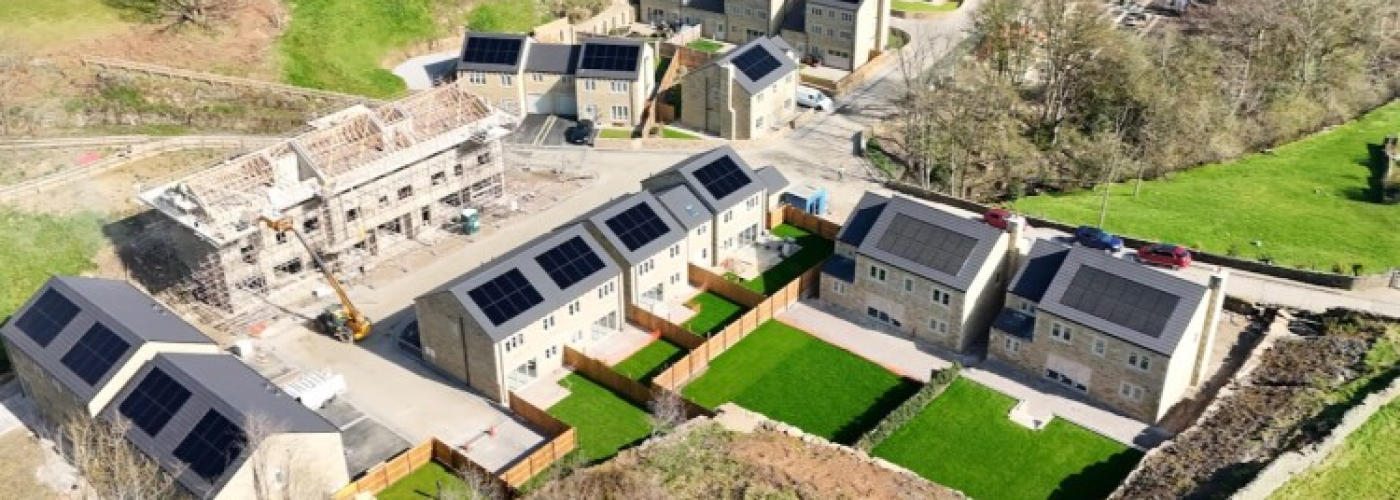


A former 19th-century dyeworks near Huddersfield has been successfully transformed into a sustainable residential development following the completion of complex engineering works led by Dudleys Consulting Engineers.
The Royd Edge Mills development delivers 30 new homes, ranging from two-bedroom apartments to five-bedroom detached properties, while breathing new life into a historic brownfield site with industrial origins stretching back to the late 1830s.
Originally established as a textile mill drawing water from Royd Edge Moor via Thick Hollins Dyke, the site later became a thriving dyeworks before eventually falling into disuse. Following decades of decline and the demolition of the former industrial buildings, the redevelopment presented a series of significant engineering and construction challenges.
Extensive below-ground investigations uncovered remnants of historic foundations, former basements, wheelhouses, engine rooms and underground chimney structures, alongside areas of quarrying, steep bedrock and an intricate network of historic watercourses. These conditions required careful planning and innovative engineering solutions before construction could begin.
Dudleys Consulting Engineers was appointed to provide civil and structural engineering expertise across the project, delivering designs for the development’s foundations, drainage infrastructure and structural solutions for both the houses and apartment buildings.
Working closely with the wider project team, the consultancy developed a revised site-level strategy incorporating a combination of shallow trench, deep trench and piled foundation systems to suit the varying ground conditions. The approach enabled efficient connections to existing adopted drainage while delivering an effective surface water management solution.
One of the project’s most significant engineering achievements involved reconfiguring the former mill pond. Rather than constructing a substantial retaining wall to manage flood risk, the team redesigned the landscape by cutting back the pond, reducing the risk of leakage and creating a more practical, attractive and sustainable solution.
This approach not only improved the visual character of the development but also increased usable garden space, enhanced natural landscaping and reduced off-site material waste. New woodland walkways have also been incorporated, helping integrate the development into its surrounding environment while encouraging biodiversity and providing attractive outdoor spaces for future residents.
Andy Walker, Managing Director of Dudleys Consulting Engineers, said the project demonstrated how innovative engineering could unlock difficult brownfield sites while delivering environmental, commercial and community benefits.
Adam Howarth of Royd Edge Mill Developments added that the engineering solutions had enabled the complex site to be developed efficiently while respecting its industrial heritage and creating lasting value for the local area.
The Royd Edge Mills project demonstrates how collaborative design, sustainable engineering and intelligent site remediation can successfully regenerate former industrial land, transforming challenging brownfield sites into high-quality residential communities while preserving the character and legacy of their historic setting.
Building, Design & Construction Magazine | The Choice of Industry Professionals