BDC News Team
Plumb Centre delivers consistent competitive pricing for trade customers

Plumb Centre delivers consistent competitive pricing for trade customers

Plumb Centre, part of the Wolseley Group, is committed to transparent and competitive pricing across an everyday range of products for the Plumbing and Heating trade professional.  As a business, Plumb Centre recognises the uncertainty that recent economic conditions and cost volatility has created for many of their skilled trade

Read More »
Erith eyes fuel savings with multi-machine investment

Erith eyes fuel savings with multi-machine investment

Erith Contractors Limited is investing in a fleet of new Cat® excavators as it aims to lower its carbon emissions by improving fuel efficiency. The national demolition expert has already taken delivery of six new excavators from Finning since March 2022, the world’s largest Cat dealer, with more expected to be

Read More »
Sunak Cuts Red Tape to Support Construction Skills Gap  

Sunak Cuts Red Tape to Support Construction Skills Gap  

FOLLOWING the announcement that the Prime Minister has pledged £60m of funding for next year to boost apprenticeships, Lee Parkinson, chief executive at Efficiency North, the holding group for flexi-job apprenticeship service EN:Able Futures, shares his thoughts on what this means for the construction sector.   Lee said: “We welcome the

Read More »
The 55 Group becomes Pagabo Group following rebrand

The 55 Group becomes Pagabo Group following rebrand

THE 55 Group – a market-leading built environment software and services business – will now be known as Pagabo Group, with a new group identity taking the lead from the group’s most widely-recognised service, Pagabo. The move comes as the company celebrates its biggest year to date, reporting growth across

Read More »
ENA responds to the 'Beyond 2030' report

ENA responds to the ‘Beyond 2030’ report

Responding to the publication of National Grid ESO’s investment plan, detailed in the report ‘Beyond 2030’, Lawrence Slade, Chief Executive, Energy Networks Association, said;  “This plan is an important step in upgrading our grid, which is vital if we are to support greater electrification, the use of more low carbon

Read More »
Latest Issue
Issue 339 : Apr 2026

BDC News Team

Plumb Centre delivers consistent competitive pricing for trade customers

Plumb Centre delivers consistent competitive pricing for trade customers

Plumb Centre, part of the Wolseley Group, is committed to transparent and competitive pricing across an everyday range of products for the Plumbing and Heating trade professional.  As a business, Plumb Centre recognises the uncertainty that recent economic conditions and cost volatility has created for many of their skilled trade customers. This is why Plumb Centre is committed to checking them regularly against the market on popular products to ensure they are transparent and competitive, and has introduced a new pricing model to assure this. The competitive pricing will also be available on the businesses market leading digital platform, Wolseley.co.uk.  Plumb Centre is an established market leading specialist merchant, and it credits this to the fact that it has continued to evolve with and for its customers.  More recently, customers are increasingly seeking clear and consistent pricing for the products they buy most often, so that they can provide a clear view of costs to their customers and ensure they continue to get value. To help with this, Plumb Centre successfully piloted in 2023 in Liverpool, Manchester, the West Midlands and North Wales to deepen the relationship that Plumb Centre has with its customers.  “We know that time is money for our customers, this is why we are committed to competitive pricing on trade quality products online and in our vast network of branches. At Plumb Centre, we take immense pride in actively listening to what customers want from us and in the past couple of years, rising costs and economic pressures have made it harder for them to provide their end-customers with clarity and certainty surrounding pricing,” said John Hancock, Chief Operating Officer, Wolseley Group.   “Our new pricing model, along with a number of other key initiatives we will land this year, helps to bring consistency and clarity to our customers that will allow them to trust the price without having to take time away from the job and their customer. Delivering this alongside the expertise and familiar faces of our colleagues at our trade counters every day is a step that we believe will eventually become common practice across our sector.”   For more detail on the move to standard pricing, please visit https://www.wolseley.co.uk/search-results/?search-term=price+checked   Building, Design & Construction Magazine | The Choice of Industry Professionals

Read More »
New model makes it easier to build sustainable structures of textile-reinforced concrete

New model makes it easier to build sustainable structures of textile-reinforced concrete

By reinforcing concrete with textiles instead of steel, it is possible to use less material and create slender, lightweight structures with a significantly lower environmental impact. The technology to utilise carbon fibre textiles already exists, but it has been challenging, among other things, to produce a basis for reliable calculations for complex and vaulted structures. Researchers from Chalmers University of Technology, in Sweden, are now presenting a method that makes it easier to scale up analyses and thus facilitate the construction of more environmentally friendly bridges, tunnels and buildings. “A great deal of the concrete we use today has the function to act as a protective layer to prevent the steel reinforcement from corroding. If we can use textile reinforcement instead, we can reduce cement consumption and also use less concrete − and thus reduce the climate impact,” says Karin Lundgren, who is Professor in Concrete Structures at the Department of Architecture and Civil Engineering at Chalmers. Cement is a binder in concrete and its production from limestone has a large impact on the climate. One of the problems is that large amounts of carbon dioxide that have been sequestered in the limestone are released during production. Every year, about 4.5 billion tonnes of cement are produced in the world and the cement industry accounts for about 8 percent of global carbon dioxide emissions. Intensive work is therefore underway to find alternative methods and materials for concrete structures. Reduced carbon footprint with thinner constructions and alternative binders By using alternative binders instead of cement, such as clay or volcanic ash, it is possible to further reduce carbon dioxide emissions. But so far, it is unclear how well such new binders can protect steel reinforcement in the long term.  “You could get away from the issue of corrosion protection, by using carbon-fibres as reinforcement material instead of steel, because it doesn’t need to be protected in the same way. You can also gain even more by optimising thin shell structures with a lower climate impact,” says Karin Lundgren. In a recently published study in the journal Construction and Building Materials, Karin Lundgren and her colleagues describe a new modelling technique that was proved to be reliable in analyses describing how textile reinforcement interacts with concrete. “What we have done is to develop a method that facilitates the calculation work of complex structures and reduces the need for testing of the load-bearing capacity,” says Karin Lundgren. One area where textile reinforcement technology could significantly reduce the environmental impact is in the construction of arched floors. Since the majority of a building’s climate impact during production comes from the floor structures, it is an effective way to build more sustainably. A previous research study from the University of Cambridge shows that textile reinforcement can reduce carbon dioxide emissions by up to 65 percent compared to traditional solid floors. Method that facilitates calculations A textile reinforcement mesh consists of yarns, where each yarn consists of thousands of thin filaments (long continuous fibres). The reinforcement mesh is cast into concrete, and when the textile-reinforced concrete is loaded, the filaments slip both against the concrete and against each other inside the yarn. A textile yarn in concrete does not behave as a unit, which is important when you want to understand the composite material’s ability to carry loads. The modelling technique developed by the Chalmers researchers describes these effects. “You could describe it as the yarn consisting of an inner and an outer core, which is affected to varying degrees when the concrete is loaded. We developed a test and calculation method that describes this interaction. In experiments, we were able to show that our way of calculating is reliable enough even for complex structures,” says Karin Lundgren. The work together with colleagues is now continuing to develop optimisation methods for larger structures. “Given that the United Nations Environment Programme (UNEP) expects the total floor area in the world to double over the next 40 years due to increased prosperity and population growth, we must do everything we can to build as resource-efficiently as possible to meet the climate challenge,” says Karin Lundgren. More about the scientific article The article Textile reinforced concrete members subjected to tension, bending, and in-plane loads: Experimental study and numerical analyses is published in the journal Construction and Building Materials. It is written by Adam Sciegaj, Sebastian Almfeldt, Fredrik Larsson and Karin Lundgren. At the time of the study, the authors were active at Chalmers University of Technology and Gdansk University of Technology in Poland. Gabriel Edefors is also working in the doctoral project that continues the study at Chalmers.The research projects that form the basis of the article are funded by the Swedish Research Council. Building, Design & Construction Magazine | The Choice of Industry Professionals

Read More »
Built to last or should we look towards the past? Exploring the durability of new-build homes

Built to last or should we look towards the past? Exploring the durability of new-build homes

It’s no secret that the reputation of new-build housing is increasingly negative among UK residents. They have become synonymous with poor quality, prone to fast wear and tear, and are proving to have less staying power than their older counterparts.  In fact, a 2023 study by the Chartered Institute of Building found that almost a third of people would describe new build housing as ‘poor-quality’, with over half of the respondents believing that older homes are of better quality.  So, what exactly are the reasons behind this belief? Are the answers hidden in the walls, and the construction materials to blame? Or is craftsmanship just no longer as good as it once was?  In this article, the Copper Sustainability Partnership (CuSP) explores how the materials used in new builds compare to those used in the Victorian era, and the impact that new homes are having on their residents and the environment.  How have our homes changed since the 19th century?   The houses of today have both obvious similarities and stark differences to those of the 19th century. Homes built in the Victorian era were made using local stone or hand-crafted brick, due to the ease of transportation compared to heavier materials, whereas in present times bricks are mass produced and imported from further distances to keep costs low.  Following the abolishment of the tax on glass and bricks in the 1850s, bricks were cheaper and therefore more commonly used, and timber and glass became the standard for window and door fittings. In addition, the development of the railway allowed materials to be manufactured elsewhere at a lower cost and transported, catalysing their usage.  In the 21st century, housebuilders are more likely to use plastic fittings in construction, for applications such as pipes, seals, windows, doors, floor coverings, cables and insulation, due to the low cost of the material. This is despite growing evidence showing the adverse environmental and health effects of plastics.  As indoor plumbing was limited in the 1800s, less piping was required. Rather than having an indoor bathroom and toilet, most households had outhouses which often used clay pipes to transport sewage. When indoor plumbing became more mainstream, copper was often the material of choice to transport water and heat and remained so until relatively recently. Now, plastic pipes are unfortunately commonplace in households, as well as commercial buildings.  The use of plastics in modern construction is not just limited to plumbing and fittings; they are also used in flooring, kitchen units and insulation. With plastics being used in all areas of the home, the impact on the reduced longevity of modern houses cannot be overlooked. Not only are plastics less durable and deteriorate more quickly than traditional materials like copper, but they also have associated fire risks, given the highly flammable properties in synthetic materials.  The negative effects of the mass production of plastics cannot be understated; plastic pollution creates serious risks, not just to our homes, but to the environment and human health, impacting our quality of life.  What are environmental impacts of new homes?  With evidence showing the low durability of new-build homes, it comes as no surprise that resident turn-over rate is increasing in the 21st century. As people are moving house more often, the environmental impact is greater – notably with waste generation and the carbon consequences of remodelling and additional construction in new homes.  Many residents of new-build houses have quality concerns. Common issues with new builds range from cosmetic defects such as leaning walls to cracks, poor installation of goods, and faulty pointing. With many expecting a smooth experience in their new home, this is more than often not the desired outcome, and many move out after a few years at the end of their warranty period – as it’s often easier to move than handle the required fixes, remodelling and maintenance.  House flipping, defined as a home sold twice within 12 months, is currently seeing a resurgence with flipping accounting for 2.3% of all house sales in 2022, up from 1.9% the previous year. Newly built houses are often chosen as properties for people to flip. Like the initial new build, flipped houses have garnered a negative reputation for being of poor quality, once again increasing the turnover rate.  Meanwhile, Victorian era houses are perceived as durable and high quality, with over a quarter of the British population living in these types of homes. They are often praised for their high ceilings and large windows, which are often overlooked in modern construction to reduce building time and cost.  Thanks to the prominence of hand-crafted bricks in Victorian era housing, the infrastructure of the housing is very strong. This is also due to the traditional building techniques employed, that prioritised longevity and durability. As there was significantly less technology available, builders relied on attention to detail and craftsmanship, unlike modern construction which depends on machinery and may encounter quality control challenges.  Are modern homes built to last?  It’s clear that Victorian era housing is more durable than the homes being built today, with higher quality materials used in construction, built to last a long time. Modern methods prioritise the cost of and duration of construction projects, with a focus on aesthetics over longevity and safety. The average new build home has a lifespan of just 40-60 years.  However, it isn’t all negative – new technologies have allowed construction methods and the appliances in homes to evolve since the Victorian era. New build homes are highly energy efficient in comparison to older homes, thanks to the latest building regulations which ensure a minimum efficiency standard. You also have the flexibility with a new build home to start from scratch – choosing your kitchen, tiling, bathroom and more, to avoid refurbishment costs later down the line.  Despite modern houses offering some incentives, there remain lessons to be learnt from past construction methods, such as using natural materials in place of plastics and synthetics. Many of the natural materials used to build a


Read More »
Erith eyes fuel savings with multi-machine investment

Erith eyes fuel savings with multi-machine investment

Erith Contractors Limited is investing in a fleet of new Cat® excavators as it aims to lower its carbon emissions by improving fuel efficiency. The national demolition expert has already taken delivery of six new excavators from Finning since March 2022, the world’s largest Cat dealer, with more expected to be delivered during 2024.  All the machines already on site have been optimised with the support of Finning engineers to allow fast and efficient attachment use – including pre-programming the weight of equipment – and have been fitted with guards to help protect against the tough working environment.  To date three Cat 352 50 tonne excavators, one Cat 336 35 tonne excavator and two Cat 325 excavators have been delivered to Erith, with investment in a further eight machines in the pipeline for this year. The machines are backed by a service plan to minimise any downtime.  Due to the nature of demolition work, Erith upgrades its fleet frequently and works closely with Finning to ensure its Cat machines are running as economically and efficiently as possible. Recently representatives from the firm were invited to the Caterpillar demolition tools manufacturing facility in Den Bosch, Holland.  Shaun Bean, Plant Director at Erith, said: “We conducted our own site test where we benchmarked one of the new Cat machines against one of our other machines on the same task. Based on the fuel savings made by the Cat machine, together with the high resale value, the investment will be recouped within a relatively short space of time.  “Prior to these new excavators, we were running two Cat dozers and the support we’ve had with those from the team at Finning meant I was confident in investing further with them. I haven’t been disappointed yet with the service we’ve had, and the assistance they have provided in setting up our machines has been second to none.”   The new Cat machines have been fitted with bespoke guards, including belly guards, ram guards, cab guards, lighting and camera guards, as well as a removable screen guard to make cleaning easier. Ryan Trafford, Territory Account Manager at Finning UK & Ireland, said: “Erith are the third biggest demolition company in the world, so we’re delighted to be supporting them in the replacement of their demolition fleet. “Each of the excavators has been fitted with a quick coupler on the front for fast and simple tool attachment, and our team has supported Erith in measuring and weighing these tools and inputting the data into their machine controls. This makes it as simple as possible for operators to switch between tools while working, and to access all the safety features, allowing them to use the machine to its optimum. “The fleet team at Erith also have complete peace of mind when it comes to minimising machine downtime as every machine is covered with our 36-month premier warranty and CVA service package. This was key for Erith as being able to get repairs and parts quickly is essential to their business and they wanted a full bumper to bumper solution.” For more information on optimising your demolition fleet with Finning UK & Ireland go to www.finning.com/en_GB/industries/industrial/demolition.htm Building, Design & Construction Magazine | The Choice of Industry Professionals

Read More »
Marr Contracting awarded heavy lifting contract on Lostock Sustainable Energy Plant

Marr Contracting awarded heavy lifting contract on Lostock Sustainable Energy Plant

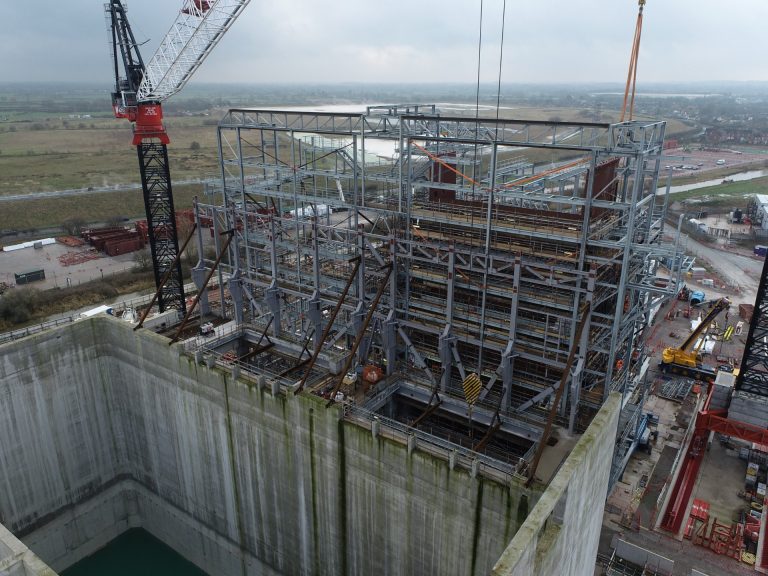
Global heavy lifting tower crane specialists, Marr Contracting, have been awarded the contract to deliver specialised heavy lifting crane services on the Lostock Sustainable Energy Plant (LSEP) near Northwich, Cheshire. A joint venture between Copenhagen Infrastructure Partners (CIP) and FCC Environment, the 60MW energy from waste (EfW) plant will have the capacity to process 600,000 tonnes of waste per year – producing enough power for 125,000 homes. LSEP has appointed global engineering, procurement, consulting and construction company Black & Veatch as the engineering, procurement and construction management (EPCM) contractor to support LSEP in delivering its Energy from Waste facility at the Lostock Works site near Northwich. Babcock & Wilcox Renewable, a segment of the global Clean Energy technology group within Babcock & Wilcox, has also been appointed to support the delivery of the power train, which is the heart of the energy generation and environmental performance of the plant. Working in conjunction with Black & Veatch, Marr developed a two-crane solution utilising the world’s largest capacity luffing tower crane, the M2480D. The solution offers lift capacities of up to 110 tonnes and a reach of up to 73 metres to lift the 70-tonne drum and boiler waterwalls weighing 85 tonnes. The first erected M2480D is founded on the Marr Transit System (MTS) – a rail system that extends the reach and coverage of the tower crane over the site without any loss of capacity. The second M2480D is installed on a static base. The solution will support Black & Veatch’s preferred MMC / DfMA methodology by allowing larger sections of plant and equipment weighing up to 85 tonnes to be installed in fewer lifts. “We’re excited to be working in the UK with a client like Black & Veatch who can see the benefits that the right cranage solution can deliver to a project. With the ability to lift in larger, heavier components, our approach will reduce the number of lifts required, helping to deliver a safer, more productive site,” said Marr’s Managing Director, Simon Marr. “Marr’s experience in the successful delivery of similar large-scale EfW plants in Australia and the Middle East is ideally suited to emerging trends in the UK. Larger plants demand more efficient construction solutions and can really benefit from the use of technology such as the Marr Transit System,” said Steve Ryder, General Manager – International, Marr Contracting. The LSEP is currently under construction and expected to be operational by 2025. Building, Design & Construction Magazine | The Choice of Industry Professionals

Read More »
Sunak Cuts Red Tape to Support Construction Skills Gap  

Sunak Cuts Red Tape to Support Construction Skills Gap  

FOLLOWING the announcement that the Prime Minister has pledged £60m of funding for next year to boost apprenticeships, Lee Parkinson, chief executive at Efficiency North, the holding group for flexi-job apprenticeship service EN:Able Futures, shares his thoughts on what this means for the construction sector.   Lee said: “We welcome the announcement that apprenticeships are getting not only the financial boost they need, but the attention in the media and wider government. As a flexi-job apprenticeship provider, we are passionate about supporting the construction skills gap.   “The latest government data shows that 24,530 new apprentices were taken on in the construction sector between 2022-23, down from the 26,060 recorded the previous year (2021-22). This decrease could be attributed to the sheer amount of red tape businesses need to navigate in order to take on an apprentice, which is even harder, if not impossible for SMEs, coupled with the expense.   “From April 1, the government will fully fund apprenticeships in small businesses, compared to organisations previously being required to fund the training aspect, a move which is expected to see an increase of 20,000 apprenticeships across all industries. Having supported many construction SMEs in hosting an apprentice, cost is a huge factor, particularly in the current challenging economic climate, so we hope to see this make a big impact.   “Making a variety of routes to the industry viable and attractive to people is essential to tackling the skills gap, in addition to showcasing the range of options available to employers looking to future-proof their workforce.   “However, the news today is only impacting those up to 21 years old. While many apprentices fall into this age category, there are a lot of others we don’t want to discourage from a career in construction by introducing upper age limits of 21. At any age you can train or retain to become an asset to the industry, so we’d like to see more inclusive opportunities go a step further.  “Furthermore, the government might consider simplifying Digital Apprenticeship Service accounts to aid the uptake of apprenticeships by SME and bolder steps are needed to fund in part or in full some apprenticeships for SMEs, which would certainly catalyze their uptake.  “That being said, this is a fantastic start that includes other benefits such as those who are paying the apprenticeship levy being able to share up to 50% of their funds, an increase of 25%. Equally important is the requirement for reporting to be simplified, supporting SMEs in removing those barriers. Overall, it’s a positive move and one that will further our work as a flexi-job apprenticeship provider helping more host businesses and apprentices. We’re looking forward to seeing the impact.”  To find out more about EN:Able Futures, please visit: https://www.efficiencynorth.org/futures/find-an-apprenticeship   Building, Design & Construction Magazine | The Choice of Industry Professionals

Read More »
The Arch Company appoints Glencar to undertake £2.5M railway arches restoration project

The Arch Company appoints Glencar to undertake £2.5M railway arches restoration project

Development on America Street, SE1 will see the renovation and redevelopment of four railway arches into new repurposed spaces suitable for a range of uses. Glencar, a leading UK construction company that was recently ranked amongst Europe’s fastest growing businesses, has confirmed that it has been appointed by new customer The Arch Company –to redevelop four railway arches situated on America Street, SE1. The project will see the renovation and revitalisation of the existing arches into space designed for businesses to thrive. The scope of works encompasses demolition, groundworks, fire rated façade installation, waterproofing, a new substation and extensive sustainable fit-out. The investment will breathe new life into neglected spaces and provide a blank canvas for restaurants, cafes, bars, and other leisure businesses looking to contribute to the local community and economy. The redevelopment is part of The Arch Company’s £200m development plan, Project 1000, which aims to bring a thousand empty or derelict spaces into use across England and Wales by 2030. Works onsite commenced during February and are expected to be completed by the summer. Commenting on the appointment, Glencar CEO Eddie McGillycuddy said: “We are very happy to be working for The Arch Company for the first time and to be working on the revitalisation of these historic viaduct structures into repurposed spaces for business to develop and thrive. In restoring these arches, a key priority set out in the project scope was to deliver a development that meets today’s ever increasing high sustainability standards. Energy efficient elements of the restoration will also include the re-lining of all arch spaces, new insulated floor slabs suitable for restaurant use and the installation of new LED lighting and glazed front infills” We look forward to working closely with the full project team and once again seeing our special projects team at work”. Craig McWilliam, CEO at The Arch Company, said: “We’re investing £2.5m into these spaces to provide much needed additional commercial space suitable for leisure use. Repurposing these arches is part of our ongoing programme to create fit for purpose spaces in which businesses can thrive. Glencar’s special project division comes with a significant pedigree and we look forward to seeing them in action”. Building, Design & Construction Magazine | The Choice of Industry Professionals

Read More »
The 55 Group becomes Pagabo Group following rebrand

The 55 Group becomes Pagabo Group following rebrand

THE 55 Group – a market-leading built environment software and services business – will now be known as Pagabo Group, with a new group identity taking the lead from the group’s most widely-recognised service, Pagabo. The move comes as the company celebrates its biggest year to date, reporting growth across its four key brands – Pagabo, Sypro, Loop, and Tequ. Pagabo Group has enjoyed a fantastic 12 months with key metrics like project value and volume, and employee numbers increasing, the second of which actually doubled in size since March 2020. Recruitment is only set to continue for the group too, with a number of roles currently live and more due later this year.   Procurement framework provider Pagabo also enjoyed increased framework output and throughput, thanks to several significant framework offerings hitting key milestones. This includes introducing a dedicated mechanical and electrical solutions framework, as well as announcing the renewal of its biggest framework covering professional services providers and a brand-new offering specifically for decarbonisation schemes – both of which are set to announce successful suppliers in the next month. Simon Toplass, group CEO for Pagabo Group, said: “While our name is changing, the way in which we work and the service we provide will continue to adapt to the needs of our clients and customers. We are immensely proud of our industry-leading reputation, whether that be procuring construction works, managing contracts and asset risks, evaluating social impact or improving learning processes, we are focused on creating simplicity and efficiency for our clients – and on giving back. “What we do with Pagabo’s frameworks is a prime example of this. As that business grows, so does the amount of money returned to the contracting authorities of our frameworks – allowing them to put the money from those rebates into key causes like funding dedicated mental health resources or free school meals in schools to creating life-changing opportunities to disadvantaged pupils. “The success of the past year is testimony to the hard work and dedication of our growing staff base, as well as the quality of the services we offer. It has allowed us to put more staff benefits in place, looking after those that really drive forward our success. This includes private pension and healthcare schemes as we continue to move with the times and ensure supporting those who drive our success is central to our culture.” Pivotal changes in the past year have resulted in the best revenue year to date for Sypro’s Contract Manager, with an increasing number of organisations utilising the product and multi-million-pound revenue growth, which is forecasted to skyrocket in the next year.   Elsewhere Sypro’s Risk Manager has enjoyed significant growth in its customer base with the newer product offering seeing continued uptake from key new clients across multiple sectors, including numerous educational facilities and household names like Queen’s Park Rangers Football Club.   Social value software and consultancy provider Loop also expanding its client base significantly across new sectors. Its economists played a key part in the development of the National Social Value Standard measurement framework, developing more than 800 metrics for the accurate reporting of social impact for businesses. Success was further driven through a bespoke version of its software tool specifically for the rail industry – developed in collaboration with the Rail Safety and Standards Board (RSSB), with funding from Network Rail.   Simon added: “The growth seen particularly across Sypro and Loop’s products shows the appetite across multiple markets for a digital-first approach to streamline and simplify what are complex activities – all aiming to make clients lives easier. Our platforms are designed to coordinate with each other, creating a truly end-to-end journey and providing clients with an industry-leading service that we continue to constantly review and improve to bring added value to everyone we work with and beyond.” For more information about Pagabo Group and its brands, please visit pagabogroup.com. Building, Design & Construction Magazine | The Choice of Industry Professionals

Read More »
Businesses invited to bid to build and run Oldham Council's new solar farm

Businesses invited to bid to build and run Oldham Council’s new solar farm

Oldham Council is inviting businesses to tender for a £1.2 million contract to deliver a major new solar farm in the borough. The site at Wrigley Head, Failsworth, is the council’s first solar farm and is a key project in our Green New Deal – our strategy to make Oldham Council buildings carbon neutral by 2025, followed by the whole borough by 2030. We’ve now launched a tender process, inviting interested businesses to design, build, operate and maintain the 1MW site for 20 years. Cllr Abdul Jabbar MBE, Cabinet Member for Finance and Corporate Resources, said: “This is a really exciting opportunity for green technology businesses to get involved in a pioneering project in Greater Manchester. “The solar farm will create green energy which is capable of creating enough electricity to power the equivalent of around 750 homes at one time. “It will transform the land, which was previously a derelict site, giving it a new sustainable purpose which will boost the environment and biodiversity. It will also reduce our reliance on fossil fuels giving the council cheaper energy bills that stay low – unlike gas prices, meaning we have more money to spend on front-line services. “We were the first council in the UK to adopt a Green New Deal and we are aiming to be the greenest borough in Greater Manchester.  “This new solar farm is just one of many green projects we have planned, and an added plus is that it will be the first subsidy-free local authority owned solar farm in Greater Manchester. “This is your chance to play a key role in this exciting programme.” With construction planned to start in September, the council requires a contractor who can review the outline design for the ground-mounted solar PV array and improve upon it, taking into account developments in new technology and any other factors. The new design will need to be agreed with the council, planning authority and any other key stakeholders. Following this, the contractor will then construct, operate and maintain the installation for up to 20 years. The net value of the contract is £1.2m. Interested parties can view the tender documents on the council’s procurement portal The Chest at www.the-chest.org.uk The solar farm opportunity comes as Oldham Council secured £8.7 million in grant funding to support our plans to create a low carbon district heat network for Oldham Town Centre. These unique systems use local sources of eco-friendly heat which would otherwise go to waste. In Oldham, we could use air, wastewater, minewater and biomass. Heat networks distribute heat from a central source and deliver it to different buildings including shops, offices and homes. By supplying multiple places, they avoid the need for individual boilers or electric heaters in every building. Building, Design & Construction Magazine | The Choice of Industry Professionals

Read More »
ENA responds to the 'Beyond 2030' report

ENA responds to the ‘Beyond 2030’ report

Responding to the publication of National Grid ESO’s investment plan, detailed in the report ‘Beyond 2030’, Lawrence Slade, Chief Executive, Energy Networks Association, said;  “This plan is an important step in upgrading our grid, which is vital if we are to support greater electrification, the use of more low carbon technologies and increase energy security. To reach our net zero goals we need to maximise the use of existing power infrastructure, operate this infrastructure flexibly and innovatively and build new infrastructure. Alongside this plan, electricity networks are spending and investing around £30bn over this price control period and undertaking the biggest programme of reforms in the history of the grid.” Building, Design & Construction Magazine | The Choice of Industry Professionals

Read More »