Kenneth Booth
70% Carbon Literacy training discount for CITB members

70% Carbon Literacy training discount for CITB members

Members can enjoy discount until March 2026  Members of the Construction Industry Training Board (CITB) across the UK can become Carbon Literate thanks to a 70% discount.  Environmental charity Keep Scotland Beautiful is offering its accredited training for the construction sector at a discounted price until the end of the

Read More »
Savills: Shifting headroom in the UK grid creates opportunities and constraints for development, with the demand for connections outpacing the supply of available capacity

Savills: Shifting headroom in the UK grid creates opportunities and constraints for development, with the demand for connections outpacing the supply of available capacity

New research from Savills reveals the mounting pressure to connect projects to the UK’s low voltage distribution network. The distribution network, where most residential and small commercial developments seek connections, is facing a rising pace of applications for demand connections as well as a supply shortage of available capacity at

Read More »
Budget wishlist from LRG’s BTR division

Budget wishlist from LRG’s BTR division

By Justine Edmonds, Head of Build to Rent / Leasing Strategies at LRG The Build to Rent (BTR) sector has the potential to deliver one in ten of the government’s 1.5 million new homes, but it can only do so if the viability crisis is addressed. The Budget on 26 November is a vital opportunity to unlock

Read More »
Clegg Construction bid manager receives Rising Star Award

Clegg Construction bid manager receives Rising Star Award

Clegg Construction bid manager Cian Webb has received a shining accolade after being highlighted as a Rising Star at the Considerate Constructors Scheme Awards. Cian, 24, who joined Clegg Construction six years ago as an apprentice, received his award at a gala evening held at the Natural History Museum in

Read More »
6,000 Years of History Unearthed Beneath the Houses of Parliament

6,000 Years of History Unearthed Beneath the Houses of Parliament

Archaeologists working at the Palace of Westminster have uncovered evidence of human activity dating back nearly 6,000 years – over a millennium older than the earliest earthworks at Stonehenge. The discovery includes more than 60 struck flint flakes, including one worked tool, likely dating to the late Mesolithic or early

Read More »
Green Light for Major Retrofit of Pinners Hall in the Square Mile

Green Light for Major Retrofit of Pinners Hall in the Square Mile

A major deep retrofit of the former Pinners Hall at 108 Old Broad Street has been approved, paving the way for a significant transformation of the 1990s office block in the heart of the City of London. Development manager Patrizia has secured planning consent for the project, working alongside long-standing

Read More »
Winvic and partners celebrate major construction milestone at 360 Bristol

Winvic and partners celebrate major construction milestone at 360 Bristol

Winvic Construction Ltd, a leading main contractor that specialises in the design and delivery of private and public sector construction and civil engineering projects, alongside client AG South Plaza B.V and developer Melburg, has celebrated a key construction milestone at 360 Bristol, a Purpose-Built Student Accommodation (PBSA) development located on

Read More »
Latest Issue
Issue 338 : Mar 2026

Kenneth Booth

70% Carbon Literacy training discount for CITB members

70% Carbon Literacy training discount for CITB members

Members can enjoy discount until March 2026  Members of the Construction Industry Training Board (CITB) across the UK can become Carbon Literate thanks to a 70% discount.  Environmental charity Keep Scotland Beautiful is offering its accredited training for the construction sector at a discounted price until the end of the 2025/26 financial year.  Spaces are available on pre-organised dates, or there is an option for organisations to commission a full cohort of exclusive training.  Keep Scotland Beautiful’s Carbon Literacy training for the Construction Sector will help upskill businesses, organisations and people involved with the sector, so they have the knowledge required to successfully respond to the climate emergency and help move towards net zero.   The training was developed in collaboration with constructor-sector professionals, and it is fully accredited by the Carbon Literacy Project.  Brian Rae, Operations Manager, Environment and Place Services at Keep Scotland Beautiful, said: “We first offered this sector-based training back in 2021 after collaborating and delivering the course to some of the industry’s most respected names.  “In the years since we have improved and refreshed our module to make it relevant to the challenges and opportunities the construction industry is currently facing.  “This discounted price is a fantastic opportunity for people in the sector – at any level – to understand how the sector is impacted by climate change and how tackling emissions can lead to more efficient and cost-effective operations.”  To book spaces on training dates below, please contact your regional Customer Engagement Advisor at CITB. You can find this information on the CITB website here.   To commission a full cohort (or cohorts) of the training, exclusively for your organisation, please email climate@keepscotlandbeautiful.org using CITB discount as the subject line, and supply us with dates that could work for your organisation.  Keep Scotland Beautiful is the official partner in Scotland for the award-winning Carbon Literacy Project, the only Carbon Literate Training Organisation in Scotland, and the only Scottish organisation to have attained Platinum Carbon Literate Organisation status. The charity has trained more than 6,000 people to be Carbon Literate.  Learn more at https://www.keepscotlandbeautiful.org/our-training/ Building, Design & Construction Magazine | The Choice of Industry Professionals

Read More »
Savills: Shifting headroom in the UK grid creates opportunities and constraints for development, with the demand for connections outpacing the supply of available capacity

Savills: Shifting headroom in the UK grid creates opportunities and constraints for development, with the demand for connections outpacing the supply of available capacity

New research from Savills reveals the mounting pressure to connect projects to the UK’s low voltage distribution network. The distribution network, where most residential and small commercial developments seek connections, is facing a rising pace of applications for demand connections as well as a supply shortage of available capacity at substations. Demand connection applications rose by 30% from April 2024 to June 2025, leaving the total queue capacity at 29 GW which is equivalent to the power needed to supply roughly 14.5 million homes. The analysis from the international real estate advisor tracks the evolution of available supply capacity in the distribution network from June 2024 to August 2025, highlighting the evolution of improvements and constraints across the network. Grid IQ, developed by Savills Earth, reveals that there was around a 2 GW uplift of available capacity in primary substations from June 2024 to August 2025, placing the total available capacity at 39 GW. This figure has been largely unchanged (± 5%) over the course of the last two years. Even though the supply of capacity is about 34% higher than the demand for connections, the geographic distribution of capacity is misaligned with development needs. According to the Energy Networks Association, applications for new distribution level connections remain high, with a total of over 9 GW of connection applications for demand, generation and storage submitted each month. To contextualise this, 1 GW could power up to 500,000 homes or around ten large data centres, highlighting the scale of projects competing for limited capacity. Despite a strong requirement for new connections across demand, generation and storage, progress has been slow. Distribution network operators (DNOs) are working to optimise existing infrastructure, but developers continue to face delays. Regionally, London and the South East saw an 11% increase in demand headroom, around 1 GW, due to revised peak demand calculations by UK Power Networks, which could ease constraints on housing and mixed-use developments. In contrast, the Midlands and South West experienced a 14% drop in capacity, driven by a surge in logistics development, which is absorbing available power. Further north, the B6 Boundary, a key bottleneck between Scotland’s renewable generation and England’s demand centres, saw headroom fall by 23%, exacerbating the constraint within the region. From April 2026, rising Transmission Network Use of System (TNUoS) charges could prompt some site owners to reduce their import capacity, potentially freeing up grid capacity for new developments. With over 210,000 non-residential sites affected, even small adjustments could have a significant cumulative impact. Kyle Rarick, Data Analyst, Energy, Renewables and Infrastructure, says: “Nearly a year on from our initial analysis of grid headroom across the UK, new data shows how the electricity grid is evolving as demand for power increases. While progress is being made through reform and reinforcement, data shows that the headroom capacity shortage persists. This shortage is increasingly shaping the pace and location of new housing, commercial, and industrial development, as grid capacity remains a key constraint on planning and delivery.” Phil Pearson, Director,Energy, Renewables and Infrastructure, adds: “The ongoing connections reform and forthcoming TNUoS charge adjustments highlight the need for developers to monitor each part of the network to identify and secure capacity. Developers who understand these changes and incorporate grid readiness into site selection, design, and investment strategies will be best placed to deliver resilient, future-proof projects in an increasingly capacity-constrained market.” Building, Design & Construction Magazine | The Choice of Industry Professionals

Read More »
Driving culture change in building safety and working effectively with the regulator

Driving culture change in building safety and working effectively with the regulator

By Vanessa Brandham CFIOSH, Health and Safety Director, Rendall & Rittner As the UK’s building safety landscape continues to evolve at pace, staying informed and responsive has never been more important. In my role at Rendall & Rittner, I see first-hand how the new regulatory environment is reshaping expectations across the property management sector and how vital it is that we all adapt to the changes with clarity and confidence. Delays within the Building Safety Regulator (BSR) are causing growing frustration throughout the industry. With one of the country’s largest portfolios of high-rise residential buildings, we have a unique vantage point on how these issues affect developers, landlords, leaseholders, RMCs, RTM companies, residents and managing agents. That is why we recently submitted evidence to the House of Lords inquiry examining how the regulator can overcome operational challenges and deliver greater consistency and efficiency. The BSR was established to ensure that higher-risk buildings are designed, constructed and managed with safety at the forefront. While the intent is clear and essential, its implementation has been far from straightforward. The combination of delays, inconsistent feedback and evolving requirements has resulted in uncertainty and added cost across the sector. A system with the capacity to assess safety cases and applications in a timely and consistent manner is urgently needed if we are to support the development of a genuinely safety-first culture. At Rendall & Rittner, we have invested significantly in our in-house safety capability so that we can guide clients through the complexities of the regime. Our experience across hundreds of buildings enables us to identify patterns, highlight inefficiencies and propose practical solutions. Working with the regulator in practice Higher-risk buildings of 18 metres and above must now pass through three gateways for new builds — planning, pre-construction and pre-occupation — while existing buildings require detailed safety case reports and a Building Assessment Certificate (BAC). However, in practice: • Gateway 2 applications are facing delays far beyond statutory timeframes, often 20–30 weeks or more, with a high proportion of submissions being rejected.• Safety case reports for existing buildings are receiving inconsistent or contradictory feedback, making it difficult for duty-holders to understand exactly what is required. Fewer than 50 BACs have been issued nationally out of more than 1,400 buildings called forward.• Day-to-day works requiring BSR approval in high-rise buildings are also subject to lengthy delays, with some applications exceeding 40 weeks. These challenges stem from the scale of change required. The BSR is a new organisation created in response to Grenfell, and the sector as a whole is still adjusting to the expanded obligations. Guidance has often been issued late, leading many stakeholders to act without full clarity. Limited public sector resource has further slowed reviews and approvals. Confusion around recoverable costs, the classification of emergency works and leaseholder protections has also resulted in complaints and uncertainty. Impact on housing delivery The gateway system is also having a direct impact on the delivery of new homes. High-rise buildings play a critical role in meeting national housing targets, but uncertainty in the process — coupled with delays to key building information submissions — has stalled sales, slowed construction and created further barriers for developers. Combined with the Act’s enhanced competency requirements across the supply chain, the impact is being felt at every stage of development. How we are supporting clients Recognising the scale of change, we developed one of the sector’s largest specialist health and safety teams, comprising 32 experts in building and fire safety. This enables us to prepare safety cases, oversee remediation projects and manage gateway submissions with consistency and rigour. Our structured approach — using standardised documentation and close collaboration with our panel of consultants — has enabled us to meet every regulatory deadline to date. Where the BSR’s feedback has been inconsistent, we adapt quickly and apply learning across our portfolio, ensuring clients receive the most up-to-date and practical guidance. We are also actively engaging at a national level. By providing detailed evidence to the House of Lords inquiry and offering direct feedback to the regulator, we are helping to highlight operational issues and influence improvements that will ultimately benefit the industry and residents alike. We are proud to be among the first managing agents to secure BACs for clients’ buildings, and progress on cladding remediation is accelerating as Homes England’s updated processes take effect. Looking ahead The regulatory landscape will continue to evolve. Recent announcements on shifting the BSR from the Health & Safety Executive to a standalone body sponsored by the Ministry of Housing, Communities and Local Government point to further structural reform — a move that may help unlock some of the delays and provide clearer accountability in the future. While the system remains complex and at times challenging, our commitment at Rendall & Rittner is clear: to provide clients with expert guidance, reliable compliance and the assurance that their buildings are being managed with the highest levels of safety and professionalism. By investing in specialist capability, sharing learning across a large and diverse portfolio and contributing actively to national discussion, we are helping to drive cultural change and strengthen safety standards across the sector — ultimately contributing to safer homes for all residents. Building, Design & Construction Magazine | The Choice of Industry Professionals

Read More »
Budget wishlist from LRG’s BTR division

Budget wishlist from LRG’s BTR division

By Justine Edmonds, Head of Build to Rent / Leasing Strategies at LRG The Build to Rent (BTR) sector has the potential to deliver one in ten of the government’s 1.5 million new homes, but it can only do so if the viability crisis is addressed. The Budget on 26 November is a vital opportunity to unlock stalled investment and enable the sector to contribute fully to housing supply and economic growth. At the top of our wishlist is the reinstatement of Multiple Dwellings Relief within Stamp Duty Land Tax (SDLT) to support high-density housing. The loss of this relief last year rendered around 25,000 BTR homes unviable almost overnight. Restoring it would be the single most effective way to stimulate development. Alongside this, the government should extend empty property business rates relief from six to twelve months and remove council tax on newly completed but unoccupied BTR homes. These measures would ease holding costs at a time when inflation and higher borrowing rates have put projects under significant pressure. We would also like to see zero-VAT on energy-saving materials extended to cover retrofit and refurbishment schemes. Many BTR assets built a decade ago are now at the end of their initial investment cycle. Encouraging reinvestment in energy efficiency would improve building performance, lower costs for tenants and help meet national sustainability goals. Above all, the Budget must prioritise stability. The BTR market remains strong in fundamentals but fragile in sentiment. Starts have fallen sharply – just 2,600 in the first half of this year compared with 18,000 completions in 2024 – not because of lack of demand, but because of fiscal uncertainty. Investors need clarity and consistency, not short-term fixes. If the government truly wants to build 1.5 million new homes, it must recognise that BTR can deliver at speed and scale. With the right tax environment and a commitment to planning reform, the sector can accelerate delivery, support regeneration and play a central role in driving the UK’s housing-led growth agenda. Building, Design & Construction Magazine | The Choice of Industry Professionals

Read More »
Clegg Construction bid manager receives Rising Star Award

Clegg Construction bid manager receives Rising Star Award

Clegg Construction bid manager Cian Webb has received a shining accolade after being highlighted as a Rising Star at the Considerate Constructors Scheme Awards. Cian, 24, who joined Clegg Construction six years ago as an apprentice, received his award at a gala evening held at the Natural History Museum in London. MD of Clegg Construction Michael Sims said: “In his time at Clegg Construction, Cian has made a remarkable impact that sets him apart as a potential future leader in the construction industry. “He exudes the energy, curiosity and integrity that define a true rising star. He inspires others through his work ethic and commitment to excellence. It’s rare to find someone who combines talent, humility and drive the way Cian does. “We’re thrilled that he has been recognised in the national Considerate Constructors Scheme Awards as a Rising Star and congratulate him on his success.” After joining Clegg Construction’s Nottingham head office, Cian undertook a fully funded part-time Construction Management degree course at Nottingham Trent University. He quickly progressed from construction trainee to assistant site manager before making the move into the pre-construction department as an assistant bid manager. Following completion of his undergraduate degree in 2024, he was promoted to bid manager. Since then, Cian has contributed to all aspects of Clegg Construction’s tender submissions, working closely with key specialists in his team to develop robust and transparent tender proposals. Over the past 12 months he has been involved in successful bids totalling more than £100m. Clegg Construction pre-construction director Christian White said: “Since I have known Cian, he has poured himself into every opportunity and grown into someone we all rely on. His bids are always delivered to the highest standard and his natural drive to win sets him apart. Promoting Cian wasn’t just recognition of his skills – it was recognition of his character. I’m proud to see how far he has come and to have him on our team.” The Considerate Constructors Scheme Awards recognise exceptional companies and individuals who have demonstrated remarkable leadership, innovation, and contributions to the construction industry. Actor Stephen Mangan hosted the CCS gala awards. With its headquarters in the Lace Market, Nottingham, Clegg Construction is a Midlands, East Anglia, and Yorkshire-based construction firm specialising in the delivery of public and private sector projects. The company works with organisations of all sizes and specialities across a comprehensive range of sectors. For more information visit www.cleggconstruction.co.uk Building, Design & Construction Magazine | The Choice of Industry Professionals

Read More »
6,000 Years of History Unearthed Beneath the Houses of Parliament

6,000 Years of History Unearthed Beneath the Houses of Parliament

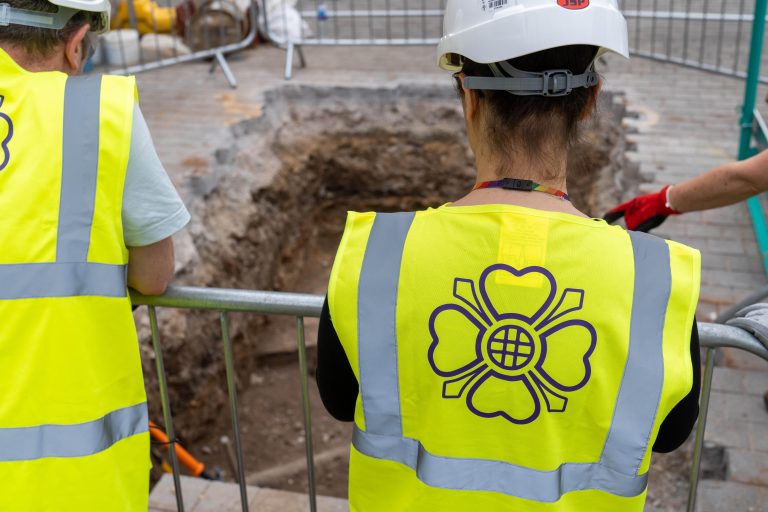
Archaeologists working at the Palace of Westminster have uncovered evidence of human activity dating back nearly 6,000 years – over a millennium older than the earliest earthworks at Stonehenge. The discovery includes more than 60 struck flint flakes, including one worked tool, likely dating to the late Mesolithic or early Neolithic period (around 4300 BC). The discovery is part of a phased three-year programme of archaeological investigations led by the Houses of Parliament Restoration and Renewal Delivery Authority. The findings will help shape future design and construction decisions as part of the Palace’s restoration.  The flints were found in undisturbed sand deposits that once formed part of Thorney Island, an area where prehistoric communities are thought to have fished, hunted, and gathered food. These rare finds offer a glimpse into early human life in what is now central London.  The Lord Speaker, Lord McFall of Alcluith, said:   “The history of Westminster is long, fascinating and well-documented. Discoveries such as these allow us to add to our knowledge of this ancient site. These archaeological investigations are an important part of the preparation work for the restoration and renewal of the Victorian building.”   Judith Cummins MP, Deputy Speaker of the Commons and R&R Programme Board Chair: “As we prepare for the restoration and renewal of the iconic Palace of Westminster, a huge amount of work is going on to understand more about the building and the thousands of years of history underneath the home of Parliament as we know it today.”  In addition to the flints, the investigation has uncovered a rich and varied collection of artefacts that shed light on the people who lived, worked, and passed through this iconic location over the centuries. Highlights include: Chair of the Houses of Parliament Restoration and Renewal Delivery Authority Board, distinguished historian, archaeologist and heritage restoration expert, Dr Simon Thurley CBE, said:  “The Palace of Westminster has been a central part of our national story for a thousand years; the location of momentous events that have shaped the UK’s history. As we plan for the significant restoration and renewal of Parliament, we must tread softly on the history beneath our feet, to protect it, and to learn from it. Last year that process of discovery began with the first trial excavations which have already revealed things we didn’t know, as well as confirming things we suspected. It is the start of a fascinating and important journey of discovery.”  A Major Medieval Discovery – the Lesser Hall  In a major archaeological breakthrough in August 2025, substantial remains of the medieval Lesser Hall, also known as the White Hall, were uncovered.   Dating back to 1167, the two-storey hall originally served as a royal dining space and later played host to key moments in Parliamentary history. Over the centuries, it housed the Court of Chancery, the Court of Requests, and even the House of Commons and House of Lords at different times.  Long thought to have been destroyed in the Great Fire of 1834 – which is believed to have started in the furnace room of the hall’s basement – new archaeological evidence, supported by historical records, reveals that sections of the hall’s medieval stone walls not only survived the blaze, but were restored, re-roofed, and continued in use until the building’s final demolition in 1851. Remarkably, parts of these walls also withstood a nearby WWII bomb strike decades later. This is the most significant discovery of the current archaeological investigations and provides vital insights into the layout and survival of historic structures beneath the modern Palace. The findings will help shape future design and conservation decisions as part of the Restoration and Renewal Programme. Head of the Government Historic Estates Unit at Historic England, David Brock said:  “The initial finds from archaeological investigations confirm the richness of Westminster as a site. They testify to the variety of human experience on this site. The locating of the Lesser Hall walls is particularly exciting. As this work continues, we hope it will further expand our understanding of the surviving Medieval buildings, especially Westminster Hall, and that the discoveries will enrich our knowledge of this World Heritage Site. It must also pave the way for a sensitive response to the site’s past when proposals are made for the restoration and renewal of the Palace.” Archaeological investigations are currently being carried out by MOLA (Museum of London Archaeology), commissioned by the Restoration and Renewal Delivery Authority. These investigations span nine key locations across the Palace of Westminster estate, including Black Rod’s Garden, Royal Court, Speaker’s Court, Speaker’s Green, Cromwell Green, Old Palace Yard, Victoria Tower Gardens, New Palace Yard, and the Thames Foreshore and River. These areas have been carefully selected in line with current design proposals, targeting locations where future ground disturbance is expected. The Palace sits within a Tier 1 Archaeological Priority Area, an official designation that reflects the site’s exceptional archaeological significance and sensitivity. Its grounds have been a centre of royal and political life for over a millennium. In the 11th century, King Canute established a royal residence on what was then known as Thorney Island. Later, between 1045 and 1050, Edward the Confessor built a royal palace on the site while commissioning the first Westminster Abbey, laying the foundations for the Palace of Westminster’s enduring role in British history. So far, the team has uncovered, recorded, and reburied evidence of structures and features from the medieval Palace, later Parliamentary buildings, and the Victorian-era reconstruction. These early-stage works are helping to build a clearer picture of the site’s rich and layered history. Specifically, these ongoing investigations will: By the end of this phase, specialists will have dug 14 trial pits, drilled 10 geoarchaeological boreholes and surveyed the river foreshore. Archaeological investigations will continue through to 2026, with a full report of the findings to be published 2027.  Archaeology lead at the Restoration and Renewal Delivery Authority Diane Abrams said:  “These exciting discoveries and finds are all contributing to the national story

Read More »
Prologis Expands London Portfolio with Strategic Acquisition in Waltham Abbey

Prologis Expands London Portfolio with Strategic Acquisition in Waltham Abbey

Prologis UK has today announced the acquisition of a 24-acre development site in North London, strengthening its presence in the capital. Located just off Junction 26 of the M25 to the south of Waltham Abbey, the site offers excellent connectivity to Central London and the wider UK motorway network, making it ideally positioned for last-mile fulfilment and urban supply chains. The acquisition forms part of Prologis’s ongoing strategy to invest in prime locations where the supply demand fundamentals are strongest. The site provides an opportunity to deliver high-quality, sustainable, advanced manufacturing and logistics units that meets the evolving needs of modern supply chains. The site sits in an area occupied by numerous national and international distribution operators. Directly adjacent to the subject site sits Sainsbury’s Waltham Point Distribution Centre, with GXO, Ocado, Iceland, Tesco and John Lewis in close proximity. Paul Weston, Regional Head, Prologis UK, said: “This acquisition underscores our conviction in the Greater London market. Waltham Abbey is already a well-established logistics location, and this site gives us the ability to bring forward sustainable, best-in-class space that supports our customers’ growth while creating employment opportunities and attracting investment for the local community.” The site is allocated for employment use in Epping Forest District Council’s adopted Local Plan, supporting economic growth and the district’s future employment needs.  Master planning is underway, with a focus on sustainability, design and community integration. As with all Prologis developments, the company will engage closely with local stakeholders throughout the planning process to ensure the development brings long-term benefits to the local community. JLL acted for Prologis. ACRE Capital Real Estate acted for the vendor. Building, Design & Construction Magazine | The Choice of Industry Professionals

Read More »
Green Light for £145 Million Twin Towers as Birmingham Scheme Passes Key Safety Gate

Green Light for £145 Million Twin Towers as Birmingham Scheme Passes Key Safety Gate

Contractor Midgard has been given approval to begin work on a £145 million twin tower residential development in Birmingham after the project successfully passed the Gateway 2 safety stage. Developer Sphere Group, working with strategic partner Select Property, is delivering the Edition Birmingham scheme, which has become the first residential skyscraper project in the city to secure sign off from the Building Safety Regulator. The development will deliver 581 new homes beside Centenary Square, split between the 46 storey Centenary Tower and the 15 storey Park Residence. Midgard, part of the JRL Group, plans to use modular construction methods to accelerate progress, with phase one expected to complete in 2027. Thomas Taylor, managing director of Sphere Group, said:“The new Building Safety Act Gateway 2 introduces some of the most stringent safety requirements in the world, making the UK a market leader and one of the safest places to invest.“Securing Gateway 2 approval is a major milestone and underlines our commitment to ensuring Edition Birmingham is built to the very highest standards of safety and quality.” Residents will benefit from an extensive range of amenities, including a swimming pool suspended 20 metres above ground, a hydro pool, plunge pool, sauna and steam room. Further features include a sky lounge with private dining on the 44th and 45th floors, a co working space known as The Study, and a 9,000 square foot outdoor terrace with cinema screen and BBQ area. Engineering consultancy is being led by SOM, with Futureserv acting as MEP consultant. Interiors are being designed by Weedon Architects. Building, Design & Construction Magazine | The Choice of Industry Professionals

Read More »
Green Light for Major Retrofit of Pinners Hall in the Square Mile

Green Light for Major Retrofit of Pinners Hall in the Square Mile

A major deep retrofit of the former Pinners Hall at 108 Old Broad Street has been approved, paving the way for a significant transformation of the 1990s office block in the heart of the City of London. Development manager Patrizia has secured planning consent for the project, working alongside long-standing partner Far East Organization, which owns the building. The site sits between Liverpool Street and Bank, in one of the busiest pockets of new development in the City core. Designed by architect Stiff and Trevillion, the scheme will add new upper levels and a pavilion on the seventh floor, enhancing the building’s profile and contributing to a total of around 200,000 square feet. Patrizia says the plans will increase net lettable space by roughly 15 per cent. The building has already been stripped out and main construction work is expected to begin in the first quarter of next year, with completion targeted for summer 2027. A contractor has yet to be appointed. The project team includes Quartz as project manager and Gardiner and Theobald as quantity surveyor. The redevelopment builds on Patrizia’s value add portfolio across Europe, including recent projects at 40 Grosvenor Place in Belgravia, 24 Endell Street in Covent Garden and The Louise in Brussels. The company continues to advance its brown to green strategy, focusing on delivering future fit offices in major markets. Dan Williams, head of investment management development at Patrizia, said the planning approval represents an important step towards realising the vision for 108 Old Broad Street. Building, Design & Construction Magazine | The Choice of Industry Professionals

Read More »
Winvic and partners celebrate major construction milestone at 360 Bristol

Winvic and partners celebrate major construction milestone at 360 Bristol

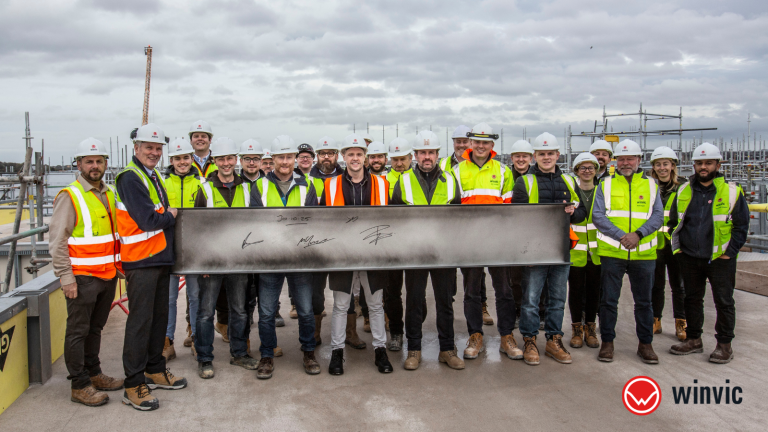
Winvic Construction Ltd, a leading main contractor that specialises in the design and delivery of private and public sector construction and civil engineering projects, alongside client AG South Plaza B.V and developer Melburg, has celebrated a key construction milestone at 360 Bristol, a Purpose-Built Student Accommodation (PBSA) development located on Marlborough Street in the heart of the city. The project team and partners – including IESIS, structural engineer HEXA, and architect ECE Westworks – came together on the 30th October for a topping out ceremony to celebrate a major milestone – completion of the building’s structure, a significant step in transforming the former 1960s office block into a 10-storey, 399-bedroom sustainable student living community. Works officially began in August 2024, with enabling works taking place ahead of the main construction phase, which commenced in May 2025.  Scheduled for completion in summer 2026, the development will provide a mix of studio and cluster bedrooms, featuring shared kitchens, a gym, cinema, karaoke, content rooms, games lounge, study spaces, yoga and Zumba rooms, and extensive outdoor areas for socialising. Outdoor amenity space includes an accessible terrace on the 10th floor and ground floor external areas on the podium over the existing basement. Basement parking and cycle storage have also been retained throughout the works. Remedial repairs to the existing structural frame have been undertaken including fire protection enhancements, and three additional upper floors have been constructed to provide additional living spaces. The project also delivers significant fire safety improvements in line with the requirements of the Building Safety Act. This sustainable design and delivery approach reflects the shared values of Winvic, AG South Plaza B.V, and Melburg, championing responsible regeneration within the PBSA sector whilst delivering significant sustainable improvements such as 3,500 tonnes of lifetime carbon savings, 1,500% biodiversity net gains, EPC A and BREEAM “Excellent” ratings. Delivered by Winvic under the Gateway 2 process, 360 Bristol is the contractor’s first project to progress through the new regime, underscoring its commitment to quality, collaboration, and building safety. The scheme is delivering meaningful social value through employment, education and community engagement. Two site visits have been held so far, one in partnership with The Restore Trust and O’Neill and Brennan hosting 15 unemployed learners, and another for T Level students from IBK Academy, where one student will be completing their industry placement on site. Creating inclusive employment opportunities, Winvic is piloting the Standing Tall programme, supporting an individual who was homeless into employment. Over 50 local employees (within 30 miles) are working on the project, which is also set to deliver over 200 training weeks for both new and existing staff, including members of the supply chain. Working alongside Winvic Construction for the scheme are Employer’s Agent and project manager – IESIS, Architect – ECE Westworks, Structural and Civil Engineer – HEXA and M&E consultant – BOX 20. Mark Jones, Managing Director of Multi-Room at Winvic Construction Ltd, said: “Reaching the topping out milestone at 360 Bristol is an exciting step forward for the project team. This scheme perfectly demonstrates how intelligent design and collaborative delivery can bring new life to existing structures – reducing embodied carbon and contributing to a more sustainable built environment. “It also marks our first project delivered through the Gateway 2 process, highlighting our commitment to building safety, quality, and partnership. I’d like to thank our client and project partners for their continued collaboration. Together, we are delivering a landmark building that will enhance Bristol’s student experience and stand as a benchmark for sustainable urban redevelopment.” Andrew Burns, Head of Asset and development at Melberg, said: “We are incredibly proud to see 360 Bristol reach this significant milestone. From the outset, our vision was to create a vibrant, inclusive community that not only meets the evolving needs of students but also sets new standards for sustainability and wellbeing. By retaining and enhancing the existing structure, we have dramatically reduced embodied carbon, while our commitment to EPC A and BREEAM ‘Excellent’ ratings ensures the building’s long-term environmental performance. The extensive amenity offer—from social spaces and wellness rooms to accessible outdoor terraces – reflects our belief that great places to live should also support personal growth and community connection. We look forward to welcoming students in September 2026 to a development that truly raises the bar for sustainable urban living in Bristol.” Join Winvic on social media – LinkedIn, and Instagram. Building, Design & Construction Magazine | The Choice of Industry Professionals

Read More »