Kenneth Booth

Chubb’s New Evacuation System Sets Standard for Performance and Compliance

Chubb, a leading global provider of fire safety, security and monitoring solutions and services, today launched a High-Rise Evacuation Alert System to assist the UK’s Fire and Rescue Services in safely evacuating residential buildings over 18 metres. Responding to the new Code of Practice recommendations outlined within British Standard (BS)

Read More »

Changes to buyer behaviour set to continue, predict housebuilders

Changing lifestyle requirements will continue to re shape the new home market through 2022, predict housebuilders in the WhatHouse? Predictions Report 2022, as demand for luxury new homes in more rural locations continues to trend. 70% of house builders asked to forecast whether the ‘race for space’ will keep the market

Read More »

binderholz Group completes acquisition of BSW

Successful closing: binderholz Group completes the acquisition of the largest British sawmill group, making it Europe’s largest company in the sawmill and solid wood processing industry On 05.01.2022, the acquisition of the British BSW Timber Ltd, based in Earlston, Scotland, by Binderholz UK Holding GmbH, a subsidiary of the Austrian

Read More »

Futurebuild announces 2022 conference programme

Practical advice on achieving COP26 objectives The built environment has been given twelve months to turn climate pledges into significant action to limit temperature rises to 1.5°C. To encourage transformational change, Futurebuild, the sustainable built environment event, has announced its 2022 conference programme. Now that COP26 has established what we

Read More »

St Francis and ALMCOR announce sale of 80 acres of land at prime logistics development site in Derbyshire to BentallGreenOak and Equation Properties

Development land is situated within its Horizon 29 scheme which extends to 140 acres in total capable of accommodating 1.4M sq ft of prime warehouse and logistics space. ALMCOR and St. Francis Group sell 80 acres of Logistics Development Land at Horizon 29, North Derbyshire, to BentallGreenOak and Equation Properties

Read More »

FutureX: A future yet to be determined

A call to action for all pioneers and disruptors The term sustainable development was first coined in Our Common Future, also known as the Brundtland Report, published by the United Nations in 1987. The report defined the term as ‘the ability to meet the needs of all people in the

Read More »
Latest Issue
Issue 343 : Aug 2026

Kenneth Booth

Chubb’s New Evacuation System Sets Standard for Performance and Compliance

Chubb, a leading global provider of fire safety, security and monitoring solutions and services, today launched a High-Rise Evacuation Alert System to assist the UK’s Fire and Rescue Services in safely evacuating residential buildings over 18 metres. Responding to the new Code of Practice recommendations outlined within British Standard (BS) 8629:2019, the High-Rise Evacuation Alert System will facilitate the immediate evacuation of any floor within a building to securely phase the evacuation process and provide the highest levels of tenant and asset protection. The system’s operating panel is housed within a tamper-proof enclosure that features an STS 205 BR2 security rating and can only be opened by a patented key and lock mechanism conforming to BS EN 1303. The easy-to-use toggles enable Fire and Rescue Services to instantly activate alarm sounders, whilst the LED indicators provide a clear overview of evacuation zone status to support quick and straightforward implementation of evacuation strategies. Suitable for both new build and retrofit applications, the system’s hybrid network capabilities offer building owners the flexibility to tailor the system to meet their specific requirements and the system can be continuously upgraded and extended to meet future legislative updates. The flexible nature of the system also provides building owners with the ability to wirelessly interlink each individual alarm sounder and visual alarm device to the hardwired evacuation alert control and indicating equipment panel. “For over 200 years, Chubb has been committed to making our customers world a safer place. The launch of our new High-Rise Evacuation Alert System is a reflection of this dedication, providing building owners with the highest possible standards of protection and performance,” said David Foord, Fire Sales Director, Chubb: “We understand the importance of ensuring the successful and safe evacuation of tenants in the event of a fire, which is why our latest system has been designed in accordance with BS 8629:2019, to provide complete peace of mind.” Supporting the installation and reporting stages, Chubb also provides proof of testing upon handover, in addition to regular testing in accordance with complete compliance. Featuring technology recommended within BS 8629:2019, the High-Rise Evacuation Alert System is also supported by Chubb’s nationwide network of dedicated engineering and support teams that provide building owners with industry-leading advice, knowledge, and service. To find out more, visit https://www.chubbfiresecurity.com/en/uk/products/fire/evacuation/evacuation-alert-system/

Read More »

Government To Make Developers Pay For Costs Of Cladding Crisis In New Measures Announced

Experts Say Announcement Could Mean More False Hope For Leaseholders Developers have been given an early March deadline to create a fully funded plan of action to help the cladding crisis, with further measures to be put in place by the Government. The announcement from Michael Gove MP at the House of Commons on the afternoon of Monday 10th of January said he is giving developers the chance to ‘do the right thing’ or he would ‘impose in law’ ways to make them pay for the cladding crisis. So far residents in blocks 11-18m high haven’t been eligible for government support to remove unsafe cladding, instead being offered loans to shoulder the often eye-watering cost – but this scheme is now scrapped, along with further measures to ease the standstill for leaseholders affected by surveys, insurers and market uncertainty as a result of the crisis. Residential property experts at Irwin Mitchell say the announcement shows the Government has shut the door on providing its own funding to help leaseholders, instead relying on developers to pay for the cladding crisis. Jeremy Raj, national head of Residential Property at Irwin Mitchell said: “The sentiments and ambition of Mr Gove’s statement today were praiseworthy and long overdue. The realities of his proposals are, however, as yet of questionable efficacy and breadth. “The truth is that the fifth anniversary of Building Safety reaching its current level of crisis for leaseholders in taller blocks of flats in particular is fast approaching. The acknowledgement today that reaction to date has been slow and ineffective will be cold comfort, particularly in relation to those with non-cladding issues. Government must indeed accept when its own performance has not been acceptable and ensure a rapid improvement. “The cladding on Grenfell had nothing to do with current or historic developers of new build homes, having been retro-fitted many years after the original build, using materials that were clearly dangerous that seem to have been ignored or waved through by the regulatory authorities. “The idea that responsibility for resolving the cladding scandal – which has now widened to become a general building safety scandal – should be laid solely at the doors of developers asked to voluntarily cough up more cash, is likely to lead only to further delay and heartbreak for leaseholders caught in dangerous or un-sellable properties. “Many developers will be puzzled as to how and to what extent they can justify such expenditure on a ‘voluntary’ basis in the context of their obligations to shareholders, and a lack of direct responsibility, particularly given clear evidence of contributory negligence by others. “As Irwin Mitchell have been saying from the outset, fixing dangerous buildings (of whatever height) should be dealt with as a priority using up-front Government money, with clawback provisions activated as soon as the extent and identity of all liable parties has been established under due legal process.” Large housebuilding developers are already facing the Residential Property Developer Tax, which targets companies with annual profits of over £25m with a 4% tax to go towards cladding. Legal experts point out that laying the blame at one person’s door doesn’t help the situation for affected leaseholders – or help with the long-term housing crisis the UK is currently facing. Jeremy continued: “In the context of an acute national shortage of safe, suitable and environmentally sound housing stock, it will not help to demonise and threaten all developers if they can clearly see that the manufacturers and suppliers of those dangerous materials, the poorly resourced regulators and the industry as a whole, seem to be being let off the hook. “It now seems clear that the Treasury has firmly shut the door to further funds being made available and that, along with Planning reform, a full upgrade and proper funding of Building Control remains a distant hope for the future. “Nobody wants the leaseholders caught up in the post-Grenfell nightmare to continue to suffer, and it is right that they should be absolved of financial responsibility for making their buildings safe. “However, significant issues relating to building safety remain in addition to the cladding problems and many of our clients do not appear to be helped by today’s announcement in resolving the problems with the homes they bought in good faith, expecting them to be safe to live in and easy to sell on.”

Read More »

Ecocem and Taylor Woodrow pave the way for ultra-low carbon concrete in the UK

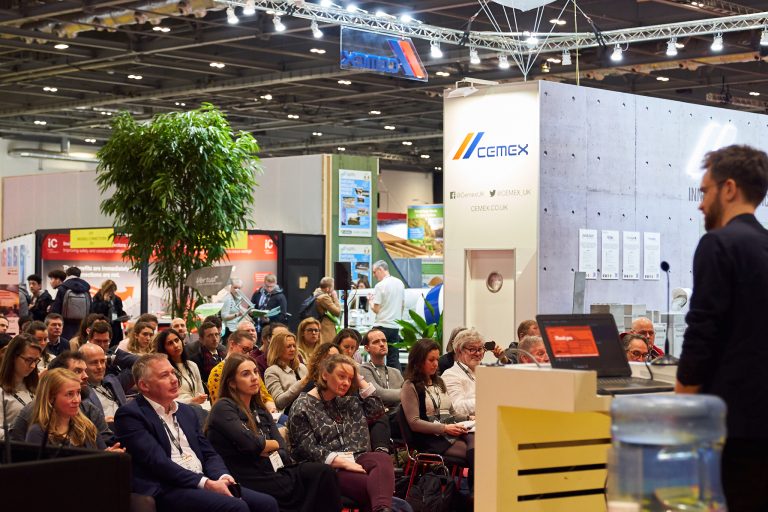
Ecocem, Europe’s leading provider of low carbon solutions for the cement and construction industries, and Taylor Woodrow, a leading player in the delivery of complex UK infrastructure projects, have conducted their first pour of Exegy® ultra-low carbon concrete in the UK. Developed over four years by Ecocem and VINCI Construction, a world leader in buildings, civil works and infrastructure, the technology – Ecocem Ultra – forms part of VINCI Construction’s Exegy® ultra-low carbon concrete range, and is already being used on a pilot site of the Grand Paris Express and in the construction of the Athletes’ Village in Paris for summer 2024. Significantly reducing the CO2 footprint of any project on which it is used, Ecocem Ultra provides an alternative to the traditional cement manufacturing process. The pour took place on EcoPark South, the first phase in North London Waste Authority’s plans to create a £1.2 billion sustainable waste management hub and Energy Recovery Facility at the existing Edmonton EcoPark. The mix used on the project reduces the carbon footprint by up to 70 per cent when compared to traditional concrete. Taylor Woodrow is building a new flagship Resource Recovery Facility, public Reuse and Recycling Centre, temporary bulky waste facility and new visitor, community, and education facility as part of the project. Ecocem has always been a first mover. For more than 20 years, the company has led the development of technology that reduces the carbon footprint of the traditional cement manufacturing process by half. Its pipeline of technology continues to be industry leading, and the company was recently backed by Breakthrough Energy Ventures, a coalition of private investors led by Bill Gates, supporting innovations that will lead the world to net zero emissions. VINCI Construction launched the global Exegy® brand in 2020 to position itself as a pioneer in the development, use, and deployment of low carbon concrete solutions worldwide. VINCI Construction has developed, jointly with Ecocem, the Exegy® ultra-low carbon concrete solutions, bringing its construction know-how and innovative mindset to support the Ecocem Ultra’s European Technical Evaluation granted on October 2021. Exegy® and Ecocem rely on a network of partner plants, such as the global building materials supplier, CEMEX, which produced the Exegy® Ultra-Low Carbon concrete for the pour. Micheál McKittrick, Managing Director, Northern Europe, Ecocem, said: “Our Ecocem Ultra technology is already being used at scale in France, and we’re excited to now see it being adopted in the UK. “The cement and construction industries are developing and deploying a range of emission reduction technologies to help the UK Government reduce emissions by 78 per cent by 2035, and reach net zero by 2050, and Ecocem will add a further dimension to these efforts.” Nerissa Patel and Alex Mitchell, Project Managers for Taylor Woodrow, said: “We are proud to have led the first use of Exegy® ultra-low carbon concrete in the UK. Ultra-low carbon concrete is a key factor in our journey towards carbon neutrality and this marks an exciting step towards achieving it.”  Steve Crompton, Director of Quality and Product Technology for Materials West Europe, CEMEX, said: “CEMEX is committed to reducing the embodied carbon in our range of cementitious products and we have ambitious targets to lower CO2 levels in concrete, including a global commitment to produce net zero concrete for all our customers by 2050. “We have been working with VINCI and Ecocem in France to investigate how alternative cement technologies can accelerate the reduction in CO2 in readymix concrete and are delighted to be involved with the project at Edmonton EcoPark to demonstrate how this new technology can contribute to ultra-low carbon emissions in concrete.”

Read More »

Changes to buyer behaviour set to continue, predict housebuilders

Changing lifestyle requirements will continue to re shape the new home market through 2022, predict housebuilders in the WhatHouse? Predictions Report 2022, as demand for luxury new homes in more rural locations continues to trend. 70% of house builders asked to forecast whether the ‘race for space’ will keep the market buoyant felt confident that we are yet to reach the ceiling in requirement for larger properties with home office, flexible family space, and access to high-quality green areas.    Overall, 71% of housebuilders reported feeling ‘cautiously optimistic’ about the year ahead  60% forecast that new build house prices would swap price peaks for continued steady growth  62% said that transaction levels would return to pre-pandemic levels  60% of housebuilders are concerned by the impact of an interest rate rise. However, those asked agree, continued economic recovery and a high percentage of fixed rate mortgages will help secure the new build housing market’s strong position  Daniel Hill, Managing Director, WhatHouse? said: “It’s still early days. We are yet to see the full impact of the pandemic on home buyers’ behaviour. Hybrid and home-based working continues to be trial and error for many businesses, once a seismic and more permanent shift takes place we will once again experience a surge in people considering relocation and hunting for more inside and outside space.”  Jamie Barrington, Sales Operations Manager, Beal Homes said: “We continue to see a large proportion of customers working from home and employers embracing home or hybrid working. This means demand for flexible space and design options, including for working space, will remain high as home working becomes the new normal and no longer a temporary novelty. It also means buyers will prioritise areas with fast internet speeds and good mobile signals.”  “The 2022 housing market should be supported by what are expected to be continuing high levels of job vacancies, feeding through to wage growth. A rising market will be driven by these factors, as well as housebuilders adjusting prices to account for increasing materials costs beyond their control, alongside changes in inflation.” 

Read More »

binderholz Group completes acquisition of BSW

Successful closing: binderholz Group completes the acquisition of the largest British sawmill group, making it Europe’s largest company in the sawmill and solid wood processing industry On 05.01.2022, the acquisition of the British BSW Timber Ltd, based in Earlston, Scotland, by Binderholz UK Holding GmbH, a subsidiary of the Austrian binderholz Group, was successfully concluded with the closing of the transaction. BSW Timber Ltd. is the largest sawmill group in the UK in 2021, with a turnover of around £700 million and a production capacity of over 1.2 million m3 of sawn timber per year. In 2022, binderholz will become Europe’s largest group in the sawmill and solid wood processing industry segment, with a cumulative annual turnover of €2.6 billion and around 5,000 employees. The brand name BSW will be retained after integration into the binderholz Group, and the current management will continue to lead the company. Strong partnership with a focus on sustainability “With a strong focus on sustainability, binderholz and BSW pursue a forward-looking and at the same time, tradition-conscious corporate philosophy. The purchase of BSW is an essential component of our long-term expansion and sustainability strategy. BSW is active along the entire value chain of the sawmill industry, from sustainable forest management and maintenance – with capacity to plant up to 50 million high quality seedlings per year – to timber harvesting, sawmill operations, timber processing and distribution as well as biomass energy,” says Reinhard Binder, owner and CEO of binderholz. “This step strengthens binderholz’s positioning in the growing British market, which is characterised by high demand for sawn timber, solid wood, timber construction and DIY products. The Green Economy ideal is being actively lived in Great Britain, which has been reflected in the constant growth rates in CO2-neutral timber construction over the years. With our products, we optimally cover these market needs and plan investments that go further into depth of the value-added chain.”

Read More »

Futurebuild announces 2022 conference programme

Practical advice on achieving COP26 objectives The built environment has been given twelve months to turn climate pledges into significant action to limit temperature rises to 1.5°C. To encourage transformational change, Futurebuild, the sustainable built environment event, has announced its 2022 conference programme. Now that COP26 has established what we need to do, the sessions at the conference will explore how to make the necessary changes at scale to take the industry from ambition to net zero. From March 1 to 3 at ExCeL London, the Futurebuild 2022 conference, sponsored by the Construction Innovation Hub, will explore some of the key questions and issues to close the gap between net zero ambition and delivery. It invites panels of industry experts to share their experience and put forward proposals on eleven selected topics, including an action programme beyond COP26, the regulation of embodied carbon, resource efficiency, financial considerations, levelling up and retrofitting. The first session on day one focuses on action plans — Beyond COP 26: our action programme.The physical impacts of climate change that we are already experiencing highlight the need for developing long-term resilience at the same time as reducing emissions, restoring natural resources and biodiversity, ensuring a sustainable food supply and recognising the impacts of climate change on human health and wellbeing. This session will focus on the actions that the UK construction industry will be taking – starting now. “There is no simple, off the shelf solution to reaching net zero, but there is a growing understanding of what needs to be done,” explained Shaun Spiers, executive director at Green Alliance and chair of the Beyond COP26 arena session. “There is an almost universal recognition that we must aim to limit global heating. The next year will give us a much clearer idea of whether the outcomes of COP26 can shift the course of the world’s economy or whether it was ‘blah blah blah’.” “We have had a difficult and uncertain time since Futurebuild 2020 and the impact of the pandemic and the opportunities and urgencies for COP26 have been explored in a number of webinars during this time,” explained Sue James, Edge member, “As our thoughts turn to COP27, we have clearly established what we need to do and must now focus on how to do it at scale’. The opportunities to change are here, do we have the courage to act on them? On days two and three, the 2022 conference programme topics include raising aspirations — leading by example to make change happen, resolving energy supply and demand and living in a sustainable relationship with nature. In each session a panel of experts will explore the key questions and issues to help the built environment sector take the action needed for us to achieve 100 per cent net zero emissions by 2050. The programme will conclude with a conversation between architect, Peter Clegg and engineer, Hanif Kara, and Hattie Hartman of the Architects’ Journal on the future of building design in our climate and ecologically challenged world. To find out the full conference programme and list of speakers for Futurebuild 2022, visit www.futurebuild.co.uk/conference-programme-overview/. Don’t forget to register for the event here.

Read More »

Oxford architect selects OGL to safeguard business growth with infrastructure overhaul

Oxford architecture practice Gray, Baynes & Shew has overhauled its IT infrastructure with a suite of technologies from OGL, to boost business productivity and protect its business while maintaining its position as an award-winning architectural partner.   Based at St Thomas House on Becket Street in Oxford, Gray, Baynes & Shew (“GBS”) took advantage of a free network appraisal which uncovered some concerning weaknesses and cyber threats.   The firm works across a range of business sectors including education and healthcare to create buildings for learning, healing, resting, playing or for worshiping. It is on Oxford University’s Capital Projects Framework and has completed projects at a number of colleges including Corpus Christi and Lady Margaret Hall.  Poor IT is the last thing any business wants, but it’s especially true of architects that use high-intensity CAD software (computer aided design) for their design work, which demands a powerful, well-managed and well-maintained infrastructure.  Realising that its incumbent supplier was not proactive or delivering the level of IT service the practice required, GBS asked OGL to conduct a free network appraisal. This audit is used to establish a company’s baseline security and identify where gaps lie, which is how OGL uncovered some concerning weaknesses and cyber threats.   The network appraisal examined every one of the firm’s network assets, from physical servers, virtual servers, network-attached storage (NAS), to firewalls, workstations, printers and much more. The result was an extremely detailed and valuable third-party perspective for the firm’s IT team.  Tony Stewart, IT Project Manager at Gray, Baynes & Shew explains: “I knew our infrastructure needed work following the shift to more home-working during and since the pandemic, but I was shocked to be shown the extent of its weaknesses and gaps. To hear that a relatively simple check by OGL uncovered our login credentials and passwords had been compromised and were on the Dark Web was a huge eye opener.”  GBS appointed OGL as its IT partner after discovering that its legacy IT infrastructure needed an overhaul and recommended a suite of technology products and services that included server configuration, Synology storage and cloud sync, firewall security, anti-virus, SaaS backup, remote monitoring and patch management.  The patch management service is now the firm’s first line of defence. It blocks unwanted traffic [is this true – is it Patch Management that does this – I would have thought it was AV?], whether that’s protection from emails with very large file sizes or executable files which autorun. While Synology storage helps GBS to manage, secure and protect its data.  Matt Thorneycroft, Business Development Manager at OGL, concluded: “IT and cyber security is so important these days, it must be resourced and financed accordingly. Tony was realistic about the work needed to get the network to a good, robust place, following years with an IT provider that didn’t appear to be pulling their weight any longer.” 

Read More »

St Francis and ALMCOR announce sale of 80 acres of land at prime logistics development site in Derbyshire to BentallGreenOak and Equation Properties

Development land is situated within its Horizon 29 scheme which extends to 140 acres in total capable of accommodating 1.4M sq ft of prime warehouse and logistics space. ALMCOR and St. Francis Group sell 80 acres of Logistics Development Land at Horizon 29, North Derbyshire, to BentallGreenOak and Equation Properties Bolsover Land Limited (‘BLL’), a joint venture between ALMCOR (formally known as iSec) and St. Francis Group, has sold over 80 acres at its 1.4 million sq. ft. Horizon 29 warehouse and logistics development to BentallGreenOak (‘BGO’) and their development partner, Equation Properties for £39.9 million. BGO and Equation will develop up to 1.2 million sq. ft. at Horizon 29 across the 140-acre strategic brownfield site located adjacent to Junction 29A of the M1 and Markham Vale. Horizon 29, formerly the Coalite works, was acquired by BLL in 2012.  The site has been remediated and core infrastructure constructed to allow for development to further consolidate Horizon 29 as one of the East Midlands’ premier industrial and logistics location. BLL retains over 33 acres for further development which will be brought forward alongside the BGO development. Rupert Wood, Head of Strategic Land at ALMCOR, said: “This is an excellent deal for the JV having bought the site in 2012.  It will drive forward the delivery of Horizon 29 while allowing ALMCOR to release capital to recycle it into other substantial projects that we are bringing forward, such as Thames Enterprise Park in Thurrock.  Working with our JV partner, St Francis Group, we have delivered a warehousing and logistics site into an increasingly constrained market at the right time demonstrating our credentials as strategic land specialists.” Gareth Williams, Development Director at St Francis Group, said: “This sale highlights the expertise within the Group and the wider Joint Venture to unlock technically challenging brownfield sites, and to complete significant highway and service infrastructure to create a development ready site capable of immediate development.  Having jointly invested significant funds to achieve this in time to capitalise on rising demand for serviced land, we are delighted to have completed this sale to BGO and to have secured a programme of speculative development at Horizon29.”  Gareth Purcell, Managing Director at BentallGreenOak, said: “We are delighted to have closed on the acquisition.  The first phases of the site already benefit from Reserved Matters planning consent and we will be commencing speculative development works on site during Q2 with the first units completing by year-end.  This deal, which completed on Christmas Eve, closes out a very busy year for BGO’s UK logistics platform, with us having acquired land to deliver c. 5m sq.ft. of new logistics space with our partners at Equation Properties in addition to a further 3.7m sq.ft. of standing assets across a total of 12 separate transactions.” BLL was advised by JLL and Clyde & Co and BGO and Equation were advised by Burbage Realty and Taylor Wessing. For further information on the development visit: www.horizon29.com

Read More »

Winvic Wins Contract to Deliver Two Industrial Warehouses for Clowes Developments

Winvic Construction Ltd, a leading main contractor that specialises in the design and delivery of multi-sector construction and civil engineering projects has broken ground at Castlewood Business Park where the firm has been contracted by repeat client Clowes Developments to construct two industrial warehouses concurrently for NFU Mutual. Both facilities will be completed within a short timescale with handover scheduled for July 2022.  Over 1.5 million sq ft of distribution and manufacturing space is already occupied at the site – located at Sutton-in-Ashfield, close to junction 28 of the M1 at Nottingham – by household names such as Co-op, Parker Knoll and Bombardier. This next development phase that Winvic is delivering comprises two speculatively built modern warehouses. Plot 1 is 158,500 sq ft and 15m high with 18 docks and four level access doors; 10,300 sq ft of office space over two-storeys will be created inside the facility and a 2,700 sq ft external hub office will also be constructed. Plot 8 is 126,500 sq ft and 12.5m high with 12 docks, four level access doors and 7,700 sq ft office space, also over two-storeys. Winvic will begin by undertaking cut, fill and compaction works to create the plateaux before completing the foundations. The steel frame installation will begin before the end of January and cladding during February. External site works include all drainage and service installation, hardstandings, landscaping and parking for cars and HGVs.  Winvic is also constructing two industrial units in Corby for Clowes Developments and is delivering the first phase of groundworks, highways and utility infrastructure works at Fairham, a new £800 million sustainable neighbourhood in Nottingham, which Clowes is delivering in partnership with Homes England. Visit https://fairhamlife.co.uk/vision/ to see the latest 360 aerial progress on site. Winvic Construction Director, Ben Shearman, said: “Winvic has been working with Clowes Developments for some time now on both industrial, and civils and infrastructure schemes including a new purpose-built facility for Deichmann-Shoes in Corby. We’re delighted they have appointed Winvic for the fourth time this year to construct this modern speculative unit at Castlewood Business Park. Our experienced team is looking forward to hitting the ground running in January and delivering the scheme safely and rapidly within a seven-month period.”  James Richards, Clowes Developments, said: “We are delighted to work with Winvic on this project. We have a small network of reliable and hardworking suppliers who achieve the high standards we aspire to across our ever growing portfolio, not just in the end product but also throughout the delivery process. Castlewood is now almost completely built out and we are very happy to see these two plots being developed as part of NFU Mutual’s property stock.” For more information on Winvic, the company’s latest project news and job vacancies please visit www.winvic.co.uk. Join Winvic on social media – visit Twitter @WinvicLtd – and LinkedIn.  

Read More »

FutureX: A future yet to be determined

A call to action for all pioneers and disruptors The term sustainable development was first coined in Our Common Future, also known as the Brundtland Report, published by the United Nations in 1987. The report defined the term as ‘the ability to meet the needs of all people in the present without compromising the ability of future generations to meet their own’. Over 30 years later, sustainability is a critical issue that we are still grappling with. So, what’s different this time? Who can we learn from? And what kind of future do we want to shape? Here Martin Hurn, event director at net zero pioneer Futurebuild joins Oliver Jones, research director at international design practice Ryder Architecture to discuss the challenge and the ambitious plans to address it. The built environment industry has talked about sustainability for decades, yet in reality, progress has been slow. “The cold hard truth of the matter is that efforts for our industry to become more sustainable generally failed because sustainability was a choice,” explained Jones. “Our net zero targets are now written in law, they are an obligation and the effects of not acting are becoming more evident as each day passes.”  The UK Government’s ambitious goal for net zero by 2050 means that our industry is legally obliged to eliminate emissions, creating not only a driver to change the industry, but also an economic impetus. “Claims are coming thick and fast from many businesses that they have already delivered net zero,” continued Jones. “But the holy grail, truly net zero buildings that don’t rely on offsets are scarce — to my knowledge we are yet to realise a truly net zero building without relying heavily on offsets. Worse still, we are starting to see some wild claims and corporate chicanery when it comes to net zero claims”. “In order to deliver on net zero and accelerate our progress our industry must take action to transform itself, focus on sharing knowledge, learning from one another but most importantly learning from other sectors who are facing the same challenges. An overly competitive mindset will stifle progress and innovation, it’s time for cross sector collaboration to take centre stage”. More than net zero Its relatively simple to produce a highly insulated building to reduce operational energy, but it becomes much more complex when we factor in reducing embodied carbon and creating high quality environments that promote health and wellbeing. In taking a whole life approach to net zero we are depending on developing sustainable advanced materials and designing for disassembly and reuse to also become commonplace. “We’re at a crossroads between three competing disruptors to our sector, technology (both digital and manufacturing in the form of modern methods of construction), the climate emergency and a renewed focus on public health,” argued Jones. “We cannot focus on one challenge — sustainability in its truest sense is about more than just net zero. It requires a well-defined, holistic approach; digital technologies to monitor and measure performance and progress and an emphasis on delivering high quality environments that promote health and wellbeing of building occupants. Net zero is really just one part of the puzzle — we need a much more holistic approach to sustainability.” Instead of focusing solely on net zero, our industry must consider how it can deliver high quality environments that embrace technology to reduce carbon emissions, optimise building performance and improve occupant health. A force for change We have a definitive deadline to meet net zero targets, so the industry must now move away from tinkering with and redefining definitions and focus on the practicalities of delivering net zero, sharing lessons learnt and delivering an actionable strategy. Cop26 was a welcome line in the sand to set out the actions that the industry must take. “We know that designing net zero buildings is possible without offsets,” continued Jones. “Let’s begin to put this into practice. It will involve better alignment of the supply chain, standards, guidance and funding. But the key to this for me, is research led design that embraces advanced materials and the latest innovations while working hand in hand with material testing and certification that can inform developing standards to get advanced material innovations safely on site and into our buildings faster. This requires a much more integrated supply chain. To me, addressing these key challenges for the future begins with identifying the players in the market, mapping that supply chain and innovation ecosystem to help us better share knowledge and collaborate. “I have seen people start with what they think is the solution time and time again, focusing on a particular renewable energy strategy or extolling the superiority of one type of MMC over another. In reality it is the supply chain that is often overlooked when creating strategies and roadmaps to sustainability. Supply chains massively impact our efforts and ability to deliver net zero buildings. You can design the greatest solution in the world, but if you do not understand the limitations of the local supply chain, deliverability will be impacted, which impacts tight programmes and leads to reactive behaviours. Proposed solutions become open for interpretation or worse still, an inevitable victim of value engineering. We must embrace innovative supply chain partners and work closely with them to develop more value focussed integrated supply chains,” continued Jones. Collaborative mindset A recurring challenge is that the construction industry operates in silos. However, it is encouraging that the climate emergency has galvanised so many likeminded businesses and great thinkers. It is a global challenge that affects every sector, and we are beginning to realise the massive opportunities that exist if we start to look outside of our own industry and across other sectors to share knowledge and transfer innovative approaches. As a sector we are not where we need to be yet. We can’t rely on the same old players, employing the same old methods with a green veneer to deliver net zero buildings. Things need drastically shaking up and

Read More »