Kenneth Booth

FGF Limited – Fine Tuning for the Future

Over the last two years, huge investments in infrastructure and machinery have enabled FGF Limited to restructure and focus on improving quality control, efficiency and communication. Recognising the value and importance of promoting Women in Construction, Kristy Driver-Gray was appointed Managing Director (The first female MD in 65 years). Along

Read More »

The Art of Client Retention

Property management has vast challenges, but retention of clients in the current financial and fast-moving environment takes hard work, and attention to detail. Clive Winton is now in his tenth year with Crabtree, and to date his portfolio of clients remains intact from when he was first appointed as their

Read More »

How to keep your drains in perfect working order

When things go wrong with the plumbing in your house, you will likely be left with a hefty bill from a professional and a whole load of stress. Some issues are totally out of your control, but there are plenty of other things you can do to keep your drains

Read More »

Wheel loaders VS hydraulic excavators

Wheel loaders and hydraulic excavators have much improved industries.  Excavators and wheel loaders are mainly used to dig up the soil, heavy lifting and moving piles of debris. The big machines can perform in mining, construction, forestry and even landscaping. These heavy machines have certain advantages such as; There has

Read More »

A Guide to Choosing the Right Heat Resistant Equipment

Can you imagine the risk one would be posing themselves while they are working under high-temperature environments without the right protective gear? If the normal summer heat gets uncomfortable sometimes, you can now imagine temperatures of over 100.4F. Working in some industries such as the construction sector sometimes requires you

Read More »

What you need to know about Fashion Business Card

Most brands are using a business card to market their products to prospective clients. However, with the increase in the adoption of these cards, it is essential to ensure that yours stands out. The fashion industry is not immune to these requirements, and you need to strategize smart ideas to

Read More »
Latest Issue
Issue 343 : Aug 2026

Kenneth Booth

FGF Limited – Fine Tuning for the Future

Over the last two years, huge investments in infrastructure and machinery have enabled FGF Limited to restructure and focus on improving quality control, efficiency and communication. Recognising the value and importance of promoting Women in Construction, Kristy Driver-Gray was appointed Managing Director (The first female MD in 65 years). Along with the experienced senior management team, Kristy has implemented numerous progressive changes across the business, including relocating the North West operation to new, much larger premises. Kristy said “We play an important role in the construction and engineering industries, manufacturing and supplying products across the UK. Customer service is at the forefront of our organisation and our diverse knowledge on sectors and products makes FGF a unique business” With over 65 years servicing the industry, FGF manufactures and supplies products including facades, insulation and fire protection along with a vast range of bespoke cut, machined and bonded products. A fleet of FORS accredited and Moffett vehicles provide a nationwide distribution service straight to site. One of the owners, Gerard Abbott Drake says “In the current climate, we have the opportunity to prepare and plan for the future. Sustainable, profitable growth can only be accomplished by constantly evolving and improving our quality and customer service. I am confident the team we now have in place will deliver that”. FGF Limited supplies non-combustible cladding, insulation and fire protection products, and provides value added services such as manufacturing, CNC machining and fabrication services to the construction and engineering industries.

Read More »

Here’s what the aviation industry could be like in the post-COVID-19 world

Will the aviation industry survive the Coronavirus outbreak? What will the sector look like in a post-COVID-19 world? What’s going to stay the same and what will be different after the pandemic is over? This article offers possible post-COVID-19 scenarios for the Aviation industry.  No other industry was as affected by the COVID-19 pandemic as the airlines, travel companies, and the tourism sector. And, although lockdowns have eased in some parts of the world, travel and tourism may be disrupted by the ongoing pandemic for longer.  As of April, this year, 90% of the global population was living in countries with active Covid-19 cases, where the governments have imposed travel restrictions on people coming from abroad to stop the virus from spreading. And, according to Reuters, this resulted in over 25 million aviation jobs being at risk. Plus, according to the World Tourism Organization, between five- and seven-years’ worth of industry growth will most likely be lost due to all these recent events.  But social distancing and travel restrictions weren’t the only challenges the industry faced because of the Coronavirus outbreak. The sector is also struggling with a decreased willingness to travel as people fear that they might get the virus.  According to a survey from Mower, only 16% of people in the US would be willing to travel abroad with a commercial airliner on the first day after the restrictions and health warnings are removed. Moreover, only 56% of Americans claim that they would feel comfortable to travel abroad by plane after 60 days the authorities give the “all clear” signal. Plus, according to a Dollar Flight Club survey, out of the 20.000 people surveyed, 80% of them have cancelled their trips scheduled for April and May.  Now, it’s no doubt that people will eventually travel again, and the aviation industry isn’t going anywhere no matter how difficult things seem to be right now. However, there will be some significant changes both in consumer travel demand and the global airline industry as a whole. A new world of airline economics Remember only half a year ago, before the Coronavirus outbreak, when you could travel internationally with only a few dollars’ worth plane tickets? Well, unfortunately, it seems that these will remain memories because, in the post-COVID-19 world, plane tickets will be a lot more expensive.  According to the director-general of the International Air Transport Association (IATA), if governments force airlines to introduce physical distancing measures on planes, the ticket prices will most likely see a 50% increase. The explanation for this warning is pretty simple: physical distancing measures imply people to stay 1.5-2 m away from each other, meaning that at least third of seats on a plane would remain empty so airlines would lose a lot of money.  Moreover, it seems that raising ticket prices is an old practice of the industry following a significant event. The same Dollar Flight Club survey analyzed data from the 9/11 and the Great Recession, two big events in the past, to see how they influenced the airline industry. The result? Plane ticket prices go down in the short term but then gradually increase in the long term.  Following the 9/11 event, plane ticket prices dropped by 18% for the remainder of the year but then increased by 25% by 2003. As for the period after the Great Recession, airfare prices saw a 21% decrease in 2008 and a 24% increase in 2012.  So, the survey predicts that the same pattern from above will happen after the COVID-19 outbreak as well. The Dollar Flight Club predicts a 35% decrease in plane ticket prices in 2021 and a 27% increase by 2025.  An even bigger step towards digital The Coronavirus outbreak challenged all industries to take a shift to digital more seriously as most businesses were forced to close their doors and customers were forced to stay inside to prevent the virus from spreading. Employees worked from home, kids learned from home, food was ordered online, and even film festivals were moved online.  Every industry had to take a bigger step into the digital environment if they wanted to survive the Coronavirus ongoing pandemic. And, the aviation industry is no exception to this rule.  Now, digital technologies can’t replace the travel services offered by airlines, but they can reshape the way these services are provided. To be more precise, they can help airlines offer a touchless travel experience to travelers, which might be imperative since more and more of them fear traveling because they fear they might get the virus.  The airline sector has already embraced technology in some processes such as online check-ins or plane ticket buying online. Yet, now the industry needs to offer a touchless travel experience to convince travelers that it is safe to fly with them. And, even with strict cleaning protocols, without technology, this is pretty difficult as people are still exchanging travel documents and touching surfaces as they check-in go through security or border control.  Thus, the sector will most likely embrace automation as the new norm. Airlines can use technology for, let’s say, identity verification with iris and face recognition technologies. We might also see other touchless technologies for data entry, such as gesture control, touchless document scanning or voice commands.  But protecting aviation employees is just as crucial as protecting travelers. Thus, aircraft maintenance management software solutions, such as those from Aviation InterTec, might also become more critical over the next few months or years. These software solutions empower aviation employees to perform tasks such as managing fleets, schedule maintenance work, and track records exclusively digitally.  More electric planes It seems like the COVID-19 crisis might be the catalyst for greening the global airline sector.  Over the past few months, as many parts of the world were in lockdown, and thousands of airplanes were grounded, several voices were pretty vocal about the climate risks posed by the aviation industry.  Many environmentalists argue that airlines aren’t precisely the sector that governments should focus on to rescue, especially since this sector had a free

Read More »

The Art of Client Retention

Property management has vast challenges, but retention of clients in the current financial and fast-moving environment takes hard work, and attention to detail. Clive Winton is now in his tenth year with Crabtree, and to date his portfolio of clients remains intact from when he was first appointed as their property manager. How has he achieved this? This is Clive’s story Clive worked in the city for 36 years. His involvement in property management started as a Finance Director in the property where he lived, spanning eleven of his 23 years in residence in a block of 120 flats in North West London. He was not only successful in this role but found it enjoyable. So, when in 2009 a former fellow Director suggested he should get into property management professionally, Clive wasn’t entirely surprised by that idea. In the beginning Around that time Crabtree was experiencing huge growth, and on the hunt for property managers to expand their team. Clive approached Crabtree, swiftly followed by an interview, but was told that whilst they were interested in him, he would need to work towards being AIRPM qualified. He decided to undertake the training at home; he passed the exam with distinction. In 2010 Clive began his longstanding career with Crabtree. Using his knowledge and experience of being a Director for an RMC, he could see things from both the client’s perspective, and the property manager’s standpoint. To this day Clive advocates that is a major factor when it comes to client retention, and resident happiness. Within two years he had taken, and passed the MIRPM qualification exam. From listening to Clive talk about his day, his enthusiasm is infectious, but it comes with gritty realism; a down-to earth approach is most definitely required to be successful, and at the core of everything he does is his skill as a great listener. Clive clearly treats every client as they are the only one that he has. Drill down further and it’s easy to see why he has never lost a customer (in no particular order): Going down to site – know your customers Knowing your finances – what budget is available? Familiarity – make friends with both the Directors and residents and to be there when they need you Awareness of current regulations and H&S practices Being proactive with feedback – tomorrow is always too late! Taking responsibility for the property – acting quickly – “just get it done”! Not wasting time, if waiting for quotes to come in for works to be done is going to slow the process up, go with the quote you’ve got. Continuity – don’t be good at what you do most of the time – customers expect it all of the time. I asked Clive why he enjoyed his job He likes to build solid relationships with the Directors, the RMC and the residents, and that means getting out, meeting regularly with people and really listening to them. He believes that being of a more mature age is a definite bonus when it comes to building these relationships. Most Directors of the RMCs he looks after are of a similar age to Clive, and with that comes a certain respect that some younger property managers can struggle with at times. Familiarity is key, Clive says (quite rightly) that the last thing a resident wants to hear either on the phone, or at an AGM is “I don’t know your property”. It happens in the property world, but not in Clive’s world. Know your site, is a mantra Clive lives by, and continuity makes the job a whole lot easier. Whilst having been a Director gives Clive more of an insight into dealing with negotiations or difficult customers, Clive still believes that it takes years of experience to gain trust and respect. He believes that the lease document is most important and needs to be completely understood before any project commences. Some lease documents (as Clive has found out in the past) can contain very unusual clauses. One such lease, that he pulled out from his multitude of files to show me was from 1976. A snapshot from this section of the document states: “the tenant is not to nurse or permit to be nursed any case of notifiable infectious or contagious illness in the flat without the previous consent in writing of the Lessor”. He likes being in control and keeping on top of budget management. Again, it comes back to his mantra; “Know your client, know your property, know your finances”. Clive keeps track of all financials via hand written ledger books, because he says that’s how he managed the service charge budget at his own block of flats when he was a Director, and what worked for him then also works for him now. Underneath his desk is a mountain of carefully stored ledger books which contain in-depth records of every penny spent by his clients whilst under his stewardship during the time he’s been with Crabtree. Whilst he also uses the online management system, he still believes this method, whilst a tad old fashioned (as he’s happy to admit), works for him. Plus, his ledger books never need a reboot. Fair point Clive, can’t argue with that. There’s a lot to be said for experience that’s for sure.

Read More »

NHF-supported Building Better alliance appoints PfH to establish offsite construction procurement framework

Building Better, the National Housing Federation-supported alliance of housing associations working to develop offsite solutions for the social housing sector, has selected Procurement for Housing to develop a procurement framework for offsite manufacturing with the aim of building a minimum of 500 homes.  Building Better was set up through the National Housing Federation’s Greenhouse innovation programme in 2018, which explored the reasons behind the chronic shortage of affordable homes and the quality issues that plague many new builds. With a combined stock size of 277,000, the Building Better alliance of 25 housing associations aims to significantly accelerate modern methods of construction amongst social landlords. Social housing procurement services provider, PfH was appointed after a competitive tender process and will start work immediately. The offsite construction framework will be informed by Building Better’s research, including over 100 interviews with housing associations and their residents, analysis of the latest offsite innovations and learning from previous projects, which all indicate that greater collaboration and standardisation are key to overcoming the offsite supply challenge. Procurement for Housing will use these research findings, the expertise of Building Better alliance advisers such as construction specialist Cast Consultancy and its own experience of developing complex procurement projects, to create a demand-led framework that will overcome common barriers around offsite construction in social housing. Although some small projects have taken place in social housing, offsite only represents around 3% of the UK construction market and the volume needed to sustain factories and reduce unit prices hasn’t yet been achieved. Building Better has appointed PfH to address this and develop a framework with a high degree of standardisation that gathers wide-scale commitment from social landlords. The goal is to develop strong partnerships with the supply chain, create value for money for social landlords and offer a high-quality solution which helps housing providers to build properties with high energy efficiency, that are better value for residents to run and for providers to maintain. The offsite manufacturing framework will offer additional construction capacity to social landlords that are already feeling the effects of the ageing construction workforce and a looming skills shortage, made worst by the economic impact of Brexit and the coronavirus crisis. Offsite construction has the ability to help social landlords meet their new build targets because it offers a more structured supply chain, less exposure to the fluctuations in the traditional skills workforce, faster delivery and more control over quality and sustainability. Helen Greig, project director at Building Better said: “We wanted a procurement partner with a strong understanding of delivering complicated frameworks that also had experience in modern methods of construction. Procurement for Housing have a loyal membership-base of over 900 housing providers and a strong understanding of the issues facing the sector and how to overcome challenges through collaborative procurement. We’re looking forward to working with PfH so we can raise the bar around modern methods of construction in the social housing sector and create a framework that delivers on quality as well as price.” Steve Malone, managing director at Procurement for Housing said: “One of the biggest challenges around offsite construction has been that social landlords often express an interest and there are small developments but you need a regular, consistent flow of work, in a standardised format, to make offsite construction economically viable. We’ve always known that offsite construction has to be demand-led, not framework-led to work in social housing. Our collaboration with Building Better is all about harnessing demand in the sector and shifting modern methods of construction from a cottage industry to the mainstream.”

Read More »

How to keep your drains in perfect working order

When things go wrong with the plumbing in your house, you will likely be left with a hefty bill from a professional and a whole load of stress. Some issues are totally out of your control, but there are plenty of other things you can do to keep your drains in perfect working order and avoid that plumbing headache! Clear blocked drains Some drain cleaners can contain harsh chemicals that can, in time, wear away your pipes and cause lasting damage, and so you may be wondering, ‘how can I clear my plumbing drains without chemicals?’ There are, in fact, plenty of non-chemical options for clearing out blocked drains, from a good, old-fashioned plunger, to a wire coathanger! These options are a lot gentler for your pipework and with a bit of muscle, can do just as good a job. Run some hot water down the drain after each use, and occasionally a cup full of baking soda to neutralize any smells and clean the insides of your pipes. Get a waste strainer One of the easiest things you can do for your drainage health is to invest in a waste strainer. They are super cheap, simple devices that cover your plughole and catch any little bits of food and waste that shouldn’t be going down into your drains. Although these little bits of rice and leftover peas don’t seem like an issue when it’s only one or two bits, it all adds up and can cause a problem. You can get a similar gadget for your shower plug to catch any hair that might fall out. It’s pretty gross to have to clean it, but much pleasanter than having to remove a hairball from your drain. Be careful what you flush There is an enormous list of things that shouldn’t be flushed down a toilet; in fact, the list of things that can be flushed is much shorter! For example, baby wipes, menstrual products such as pads or tampons, and cat litter should not be flushed. Although it might seem harmless to flush hair or dental floss, they both act like nets and can catch anything that comes down the drain, causing a blockage. Keep oil and grease away Although they are both liquids, and it may seem as though they can be safely flushed or disposed of down your kitchen sink, grease and oil are two of the worst things that can find their way into your pipes! They will solidify, and cause a stubborn blockage that may need professionals to treat. When it comes to keeping your house in good running order, a lot of it comes down to common sense, although there may be a few items on this list that did surprise you. That said, if you follow this guidance, you will keep your pipes, drains, and plumbing in optimal health, which will save you a considerable amount of time, money, and worry in the long run!

Read More »

Wheel loaders VS hydraulic excavators

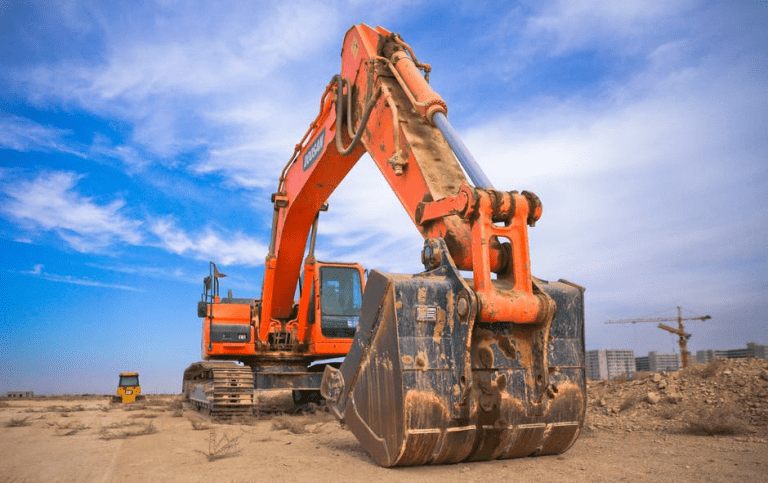
Wheel loaders and hydraulic excavators have much improved industries.  Excavators and wheel loaders are mainly used to dig up the soil, heavy lifting and moving piles of debris. The big machines can perform in mining, construction, forestry and even landscaping. These heavy machines have certain advantages such as; There has always been a comparison of wheel loaders and the hydraulic excavators. Many of the times the hydraulic excavators are still better than the wheel loaders and International attachments is necessary to get the best deals.. Let us take a look at the reasons: Dump height The wheel loaders have a low dump height while the hydraulic excavators have a high dump height. The difference in dump height is an important feature to consider if you will be using the machine for dumping mainly. The low dump height in wheel loaders makes dumping less accurate as the operator cannot see well where he/she is dropping. High dump height of the hydraulic excavators makes the dumping by hydraulic excavators more reliable and more efficient. Breakout force One of the features that make the excavator more efficient than the wheel loaders is that it has a higher breakout force. The wheel loader in its design has less breakout force hence is usually less efficient. Maintenance costs It is estimated that 50% of the money used to maintain the wheel loaders is used for replacing the tear and wear of the wheels. Due to the nature of its work, the wheel loaders work in very rough surfaces. The excavator has the tracks, and even if they require to be repaired, they have less tear and wear hence are more economical. If you are looking for spare parts for excavators, check out your local dealership for terex spare parts in Australia. Flexibility and mobility The wheel loaders require more space to maneuver hence cannot work in smaller areas while the excavators can work without changing their location. It makes the excavators more flexible to work with and therefore, more efficient. The design that enables the excavators not to move lets it easy for the operator. Easy to work with As stated above the wheel loaders usually move about in the area; it is working. It makes it challenging to work with compared to the excavators which do not change their location. Their flexibility does not tire the operator and hence better to use. As illustrated above, working with excavators is more efficient, and it is way better than working with wheel loaders. The wheel loaders, however, do not lack its advantages of its own such as; Cheap The wheel loader design makes sure that it uses less steel to manufacture compared to the wheel excavator. It reduces its manufacture cost hence decreasing its price. Mobility The wheel loader is more mobile hence can work in places where the excavator cannot work, such as in sloppy areas. Easy to train One can efficiently train how to use a wheel loader. Excavators require a lot of training and hence increasing the labor costs of the excavator. If you want to save money, the wheel loader is your best option as it is cheap and requires cheaper labor. Getting Excavators and wheel loaders  International attachments can help you a great deal in getting hydraulic excavators and loaders. Foreign accessories are helpful in that they; Offer expert help The hydraulic attachments and wheel loader attachments companies are experts in their field; therefore, they offer expert help and help one get the best machine for what he wants. Offer a wide range of selection. The market generally offers a wide selection of products such as that you can select from a wide range of products. Reduced costs If you can get an excellent deal for your excavators and wheel loaders, then you will get free shipping services reducing your costs. Discount prices Getting an attachment for the hydraulic excavators and wheel loaders will give you discount prices for the machines. It will enable you to afford these machines. Bottom Line In this modern era, the excavators and wheel loaders will significantly improve our industries hence very important to be aware of how they operate. They both have their advantages and disadvantages, and when deciding which to buy, you have to consider certain factors. It is, therefore, essential for you to seek expert help to help you choose the best option. International attachments can be of great help.

Read More »

A Guide to Choosing the Right Heat Resistant Equipment

Can you imagine the risk one would be posing themselves while they are working under high-temperature environments without the right protective gear? If the normal summer heat gets uncomfortable sometimes, you can now imagine temperatures of over 100.4F. Working in some industries such as the construction sector sometimes requires you to operate under extremely high temperatures. For this reason, it is vital to have the right protective gear while doing the job. This is so as to ensure that you are safe while working and also to avoid falling in the wrong books of authorities given that most demand that all employees should be in the right protective gear while at work. All employers should, therefore, ensure that their employees have the right gear and equipment while doing their job. The idea of choosing the right protective gear for employees working in the high heat conditions might be daunting, but fret not! In this piece, we will be giving you a few tips to help you choose the right heat resistant equipment. Know what equipment you need First things first, what type of heat resistant materials do your employees require? This is the first thing that you need to know before taking the plunge. You want to access the working environment and find out the type of equipment that will be required for the job. Also, while doing this, the safety of your employees should be your number one priority. Look at some of the hazards that might happen while at the workplace to be certain of what they will require. You could use your employees’ input at this point as they might be in a better position to know what they need to get the job done. Identify the right company to buy from After coming up with a list of the protective equipment that your employees will require, you now want to identify a company that deals with such. Given that many companies sell the heat-resistant materials today, you want to be very particular while choosing one. Be sure to choose a company that is highly reputable and is known to sell only high-quality equipment. To help you with these, scheme through some of the online reviews and see what other customers are saying about a particular company. Bad reviews are a red flag, move on to the next! Quality is key Some of the heat resistant materials can be quite costly, and you might be tempted to go for a cheaper option- but this is a mistake you should never make. Quality is crucial when it comes to buying such. You do not want to go for a cheaper option only for it to serve you for a short while before getting spoilt. If you want quality, you will have to part away with a few bucks, but best believe, the equipment might take you years before you get a replacement. Consider comfortability Most often than not, employees are always on their protective gear for the best part of the day. What that means is that there is a need for them to be comfortable in the protective gear that they wear. Comfortable clothing enables the employees to do their work efficiently while at the same time protecting them from any risks. All employees should, therefore, go for a fitting of the protective gear before the purchase is made to be sure that it fits them perfectly. Be keen on the maintenance Buying the right high-quality equipment but not doing your due diligence when it comes to its maintenance means that the equipment’s lifespan is reduced. As such, you want to ensure that your employees clearly understand how to take care of the protective gear that you purchase. The good thing is that most of these protective gears come with clear instructions on how to maintain them in terms of how to clean and store them. Bottom Line Now that you know how to choose the right heat protective gear after going through the above guide, you are in a better position to make the right purchase. Also, ensure that your employees are well trained on how to use the equipment as well as how to take good care of them.

Read More »

What you need to know about Fashion Business Card

Most brands are using a business card to market their products to prospective clients. However, with the increase in the adoption of these cards, it is essential to ensure that yours stands out. The fashion industry is not immune to these requirements, and you need to strategize smart ideas to be competitive. Fashion business card intention is to promote your fashion business and encourage more buyers to buy your products and services. The Printing house creates innovative, useful business cards for your fashion business. The following are the important things you should know about your business card if you are in the fashion industry: Personalization of the business card Personalization is the addition of your images, contacts, and email address on the fashion business card. The information is useful in giving your prospective consumers a detailed report of your location and the products you sell. Additionally, images displayed on the business card can provide them with a glance into your business dealings in an effective manner. The inclusion of your photo is incredible to create an image in the mind of the consumers. They will remember the conversation you had and the place of meeting. Customization according to the events It is crucial to showcase your products in various events if you want to remain relevant in the fashion industry. While attending different functions, it is essential to incorporate the theme of the event to your card. It is an appropriate manner to connect with the customers in the events. If your business card has space, you can handwrite it to make it memorable to the customer. It will act as a perfect reminder of the encounter, and the prospective customer might be encouraged to approach your business in the future. Inclusion of your social presence Instagram and Facebook are the most widely used social media platforms to market fashion products. Thus inclusion of your social presence is an effective way to connect with the prospective buyers. The buyers will have an extraordinary chance to view your products without visiting your physical store through social media platforms. Also, if you have e-commerce stores, including your store availability, it is a conducive way to increase your sales. Create something unique The fashion industry is flooded, and to gain popularity, you need to create something unique that captures the attention of the customers. The Printing house can innovate something that will stand out in the competitive market. The uniqueness is measured in terms of color coordination, extraordinary style, and rare paper designs. Inclusion of testimonials Testimonials act as evidence of the effectiveness of your service delivery. You can briefly list some credible testimonials to build trust with the clients. Additionally, the inclusion of people you do business with is an incredible way to boost your confidence with the clients. Reputable brands will significantly assure the customers of the reputation of your fashion business. What are the merits of incorporating such changes in your fashion business card? It’s a cheap marketing strategy. By allowing the business cards to advertise your fashion products, you save a considerable amount of money on other forms of advertising. Consumers’ target is often regulated, and it is possible to reach the demographic you feel needs your products.  It boosts credibility in your business. Business cards prove your credibility in the fashion industry. The inclusion of your business information and physical and virtual presence is a clear indication that you are a reputable dealer in the industry. Also, it plays as a perfect reminder to the customers of your presence in the industry, and the chances of being forgotten are narrowed. The business card is a proof of the existence of a reputable business in the market. It is unreasonable to ignore the impact a business card has on the reputation of your brand. They are useful in events. The perfect way of marketing your products in public gatherings is the use of business cards. It is an ideal way to boost your client base and connect with new contacts in the event. The cards will be useful to communicate to the persons attending the event. Business cards are more visible. Compared to other methods of advertising, business cards are visible due to their physical characteristics. The visibility of the cards will act as a perfect reminder to the customer of your presence in the market. Bottom Line Using business cards in the fashion industry is essential to remain relevant in the industry. However, not just any business card will be valuable to increase sales in your business. It is crucial to incorporate the above things into your card to make it useful. You can also hire The Printing house to design attractive and unique business cards that will capture the attention of your customers.

Read More »

New world leading Global Technology Centre for GKN Aerospace handed over at premier south west development

The new facility the latest building to be completed at popular and successful Horizon-38 mixed use development site at Filton in Bristol St Francis Group together with its development partner iSec has today announced that it has completed and handed over a new built to suit Global Technology Centre for GKN Aerospace at its Horizon-38 scheme at Filton in North Bristol. The state-of-the-art facility which comprises of a highly bespoke, built to suit facility extending to 110,000 sq. ft including 40,000 sq. ft of Grade A office accommodation has been pre-let to GKN Aerospace with funding provided by BP Pension Fund. Buckingham Group Contracting Ltd were the contractor, completing construction and handing over this week despite exceptional circumstances at this difficult time. Talking about the project Gareth Williams, Development Director at St Francis Group said: “When we were presented in 2017 with GKN Aerospace’s vision for a network of regional technology centres across the globe it was clear that this could be one of our more exciting development projects. It hasn’t let us down. We are delighted that Horizon-38 was selected as the location for this centre of excellence and for St Francis Group and iSec to have played a key role in the continued promotion of GKN Aerospace as a leading technology led global business.” Going on to say “The Global Technology Centre will enable GKN Aerospace to create a world leading facility for research particularly in the areas of wing configuration and construction, meaning intellectual property, skills and knowledge is retained in the UK. Also commenting, Jane Leedham, Estates Director at GKN Aerospace said: “For such a high-profile project with a continually evolving brief, it was essential that we found a development partner with a delivery team that was both flexible and extremely capable. In return for a long-term commitment from GKN Aerospace, we were able to secure a bespoke research and development facility to rival all others.” Horizon38 was acquired by a joint venture between St Francis Group and iSec late in 2015 and since then nearly 500,000 sq ft of new high-quality warehouse space has been built in addition to a new Village hotel and Selco trade counters. A new Sytner Car Shop is under construction and a further pre-let just announced with Volvo Cars UK for a new flagship car dealership For further information visit : https://horizon38.com/

Read More »

PLANNING GRANTED FOR NEXT PHASE OF COMMERCIAL DEVELOPMENT AT KIRKSTALL FORGE

Leeds City Council has resolved to grant detailed planning permission for the next 200,000 sq ft of commercial space at the £400 million Kirkstall Forge development in Leeds. 2 Kirkstall Forge, the next phase of development, is capable of accommodating a workforce of up to 2,000 people within two office buildings, with leisure and retail uses on the ground floor. The upper floors will provide flexible office accommodation with open floor plates from 11,000 sq ft to 15,300 sq ft. In line with the site’s strong sustainability credentials, there will be electric car charging, a cycle spa, shower rooms, locker facilities, as well as outdoor rooms and balcony features maximising the wooded, riverside views. Paul Richardson, Investment Manager at CEG, said: “This next phase of development will bring some of the most advanced office space to Leeds. “The buildings are available for pre let, with workspace being offered through our Core and Flex model which allows a business to expand and contract within the space. This will help to manage company growth and additional projects, as well as seasonal demand and the effects that social distancing will have on office requirements. “Our long term approach means we can not only offer this partnership approach to our customers, but also design for performance; delivering workspace that is sustainable, efficient, flexible, healthy, productive, digitally resilient and future-proofed.” CEG’s performance credentials were proven with Number One Kirkstall Forge which secured the Best Commercial Workplace in the UK from the British Council of Offices and was named the country’s healthiest place to work by Property Week. Now fully let, the building is Zenith’s headquarters and home to Mercedes-Benz Vans UK Ltd, Bupa, CEG and Butlers restaurant and bar. CBRE has been recently appointed to act as joint agent with Fox Lloyd Jones. Paul Fox, director of Fox Lloyd Jones, said: “We are very excited to try and build on the quality benchmark of Number One Kirkstall Forge, where we attracted high quality tenants focused on amenity and well-being for their staff. We continue to listen to what occupiers need and want, and even in these changing times feel positive that CEG’s long term ownership model and ability to offer uniquely flexible lease terms and deals on new Grade A space will continue embrace occupiers evolving thinking. These carefully curated buildings are designed with such flexibility at their core.’’ Alex Hailey, director of CBRE, said: “CBRE is delighted to be appointed on such a fantastic development. Kirkstall Forge provides a truly unique offering to the Leeds office market with some of the highest quality offices as part of a whole new community. There has been a shift from occupiers in recent years to make the office a preferred destination for employees and this will only be accelerated as the lockdown is relaxed. With the enhanced technology, superior specification, a focus on health and wellness, excellent transport links and a design that will support productivity, Kirkstall Forge has all the attributes to enable occupiers to attract and retain the best talent in the city.” Ultimately, the £400million Kirkstall Forge scheme is set to become home to a thriving mixed-use community comprising of up to 1,500 new homes, 300,000 sq ft of offices and 100,000 sq ft of retail, leisure and community space. The site connects to Leeds City Station in six minutes by rail and offers on-site cycle, car and scooter hire and electric vehicle charging.

Read More »