Kenneth Booth

Suffolk distribution park wins consent

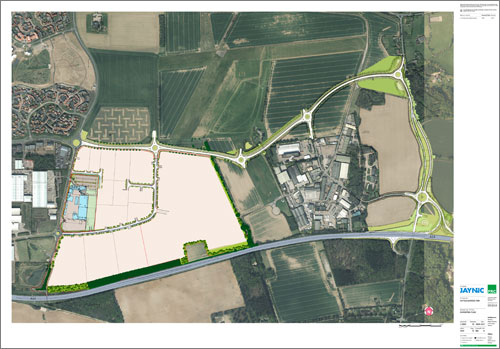
The second phase of developer Jaynic’s Suffolk Park in Bury St Edmunds, Suffolk, has secured detailed planning consent from West Suffolk Council. The second phase of warehouse units at the 114-acre scheme totals 367,000 sq ft in four units of 37,000 sq ft, 80,000 sq ft, 100,000 sq ft and

Read More »

Engineering services bodies issue coronavirus site safety guides

Leading engineering services sector bodies BESA and ECA have jointly developed two new guides to help contractors to manage coronavirus-related issues on site. The new guides will be freely available to the wider industry during the current emergency. They provide sector-relevant guidance for engineering and building services contractors working across

Read More »

NHS Property Services insources Hard FM services

NHS Property Services (NHSPS) has today announced changes to the way it delivers hard facilities management services (‘Hard FM’), which will see the government-owned company take direct control of selected services. Responsible for the management and maintenance of 3,500 properties across England, encompassing 7,000 tenants, NHSPS has one of the

Read More »

Selco to reopen after coronavirus closure

One of the UK’s leading builders’ merchants will resume its online service to tradespeople on Wednesday. Selco Builders Warehouse’s 68 branches and all its delivery services have been closed since the UK officially entered lockdown due to the coronavirus outbreak on Monday, March 23. A decision has now been taken

Read More »

Matt’s #BravetheShave Challenge for NHS!

Matthew Mackintosh, Managing Director of family business AM Surveying & Block Management is raising money to support the NHS by ‘Braving the Shave’.    AM Surveying & Block Management was started in the 1970’s and provides block management, building surveying and property maintenance services to 1,500 properties throughout London &

Read More »

What should you consider when choosing an emergency plumber?

Unexpected plumbing problems can be a huge disruption to your everyday life, especially when they occur late at night or during odd days, such as holidays and weekends, when your plumber might not be available. That is why it is imperative to have the right plumber on speed dial who

Read More »

Minister echoes CICV Forum call to keep key workers safe from abuse during essential construction work

The Construction Industry Coronavirus (CICV) Forum is providing greater visibility on what constitutes ‘essential work’ to prevent key workers being harassed and verbally abused during vital construction projects. The Forum’s members have reported an increasing number of tradespeople being intimidated and verbally abused by the public while carrying out legitimate

Read More »

Clear Safety Glasses – Eye Protection for Welders

When you are welding, which equipment do you need? Why is it essential to wear gears that can protect you? For many people, welding may be a simple job, and you need to stay away from the sparks that are flying left and right. But to the people who are

Read More »
Latest Issue
Issue 345 : Oct 2026

Kenneth Booth

Suffolk distribution park wins consent

The second phase of developer Jaynic’s Suffolk Park in Bury St Edmunds, Suffolk, has secured detailed planning consent from West Suffolk Council. The second phase of warehouse units at the 114-acre scheme totals 367,000 sq ft in four units of 37,000 sq ft, 80,000 sq ft, 100,000 sq ft and 150,000 sq ft, respectively. Jaynic has outline consent for up to 2 million sq ft of business, distribution and industrial space at the scheme The first phase saw the development of speculative two warehouse units totalling 357,000 sq ft. The 147,000 sq ft building was successfully let to Unipart acting as the provider for the NHS Supply Chain last Summer, and it is in detailed negotiations with occupiers on its second 206,000 sq ft unit. Ben Oughton, Jaynic development director, said: “Despite the current health crisis there is strong evidence that there is still significant demand for well-located logistics warehouses. We felt that as the first phase is proving successful with Unipart taking the first unit and the current strong demand for the second unit the time was right to go ahead with a further second phase of speculative units.” Suffolk Park is located immediately adjacent to the A14 trunk road providing a fast transport link from the east coast ports through East Anglia and into the national motorway network. A recent report from Savills on big shed supply highlighted the lack of new speculative units in East Anglia.  At the time the report commented that: “there are no speculative units scheduled for delivery in 2019” and pointed out that the first phase of units at Suffolk Park units were the first speculative warehouses to be delivered in the region for over a decade. Encouraged by this Jaynic has gained planning consent for this second phase. Letting agents are Hazells Chartered Surveyors, Bidwells and Savills

Read More »

Engineering services bodies issue coronavirus site safety guides

Leading engineering services sector bodies BESA and ECA have jointly developed two new guides to help contractors to manage coronavirus-related issues on site. The new guides will be freely available to the wider industry during the current emergency. They provide sector-relevant guidance for engineering and building services contractors working across construction and FM in two specific areas: ‘Specific Environments’ (where there may be higher risk of COVID-19 transmission); and ‘close proximity working’ (less than 2m). The new guides: – align with the hierarchy of preventative measures shown in the Construction Leadership Council Site Operating Procedures, based on guidance from Public Health England;   – do not recommend the deployment of respiratory protective equipment (RPE) for general site activities, most notably where social distancing is possible; and – recommend that any decision to deploy RPE in site-specific situations should be based on risk assessment. The guides have been drawn up with the support of a COVID-19 Expert Panel made up of BESA and ECA safety practitioners. The panel is also helping ECA and the BESA to provide informed, practical comments on site health and safety issues to the government and industry bodies who are generating overarching guidance in this area. BESA Health & Safety Advisor Rebecca Crosland said: “It is imperative that there is further guidance out there to help keep the industry safe. “The health, wellbeing and safety of everyone on site must be a priority during the COVID-19 health crisis. Businesses must exercise their duty of care under legislation to ensure all workers are protected and ensure that any critical information related to their health and safety is communicated clearly and then implemented.” Paul Reeve, ECA’s CSR Director and a member of the CLC’s working group on site safety measures said: “The CLC SOP is an overarching industry document, but it refers to the need for sector guidance. These two guides are the start of joint ECA and BESA activity to produce more detailed, sector-relevant information that’s desperately needed by many engineering services contractors. “They aim to help with the practical management of coronavirus-related issues on site, which may include the challenges associated with doing essential work in closer proximity than 2 metres.” The BESA and ECA welcome comments on the new guides from across the industry

Read More »

NHS Property Services insources Hard FM services

NHS Property Services (NHSPS) has today announced changes to the way it delivers hard facilities management services (‘Hard FM’), which will see the government-owned company take direct control of selected services. Responsible for the management and maintenance of 3,500 properties across England, encompassing 7,000 tenants, NHSPS has one of the largest portfolios in the UK, valued in excess of £3bn and representing approximately 10% of the total NHS estate. The move to insource Hard FM services, i.e. those that relate to the maintenance of the physical materials of a building, follows a detailed review by NHSPS. This has determined which services should be delivered directly by NHSPS instead of the current provider Mitie. These include plumbing, electrical, mechanical, water systems, fire safety systems, lighting and building inspections. Other selected services such as air conditioning, heating, and gas will continue to be provided by Mitie or transferred to trusted partners. The change will take place on 1 April 2020 when approximately 140 Mitie employees affected by the decision will transfer to NHSPS’s employment. Martin Steele, Chief Executive Officer of NHSPS, said, “This decision supports our business strategy to deliver improved value for the NHS and is part of a wider program to rebalance our service delivery model. By taking these elements of facilities management in-house, we will have greater control over the standard and flexibility of service we provide our NHS customers. Given the scale of this service nationally, we will also be able to achieve significant cost efficiencies, to be reinvested back into the NHS.”

Read More »

Selco to reopen after coronavirus closure

One of the UK’s leading builders’ merchants will resume its online service to tradespeople on Wednesday. Selco Builders Warehouse’s 68 branches and all its delivery services have been closed since the UK officially entered lockdown due to the coronavirus outbreak on Monday, March 23. A decision has now been taken for Selco to re-open 42 branches to support the delivery of online orders – through Click & Collect and Click & Deliver – only. No customers will be permitted to enter branches and other social distancing measures will be in place for collections and deliveries. Any collections will be made from the car parks of those branches that are open. Chief executive Howard Luft said: “It’s been an incredibly difficult period for the whole country and it’s been no different for us at Selco. “We have been monitoring events and government guidance extremely closely and now everything is in place to enable us to offer our customers a revised service, while closely following the social distancing guidelines. “We are fully aware our customers offer a vital service to the communities in which they operate, providing essential maintenance and repairs to properties, and we are delighted we can once again begin to make at least part of our usual offering available to them. “The health and wellbeing of our customers and colleagues remains our No 1 priority.” Opening hours at those Selco branches opening will be limited to 7am-5pm, Monday to Friday. All branches will be closed at weekends. Customer numbers will be managed through collection time slots to collect their orders, to ensure that social distancing can be maintained. Howard added: “We would urge only people who have pre-ordered products and materials to visit branches – and then only at the time they have been allocated. “We will constantly monitor operations in all of our branches which are re-opening and make adjustments as and where we see fit. “We will provide a further update on the remaining 26 branches which remain closed in due course.” For more information on Selco visit www.selcobw.com The full list of Selco branches opening is: York, Ardwick, Leeds Elland Road, Coventry, Baguley, Stirchley, Tyburn, Tyseley, Wolverhampton, Leicester, Nottingham, Cardiff Hadfield Road, Swansea, Bristol Filton, Cricklewood, Kingsbury, Ruislip, Hanger Lane, Southall, Watford, Hemel Hempstead, Camberley, Reading, Slough, Isleworth, Chessington, Poole, Southampton, Walthamstow, Barking, Tottenham, Romford, Thurrock, Chelmsford, Charlton, Catford, Old Kent Road, Sidcup, Croydon, Sutton, Wimbledon, Redhill.


Read More »

Matt’s #BravetheShave Challenge for NHS!

Matthew Mackintosh, Managing Director of family business AM Surveying & Block Management is raising money to support the NHS by ‘Braving the Shave’.    AM Surveying & Block Management was started in the 1970’s and provides block management, building surveying and property maintenance services to 1,500 properties throughout London & the South East.   During the current difficult times caused by COVID19 Matt would like to use the unusual circumstances many folks currently find themselves in – not being able to attend a barbers/hairdresser! – and have his wife shave his head in the name of raising funds for the NHS.   Matt has been inspired by fundraisers such as Capt. Thomas More, NHS staff and key workers and would like to do his bit! As part of Matt’s household, Matt’s wife Paris is the only person in the world currently permitted under lockdown restrictions to come within 2m of his head, and without any haircutting experience whatsoever Matt has opted just to go for the full chop!   Matt’s fundraising campaign started on 27th April, he would like to raise £1,000.00 for the NHS before the end of May 2020. Matt’s wife will be taking the clippers to his head on 11th May 2020 and will be posting results online.    Matt says “While my head shaving is by no means big news, helping out the NHS in a time of crisis certainly is! If able, please please donate, every little helps make a massive difference and after all, we’re all in it together!” To see more on Matt’s campaign and to donate please click here.

Read More »

GMI receives RoSPA President’s Award for consecutive health and safety achievements

The highly prestigious RoSPA Presidents Award is presented to those organisations who have received 10 consecutive RoSPA Gold awards for health and safety GMI Construction Group PLC, which has bases in Birmingham, Leeds and Manchester, has announced that it has been presented with an internationally recognised award for demonstrating high health and safety standards on a consistent and continual basis. GMI has received a RoSPA President’s (10 consecutive Gold Awards) Health and Safety Award for working hard to ensure its staff, clients and sub-contractors get home safely to their families at the end of every working day. Organisations receiving a RoSPA Award are recognised as being world-leaders in health and safety practice. Every year, nearly 2,000 entrants vie to achieve the highest possible accolade in what is the UK’s longest-running H&S industry awards. Andy Bruce, GMI Construction’s Group Managing Director, said: “Providing a safe working environment for our employees, operatives and visitors as well as the general public is our number one priority, the robust systems we have in place demonstrate our commitment towards that. We’re delighted that RoSPA has recognised GMI’s achievement over 10 years and the President’s Award is a real testament to our dedicated and hard working team. To achieve the President’s Award for 10 consecutive years of Gold medals is truly an outstanding achievement for the company. I would like to thank everyone involved in helping us achieve this accolade.” Julia Small, RoSPA’s head of qualifications, awards and events, said: “The RoSPA Awards scheme is the longest-running of its kind in the UK, but it receives entries from organisations around the world, making it one of the most sought-after global accolades in health and safety. “RoSPA wants every employee, wherever they are, to work safe in the knowledge that they will be going home unharmed and healthy at the end of every day. The RoSPA Award winners are vital to help achieve this goal, as by entering they are driving up standards and setting new benchmarks for organisations everywhere. Currently, around 7 million people are directly impacted by the RoSPA Awards, but the scheme’s influence is even wider.” The majority of awards are non-competitive and mark achievement at merit, bronze, silver and gold levels. Gold medals, president’s awards, orders of distinction and the Patron’s Award are presented to organisations sustaining the high standards of the gold level over consecutive years. Competitive awards go to the best entries in 24 industry sectors including construction, healthcare, transport and logistics, engineering, manufacturing and education. There are specialist awards for health at work, environmental management, safety delivered outside of the workplace, and fleet safety, and excellence trophies for the best international organisation, new entry, workforce involvement, leisure organisation, and organisation operating or based in Scotland. RoSPA’s top accolade is the Sir George Earle Trophy. Headline sponsor of the RoSPA Awards 2020 is NEBOSH – the National Examination Board in Occupational Safety and Health – for the 15th consecutive year. For more information about the RoSPA Awards visit www.rospa.com/awards

Read More »

Charterpoint and LNT celebrate as care home development given the go-ahead

Planning permission has been granted for a care home on a Lincolnshire development that forms part of a wider residential scheme delivered by Charterpoint Group. East Lindsey District Council has approved plans for the two-storey, 66-bed care home which will be built on a plot alongside the residential development at Westfield Park, off Grimsby Road, Louth. Presented by care home specialist LNT Care Home Developments Ltd, the plans for the purpose-built residential care home include individual rooms for residents, communal spaces for socialising, dining and recreational use, car parking, landscaping, and a secure bike store. It is anticipated that between 50 and 60 jobs will be created by the development. Work is expected to get started imminently on the 2.2 acre site. Adrian Goose, Chief Executive of the Charterpoint Group, said: “Houses built as part of the first phase of Westfield Park are proving popular, and we are delighted that East Lindsey District Council has now awarded planning permission for a modern new care home as part of the scheme. “When completed, Westfield Park will feature a total of 240 new homes, plus the care home, creating a super community on the northern edge of Louth and close to the key amenities and services offered by the town. “LNT Care Developments Ltd is a company with considerable experience in the operation and construction of care homes for older people and we are pleased that the green light has been given for this latest scheme.” Charterpoint, which is based at Edwalton near Nottingham, specialises in developing first-class senior living accommodation, sustainable housing schemes, and primary care premises. LNT Care Developments has a portfolio of care homes specifically for the care of older people in a number of locations across Yorkshire, the Midlands and the South. For more information about Charterpoint, visit www.charterpointgroup.co.uk For more information about LNT, visit www.LNTGroup.co.uk

Read More »

What should you consider when choosing an emergency plumber?

Unexpected plumbing problems can be a huge disruption to your everyday life, especially when they occur late at night or during odd days, such as holidays and weekends, when your plumber might not be available. That is why it is imperative to have the right plumber on speed dial who can be there within minutes in case of emergency.  You might be tempted to solve the problem on your own, but without the necessary plumbing equipment and expertise, you may end up worsening it and get the whole house drenched in sewer water or even hurt yourself in the process. Call a professional to get the job done right. So, what factors should you consider when choosing an emergency plumber? Plumbing Services Offered Ask what services your plumber offers for both emergencies and regular issues such as routine maintenance. A great emergency plumber should be conversant with different types of plumbing systems and be ready to provide real-time solutions.  The three main types of plumbing systems that their company should be able to work on are sanitary drainage, potable water, and stormwater drainage. Availability and Location If you want an emergency plumber who can respond to your requests as soon as possible, then you need someone in your area. A local plumber has less distance to travel, and thus a better chance of responding faster to your problem.  Hiring local will save you time and money in the form of call-out fees and unspecified allowance charges. Also, the faster the problem is fixed, the more you save on water and utility bills. Make sure the company you choose offers 24/7 service so they’ll be available for emergencies at all hours. Professionalism Does your plumber deliver prompt service with professional courtesy? Do they have the necessary tools and equipment to do a good job? If your emergency plumber uses substandard equipment or cuts corners, then you may find yourself experiencing the same problems over and over. The best way to evaluate your plumbing company is by asking two simple questions: was the problem fixed in a timely fashion? And did it recur? Response Time Response time for plumbing emergencies should be less than thirty minutes. This is essential because broken pipes can cause significant damage on a property, damage that compounds the longer the problem remains unsolved. A prompt response to your requests will not only save you on plumbing expenses, but also on other repairs to your property that may be necessary. Cost How much does your plumber charge for emergency service? Make sure you research different plumbers in your area to find out which one delivers the service you want at a price you can afford.  Companies based in different cities may have different rates for the same service.  For example, a Long Beach emergency plumber may charge significantly less than a Santa Monica one.  So, if your property is located between each city, then opt for the lower quote.  

Read More »

Minister echoes CICV Forum call to keep key workers safe from abuse during essential construction work

The Construction Industry Coronavirus (CICV) Forum is providing greater visibility on what constitutes ‘essential work’ to prevent key workers being harassed and verbally abused during vital construction projects. The Forum’s members have reported an increasing number of tradespeople being intimidated and verbally abused by the public while carrying out legitimate projects in line with CICV Forum guidelines. One contractor said: “On one commercial job, our engineers were subjected to a barrage of abuse by residents and staff. Our guys were upset and didn’t want to be there, so in the end, the local authority had to put up posters explaining that we were carrying out essential work. It was the only way our engineers could be left alone to do the work. “Not all essential obvious work is obvious to the public, but that is no excuse for the behaviour that some of us in the construction industry are having to put up with.” To try and diffuse the situation, the Forum has produced a checklist of projects to help the public understand the range of work classified as ‘essential’. It also plans to offer on-site signage to help workers make it clear to the public they are carrying out essential work only. Kevin Stewart, Minister for Local Government, Housing and Planning, said such measures were essential to provide clarity and reduce tension between the wider public and workers. He said: “The general public may not be aware of the full range of projects that constitute ‘essential work’, but these are workers who are performing a vital role safely and responsibly. “At a time when the Scottish Government is asking people to remain in their homes it is even more important that these homes are watertight, safe and have essential working facilities, such as water, gas and electricity. “Builders and plumbers’ merchants are also needed to provide supplies for essential repair and maintenance, such as heating and hot water breakdowns, roofing repairs, and electrical and fire safety.” Mr Stewart added: “It is important that the public understand that there is still a need for essential works to be carried out in these challenging times and industry professionals should be able to complete repairs in safety, without fear of criticism and rebuke.” His words were echoed by John McKinney, secretary of Forum members the National Federation of Roofing Contractors, the Stone Federation and the Scottish Contractors Group, who said: “Essential construction work is not confined to building a major hospital for COVID-19, but we know that people might not be aware of this. “There are dozens of other construction works that are classed as essential to keep the fabric of Scotland intact. At the very least, homes need to be watertight and safe both inside and out for people to be able to live in them. That’s why the construction industry is working hard across Scotland to ensure people can stay at home during these times to protect the NHS. “Greater understanding is needed among the public to understand that the key workers carrying out such work aren’t flouting the rules – they are performing essential tasks and should be allowed to do so without fear of abuse.” To help the public, the Forum has now compiled a list of essential work that is permitted to be carried out, including: Removal of elements in danger of collapse, e.g. cladding Repair and construction of critical road and utility infrastructure Emergency call-out services, e.g. electrical, plumbing, glazing and roofing Making inhabited buildings safe and watertight, e.g. after storm damage Domestic repairs to ensure occupants’ safety and wellbeing, e.g. the elderly Repair and maintenance of essential buildings, e.g. fire and police stations Safe operation of faulty heating and water systems Essential inspections to prevent health outbreaks, e.g. legionnaires Supply of materials for these and other essential COVID-19 projects. In addition, the Forum is developing a series of free signage for contractors to use to make it clear that any work being carried out is essential. Designed to be printed out and inserted in van windows and properties, the read: “Key Worker: Carrying Out Essential Construction Work.” Andrew Renwick, Managing Director of Caltech Lifts, who represents Forum member the Lift and Escalator Industry Association, said it was vital that this new collateral was used responsibly. He said: “It is imperative that this material is only displayed and worn by individuals undertaking qualifying work, so employers should also issue employees with appropriate paperwork so that they can provide evidence if question by the police. “Anyone caught abusing this material should be dealt with and the employer spoken to by the authorities.” Set up in March, the CICV Forum has already played a major role in clarifying conflicting information for the sector and issuing practical guidance for companies, clients and employees. It has also established a series of influential sub-groups dealing with mission-critical aspects such as health and safety, skills and future planning.

Read More »

Clear Safety Glasses – Eye Protection for Welders

When you are welding, which equipment do you need? Why is it essential to wear gears that can protect you? For many people, welding may be a simple job, and you need to stay away from the sparks that are flying left and right. But to the people who are doing this kind of job, welding involves a lot of risks. There are risks of electric shocks, injuries, toxic fumes, burns, and eye blindness. For people who are doing arc welding, the work is a source of ultraviolet and infrared lights. In many processes, safety goggles, shields, helmets, and clear safety glasses are used to protect the eyes. Some vicinities screen the welding process so that the arc is not visible through the metal or glass. Most operators use goggles and clear glasses to protect their eyes from hot metal, glare, heat, and flying fragments. The safety of each welder and the job starts from the personal protective equipment. These can include the following: Welder’s Mask/Respirator – Many gases and fumes are produced every second when you are in the welding process. A filter mask that is highly recommended, or if it’s not available, you can use a half-mask respirator. If you are doing a grinding process, note that some particulates and fumes can go inside your lungs. Most welders may want to use N95 masks as it filters 95% of air particles with a size of 0.3 micrometers and more. Eye Protection – An approved eyeglass protection should be worn at all times. You can use goggles or safety glasses that are clear. The lenses should fit correctly, and they must be in excellent condition. You should wear them to protect your eyes at all times. Note that the colored lenses will not be able to protect your eyes. You should wear something that is only approved by the American National Standards Institute (ANSI). You can know more about ANSI when you click here. Choose ones that are comfortable, flexible, and light. There are also new technologies such as scratch-resistant and non-distorting ones that are available on the market. Most of them can block ultraviolet and infrared rays. Hearing Protection – You can get silicone earplugs that have string attachments on them for more comfortable wear. Most of the devices that produce noise in a welding area can damage one’s hearing. Most of the workers also face a situation where some debris can go inside their ears. A foreign object’s penetration to the ear canal can cause damage. Loss of hearing is the most common in many welders. With this said, hearing protection can be in the form of ear mufflers or washable stringed earplugs. This is to reduce noise, and they are useful in letting you concentrate more on your job. Gloves – The hands should be protected at all times while welding. Gloves that are made of leather are always the ones that are popular among workers. The thickness of the leather should depend on the kind of work that you are doing. Most people recommend thicker leather gloves for flux-cored arc welding (FCAW) or shielded metal arc welding (SMAW) work. When you are doing gas metal arc welding (GMAW), medium-weight gloves are ideal. There are times when gloves should not be used when you are working on a rotating machine. Examples of these are grinders. In these instances, there are manuals that you can follow on how to protect yourself in these areas best. Clothing – The right clothes can cover the entire body and provide adequate protection. Most of the apprentices are required to wear clothes made from natural fibers. Most of them opt to wear wool or cotton. Long sleeves and pants are also recommended. Jackets such as the fleece ones are also advised to be worn at all times while working. Some closed-neck hoods and jackets are recommended if what you are welding are pipes above you. Most of the pants are not required to have cuffs so that they won’t catch hot slags or sparks. Most of the clothes should be ironed beforehand, as sagging is not allowed. Frayed gears with holes on them are also prohibited. Shoes – Wear safety shoes that comply with your country’s regulations and standards. Read more about safety shoes here: https://www.safeopedia.com/definition/1076/safety-shoes. Most of the protective footwear can prevent falling objects and hot sparks for coming in contact with your feet. There should be toecaps to protect the toes from suddenly getting crushed from falling objects. Note that there are standards that don’t approve the strap-on types of caps. The toecap should be initially designed and made in the shoe when one manufactures it so that it is an integral part of the whole shoes. This will further protect the feet from accidents. A Final Word Other than these, there are helmets, face shields, goggles, and other protective clothing that you need to consider. One of the most important things that you need to remember when buying is the equipment should meet the standards of Occupational Safety and Health Administration. Your supervisor should also approve of them.

Read More »