Kenneth Booth

GG Pumps and Electrical

When you think about it, solar power is pretty amazing technology. It’s able to take an abundant natural resource and turn it into zero-emission, 100% sustainable and renewable electricity that can be used for a wide range of purposes. It’s little wonder that so many people are now using solar

Read More »

£60 Million Logistics Base Development is Underway

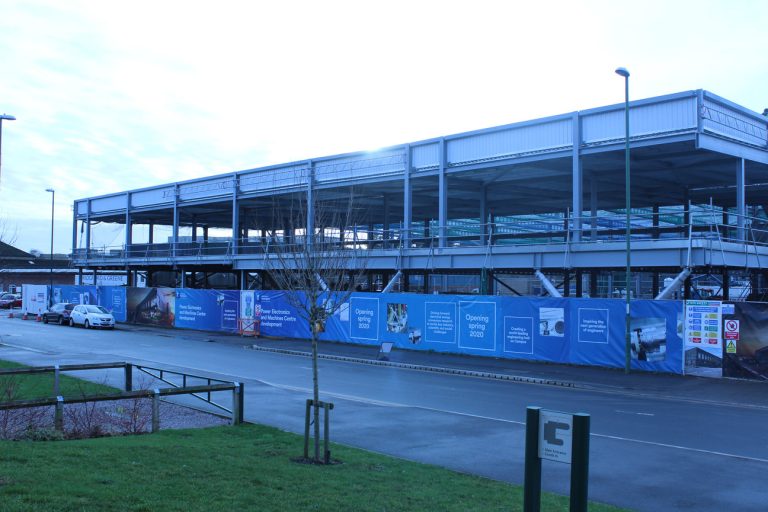
Construction has started on a £60m logistics base for Europa Worldwide Group in Northamptonshire. The 715,000 sq ft development will be located at Midlands Logistics Park in Corby and is due to be completed in June 2020. The new facility will double Europa Warehouse’s logistics portfolio. Managing director Andrew Baxter said: “We’re delighted to

Read More »

Ibstock brick apprentice wins regional award

A talented apprentice from Ibstock Brick has won a prestigious regional award. Zac Payne – who is based at Ibstock Brick’s Chailey Factory, near Lewes – was a finalist for the Make UK Manufacturing Awards in the Engineering Apprentice of the Year (Final Year) for the Southern Region. And on

Read More »

The Science of Design: How Buildings Are Designed for Us

Have you ever thought about how buildings are actually designed for us? They’re not just created to provide us with a place where we can shop, work, eat, live, and so on. They’re designed to affect our mood and make us feel a certain way — even when they don’t

Read More »

The importance of understanding Building Information Modelling

Leading engineering solutions provider, Boulting Ltd., has released a new infographic and white paper, exploring and explaining the levels of Building Information Modelling (BIM) for construction, project and plant managers. BIM is a collaborative process that facilitates the efficient design, construction, maintenance and delivery of buildings throughout their entire life

Read More »

Developer Panattoni submits plans for Crewe mega shed

Panattoni has submitted plans for a 305,000 sq ft warehouse at Crewe Commercial Park. The warehouse will be built on a 14-acre plot, adjacent to its newly completed 240,000 sq ft speculative logistics facility The developer has submitted a reserved matters application for a warehouse of 291,239 sq ft, along

Read More »

How to produce an internal audit successfully

Not matter what industry you’re based in, a business success thrives on improvements being made and one of the most effective ways to do so, would be to appoint an internal auditor out of one of your staff, or hire a third-party internal auditor. The job of an internal auditor

Read More »
Latest Issue
Issue 343 : Aug 2026

Kenneth Booth

GG Pumps and Electrical

When you think about it, solar power is pretty amazing technology. It’s able to take an abundant natural resource and turn it into zero-emission, 100% sustainable and renewable electricity that can be used for a wide range of purposes. It’s little wonder that so many people are now using solar energy to power their homes while helping to slash their energy bills and minimise their carbon footprint. But did you know that solar energy has a whole host of uses that go beyond just powering your home? Nowadays, solar pump specialists are able to supply and install a wide range of different solar water pump systems (as well as providing pump maintenance and repair to help keep these systems running). If your business or agricultural operation relies on water pumps, make sure you read the rest of this article to find out more about 5 fantastic benefits of using solar water pump systems. They Don’t Require External Power At the risk of stating the somewhat obvious, one of the biggest benefits of solar-powered water pumps is that they don’t require an external source of power to operate. This makes them especially useful in remote and hard-to-get-to locations. The fact that they’re self-powering means that you don’t have to spend thousands of dollars trying to get a source of power out to your well or boar. It also saves you from having to find an alternative source of power (such as a windmill) that can be expensive and difficult to maintain. Whether it’s in a remote paddock or just outside your building, a solar water pump can save you the hassle and expense of installing an external power source. They Require Minimal Maintenance Another great advantage of solar water pumps is that they require very little maintenance due to their sturdy construction and the fact that they have relatively few mechanical components. This makes them much less likely to break down and require expensive and time-consuming repairs. In some instances, they can run for years without the need for any extra attention. This means that solar water pumps are more of a set-and-forget type of arrangement. While it’s still important to inspect them on a regular basis to make sure that everything is in working order, the chances of you having to repair or maintain them are much lower than with other kinds of water pumps. There Are Minimal Operating Costs Involved In addition to the fact that you don’t have to pay to install an external power source or expend a lot of resources maintaining them, solar-powered water pumps draw all of their energy from the sun. This means that there are minimal (to non-existent) operating costs involved. Once it’s set up, your solar water pump will harness the sun’s power to pump as much water as you like without costing you an extra cent. It’s one of the things that makes them such an attractive long-term investment. They Can Be Moved Because they’re simple, self-contained units that don’t rely on an external power source, solar-powered pumps are relatively simple to move. Whether you need to move your pumping system due to seasonal changes or you want to relocate your livestock, most solar water pumping systems can be quickly and easily moved to a new location. This can save you from having to buy an extra pumping system. They’re Easy To Install As we mentioned earlier, most solar water pump systems have few mechanical components. This makes them relatively easy to install.   They’re so simple to install that lots of people are able to set them up without professional help. This means that not only can you get your solar-powered pumping system set up when and where you need it, you’ll also save on expensive installation fees.

Read More »

£60 Million Logistics Base Development is Underway

Construction has started on a £60m logistics base for Europa Worldwide Group in Northamptonshire. The 715,000 sq ft development will be located at Midlands Logistics Park in Corby and is due to be completed in June 2020. The new facility will double Europa Warehouse’s logistics portfolio. Managing director Andrew Baxter said: “We’re delighted to announce this huge investment in our logistics operation at a time of massive growth at Europa. “This is the single biggest investment we have ever made since I acquired the business in 2013 and it demonstrates our ambition to strengthen our 3PL operation at a time of huge market growth particularly for e-commerce Logistics.” Midlands Logistics Park in Corby has created 2,200 local jobs since 2015. It is built on the site of a former British Steel quarry, latterly Stanion Plantationm and covers 150 acres. The development has been agreed with Corby Land and Development Ltd, a joint venture between Mulberry Developments and Frogmore who will also develop out the facility. The main contractor is VolkerFitzpatrick.  Europa is being supported by the team at Budworth Hardcastle (Property Consultants).

Read More »

Ibstock brick apprentice wins regional award

A talented apprentice from Ibstock Brick has won a prestigious regional award. Zac Payne – who is based at Ibstock Brick’s Chailey Factory, near Lewes – was a finalist for the Make UK Manufacturing Awards in the Engineering Apprentice of the Year (Final Year) for the Southern Region. And on October 15th, Zac was announced as the winner at a ceremony held at Aerospace Bristol. The judges remarked that Zac’s award was recognition of his outstanding attitude towards work, willingness to learn and the lead role he had taken on technical electrical projects. He will now go forward to the Make UK National Awards which will be held in London on January 29th 2020. Zac, who joined the Ibstock Brick apprenticeship programme in 2016, commented: “My apprenticeship has been hugely valuable in helping me extend my knowledge through practical and hands-on experience. This has allowed me to contribute to engineering projects across the factory. My mentor Paul Charlesworth has been a great help in helping me achieve my goals. I was delighted to win and it is a privilege to be recognised by the judges.” Paula Wardle, Group Learning and Development at Ibstock plc, comments: “We are extremely proud of Zac’s achievements. Since beginning his apprenticeship he has shown great ability in all areas of his work. His attitude towards learning has been excellent and this award recognises how he has made the most of the training and development opportunities presented to him during his apprenticeship.” For more information about Apprenticeship opportunities at Ibstock plc

Read More »

St Francis Group and iSec announce major development to build five new warehouses.

Detailed planning consent has been granted for 824,000 Sq Ft of industrial warehouse space on land next to Markham Vale off junction 29A of the M1. St Francis Group, a leading UK-based property development and investment group and an expert in brownfield development and regeneration together with its Joint venture partners iSec have today announced details of a major new development on land next to Markham Vale off junction 29A of the M1 upon which it intends to develop five new warehouse developments. The brownfield site has been unused since the Coalite works closed over a decade ago but now joint venture partners iSec and brownfield regeneration specialist St Francis Group will start ground works immediately to make plots ready for development. Occupiers could move into high quality industrial warehouse and manufacturing space from Q2 2021.  A second application seeking outline consent for an additional 500,000 sq ft in two units on adjoining land has also been submitted by the developers to North East Derbyshire District Council.  At 1.32 million sq ft the scheme is destined to play a national role in the ever-expanding logistics market based on increasing demand from e-commerce channels. The developers together with community leaders also want to make sure the business park provides a broad range of jobs across the manufacturing and technology sectors.   As well as stimulating significant local job opportunities, the developers expect the scheme to stimulate fresh inward investment in the area boosting the local economy. It is also planned to upgrade the surrounding road network with significant improvement works planned for Buttermilk Lane likely to start early next year.  Talking about the project, Gareth Williams, Development Director at St Francis Group said; “It is well documented that there is significant levels of pent up demand across the region and indeed the UK for high quality industrial units as businesses look to expand or relocate. A considerable amount of time and effort has gone in to ensuring that this development will meet the very high standards expected by todays occupiers. The units will sit in a high-quality environment only minutes from the M1”. Following a formal launch early next year, marketing will target occupiers looking for bespoke buildings, built to meet specific requirements.  iSec and St Francis Group have instructed Knight Frank and CBRE as sole joint letting agents.

Read More »

The Science of Design: How Buildings Are Designed for Us

Have you ever thought about how buildings are actually designed for us? They’re not just created to provide us with a place where we can shop, work, eat, live, and so on. They’re designed to affect our mood and make us feel a certain way — even when they don’t seem like they’re designed for this purpose. Consider this quote from Winston Churchill: “We shape our buildings and afterwards our buildings shape us.” Think about how buildings affect you day to day. A dilapidated building might make you feel sad or uncomfortable, even subconsciously. Where as a colorful, modern building might make you feel relaxed and happy. Although a lot of this that can be subjective, there are also ways that architects can design buildings to bring about desired effects for the majority of people. Ignoring the science behind building design can have disastrous effects. For example, a concrete-heavy, minimalist apartment building with cinder block walls might make tenants feel like they live in a prison. Even without realizing it, they might eventually become more depressed or start acting out in unusual ways because their environment has been subconsciously affecting them in the background as they go about their lives. Thus, more architects today have realized the importance of designing buildings with science in mind to improve day-to-day wellbeing in all areas of life, from apartments to office buildings. A great design can make people feel comfortable, which will help them to live better and perform better at work. Even the casino industry is a well-refined, exact science: the layout, furniture, colors, materials, and lights are all carefully chosen to ensure that guests are relaxed and having fun. How Architects Know What People Want This can be as simple as asking people what they like and don’t like or how they feel in response to their environment. But people aren’t always aware of these things. That’s where data-tracking devices come in to play. In psychological studies, heart rate, brain activity, and emotions can all be monitored through smart devices or medical technology. Researchers can discover how entering a certain room changes how we feel, or how being surrounded by skyscrapers can make us feel uneasy or tense. (This is also why there’s been such a huge push for parks in urban areas — they make us feel happier.) A Closer Look: Building Design A lot is considered when designing a building. For example, ceiling heights are very important. A low ceiling height can make people feel claustrophobic or uncomfortable and want to leave the room or building as quickly as possible. A higher ceiling height can of course bring about the opposite effect — It’s even been said that higher ceilings can stimulate free and creative thinking. Additionally, a ceiling that is designed with the right materials, such as those that are pleasing to the eye and can absorb sound, will further positively affect those in the building. Colors and lighting are also important factors to consider. For example, think about the design of your favorite restaurant. It likely uses many different colors to set the mood in aspects like the walls, floor, furniture, seating, and decorations. The lighting is probably not too bright because the restaurant wants you to feel less alert and more relaxed. (On the other hand, if the lighting is bright, the restaurant likely is a fast-casual place that doesn’t want you to linger.) If the lighting is dim, it’s probably because the restaurant wants to set a romantic mood or further lower your heart rate so that you’re feeling pleasant and stick around a while. Further, natural lighting is an important factor to consider, too. A building designed to achieve the greatest amount of natural light will help people to feel happier than a building that gets poor light. These are just a few of the ways that buildings are designed with us in mind — there’s a lot more that’s considered, like materials, location, aesthetics, and space, among others. Regardless, thoughtful building design is extremely important — so hopefully this won’t just be a passing trend.

Read More »

The importance of understanding Building Information Modelling

Leading engineering solutions provider, Boulting Ltd., has released a new infographic and white paper, exploring and explaining the levels of Building Information Modelling (BIM) for construction, project and plant managers. BIM is a collaborative process that facilitates the efficient design, construction, maintenance and delivery of buildings throughout their entire life cycle. The infographic and whitepaper can be downloaded for free on the Boulting Ltd. website. The UK is one of the world leaders in BIM technology and execution, the UK government has recognised the key benefits of 3D Modelling and BIM and through legislation are driving its implementation and use, which is why it is crucial that industry professionals understand the levels of BIM in order to make the most out of their project. The Boulting Ltd whitepaper and infographic provides insight into the current levels of BIM that were established as a requirement for construction when the UK Government published the Construction Strategy in 2011. Considerations for managing BIM projects as well as current regulations and future directions of BIM are explored through the whitepaper. BIM levels range from level 0 to level 7, with even further potential for development in the future. In 2016, level 2 was set as the UK Government minimum standard for public sector work. Capability to undertake 3D Modelling coupled to BIM level 2 execution is normally a prerequisite requirement of the tendering process. BIM is a valuable information source that allows project managers, contractors and maintenance teams to identify coordination issues earlier in the project cycle at design phase rather than during construction giving greater cost assurance and ultimately eliminating maintenance inefficiencies. “In our sector, BIM is a fundamental aspect of work,” explained Glyn Shawcross, Engineering and Design Director at Boulting Ltd. “At Boulting, we are able to implement and undertake BIM projects and achieve successful results thanks to the wealth of knowledge that our valuable staff provide. The whitepaper and infographic helps to demonstrate the importance of considering BIM at all stages of a project, from planning through construction to the ongoing maintenance of the site.” Regardless of whether a current project mandates the use of BIM, it’s essential that your business is BIM enabled and regulations are understood. As technology develops, future levels of BIM, beyond level 3 could become a standard requirement, as they require more collaboration for cross-functional work. Ensuring that current levels are understood will better prepare your business for future developments of BIM, when they become applicable to your project requirements. To find out more information about BIM and the work that Boulting Ltd does, call +44 (0)1925 446000 or visit www.boulting.co.uk.

Read More »

Preserving history for the future: temperature control and artefacts

It’s a very strange and humbling understanding, that the item in the museum’s glass case in front of you is so many times older than you are! That the person who made it might not have thought much beyond its primary use, much less that it would be a lasting record of their era. That it would survive not only them and the intended original owner, but so many centuries after. It makes you wonder what will remain long after we’re gone, and realise how important it is that such items are preserved as information for the future. It is always heart-breaking to hear if a museum piece or artwork has been destroyed by natural causes or human interference. While only so much can be done to prevent the latter, museums have an abundance of technology at their disposal. According to the Smithsonian, the most damaging causes of deterioration are: Neglect — lack of process, forgotten storage, or failure to maintain records can lead to secondary deterioration causes, such as… Water — from full-scale floods to creeping damp, water can cause so many problems for artefacts. Fire — of course, fire will obliterate many artefacts, but those that survive may also be damaged by the heat and smoke.  Pollutants — dirt and gas can react badly with some artefacts, hastening their decay. Chemicals in cleaning can also erode away materials. Even the oils on your hands can be harsh enough to pollute some delicate artefacts. Pests — taxidermy and natural materials can find themselves rapidly ruined by a hungry rodent or greedy bugs.   Light — sunlight or artificial light can cause fading, drying, and cracking.   Physical force — everything from impact to vibrations can affect artefacts. This is why museums display their pieces in cases or behind designated barriers. Of course, this isn’t always fool-proof. For example, did you know Michelangelo’s David has a delicate flaw in its ankles? A slight shift in angle, a strong vibration from a train or footfall, or a natural disaster like an earthquake would send David tumbling.  Theft and vandalism — intentional damage by vandals or mishandling by thieves can obviously cause an artefact or artwork’s condition to fall. One of the more difficult to control elements of potential deterioration is a combination of humidity and temperature. These two elements are noted to be able to accelerate the rate of decay, growth of mould, or warping. Without adequate protection, the cost of artefact lost can be immeasurable, from a loss of monetary value to a loss of any physical record of that item. Take the Oxford Dodo for example, which is the most complete single dodo specimen anywhere in the world. And yet, all that has survived is the head and a foot thanks to an infestation noted in the specimen around 1755; feather mites are highlighted as the main culprit for devouring the taxidermy dodo’s torso, wings, and feathers. Preservation Equipment advises that a high humidity can encourage fungal growth and pests in natural materials; could better temperature and humidity controls have saved more of the last dodo specimen? Humidity and temperature can not only encourage pests, but also bring a whole host of other problems. The Telegraph reported how, when the glass roof of the Natural History Museum was cleaned of around 150 years’ worth of dirt, it was quickly discovered that the gathered dirt and the decision to remove the solar reflective film from the glass had had unintended side effects. The result? Temperatures in the museum soared to 40°C and the humidity tumbled, and the artefacts and specimens have already suffered irreversible damage, the article states. The skin of specimens has cracked and dried, fading as they have been sun-bleached, and whale skeletons are also degrading as a result. The museum is not only looking into replacing the solar reflective film, but also at installing a new HVAC (heating, ventilation, and air conditioning) system to try and save the artefacts. The problem of correct temperature and humidity control stretches beyond the UK. Over in Denmark, the country faces losing many historical artefacts due to a rise in damp and mould growing in its museum storage areas, which are reported to lack air conditioning units. CPH Post commented that the museums are using old buildings such as barns or lofts to store the artefacts, which means they aren’t being protected by any level of temperature control. More than 70,000 items are at risk of being destroyed as a result of 118 buildings used for storage being marked as riddled with mould.  For both stored and displayed artefacts, it is vital that temperature and humidity are monitored closely. The optimum temperature is between 16°C and 20°C — though temperatures as low as 10°C probably won’t cause harm, the risk of condensation grows for anything below 10°C. In terms of humidity, the advised relative humidity is between 40% and 70%, to avoid drying out items or encouraging pest or fungal infestations. It has also been noted that rapid fluctuation in humidity can be problematic. A good HVAC system is invaluable for both museum and home collectors with artefacts to preserve. With this, temperatures and humidity can be monitored and controlled quickly, providing much-needed protection from the elements when it comes to artefacts and artwork. Sources:

Read More »

Developer Panattoni submits plans for Crewe mega shed

Panattoni has submitted plans for a 305,000 sq ft warehouse at Crewe Commercial Park. The warehouse will be built on a 14-acre plot, adjacent to its newly completed 240,000 sq ft speculative logistics facility The developer has submitted a reserved matters application for a warehouse of 291,239 sq ft, along with 13,864 sq ft of integrated three-storey offices and a security gatehouse. The site occupies a prominent position adjacent to the A500, offering easy access to J16 of the M6.  Once built, the development will add £3 million per year into the local economy and bring over 300 full-time jobs. Dan Burn, development director at Panattoni, said: “We have been hugely encouraged with the interest that we have received to date for our 240,000 sq ft speculative unit.  By submitting this application, we will ensure that we can respond immediately to occupier’s requirements and give ourselves the option of a further phase of speculative development at the appropriate time”. Matthew Byrom, managing director of Panattoni, added: “As a result of its strategic location between the North West and West Midlands conurbations, Crewe has always attracted a strong list of occupiers.  With proposals for the town to become a hub for HS2, we are confident of robust demand”. CBRE, Burbage Realty and Legat Owen are the retained agents on the scheme.

Read More »

Tate Consulting recognised for excellence in this year’s Parliamentary Review

Tate Consulting building services engineering company was selected to be part of this year’s Parliamentary Review which demonstrates how organisations have become outstanding leaders in their field and aims to raise industry standards. The Parliamentary Review is an indispensable guide to best practice showcasing examples from across a variety of sectors with the aim of raising industry standards by producing a template for future reform. The September release of the publication is also widely acknowledged for its importance in the political calendar. Writing in The Review, The Chancellor of the Duchy of Lancaster, Michael Gove said “this year’s Parliamentary review comes at a momentous time for parliament as we collectively determine the destiny of the United Kingdom.” Lord Pickles praised the Review published this month as one of the most comprehensive yet. He commented that as Britain undergoes changes, it is “essential that politicians have a firm understanding of the challenges with which British organisations must contend” and that The Review once again provides a perfect platform for this. Tate Consulting’s portfolio spans every market sector including logistics, industrial, residential and mixed use, commercial, education, retail and leisure. With offices in London, Leeds and Manchester the company are able to secure contracts working on the biggest commercial brands and large-scale development projects across the country. Jim Lee and Grahame Kelly, Directors of Tate Consulting attended the prestigious event at Mansion House in London, co-chaired by Lord Pickles and Lord Blunkett with speakers including broadcaster and journalist Julia Hartley-Brewer and former cabinet Minister Ed Balls. Jim Lee said: “We feel very honoured and privileged to represent our industry sector in the Parliamentary Review. It also gives us a platform as industry thought leaders to discuss the challenges we all face and how key policy makers can help implement the changes required.” Grahame Kelly added: “I met a number of interesting people from across the country and it was good to hear everyone’s perspective on life in the UK today, with Parliament and Brexit dominating discussions as you might expect.” As part of the Parliamentary Review, Tate Consulting submitted a 1000-word article on how they’ve responded to challenges within the industry, sharing best practice as a template for reform. Across all its policy sectors, The Review is sent out to over half a million individuals each year, including MPs, Peers at the House of Lords, Chief Executives, Vice Presidents, Chief Information Officers, Chief Technology and Procurement Officers. George Osborne, Theresa May, David Cameron and Philip Hammond have all written exclusively for the Review over the last few years, along with many of the nation’s most established business leaders and talented entrepreneurs. The Parliamentary Review best practice article for Tate Consulting can be viewed via link below, or for print copy please email terenia.taras@tateconsulting.eu

Read More »

How to produce an internal audit successfully

Not matter what industry you’re based in, a business success thrives on improvements being made and one of the most effective ways to do so, would be to appoint an internal auditor out of one of your staff, or hire a third-party internal auditor. The job of an internal auditor is to act as a fresh pair of eyes on your business processes, reviewing the behaviour of them on a daily basis to see whether: Processes are being followed Processes are still effective/relevant Risks occur during these processes Output is of a consistently high standard Depending of the nature of your business, certain departments would need more frequent internal audits than others. How to plan an audit Step one, would be to draw up a list of areas that need an internal audit. This may include: Purchasing Purchase invoice process Purchase order process Sales Sales invoice process Sales order process Sales quote process IT and Security Human Resources Accounting Payroll process Expenses process Manufacturing Preparation of Item A Production of Item A Finish/Quality Control process Shipping Stock process Shipping process Once you’ve listed your areas and process within your organisation, you can plan how frequent you require an audit. With this information, you can create an Internal Auditing Calendar for the year. Drawing up a calendar Audits should be considered as a necessity and not an additional process of the business structure. Drawing up a calendar ensures that the audits will be completed on time and frequently. Your internal auditing calendar doesn’t need to be anything fancy. A simple template to follow could be: By using an audit calendar, you will be able to alert your chosen departments in advance on any scheduled audits, which is recommended to be able to prepare the correct documentation for you to review. It also gives the internal auditor a chance to locate the process documents and review how the process should be followed and write up relevant questions, before they observe it in action. The process of an internal audit Observing and reviewing With questions needing to be answered, the internal auditor must monitor the performance of employees on the processes they’ve been given, preferably in a natural scenario ((i.e. the task needed doing that day). Asking the employee questions about the process they are performing will give the auditor insight as to whether or not the member of staff is, a) following the process properly, and, b) understands the process and the risks it is designed to mitigate. Based on the answers received, the auditor can plan out areas that need refresher sessions, or aspects of the process that may have not aged well (such as inefficient practices compared to technology that has been brought into the workplace). Evaluation With the completion of the observation and interview process, the internal auditor needs to document their findings and highlight areas that need improving. The document again, can be as simple or detailed as you require, as long as it records the findings. In the event of a process found to be non-compliant, the auditor will need to recommend further measures in an action plan. They may also need to raise a Non-Compliance Report, depending on your company and its quality compliance measures and recognitions: Process Findings Compliant? Process 1 Procedure completed in accordance to outline of Process 1. No risks found. ✔ Process 2 Equipment used as part of Process 2 suffering notable wear and tear. Product quality affected by this.  ✘ Process 3 Data is stored accurately and safely in accordance to outline of Process 3. No risks found. ✔ Plan of action Working with the respective head of department, an action plan must be created to address any issues or risks highlighted in the internal audit. This should include the finding, the corrective action, who will take ownership of implementing the corrective action, and the deadline for doing so. There should also be a follow-up date to ensure the corrective action has been applied: Finding Corrective action recommended Non-compliance report number Owner Deadline for implementation Review Process 2 Replace hydraulic torque wrench power head. NCR4 George 01/12/19 01/01/19 The process of internal auditing is a benefit to any business, and it should be implemented as a critical procedure, and not simply as something to tick off in the books!  You could also consider Sources:

Read More »