Kenneth Booth

Heathrow expansion to go modular

Cabinet ministers have backed initial proposals for a new runway at Heathrow Airport, claiming it is an “historic moment”. As MPs prepare to vote on the plans ahead of the July 11 deadline, Paul Meagh, electrical and instrumentation services director at engineering solutions provider Boulting Ltd, explores how a modular

Read More »

Autonomous Driving: A Nod to Safer Construction

Autonomous driving could be the answer to the 10% fatality rate on construction sites caused by moving vehicles. The autonomous function is now moving beyond just passenger cars and transportation vehicles and expanding into the various sectors. The construction industry welcomes this exciting new addition to the fleet. Here’s what to look

Read More »

TRAINING PROVIDER OPENS DOORS TO PROMOTE SKILLS IN ENERGY SECTOR

Construction and utilities specialist Develop Training Ltd (DTL) is opening the doors of its Midlands and Scotland based centres throughout July to promote skills in the energy sector. The company, which is a strong advocate for greater investment in training and apprenticeships by industry and the government, is running three

Read More »

Bringing LAN cabling to top hat rails

R&M increases packing density with the slim-line DRM45 DIN rail adapter for copper and fiber optic connectivity. R&M, a Swiss cabling systems developer and provider for high-quality network infrastructures around the world based in Wetzikon, is supporting high-density LAN cabling on top hat rails. With a width of 18 mm,

Read More »

Nixon Hire turns to Trime’s green lights

Nixon Hire, one of the UK’s largest and leading site equipment providers, have invested in a large fleet of lighting towers supplied by the market leader in LED lighting, Trime UK Limited. After carefully evaluating the range of LED lighting sets available in the current market, the company opted to

Read More »
Latest Issue
Issue 344 : Sep 2026

Kenneth Booth

Unite Students Granted Planning Approval for Leeds Student Accommodation

Unite Students, the UK’s leading manager and developer of student accommodation, has been granted a planning approval to develop a 928-bed student accommodation development in Leeds. The site, located on Merrion Way in the city centre, is close to both the University of Leeds and Leeds Beckett University. The site would increase Unite’s Leeds portfolio to 4,376 beds, serving a student population of 58,000, and further enhancing Unite’s operating efficiency in the city. In the last five years, Unite’s occupancy in the city has been 99% with over 1,800 beds subject to nominations agreements with Leeds universities. The development will generate a development yield in line with our target returns and will be funded from internally generated sources. It is expected to be open for the 2020 academic year. The transaction reflects Unite’s strategy of aligning its property portfolio with high-ranking universities where student numbers are growing whilst underpinning further earnings growth. Nick Hayes, Group Property Director, Unite Students said: “Leeds is a strong performing market, with a diverse and growing student population.  With two high quality Universities, we expect demand for quality, affordable student accommodation to grow and this development will help to fulfil that need.”

Read More »

Snows invest to improve operations at Mansfield and Glastonbury Distribution Centres.

At Snows, our promise to customers is a simple one. We aim to give the trade exactly what they need and inspire trust in our ability to deliver on the promises made. To make this promise a reality, we are making substantial investments to refine and modernise our operations and ultimately, better cater for the customers of tomorrow. One of our biggest investments takes place at our Mansfield Distribution Centre, where a regeneration programme of circa. £0.5million is taking place until the end of July 2018. The site will be reconfigured, which will include demolition of existing offices, erection of 900m2 of warehousing and installation of 1200m2 of hardstanding ground adjacent to the existing site – alongside this, an additional high-speed line will be installed in the mill. The result of these changes will improve efficiencies and productivity across the picking and milling of product and enlarge our geographical area for delivery.   Double shift capabilities will be introduced into the Mansfield and Glastonbury Distribution Centres to improve overall capacity of the organisation and improve our already-considerable level of flexibility.   These operational changes will result in Snows ability to offer competitive prices and deliver on our original promise to give the trade exactly what they need, due to improving cost efficiencies throughout the business. Have you heard about our new National Sales Office?   Our Regional Sales Offices have recently been consolidated into a central location in Towcester, Northamptonshire. Its aim is to provide high quality customer service, which promotes two-way communication between us and our customers. Although customers can (and will) still receive support from our regional locations, the change to one central office will allow us to properly structure and manage every aspect of the customer journey – from enquiry, to quotation, order processing and relationship development. The new office is made up of individuals who have a proven track record in customer service, and have a fresh, forward-thinking attitude that align with the new vision of Snows Timber. Customers can be assured that “communication” is set to be the word of the year at Snows.

Read More »

Heathrow expansion to go modular

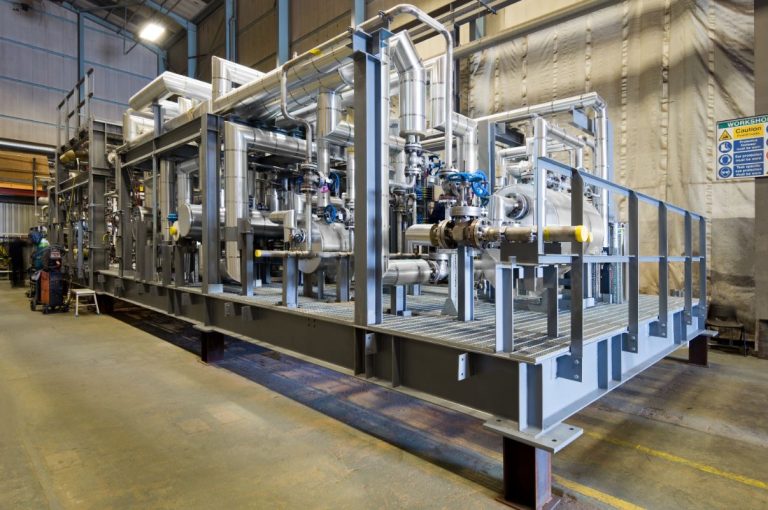
Cabinet ministers have backed initial proposals for a new runway at Heathrow Airport, claiming it is an “historic moment”. As MPs prepare to vote on the plans ahead of the July 11 deadline, Paul Meagh, electrical and instrumentation services director at engineering solutions provider Boulting Ltd, explores how a modular build will benefit the £14 billion project.   Modularisation is not a new concept and has been used by construction and engineering firms for several years as a way of reducing the complexity surrounding the build or refurbishment of a project.   For many years, modular construction was thought to be largely box-type structures, providing a bare frame to accommodate construction site workers, large classrooms and residential homes. While the concept still provides benefit for these uses, more and more engineering projects, including the expansion of Heathrow airport, are incorporating the concept into their build as a way of minimising both cost and disruption to the client and end user.   The recent announcement by the UK cabinet about the proposed expansion of Heathrow airport has been welcomed by many, including ourselves. The expansion is estimated to create 60,000 new jobs and generate £70 billion in total economic benefits by 2050. While the site itself is in London, Heathrow plans to use the expansion to drive growth in off-site construction across the country.   If the vote is successful, a total of four offsite construction and manufacturing hubs will be established across the country, allowing for pre-assembled components to be constructed prior to installation at the new runway. These sites will create thousands of new jobs outside of London, ensuring that more than just the capital city benefits from the expansion.   At Boulting, we have 15 years of experience working with modular builds, part of which includes the design, fabrication and installation of the rail station services at Heathrow’s terminal 5. A total of 75 per cent of the project was modularised, enabling us to remove a vast amount of site activity to the controlled environment of a workshop. In addition to minimising disruption to the airport, modularisation improved the overall quality of the project and site safety while reducing the number of site man hours required and total time of the project.   Constructing on a dedicated fabrication site, such as Boulting’s facility in St Helens, overcomes these issues as the infrastructure is already in place. Experienced labourers are also at hand to build, test and commission a facility before shipping and erecting in its final location, ensuring a quicker and more cost-effective solution.   If the expansion of Heathrow airport is given the green light, its use of modularisation will be one of the largest in the UK. While the concept does have multiple benefits, the decision to use it should not be rushed and all factors should be carefully considered. Working with a leading provider of prefabrication and modularisation services, such as Boulting, can ensure the right decision is made for the project in the most efficient way possible.


Read More »

Autonomous Driving: A Nod to Safer Construction

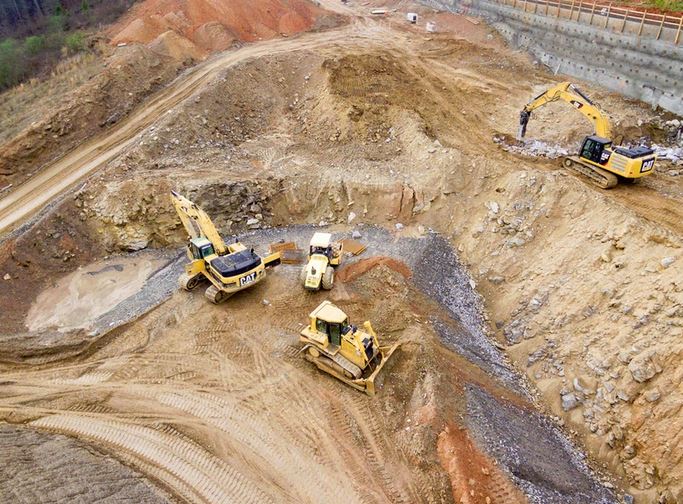
Autonomous driving could be the answer to the 10% fatality rate on construction sites caused by moving vehicles. The autonomous function is now moving beyond just passenger cars and transportation vehicles and expanding into the various sectors. The construction industry welcomes this exciting new addition to the fleet. Here’s what to look forward to. The Future Is Here While it may seem as though manufacturers are still working out the teething issues in autonomous technology, the future is on our doorstep and 22 states in the U.S. have already passed legislation detailing the legalities of autonomous vehicles. This legislation is the beginning of the end of driving as we know it and the construction industry is hot on the heels of passenger cars and taxis for their piece of autonomous pie. From mining vehicles to dozers, those in the industry estimate these heavyweights to start making their appearance within the next decade. New Hope For Construction Workers Construction workers, and especially those working on the roads, often have to face dangerous situations to get the job done. Impact protection vehicles were designed to prevent collisions with the workers by featuring a crumple zone made for impact. Previously, these vehicles still needed a driver but thanks to autonomous technology, drivers are also now spared from potential impact. The Ability To Pick and Choose While the construction industry still needs to wait in line for its share of driverless vehicles, by the time they arrive on the scene, the passenger and transportation motoring world will already be flooded with used vehicles looking for a new owner. The first batch of autonomous vehicles will be around for eight years by the time construction vehicles make their appearance, which means upgrades are inevitable. Autonomous Vehicles Are Just A Part Of It Just when you thought autonomous driving was the only new technology making waves in the construction industry, predictive analytics comes along and swoops every hard hat right off their feet. This technology is a boon for the safety side of a construction site, as the analytics are able to prepare scenarios based on the information provided. Pair that up with autonomous vehicles and construction sites will soon have a 0% work accident rate. Innovative technology paves the way for safer construction sites and creates opportunities where workers feared to tread. The pairing up of technology such as autonomous driving and predictive analytics is a sure way to improve safety ratings at the very least. This will be a decade of growth and possibility for the multi-billion pound construction industry as it awaits the arrival of that driverless bulldozer.

Read More »

TRAINING PROVIDER OPENS DOORS TO PROMOTE SKILLS IN ENERGY SECTOR

Construction and utilities specialist Develop Training Ltd (DTL) is opening the doors of its Midlands and Scotland based centres throughout July to promote skills in the energy sector. The company, which is a strong advocate for greater investment in training and apprenticeships by industry and the government, is running three open days in Derby and Linlithgow near Edinburgh. The free-to-attend events are designed for organisations with an interest in training for gas, mechanical and electrical engineering, smart metering, mechanical and electrical engineering training. Open day visitors will be given a tour of the company’s top-of-the-range facilities in Derby and Linlithgow with live demonstrations of the company’s control rig, medium pressure apparatus and smart metering equipment. Visitors will also have the opportunity to give their views on the content of DTL’s extensive range of training courses in gas/energy. There has been strong interest in the events already from DTL’s customers, who include household names in the utilities and construction sector, with spaces filling up quickly. Further details with information on how to book can be found here. www.developtraining.co.uk   About Develop Training Develop Training Limited (DTL) is the UK’s leading accredited provider of compliance, technical, and safety training, supporting thousands of firms with their training needs. Clients include some of the UK’s largest and best-known organisations from the utilities and construction to the defence, healthcare, facilities management and telecommunications sectors. Training programmes cover water and environmental, gas and energy, safety, electrical and mechanical, apprenticeships and management development delivered at DTL’s seven dedicated training centres in Linlithgow near Edinburgh, Romford, York, Derby, Bolton, Swindon and Lisburn near Belfast, or onsite at clients’ premises. DTL also provides bespoke and consultancy services, tailoring training programmes and initiatives to the requirements of individual clients. www.developtraining.co.uk

Read More »

Bringing LAN cabling to top hat rails

R&M increases packing density with the slim-line DRM45 DIN rail adapter for copper and fiber optic connectivity. R&M, a Swiss cabling systems developer and provider for high-quality network infrastructures around the world based in Wetzikon, is supporting high-density LAN cabling on top hat rails. With a width of 18 mm, the new, slim-line DRM45 DIN rail adapter corresponds to 1 HP (horizontal pitch), the typical pitch pattern on standard 35 mm top hat rails (DIN EN 50 022). When it comes to structured cabling for Local Area Networks (LAN), planners, installers, and building owners want compact solutions. Increasingly these days, small building distributors or switch cabinets for industrial, functional, and residential buildings not only require controllers, network connectors, and other technical building system components, but also RJ45 network connections. These are needed, for instance, for the Internet of Things, industrial Ethernet, internet connections for machines, and controllers for smart buildings. In such cases, the 35 mm top hat rail is often the installation platform of choice. R&M has developed the slim-line 1HP DRM45 adapter to meet this demand. Both the shielded and unshielded versions of the RJ45 copper modules Cat. 6A EL, Cat. 6A ISO, and Cat. 6A coupler fit into the housing. In fiber optic cabling, the adapter supports LC Duplex and SC Simplex connections. The adapters can be clicked into and snapped out of the top hat rail in just a few steps. The copper and fiber optic adapters are equally easy to insert, click in, and if required, replace or remove. The plug connections can still be accessed from the front with a higher packing density. The integrated ground spring can also be enabled or disabled from the front. A hinge connects the dust cap with the adapter so that the cap does not get lost. There are nine cap colors available to denote individual network services. If the adapter is not in operation, the dust cap can be closed in a flash. The labeling window is also accessible from the front. The labels can either be written by hand or printed. More information: https://www.rdm.com/gbr_en/Company/Media/News/Bringing-LAN-cabling-to-top-hat-rails

Read More »

Nixon Hire turns to Trime’s green lights

Nixon Hire, one of the UK’s largest and leading site equipment providers, have invested in a large fleet of lighting towers supplied by the market leader in LED lighting, Trime UK Limited. After carefully evaluating the range of LED lighting sets available in the current market, the company opted to purchase the Trime X-ECO LED sets. The Trime X-ECO LED is a compact, energy saving site lighting tower already popular with many rental firms and contractors. With sustainability at the core of its development, Trime have calculated that the X-ECO uses approximately £336.00 less in fuel each month, when compared to many traditionally illuminated lighting sets available. Nixon Hire’s managing director, Graham Nixon commented, “We looked at several different makes and models of lighting towers, but we decided that the Trime X-ECO LED had all the features and benefits that would help to ensure that our hire fleet is kept in line with present day demands for green products. The lights are a great addition to our existing eco product range.” The Trime X-ECO LED sets have already been delivered and distributed around the Nixon Hire depots from the Highlands of Scotland to Nottingham in the East Midlands. The X-ECO lights will be hired to a range of customers including site contractors, highway projects and on outside events. Founded in 1967, Nixon Hire is a family-run business employing nearly 500 people across an ever-expanding depot network. With over 50 years of experience they supply plant equipment, tools, site accommodation, welfare facilities and portable toilet products alongside associated services. Nixon Hire currently has 13 depots in the north of England and throughout Scotland. Likewise, the Trime Group can also boast over 50 years of experience in the development and marketing of environmentally sustainable lighting sets for the construction and rental markets. Trime UK is headquartered in Huntingdon, Cambridgeshire; their manufacturing plant is based near Milan, Italy.

Read More »

GOVERNMENT’S £400m REPAIR FUND IS AN OPPORTUNITY TO CHANGE OUR CLADDING CULTURE, SAYS PURA FACADES

Prime minister May’s announcement last month to spend £400m on the repair & refurbishment of 158 high rise buildings identified within England’s social housing estate has been widely welcomed by the construction industry and housing chiefs alike. However, the considerable war chest earmarked by government to bring these dwellings up to standard should also be used to create a new culture in UK housing, which treats residents in the private and public sector with equal respect. That is the view of James Butler, commercial director of PURA Facades, part of Vivalda Group, the UK’s largest independent distributor and fabricator of high performance cladding systems. ‘Based on the average cladding area of 3,000 sq.m for a high rise, this budget suggests a figure of over £2.5m per tower, which on the face of it appears generous,” he said. “Our calculations indicate that it’s more than enough to dismantle the existing cladding and replace this with quality, market-leading incombustible facades. And this includes all the elements of a through-wall rainscreen cladding system comprising fireproof linings and fire breaks, insulation, weatherproof sheathing boards and all the necessary associated fixing systems.” “There should also be enough within this budget to install the necessary fire protection measures as long as each tower’s needs are carefully assessed on a case by case basis,” said Butler. “While ensuring all of these homes benefit from the very best safety precautions the industry can offer, it’s also an opportunity for councils and social housing organisations to send a strong message to both residents and the construction sector in general; that there should be no gap in the quality of products being used on public or private housing. The Grenfell enquiry, led by Sir Martin Moore-Bick, has shown that there is a definite class theme running through this sorry chapter – and this funding provides us with the opportunity to change that divisive culture.” James Butler highlighted the fact that Pura had significant experience supplying high performance products to the private sector, and that there was no reason why this ‘quality first’ approach should not replace the recently discredited ‘value engineering’ process, which was widely used in the public sector as a cost cutting tool.   He said: “While the image of cladding may have been tarnished by association with the Grenfell tragedy, the fact remains that there are many excellent, fireproof products out there that would be ideal for the 158 high rise residences awaiting refurbishment. We have the budget now, all we need is the will power and imagination from local council leaders and their appointed architects to change the culture of cladding within social housing.” Pura has now begun working in the social housing market, demonstrating how products and methodologies used in the private sector can be adopted by public sector developments. Butler said: “While we have already worked on a couple of social housing projects that have used non-flammable natural cladding including terracotta or glass reinforced concrete (GRC) cladding from manufacturers such as Rieder of Austria, we’re also excited to see a new generation of aluminium cladding now coming onto the market.” “Valcan is a well-established, respected manufacturer of aluminium panels that has developed Vitracore G2, which comprises exclusively layers of aluminium which form an internal, non-flammable honeycombed centre. This type of innovation shows that the market is responding positively to Grenfell and this should enable architects to consider this new generation of cladding for the social housing sector.”

Read More »

Uni’s long-serving Director of Estates and Facilities becomes Deputy Lieutenant of West Yorkshire

Colin Blair MBE, at the University of Huddersfield, was commissioned by the Lord-Lieutenant of West Yorkshire, Dame Ingrid Roscoe. THE University of Huddersfield’s Director of Estates and Facilities, Colin Blair MBE, has become a Deputy Lieutenant of West Yorkshire. He was commissioned by the Lord-Lieutenant, Dame Ingrid Roscoe, who holds the historic role of Queen’s representative in the county. The Deputies selected and appointed by Lords-Lieutenant are individuals who have made valuable contributions to the nation or the local community.  Their role is to promote and support the Lieutenancy and to represent the Lord-Lieutenant in performing a range of public duties The Vice-Chancellor of the University, Professor Bob Cryan CBE, has served as a Deputy Lieutenant of West Yorkshire since 2012 and he was one of the first to congratulate Mr Blair, who receives his commission alongside dignitaries who include Yorkshire tourism chief Sir Gary Verity. Mr Blair said that he was honoured to become a Deputy Lieutenant. “Working on Royal visits to the University of Huddersfield has given me a valuable insight into just how hard members of our Royal Family work in order to support the community, and into the importance of the Lord-Lieutenant’s office in making their visits a success.  It will now be my privilege to give something back and play a wider role,” said Mr Blair. He was awarded his MBE in the 2015 New Year’s Honours List.  It recognised his key role in ensuring that the University has one of the UK’s highest-quality campuses, with a continual programme of development. Mr Blair was a project engineer in the private sector before joining Kirklees Council in 1983 as head of property maintenance.  He was then appointed Senior Building Services Engineer at the University and in 1998 Mr Blair became Director of Estates and Facilities. There has been a steady sequence of architecturally and technologically innovative new structures, one of the most recent being the £27 million Oastler Building, opened by the University’s Chancellor, HRH The Duke of York. On a recent visit to the University, The Duke unveiled the foundation stone of the £30 million Barbara Hepworth Building, due for completion in 2019. The University has been widely praised for its adaptation of historic properties that include canalside Victorian mills.  The campus has one of the largest percentages of listed buildings of any Higher Education institution, presenting Mr Blair and his team with a wide variety of maintenance challenges and responsibilities. Colin Blair is a Chartered Engineer and has an MSc (Distinction) in Facilities Management.  He served for eight years on the National Executive Committee of the Association of University Directors of Estates and served as the organisation’s treasurer and chaired its North East Region.  He is a Fellow of the Chartered Institute of Building Services Engineers. Earlier this year, he achieved Chartered Managers status from the Chartered Management Institute, of which he became Companion in 2017.

Read More »

‘BACK TO BASICS APPROACH NEEDED TO IMPROVE ROAD OPERATIVE SAFETY’, SAYS AGGREGATE INDUSTRIES CONTRACTING

As the construction and road surfacing industry comes under pressure to reduce on-site accidents, Aggregate Industries’ Contracting Division has said that a ‘back to basics’ approach could be the key to improving site safety. With recent figures1 revealing that UK roads are the tenth most congested in the world, the role of the roadwork operatives, typically involving work on the live highways network, has become increasingly challenging. A previous study by Oxford University2 ranked it as the 16th most hazardous job in the UK, and Highways England estimates that 12 road workers have lost their lives on the network over the past 10 years.3 In response, there is an increased onus on all stakeholders from across the industry to take positive action to improve the health, safety and welfare of roadwork operatives – and while embracing new technological advancements has a part to play; Aggregate Industries says there is also a job to do in fixing the safety basics.   Paddy Murphy, Managing Director of Contracting Services at Aggregate Industries, commented: “While there is certainly a raft of new technologies on the market which can play a huge role in aiding the road operative safety plight, the reality is that there is also a big job to do in ensuring that our operatives abide to the basic safety measures. This begins with not only providing all workers with the correct task-based training and awareness of site risks, but by leaders providing a visible personal commitment to safety and leading by example.   “Site behaviours need to be monitored to ensure that everyone is adhering to current best practice by providing regular refresher sessions, as required. It sounds simple, but regardless of deadlines and pressures, it is vital that workers take the required rest-breaks and have access to adequate welfare facilities.   “Asides from site safety, it’s also about ensuring the health and wellbeing of staff. At Aggregate Industries, for example, our ‘Healthy You’ initiative provides workers with ongoing advice, guidance and support on how to deal with a variety of real health issues both in and outside of the workplace; from mental health and stress support, through to nutrition and fitness advice – all of which has been shown to help workers in their day-to-day.”   Whilst Highways England delivers a £15billion programme designed to improve the UK’s motorways and main A-roads as part of their Road Investment Strategy, the government has also committed £350 million to improving the UKs local roads.   Paddy added: “Amid hugely vast targets to improve Britain’s transport infrastructure, coupled with increased demand on our roads and levels of traffic, it has never been a more apt time for the industry to place a greater focus on the safety and wellbeing of staff than ever before. If we don’t get the safety basics right and iron out any issues now, the reality is that we may encounter even bigger issues down the line as pressures and workloads increase.”   For further information about Aggregate Industries, visit www.aggregate.com.  

Read More »