


Hadley secures committee approval for major retrofit-led neighbourhood at former GSK headquarters in Brentford
Planning committee approval paves the way for upwards of 2,300 new homes and more than 300,000 sq ft of commercial, community and educational space on London’s Great West Road in Hounslow. A pioneering approach to retrofit and reuse will save more than 34,500 tonnes of embodied carbon in the demolition and construction phases. Hadley Property Group has secured Resolution to Grant for the transformation of 980 Great West Road in Brentford, west London. The decision by the London Borough of Hounslow’s planning committee marks a milestone in delivering one of the UK’s most ambitious reuse-led developments transforming the former GSK House into a new neighbourhood rooted in sustainability, circular economy principles and genuine long-term social value for Brentford. Spanning 13 acres, the approved scheme will deliver 2,324 new homes, including 227 social rent, 90 intermediate, 506 Purpose-Built Student Accommodation and 296 co-living units, alongside 24,000 sqm of commercial space. The development provides 22% affordable housing with a 70/30 split of Social Rent and Intermediate housing and will generate 1,980 permanent jobs. The designs have been developed by a multiple award-winning design team led by Haworth Tompkins, with Studio Egret West, Metropolitan Workshop and DRMM as plot architects, and Turley as planning consultant and Montagu Evans advising on heritage, townscape and visual impact. The project’s pioneering low-carbon strategy retains the basement and substructure, significantly shaping the masterplan — heavily influencing the proposed building heights and locations, while also freeing up the ground floor for active uses. Two key buildings from the original campus, including the high-rise tower, will be retained and adapted, with their reuse being integral to the overall low-carbon approach. Studio Egret West is leading the design of the retained tower, which will contain generously proportioned homes with oversized balconies, large communal areas, shared amenity spaces and a large rooftop conservatory. The new neighbourhood is grounded in a reuse-first strategy — a bold approach that retains embodied carbon, preserves significant existing sub and superstructure, and champions material reuse. It will deliver 61% publicly accessible open space and a 10% biodiversity net gain. Reconnecting the historical island site to Boston Manor Park, the River Brent and Brentford High Street is also key to the site’s placemaking credentials. Alongside their work on the tower, Studio Egret West has designed a generous and accessible landscape that sees more than 60% of the site given over to public realm, including play areas, gardens and riverside access. More than 330,000 sq ft of flexible commercial, retail and community uses will be provided across the wider masterplan supporting a diverse local economy and providing a platform for education providers, social enterprises, independent businesses and charitable organisations. A collaborative process with the London Borough of Hounslow and the University of West London will see a 200 sqm innovation hub delivered to drive innovation within the emerging Golden Mile district. Over the past 18 months, an extensive co-design process led by Hadley’s in-house team and Haworth Tompkins, supported by Metropolitan Workshop and Neighbourly Lab has engaged hundreds of local residents, community groups and stakeholders, ensuring the proposals reflect local priorities and aspirations. Andy Portlock, CEO of Hadley, said: “Reaching this milestone — the first of many for this project — is down to the way we’ve been able to work with a local authority that is genuinely committed to growth and has a clear strategic vision for one of the most exciting places in London. Alongside a pioneering approach to retrofit at this scale is a very clear commitment to people and place. A broad range of tenures, a new NHS primary care facility, a tech and innovation hub are all part of a new neighbourhood at the heart of the emerging Golden Mile district. Building, Design & Construction Magazine | The Choice of Industry Professionals

Erdgard targets £51m Platform Brackmills logistics scheme in Northampton
Plans have been submitted for a £51m industrial and logistics development in Northampton, with the proposed scheme set to bring forward a new generation of high-spec warehouse space in one of the UK’s most established employment locations. The project, known as Platform Brackmills, will be delivered on an 11.5-acre site and comprises three units ranging from approximately 46,400 sq ft to 76,500 sq ft. The scheme is being promoted by industrial and logistics specialist Erdgard Developments in partnership with the Richardson family business. If approved, the development will transform a previously underutilised site into a modern logistics hub designed to meet both current and future occupier demands. The units are expected to be available for occupation by the third quarter of 2027. Erdgard said the scheme reflects continued demand for well-located, high-quality industrial space, particularly in established logistics centres where connectivity and workforce access remain key drivers for occupiers. Director Gareth Williams commented that the proposals would bring the site back into productive use, delivering a high-quality employment scheme aligned with market expectations. He added that the location, already home to a number of major occupiers, would appeal to businesses seeking a modern working environment with strong transport links. Sustainability and performance sit at the core of the development’s design. The buildings are targeting BREEAM Excellent certification and will incorporate a range of low-carbon and energy-efficient technologies. These include air source heat pumps, LED lighting systems, electric vehicle charging infrastructure and rainwater recycling, alongside sustainable urban drainage systems to manage water effectively across the site. Constructed using a steel portal frame, the buildings will offer flexible internal layouts with column spacing designed to accommodate a wide range of racking and operational configurations. Enhanced cladding systems will also improve thermal performance, helping to reduce energy consumption and operational costs for occupiers. Erdgard’s approach goes beyond base build delivery, with the developer able to integrate bespoke occupier requirements into the specification. This includes tailored lighting, sprinkler systems, security solutions and other operational enhancements to support a variety of industrial and logistics uses. The scheme also reflects the company’s wider focus on sustainability and responsible development. Erdgard has committed to delivering its buildings as net zero carbon in construction, in line with UK Green Building Council guidance, while also embedding biodiversity and whole-life carbon considerations into its projects. As demand for high-quality, sustainable logistics space continues to grow, Platform Brackmills is positioned to play a key role in supporting occupiers seeking future-ready accommodation within a proven industrial location. Building, Design & Construction Magazine | The Choice of Industry Professionals

Porsche project accelerates away – with help from TCC
A prestigious £5.8 million state-of-the-art Porsche centre in the West Country is now fully operational, with help from a fast-growing Midlands construction consultancy. Birmingham-based The Construction Consultants (TCC) provided quantity surveying and employers agent services for the creation of the new cutting edge Porsche dealership in Exeter. The state-of-the-art development, on Matford Business Park, included the demolition of a previous dealership building, a new large vehicle showroom, new high quality workshop areas equipped with the latest technology, servicing and testing bays and a wet and dry valeting building . The development also included drainage and civils installation, landscaping and extensive parking areas. TCC has been involved since the initial project feasibility stage. As employers agents, TCC had the responsibility of acting on behalf of Ryland Automotive and Dealership Developments Ltd to see the project through to completion. TCC director Gareth Powell said, “We are delighted to have been involved in this prestigious project which involved combining premium design and advanced technology into a space which embodied the essence of the Porsche brand and reflected Porsche’s high status and luxury in a centre of automotive excellence.” Ryland Automotive group property director Chris Page said, “Ryland Automotive appointed TCC as cost consultants and employers agent on the Porsche Centre, Exeter new build and part refurbishment project and they provided a professional service throughout the project. TCC offered clear advice and maintained strong cost control throughout. TCC’s professional approach added real value and I would recommend and work with them again.” TCC has a wealth of experience across public and private sectors including industrial, commercial, retail, leisure, care and residential projects. Headquartered in Bennett’s Hill in Birmingham city centre, TCC is a multi-disciplined consultancy providing specialist project management, quantity-surveying, employers agent, building surveying and health and safety services to a wide range of sectors. Building, Design & Construction Magazine | The Choice of Industry Professionals

J. Smart & Co targets major Eurocentral logistics hub with new joint venture scheme
Contractor J. Smart & Co has joined forces with developer Manse LLP to bring forward a significant new industrial and logistics scheme at Eurocentral, with a planning application now submitted to North Lanarkshire Council. The proposed development, known as Eurocentral Gateway, will deliver more than 200,000 sq ft of modern industrial space within one of Scotland’s most established and strategically important distribution locations. The scheme will comprise two high-specification units of approximately 80,000 sq ft and 120,000 sq ft, designed to meet the evolving requirements of logistics and industrial occupiers. The development will place a strong emphasis on sustainability, operational efficiency and contemporary design standards. Eurocentral continues to attract strong demand due to its central location and excellent transport connectivity, making it a key hub for national distribution. The latest proposals aim to capitalise on this demand by delivering flexible, high-quality accommodation suited to a range of occupiers. J. Smart & Co’s involvement reflects its growing role not only as a contractor but also as a development partner, working alongside Manse LLP to deliver the scheme through a joint venture structure. Property consultants CBRE and Colliers have been appointed as joint letting agents and are already encouraging early engagement from prospective occupiers, particularly those seeking pre-let opportunities in a market where supply of prime industrial space remains constrained. Craig Semple, director at CBRE Scotland, said the scheme represents an important addition to the market, noting that demand for high-quality logistics accommodation across Scotland continues to outstrip supply. He added that established locations such as Eurocentral remain especially attractive to occupiers, and developments of this scale and specification are likely to generate strong interest. If approved, Eurocentral Gateway will further strengthen the region’s industrial offering, providing future-ready space aligned with occupier expectations around sustainability, efficiency and long-term performance. The project also highlights the continued momentum within Scotland’s industrial and logistics sector, as developers and contractors respond to sustained demand for well-located, high-specification space. Building, Design & Construction Magazine | The Choice of Industry Professionals

Novus and The Guinness Partnership – delivering for communities across the South West
National maintenance, refurbishment and fit-out contractor Novus Property Solutions has secured a new 15-year planned improvement and major works contract with The Guinness Partnership in the South West, reinforcing a 14-year strong relationship of trusted delivery and shared purpose. Valued at £11 million per year, the contract will see Novus deliver a comprehensive programme of planned maintenance works, including kitchen and bathroom replacements, electrical heating upgrades, external works and window and door installations. Ensuring homes remain safe, comfortable and fit for modern living, the scope also includes addressing any defects classified as a significant hazard under the terms of Awaab’s Law which came into force in October 2025. The Guinness Partnership is one of the largest affordable housing providers in England, with more than 160,000 residents living in more than 70,000 homes. Committed to providing high quality homes, the framework with Novus directly supports operational delivery alongside social value to ensure meaningful impact in homes and their communities. Steve Gayter, Executive Director of Operations at Novus Property Solutions, said: “Over the past 14 years, we have developed a way of working with The Guinness Partnership that prioritises quality, responsiveness and a positive experience for every resident. Being awarded this 15-year framework for the South West region is a reflection of our ability to deliver at scale and to the highest standards while remaining focussed on the individual needs of the communities we serve.” Catriona Simons, Group Chief Executive at The Guinness Partnership said: “We’re delighted to welcome Novus Property Solutions as one of our five new long-term partners, and for them to have formally signed our Planned Investment and Major Works contract. These partnerships demonstrate our shared commitment to investing in and improving residents’ homes and marks the beginning of a relationship we expect to grow and strengthen in the years ahead, as we work together to deliver lasting benefits for our residents. “Residents are central to this partnership. When selecting our partners, we placed residents’ priorities at the front of the process. Their feedback – ranging from the importance of clear communication to consistently high‑quality works – directly shaped our decisions and will continue to guide how these partnerships operate day to day. “We look forward to working closely with Novus Property Solutions in the years ahead, as we focus on improving residents’ homes.” Novus Property Solutions has supported The Guinness Partnership since 2012, delivering more than 2,400 component upgrades as part of its planned maintenance programme. Work has included carrying out upgrades under the SHDF Wave 2 retrofit covering EWI, windows and doors, roofing, and ventilation to 50 properties in Crewe which was completed ahead of schedule. The team also successfully undertook a heritage refurbishment project including roofing works, fire safety upgrades and conservation-compliant finishes for 117 apartments housed within Grade II buildings at Lansdown Crescent in Cheltenham. To find out more about Novus Property Solutions please visit https://www.novussolutions.co.uk/. Building, Design & Construction Magazine | The Choice of Industry Professionals
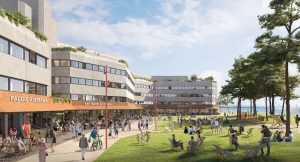
Major step forward for Swansea seafront plans after UK Government announces intention to support project
The UK Government has announced plans for a £20m investment to support the transformation of Swansea’s Civic Centre site on the city’s seafront. Swansea Council, working with development partner Urban Splash, has confirmed that funding from the UK Government – once it has gone through the necessary checks and clearances – will support ambitious proposals to rejuvenate and reenvisage the building. Speaking of the news Chancellor of the Exchequer, Rachel Reeves, said: ”Backing Swansea with this £20 million investment will create jobs, transform the city’s tourist offering and boost its local economy, making it a more attractive place to live, work and start a business in the years to come.” Proposals include 15 commercial units across the ground and lower ground floors, cafés, bars, shops, workspaces, spaces for leisure and events, an aquarium, and around 140 residential apartments on the upper floors. A formal planning application is expected to be submitted later this year and the project will need to go through further checks including due diligence and a final business case before funding is confirmed and allocated. Urban Splash was appointed as Swansea Council’s strategic partner in 2021 as part of a 20-year regeneration partnership across seven city sites, including the Civic Centre. The company has since been evolving its plans – designed with Wales-based architects Rural Studio and Studio Egret West – as David Warburton, Development Director at Urban Splash explained: “This is fantastic news for our shared vision for Swansea and a major step forward in turning our joint plans for the repurposing of the Civic Centre into a reality. “The investment paves the way for the creation of a vibrant new waterfront district for Swansea, benefiting local people and acting as a magnet to draw visitors and investment in support of Swansea’s long-term growth. “We greatly value our partnership with Swansea Council and look forward to continuing to work together to deliver not only the repurposing of the Civic Centre as part of the City Waterfront project, but in realising the wider vision for the city across all seven sites in the partnership.” Cllr Rob Stewart, Leader of Swansea Council, added: “We have been driving the biggest regeneration programme Swansea has seen in over 70 years and the Civic Centre is one of the next big opportunities for us. “We want to see it transformed into a high-quality landmark destination for living, working and enjoying that features an aquarium, a saltwater lido, new homes, independent businesses, and leisure and community spaces that will benefit local people while attracting more visitors to Swansea. “This £20 million investment from the UK Government is a major further vote of confidence in Swansea and our plans for the site – and will greatly help the project to proceed more quickly.” Jo Stevens, the UK Government’s Secretary of State for Wales, said: “The £20 million investment from the UK Government will help deliver the ambitious regeneration plans for the iconic Civic Centre in Swansea and the new waterfront district, transforming this part of the city and making the most of its spectacular location. “This investment will make Swansea even more of a destination for visitors as well as providing better leisure facilities and places to live and work for residents.” Torsten Bell, MP for Swansea West, said: “Securing this major investment in an iconic Swansea landmark has been a personal priority for me. With the £20m funding from the UK Government, this is another big step forward for the city. “With its prime spot overlooking the splendid curve of our beach, the building is crying out for a new lease of life. “And that is exactly what we are going to give it, as we keep investing in Swansea’s future, not just remembering its past.” The Civic Centre redevelopment is estimated to be worth £17 million a year to Swansea’s economy. The Civic Centre project is expected to create around 291 direct jobs across hospitality, retail, leisure, culture and building management, along with around 50 additional jobs linked specifically to the proposed aquarium. To find out more click here: https://www.urbansplash.co.uk/regeneration/projects/swansea Building, Design & Construction Magazine | The Choice of Industry Professionals