January 27, 2026
Baltic Quarter vision moves forward as Muse and ECF step in

Baltic Quarter vision moves forward as Muse and ECF step in

Plans to regenerate Gateshead’s Baltic Quarter have taken a significant step forward after the council agreed a pre-development deal with Muse and ECF to progress a major mixed-use scheme of around 1,600 new homes. Under the agreement, ECF will work alongside Gateshead Council to develop the long-term vision for the

Read More »
Costain to build new M5 gigafactory junction

Costain to build new M5 gigafactory junction

c.£100m five-year project will provide critical access to Agratas gigafactory in Somerset. Costain, the infrastructure solutions company, has been appointed to design and build a new junction on the M5 motorway. Awarded through the Regional Delivery Partnership (RDP) framework, the contract is worth approximately £100m to Costain over a five-year

Read More »
LEDVANCE introduces urban wall vario: Flexible façade where lighting meets performance

LEDVANCE introduces urban wall vario: Flexible façade where lighting meets performance

Façade lighting plays an important role in shaping how buildings are perceived after dark, while also supporting the safety and usability of outdoor spaces. For residential, hospitality and commercial environments, wall luminaires must deliver not only visual impact, but also durability, efficiency and installation flexibility. When specifying exterior wall lighting,

Read More »
GGH Hire powers up fleet with major Kubota investment

GGH Hire powers up fleet with major Kubota investment

Kubota (UK) has marked one of the largest single equipment deals in its history after securing a major order from GGH Hire. The Enfield-based hire firm has taken delivery of the first machines from a 150-strong order of compact excavators, forming part of a multi-million-pound investment programme. The purchase follows

Read More »
Transforming construction with advanced roofing diagnostics

Transforming construction with advanced roofing diagnostics

In the construction industry, advanced roofing diagnostics are becoming essential. New technologies are changing how roofing issues are identified and fixed. Staying updated with these advancements is crucial for maintaining a competitive edge. Advanced roofing diagnostics are reshaping traditional practices in the construction sector with modern solutions. As buildings become

Read More »
Critical Infrastructure Under Threat: Understanding Geohazards That Compromise Roads, Railways and Utilities

Critical Infrastructure Under Threat: Understanding Geohazards That Compromise Roads, Railways and Utilities

Critical infrastructure in the construction and utilities sector includes transportation corridors and underground networks that support homes and businesses. These systems form the backbone of daily operations, but as urban areas expand and rural development pushes into unstable terrain, their exposure to natural ground risks increases. Rapid population growth and

Read More »
Latest Issue
Issue 337 : Feb 2026

January 27, 2026

Baltic Quarter vision moves forward as Muse and ECF step in

Baltic Quarter vision moves forward as Muse and ECF step in

Plans to regenerate Gateshead’s Baltic Quarter have taken a significant step forward after the council agreed a pre-development deal with Muse and ECF to progress a major mixed-use scheme of around 1,600 new homes. Under the agreement, ECF will work alongside Gateshead Council to develop the long-term vision for the site, shaping funding, phasing and delivery. The Baltic Quarter plays a central role in the council’s regeneration strategy unveiled last autumn. Initial work will focus on how new homes and workspaces can be introduced alongside improved public spaces, landscaping, routes and infrastructure. The proposals aim to support the area’s existing business community, including Gateshead College and the Northern Design Centre, while creating space for future growth. The council said the regeneration will build on the quarter’s established creative and commercial character, helping current businesses remain and expand, while attracting new companies and talent to Gateshead and neighbouring Newcastle. An early masterplan for the Baltic Quarter has been prepared by architect Brown + Company. Sustainability sits at the heart of the proposals, with the area already benefiting from a district energy network powered by the UK’s largest urban solar farm and mine water heat. A recently completed 1,000-space car park has also been designed to support large-scale electric vehicle charging. Sir Michael Lyons, chair of ECF, said the pre-development agreement allows partners to work closely with the council and local stakeholders to shape proposals that reflect Gateshead’s industrial heritage while delivering lasting economic and social benefits. The agreement was secured through Pagabo’s developer-led framework. Council leader Martin Gannon said the scheme could deliver more than 1,600 homes, new office space and high-quality public realm, creating a visible statement of confidence in Gateshead that could help attract further investment to the borough.

Read More »
Holborn Circus set for bold new chapter as refurbishment gets green light

Holborn Circus set for bold new chapter as refurbishment gets green light

Work is due to begin later this year on a major refurbishment of Holborn Circus, as developer Tishman Speyer prepares to appoint a contractor for the landmark Farringdon building. Construction is scheduled to start in the second half of the year at the former Sainsbury’s headquarters, marking the next stage in the building’s evolution. The project will reimagine the property as a modern, highly sustainable office destination designed for the future of work. Plans include the introduction of new internal atriums to bring more light into the building, a complete overhaul of the ground floor and basement spaces, and the creation of a new roof terrace offering outdoor amenity space. Martin Simonneau, Managing Director at Tishman Speyer, said the scheme reflects the company’s confidence in London’s office market and its long-term prospects. He added that the development will draw on Tishman Speyer’s placemaking and development expertise, with the aim of delivering one of the City’s most attractive and environmentally responsible working environments. Building, Design & Construction Magazine | The Choice of Industry Professionals

Read More »
Railpen secures regional first in new retail and leisure lettings for Multistory, Birmingham

Railpen secures regional first in new retail and leisure lettings for Multistory, Birmingham

Railpen, manager of the £34bn railways pension scheme in the UK, has signed two brands at Multistory, its 295,000 sq ft (NIA) office building in Birmingham. This follows the completion of phase one last year, which comprised the creation of 27,000 sq ft of retail and leisure space on the ground floor, with now only one unit remaining to let. 92 Degrees Coffee, founded in Liverpool in 2014, is opening its first Birmingham location at Multistory in early February, a vibrant space that reflects its belief in quality, community, and experience. The new coffee shop will be open to the public and tenants, offering sit-in or takeaway coffee, alongside a dedicated kiosk within the new co‑working hub. It will be serving its signature Damn Fine Coffee, as well as its curated range of great products. That Day, the gym and wellness studio, has also signed at Multistory for 5,300 sq ft, delivering a state-of-the-art facility for occupier use, offering wellbeing workshops, fitness classes, therapy, and coaching. It is due to open in Q1 this year, adding to a collection of amenity uses designed to enhance productivity and wellbeing within Multistory’s workspaces, such as a library, a 15,000 sq ft indoor-outdoor bar and café area with a 2,000 sq ft terrace, an adjoining atrium, and a unique 80-seat auditorium. Emily Atkinson, Asset and Transaction Manager at Railpen, said: “Securing That Day Fitness and 92 Degrees Coffee is a strong endorsement of the direction we are taking with Multistory. These brands share our ambition to create places that establish a sense of community and connection between employees and their place of work. This is an approach we take across our entire office portfolio, selecting brands that will add real value for people working in and around our developments, but also ones that encourage staff retention, attraction, and productivity.” Jack Brewitt, CEO of 92 Degrees Coffee, said: “This opening is a special one for us. It’s not just our first franchise, but our first Birmingham store – a city that’s been on our radar for some time. Multistory felt like the perfect fit: a development that shares our values, with a strong sense of place, a diverse community, and a real vision for the future. We’re proud to partner with Ketch&Co to bring #DamnFineCoffee™️ to the heart of Birmingham and to keep building connections that matter.” Multistory is a grade A standard office building in the heart of Birmingham, boasting the city’s largest single floorplate at 41,000 sq ft, which is now available to let. A three-minute walk from Snow Hill train station, five minutes from Birmingham New Street, and five minutes from the proposed HS2 station, Multistory plays a key role in supporting Birmingham’s continued regeneration and wider UK growth by offering flexible, future-focused space designed around people and place. As well as targeting BREEAM Outstanding, WiredScored Platinum, EPC B and a Fitwell two-star rating, Multistory has parking for over 280 bikes with shower and changing facilities, 92 car parking spaces, and ten EV charging points. Multistory is just one of Railpen’s developments across its office portfolio in the UK, which have all been designed and developed to create high-quality, sustainable, and amenity-rich workspaces that appeal to modern occupiers and their employees. The portfolio also includes Mill Yard and Botanic Place in Cambridge, both of which are currently under construction, alongside several in London, such as Red Lion Square, 125 Wood Street, 101 Bayham, Jamestown Courtyard, 4 Coleman Street, and 12 Smithfield. CBRE and Creative Retail are the retail and leisure leasing agents on Multistory, CBRE and Avison Young lead on the office leasing, with V7 Asset Management advising. Building, Design & Construction Magazine | The Choice of Industry Professionals

Read More »
Commercial remodelling sector in decline as London held back by lack of premium office spaces

Commercial remodelling sector in decline as London held back by lack of premium office spaces

The latest research by BPS London has revealed that London’s office sector is being held back by a lack of investment in refurbishment and remodelling, with just 7.5% of currently available office rental stock in the capital considered premium workspace. BPS London analysed the size and annual change of the UK commercial property remodelling sector, before conducting further analysis of current London office rental listing stock to assess how much of the market is meeting the standard expected by today’s workforce. Commercial property remodelling sector on the decline The research* shows that in 2022, following the removal of Covid restrictions, the commercial property remodelling sector boomed as businesses adapted to reduced physical attendance and evolving workplace expectations. In total, the sector grew to £6.86bn, marking an annual increase of 25.1%, a rate of growth which then slowed dramatically in 2023 (+6.1%) and 2024 (+1.2%) What’s more, in 2025 the commercial property remodelling market declined by -2.1% to £7.21bn and is forecast to fall by a further -2.7% in 2026, down to £7.01bn. Just 7.5% of available London offices considered premium BPS London believes this decline is arriving at precisely the wrong time, as London’s office market continues to evolve in a post-pandemic landscape and occupiers demand higher-quality, fit-for-purpose space. In fact, BPS London’s analysis** of current London office rental opportunities shows that the vast majority of available stock sits below premium price thresholds. Almost half of office rentals are priced between £31 and £60 per sq ft (46.6%), while more than a quarter fall into the lowest price bracket of £0 to £30 per sq ft (27.4%). Just 7.5% command a premium price point of £91+ per sq ft. Current London offices fail to provide even most basic features Further analysis*** of the features currently being advertised within London’s office rental stock also suggests that many buildings are failing to meet even baseline expectations. Security / security systems were the most common feature, present in 60% of listings, while only 35% of listings provide 24-hour access, despite the evolving working patterns seen since the pandemic. Meanwhile, controlled access is present in just 21% of office rentals. On-site amenities remain limited across much of the capital’s current office stock, with just 18% offering an on-site restaurant and 17% featuring a roof terrace. Fitness centres and concierge services are each available in only 5% of listings, whilst features such as day care and leisure facilities are virtually non-existent, accounting for just 0.1% of available listings stock respectively. Commenting on the findings, Mahir Vachani, Director at BPS London, said: “It’s been said that that mid-week office attendance has now returned to post-pandemic levels and that’s great news for London’s commercial sector. However, the workplace has changed dramatically since Covid, and the capital’s workforce now has higher expectations than ever before when it comes to the quality of their working environment. Today, flexible working is the norm and that means businesses can’t expect employees to commit to travelling into the office if the space itself feels tired, uninspiring, and poorly equipped. Yet our analysis shows that just a small proportion of London’s current office rentals can be considered premium, while many buildings are still falling short on fundamentals such as security, controlled access, and 24-hour availability. At the same time, the UK commercial property remodelling sector has started to contract, with a decline recorded in 2025 and a further reduction forecast for 2026. This is happening at a point where investment is needed most, not only to modernise London’s office stock, but to create fit-for-purpose workspaces that support productivity, wellbeing, and the expectations of the modern-day worker.” Data Tables and Sources Building, Design & Construction Magazine | The Choice of Industry Professionals

Read More »
Costain to build new M5 gigafactory junction

Costain to build new M5 gigafactory junction

c.£100m five-year project will provide critical access to Agratas gigafactory in Somerset. Costain, the infrastructure solutions company, has been appointed to design and build a new junction on the M5 motorway. Awarded through the Regional Delivery Partnership (RDP) framework, the contract is worth approximately £100m to Costain over a five-year period. Junction 22A is a new motorway junction being constructed between Burnham-On-Sea and Bridgwater, in Somerset. It will provide access to the Gravity Smart Campus and £4bn gigafactory being developed by Agratas, which will be Britain’s biggest electric vehicle battery manufacturing facility. The junction will consist of north facing slip roads and will alleviate congestion on the motorway south of the Huntspill river. Costain’s role as the project’s delivery integration partner and main works contractor will see it design and construct the new junction before handing it over to National Highways upon completion. In its role, Costain will provide a range of best-in-class infrastructure services, including design, engineering, programme delivery and supply chain management. WSP will support Costain as design partner. Alex Vaughan, Chief Executive Officer of Costain, commented: “This award is built on our long-established highways delivery expertise and trusted partner relationship with National Highways. We will work closely with our supply chain partners to design and deliver this new junction that will provide access to the new gigafactory and help to drive economic growth in this region of the UK. “This investment, supporting the UK’s growth ambitions, is another example of Costain’s commitment to deliver critical national infrastructure programmes that improve people’s lives.” Costain is a long-term partner to National Highways and last year completed the construction of 41 emergency areas on the M1 ahead of schedule. Costain is also providing specialist technical engineering advice to National Highways under its Specialist Professional and Technical Services Framework (SPaTS3), which will cover the whole of the period for Roads Investment Strategy 3 (2026-2031). The infrastructure solutions company is also National Highways’ delivery partner for the M60/M62/M66 Simister Island Interchange scheme. In addition, Costain was recently added to join the Eastern Highways Alliance’s EH4 Framework, covering a range of civil engineering and construction works across the East of England. Building, Design & Construction Magazine | The Choice of Industry Professionals

Read More »
AWW selects NavLive to accelerate BIM workflows and strengthen Building Safety Act compliance

AWW selects NavLive to accelerate BIM workflows and strengthen Building Safety Act compliance

AWW Architects, one of the UK’s leading multi-disciplinary architectural practices, has adopted NavLive’s LiDAR BIM scanning technology to improve survey accuracy, reduce project risk, and meet the growing demands of the Building Safety Act across a range of high-risk and complex developments. With a team of 100 architectural professionals delivering projects across the nuclear, defence, commercial and public sectors, AWW frequently acts as lead consultant under traditional contract arrangements, often assuming full liability under Professional Indemnity insurance. As part of this expanding remit, the practice is increasingly responsible for Clerk of Works and Principal Designer duties, where precise, coordinated information is essential to maintaining a compliant “golden thread” of building data. Maintaining up-to-date survey information, particularly on existing or part-demolished structures, had become time-intensive and costly. To address this, AWW undertook a comprehensive market review to find an in-house solution capable of capturing reliable, high-accuracy site data while accelerating its Revit modelling workflows. Following extensive evaluation, AWW selected the NavLive LiDAR BIM Scanner as its preferred solution, as the system enables AWW’s designers to generate highly detailed point cloud data within minutes. Through NavLive’s software platform, produce Revit-ready outline models that correct, enhance, and validate existing survey and planning information. The technology has now been deployed across five separate buildings by staff at all levels, delivering consistent results and measurable gains in accuracy, speed, and assurance. Nicholas Mulholland, Managing Director at AWW Architects, added: “The NavLive scanner has significantly accelerated our design workflow and achieved measurable cost savings while improving the accuracy and assurance of our model data. The system provides exceptionally detailed point cloud data within minutes and, through the NavLive software, generates Revit-ready outline models that correct and enhance existing survey and planning information.” Chris Davison, CEO of NavLive, said: “Architectural practices like AWW are facing increasing pressure to deliver precise, assured information at every stage of a project. NavLive was designed to give teams immediate access to high-quality building data, reducing uncertainty and supporting the level of rigour demanded by modern regulation. AWW’s adoption of our technology shows how digital tools can remove delays, improve coordination, and strengthen compliance across some of the UK’s most complex projects.” With a long track record of early BIM adoption and a portfolio spanning high-risk and heavily regulated environments, AWW’s integration of NavLive reinforces its commitment to delivering accurate, coordinated design information from the earliest project stages. The partnership is expected to support future projects as industry requirements around digital record-keeping and safety assurance continue to intensify. Building, Design & Construction Magazine | The Choice of Industry Professionals

Read More »
LEDVANCE introduces urban wall vario: Flexible façade where lighting meets performance

LEDVANCE introduces urban wall vario: Flexible façade where lighting meets performance

Façade lighting plays an important role in shaping how buildings are perceived after dark, while also supporting the safety and usability of outdoor spaces. For residential, hospitality and commercial environments, wall luminaires must deliver not only visual impact, but also durability, efficiency and installation flexibility. When specifying exterior wall lighting, professionals must consider a number of factors, including light distribution, colour temperature, glare control, environmental protection and long-term reliability. Increasingly, there is also demand for solutions that offer adaptability on site, allowing lighting effects to be fine-tuned to suit different architectural styles and changing project requirements. To meet these needs, LEDVANCE has expanded its outdoor luminaire portfolio with the URBAN WALL VARIO – a highly versatile, decorative wall light designed to combine architectural aesthetics with robust outdoor performance. URBAN WALL VARIO is designed to provide upward, downward or combined up-and-down light emission, enabling specifiers and installers to accentuate façade textures, highlight entrances and create depth and visual interest across building elevations. Interchangeable reflectors are supplied as standard, allowing beam angles of 30° for more focused accent lighting or 55° for a wider, softer distribution, making it easy to tailor the lighting effect to the application. On-site adjustability allows lighting effects to be fine-tuned during or after installation, with discreet controls enabling changes to light direction, colour tone and output without affecting the clean external appearance. This allows more sensitive integration of lighting with different façade materials and architectural styles. Built for long-term outdoor use, the luminaire combines robust construction with protection against weather, impact and temperature extremes, making it suitable for a wide range of exterior settings. High durability and extended service life also help to reduce maintenance demands over the lifetime of the installation. Durability remains just as critical, especially in exposed outdoor locations where luminaires must withstand weather, temperature fluctuations and physical impact over many years of operation. URBAN WALL VARIO is rated IP65 for protection against dust and water ingress and IK08 for impact resistance, with a robust aluminium housing and C4 corrosion protection to ensure long-term performance in challenging external environments. A long lifetime of up to 100,000 hours (L70/B10) further reduces maintenance requirements and supports lower whole-life costs. From an installation perspective, efficiency and adaptability are also high on the priority list. With dual cable entries for through-wiring, snap-in connectors and a mounting design that allows installation in either orientation, the luminaire accommodates varied wiring approaches and simplifies coordination on site, helping to reduce installation time on fast-paced projects. For projects requiring intelligent control and seamless integration with building management systems, URBAN WALL VARIO is also available with DALI-2 control gear. These versions enable precise digital dimming, individual addressing and flexible grouping zones. Head of Project Sales at LEDVANCE UK – David Goddard adds, “Architectural lighting should enhance a building’s character while standing up to the realities of outdoor use. Our aim with URBAN WALL VARIO was to create a solution that supports creative façade lighting while also addressing the practical challenges faced by designers and installers on site.” Supported by LEDVANCE’s technical guidance and project support services, the URBAN WALL VARIO range is positioned to help professionals deliver exterior lighting schemes that balance visual quality, reliability and ease of implementation across a wide variety of outdoor applications.  For more information, contact LEDVANCE UK. Building, Design & Construction Magazine | The Choice of Industry Professionals

Read More »
GGH Hire powers up fleet with major Kubota investment

GGH Hire powers up fleet with major Kubota investment

Kubota (UK) has marked one of the largest single equipment deals in its history after securing a major order from GGH Hire. The Enfield-based hire firm has taken delivery of the first machines from a 150-strong order of compact excavators, forming part of a multi-million-pound investment programme. The purchase follows GGH Hire’s recent acquisition by St Albans-based Herts Tool Company and was completed through local dealer Boss Plant Sales. The order spans a wide range of Kubota mini and midi excavators, from the sub-one-tonne KX008-5 to the 8.5-tonne KX085-5, the manufacturer’s largest compact model. Around 100 of the machines will be used to fully refresh GGH Hire’s existing fleet, while the remaining 50 excavators have been earmarked to support future growth as demand continues to rise. GGH Hire was acquired by Herts Tool Company in December 2025. Both businesses will continue to operate independently, with David Shallow taking full responsibility for the Enfield operation. Former owner Gerry Gardiner remains involved with the business following the acquisition. Building, Design & Construction Magazine | The Choice of Industry Professionals

Read More »
Transforming construction with advanced roofing diagnostics

Transforming construction with advanced roofing diagnostics

In the construction industry, advanced roofing diagnostics are becoming essential. New technologies are changing how roofing issues are identified and fixed. Staying updated with these advancements is crucial for maintaining a competitive edge. Advanced roofing diagnostics are reshaping traditional practices in the construction sector with modern solutions. As buildings become more complex, the need for precise and efficient diagnostic methods grows. Innovations like thermal imaging and drone surveys have made these diagnostics more accessible and effective. By embracing these advancements, you can enhance accuracy and streamline operations across various projects. Companies like NWIR are at the forefront of these innovations, offering cutting-edge solutions for the industry. Technologies driving roofing diagnostic advancements Thermal imaging has revolutionised roofing diagnostics by providing non-invasive methods to detect moisture and insulation issues. This technology allows you to identify hidden problems without dismantling parts of a structure. By analysing temperature variations on roof surfaces, contractors can pinpoint potential leaks or insulation failures with precision. The ability to see beneath the surface without physical disruption significantly improves both speed and accuracy. Drone surveys offer another leap forward in roofing diagnostics, allowing for comprehensive aerial inspections that were previously challenging. With drones, you can capture high-resolution images and videos, offering a complete view of the roofing area. This method saves time and reduces safety risks associated with manual inspections. By combining drone imagery with data analytics, you gain insights into structural integrity and potential problem areas that might otherwise go unnoticed. Moisture meters and infrared sensors complement thermal imaging by providing detailed readings of water infiltration and humidity levels within roofing systems. These handheld devices enable you to conduct targeted investigations in specific areas flagged by broader diagnostic scans. When combined with digital reporting systems, the data collected can be stored and analysed over time to track deterioration patterns and predict maintenance needs. This layered approach to diagnostics ensures that no potential issue escapes detection, allowing for comprehensive roof health assessments that support long-term asset management strategies. Benefits of advanced diagnostics in construction Integrating advanced roofing diagnostics into construction projects brings numerous advantages. Primarily, these technologies lead to significant cost savings by reducing the need for extensive manual labour and minimising material wastage. Identifying issues early through precise diagnostics helps you avoid expensive repairs later. Additionally, the efficiency gained through technology can lead to shorter project timelines, benefiting both contractors and clients. Moreover, advanced diagnostics enhance decision-making by providing detailed data that informs strategic planning and resource allocation. When you leverage these insights effectively, project managers can better anticipate needs and adjust schedules accordingly. This proactive approach fosters a more efficient workflow, enabling you to deliver higher quality outcomes while maintaining budgets and deadlines. Environmental sustainability is another significant benefit of implementing advanced roofing diagnostics in modern construction. By accurately identifying problem areas and enabling targeted repairs, you reduce material waste and minimise the environmental impact of unnecessary replacement projects. These technologies also help optimise energy efficiency by detecting insulation deficiencies and thermal bridging that contribute to heat loss. As building regulations increasingly emphasise environmental performance, the ability to document and improve a structure’s thermal envelope through precise diagnostics becomes invaluable for meeting compliance standards and achieving green building certifications. Real-world applications and future trends The practical implementation of advanced roofing diagnostics has shown impressive results in various construction projects. Large-scale commercial developments have benefited from reduced overheads and improved project delivery times by employing these technologies early in the planning phase. This not only mitigates risks but also boosts client satisfaction by ensuring timely completion. The future of roofing diagnostics is promising, with potential innovations set to further transform construction practices. Emerging technologies like AI-driven analytics promise to enhance data interpretation, offering predictive insights that help anticipate future challenges. You may soon find AI integrated into diagnostic tools to automatically assess risks and recommend preventive measures. Staying informed about these developments will be crucial for maintaining a competitive edge in the construction industry.

Read More »
Critical Infrastructure Under Threat: Understanding Geohazards That Compromise Roads, Railways and Utilities

Critical Infrastructure Under Threat: Understanding Geohazards That Compromise Roads, Railways and Utilities

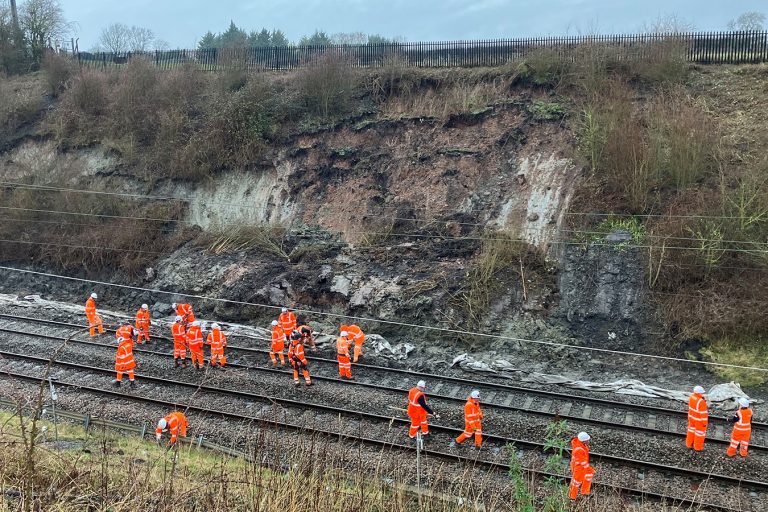
Critical infrastructure in the construction and utilities sector includes transportation corridors and underground networks that support homes and businesses. These systems form the backbone of daily operations, but as urban areas expand and rural development pushes into unstable terrain, their exposure to natural ground risks increases. Rapid population growth and land use changes often lead to building in zones prone to landslides and erosion, conditions that were once rare but are now widespread. Across dense cities and remote regions, geohazards are no longer outliers. They’re a recurring challenge that affects the integrity and longevity of infrastructure. Overlooked Ground Risks That Create Planning Blind Spots Nearby project history doesn’t ensure consistent soil behavior across a new site. Several low-grade ground issues, such as minor settlement and poor drainage, often combine over time and create larger structural problems. Urban fill areas may conceal buried debris, organic matter or loose materials that weaken load-bearing capacity. Safety planning is central to organizing urban centers against the risks they face while aligning actions that strengthen and improve long-term resilience. Existing subsurface utility crossings can also disturb the surrounding soil, which makes it harder for the ground to support new loads. Previously developed land may appear stable, yet it can create a false sense of security when underlying conditions remain unverified. Common Geohazards That Impact Infrastructure Geohazards take many forms, and their impact depends on local soil conditions and surrounding development. Even small shifts in the ground can lead to major damage when infrastructure systems aren’t designed with these risks in mind. Landslides and Slope Failures Landslides often result from prolonged rainfall or heavy structural loads placed on already unstable slopes. When slopes fail, they can displace roadbeds or shear off hillside utility lines with little warning. These ground shifts create expensive and hazardous disruptions, particularly along transportation corridors where repairs may be short-lived if slope tension isn’t properly resolved. In regions with recurring slope movement, temporary fixes frequently give way to repeated failures. This highlights the need for permanent drainage control, soil stabilization and long-term monitoring. Soil Erosion Soil erosion is a common hazard near coastlines and poorly drained lots, where water flow gradually wears away the surface and subgrade layers. This steady degradation can expose building foundations and weaken the structural base of roads and utility corridors. Infrastructure in these areas often faces foundation exposure or slope instability, which leads to reduced load-bearing capacity and eventual structural failure. Road shoulders may crumble or wash out, while buried lines can shift or become exposed as supporting soil is lost. Over time, even minor erosion can trigger major damage if not identified and mitigated early through proper grading and reinforcement. Seismic Risks and Ground Liquefaction Seismic activity poses a major threat to infrastructure, especially in retrofits and utility relocations where older systems may lack flexibility. Ground shaking or liquefaction can buckle rail lines and shift entire substructures within seconds. In some regions, the threat isn’t just natural. Around 23% of human-induced earthquakes are linked to dams, where water seepage into underground cracks increases pressure along fault lines. These compounded stresses can create sudden, large-scale ground movement that existing infrastructure isn’t designed to withstand. When development occurs without seismic adaptation, the consequences can be immediate and severe. How These Hazards Damage Roads, Railways and Utilities Translational landslides can cause widespread infrastructure failure, especially along transportation corridors and utility routes. The failure process typically begins with sliding at the slope crest under external loads, which then drives the lower soil mass downslope. This ground movement results in pavement cracking and misaligned tracks caused by creeping slopes or shifting foundations. Pipelines laid across unstable ground are particularly vulnerable, often breaking under soil pressure and causing water or gas leaks that pose serious environmental and safety risks. After such events, service interruptions and access delays are common, which complicates emergency response and long-term repair efforts. The Climate Connection Climate change amplifies geohazard risks by destabilizing the natural balance between soil, water and temperature. More frequent storms lead to rapid saturation and runoff, eroding slopes and weakening the ground beneath roads and buried utilities. Prolonged droughts dry out clay-rich soils, which causes shrinkage and ground movement that strains foundations and pipeline joints. In many regions, fluctuating groundwater levels cause more subsidence and slope instability than ever before. Northern climates face additional pressure from increased freeze-thaw cycles, which expand and contract pavement and subgrade materials. These patterns turn once-manageable geohazards into persistent threats that demand updated engineering and maintenance strategies. Site Investigation and Risk Mapping Geotechnical surveys are critical to infrastructure mapping, offering a clear view of subsurface conditions that can affect long-term performance. These assessments include soil bearing capacity, settlement potential and other key factors that influence structural design. Soil boring data reveals how different layers respond under load, which helps engineers avoid costly surprises after construction begins. Alongside traditional surveys, modern tools like satellite imagery help identify high-risk corridors and topographical vulnerabilities across large project areas. Factoring in hydrology and seasonal ground behavior is essential, especially for sites exposed to fluctuating water tables or freeze-thaw cycles. Early detection of potential ground hazards improves safety and delivers significant cost savings over the life of the project by preventing emergency repairs and system failures. Engineering and Construction Best Practices Using strategies tailored to local soil conditions and environmental pressures allows infrastructure systems to better withstand shifting ground or seismic movement. The following best practices help protect roads and utilities from ground-related threats: Monitoring and Maintenance Over Time Monitoring ground conditions over time is essential for keeping infrastructure safe and operational. Ground movement sensors and wireless telemetry systems allow for real-time data collection across remote or high-risk areas. This telemetry integrates seamlessly with cloud-based platforms, which transform roads and utility corridors into cyber-physical systems capable of automating inspections and alerts. After heavy rainfall, targeted site checks in vulnerable zones help confirm slope stability and drainage performance. Seasonal review cycles are also critical, particularly for sloped corridors and utility trenches that experience soil

Read More »