June 30, 2026
Britain Cannot Build Its Way Out of Crisis if Builders Are Going Bust: Jewson and Stark UK Launch National Campaign Demanding Urgent Government Action.

Britain Cannot Build Its Way Out of Crisis if Builders Are Going Bust: Jewson and Stark UK Launch National Campaign Demanding Urgent Government Action

Britain’s builders, tradespeople and construction businesses have united behind a national campaign calling for urgent government action to prevent the further decline of the country’s most important industries. The newly launched Let’s Get Britain Building – NOW! campaign lead by Stark Building Materials UK and Jewson is warning that the

Read More »
Dandara wins approval for 252 home Bristol regeneration scheme

Dandara wins approval for 252 home Bristol regeneration scheme

Independent housebuilder Dandara has secured reserved matters planning permission to build 252 new homes in Fishponds, representing a significant milestone for Bristol’s regeneration plans. The new neighbourhood will form part of Bristol City Council’s Atlas Place Masterplan for the Central Fishponds area and will deliver a mix of one, two,

Read More »
National Safety Month: Why Lighting Remains a Critical Element of Workplace Safety`

National Safety Month: Why Lighting Remains a Critical Element of Workplace Safety

Dialight, the world leader in industrial LED lighting innovation, is marking the 30th anniversary of National Safety Month by highlighting how high-performing, industrial-grade LED lighting can help reduce risks, support compliance, and improve overall operational efficiency, particularly in harsh industrial worksites and conditions. National Safety Month, established by the National

Read More »
Latest Issue
Issue 341 : Jun 2026

June 30, 2026

Britain Cannot Build Its Way Out of Crisis if Builders Are Going Bust: Jewson and Stark UK Launch National Campaign Demanding Urgent Government Action.

Britain Cannot Build Its Way Out of Crisis if Builders Are Going Bust: Jewson and Stark UK Launch National Campaign Demanding Urgent Government Action

Britain’s builders, tradespeople and construction businesses have united behind a national campaign calling for urgent government action to prevent the further decline of the country’s most important industries. The newly launched Let’s Get Britain Building – NOW! campaign lead by Stark Building Materials UK and Jewson is warning that the construction sector has reached a critical tipping point due to a combination of thousands of companies ceasing trading and sole traders shutting up shop, housing delivery falling dramatically short of demand and chronic skills shortages. Campaign leaders are calling on the government for an emergency package of measures to restore confidence, stimulate demand and remove barriers preventing the industry from delivering the new and improved homes, jobs and economic growth Britain desperately needs. Alongside a public petition – the construction industry is set to escalate its grave concerns to Parliament to secure a national debate on the future of Britain’s construction industry. Today’s warning comes at a time when the gap between housing need and housing delivery continues to widen. Construction leaders estimate Britain is now facing a housing shortfall of approximately 6.5 million homes. To close that gap by 2040, around 565,000 homes would need to be built every year. Yet current projections suggest that annual housing delivery is likely to reach only around 305,000 homes by 2029. More than 630,000 properties in England sit empty and ripe for retrofitting into quality homes, but VAT and planning constraints are blocking progress. At the same time, the businesses responsible for building those homes are disappearing at an alarming rate. Nearly 4,000 construction firms became insolvent in the year to February 2026, making construction the worst-affected sector in the country’s economy in terms of business failures. Small and medium-sized housebuilders, once responsible for a significant share of housing delivery, have seen their numbers collapse from around 12,000 businesses in the late 1980s to fewer than 2,000 today. Kieran Griffin, Divisional Managing Director at Jewson, says: “The economics of building have become increasingly difficult, as the costs associated with more regulation, taxes and levies mount up for every new home built. Material costs have risen by around 40 per cent since 2020 and are expected to increase further in the years ahead. Combined with rising borrowing costs, planning delays and weaker consumer confidence, many projects that would once have been financially viable are now being postponed or abandoned altogether. “This is no longer a future challenge; it is a present-day emergency,” said Griffin. “Construction sits at the heart of the British economy and infrastructure. It delivers homes, jobs and investment in every town across Britain, yet the sector is under enormous pressure from every direction. Businesses are closing, projects are stalling, and skilled workers are leaving the industry. If the government wants growth, it needs to support the people and businesses that are physically building the country.” Ashley Woodcock, a painter and decorator from Bolton, says he has had to take on a second job as a milkman to supplement his income in construction. His day begins at 2.30 am, delivering milk before he heads to decorating jobs later in the morning. Ashley says he sees the impact of delays, uncertainty and workforce shortages every day. “Everyone agrees Britain needs more homes, but the reality on the ground is that it is becoming harder and harder for tradespeople,” he said. “Projects are delayed, costs continue to rise, and there aren’t enough skilled people entering the industry. Most of us want to get on with the work, but we need the right support and conditions to make that possible.” At the centre of the campaign are three urgent policy demands that organisers believe would have an immediate impact on the industry’s ability to grow. Campaign leaders argue that there has been no meaningful replacement for previous support schemes that helped buyers enter the market and are calling for targeted financial incentives for homebuyers and homeowners, including measures to reduce deposit requirements and expand mortgage access. They also want ministers to consider stamp duty relief and other fiscal measures to encourage transactions and boost market confidence. Another request is the removal of VAT on building materials and the refurbishment and retrofit of existing homes. Currently, new-build homes benefit from zero VAT, yet renovation projects often face additional costs that discourage investment. They believe removing VAT could unlock significant activity, especially in relation to the thousands of vacant properties across the country that could be renovated and used as housing. There are also calls for reform of the planning system, which campaigners describe as slow, costly and unpredictable. Only a small proportion of major planning applications are currently decided within statutory timeframes, while delays on smaller projects continue to frustrate homeowners and builders alike. Justin Gilbert, CEO Gilbert Homes said: “As a company owner for over thirty years I have never experienced such negative planning policies that we face today. The majority of potential new housing sites are unviable due to the various levies. The planning system is a complete farce.” The campaign is calling for a simpler, more transparent planning system that relies on clearer rules rather than subjective preferences, faster decision-making, and greater use of digital technology. Organisers believe artificial intelligence could play an important role in streamlining at the very least the early stages of planning applications and reducing administrative burdens on local authorities. They also want a moratorium on additional policy requirements that increase costs and complexity without accelerating housing delivery. Another key policy is tackling what campaigners describe as a construction skills emergency. More than 35,000 vacancies currently exist across the sector, and the industry is expected to require around 225,000 additional workers by 2027, but approximately one-quarter of the existing workforce is expected to retire over the next five years. Campaign leaders are therefore calling for expansion and an acceleration of apprenticeships, training programmes and industry-led education initiatives. They want greater support for small and medium-sized businesses that train and to retain apprentices and closer collaboration between employers,

Read More »
Dandara wins approval for 252 home Bristol regeneration scheme

Dandara wins approval for 252 home Bristol regeneration scheme

Independent housebuilder Dandara has secured reserved matters planning permission to build 252 new homes in Fishponds, representing a significant milestone for Bristol’s regeneration plans. The new neighbourhood will form part of Bristol City Council’s Atlas Place Masterplan for the Central Fishponds area and will deliver a mix of one, two, three and four bedroom houses and apartments. The former industrial site, previously occupied by Graphic Packaging International before its relocation in 2023 after more than 100 years in Fishponds, will be transformed into a vibrant new residential neighbourhood. At the heart of the development will be landscaped green public open spaces and play areas. More than 150 new trees will be planted across the development, creating attractive green spaces and play areas for residents and the wider community. A new orbital cycle route running through the centre of the scheme will improve connectivity and provide direct links to the wider cycling and walking network, including the Bristol and Bath Railway Path. Construction is expected to begin later this Summer, with the first homes expected to be ready for occupation in 2027. Under the planning agreement, Dandara will contribute approximately £430,000 towards local highway and public transport improvements. William Bishop, Head of Land at Dandara said: “We have worked very closely with Bristol City Council, stakeholders and the wider project team, throughout the planning process to ensure we are delivering a development which will significantly enhance the Fishponds area, bringing benefits not just to our new residents but the local community. This development will appeal to a diverse range of buyers while making a meaningful contribution to tackling the housing shortage in the city.” According to forecasts, the city’s population has grown by more than 11% over the past decade, with projections suggesting it could exceed 500,000 residents by 2032[1]. Housing delivery has struggled to keep pace which has led to affordability challenges and rising rents across the city. James Snelgar, Technical Director at Dandara, said: “Bristol is a city with enormous character, energy and a clear need for well-designed homes. This approval is a major milestone for the project and paves the way for the regeneration of the former Graphic Packaging site. This is about more than building homes. It is about creating a place that works for local people, respects the area’s heritage and supports the city’s long-term growth. “We will also create vital new construction jobs and work with the council to direct employment and apprenticeships towards local people.” The Fishponds development will offer direct access to the Bristol to Bath Railway Path for cyclists and pedestrians, alongside easy links to the city centre, the M32 and Fishponds high street. Sustainability has been embedded from the earliest stages of the project. All homes will be fully electric, featuring air source heat pumps and enhanced energy performance standards. As part of the site’s preparation, 100% of material from the demolition contractor has been recycled, with a proportion of this material being reused on site as part of the new development. Bishop added: “Sites of this scale in the heart of Bristol are rarely available and require significant work to unlock. The city’s complex planning and technical environment underlines why regeneration done well really matters. Atlas Place represents a major opportunity to contribute to local housing need while respecting the area’s history.” [1] https://www.bristol.gov.uk/council/statistics-census-information/population-of-bristol Building, Design & Construction Magazine | The Choice of Industry Professionals

Read More »
WindowMaster champions Night Flushing as a Natural Response to the UK Heatwave

WindowMaster champions Night Flushing as a Natural Response to the UK Heatwave

Intelligent window control technology protects people and buildings Heatwaves in the UK are becoming more frequent and more severe. According to the Met Office, the number of days exceeding 28°C has more than doubled since the 1961-1990 baseline, and very hot days above 30°C have more than trebled.¹ The South East of England now averages over 12 such days per year. As buildings heat up during the day and fail to cool overnight, schools, offices and public buildings are turning into heat stores.  To mitigate this problem, WindowMaster is harnessing its expertise as a leading hybrid-ventilation specialist to advocate natural night flushing as a simple, passive solution to cool down city centre and vulnerably-located buildings overnight. Its suggested solution? Automated windows[1] that use the cool night-time hours to regulate indoor temperatures, without the need to engage expensive and resource-depleting air conditioning. Passively tackling rising temperatures The UK’s heat problem is worsening. The summer of 2022 saw an estimated 2,985 heat-associated excess deaths in England alone, according to the UK Health Security Agency (UKHSA).² The Office for National Statistics (ONS) recorded 3,271 excess deaths across England and Wales during the same period.³ The UK’s statutory mandated independent adviser, the Climate Change Committee (CCC) warns that without adaptation, heat-related deaths could triple to exceed 10,000 per year by 2050.⁴ The West Midlands records the highest rate of heat-related mortality per million population, while London and the South East account for the highest absolute numbers of heat-associated deaths.² Schools, offices and public facilities across England are increasingly turning into heat stores as days grow hotter and buildings fail to cool overnight. Natural cooling instead of artificial air conditioning Night flushing is a straightforward, sustainable approach to refreshing a building’s ambient temperature, and one that WindowMaster advocates over energy-intensive air conditioning. The principle is simple: it draws on the temperature difference between hot days and cooler nights. In the evening, fresh outdoor air flows in through automatically controlled windows, carrying accumulated heat away with it. The heat stored in walls, ceilings and furniture during the day escapes overnight. By morning, the building is already cooler, before anyone has arrived. Mainstream hybrid systems, including those from WindowMaster, manage this process automatically. Sensors monitor temperature, CO₂ levels, humidity and weather conditions. When conditions are right, the windows open on their own and close again as soon as wind or rain picks up. Window openings stay within burglar-proof gap widths throughout. A refreshingly efficient solution Night flushing works differently to air conditioning. It operates passively, using natural air currents, it saves electricity and is kinder to the environment.  A peer-reviewed study from London South Bank University found that natural ventilation can reduce building cooling energy use by between 13% and 40% compared to mechanical systems.⁵ Reducing reliance on the use of energy-intensive cooling equipment lowers operating costs, while comfort and wellbeing improve at the same time. The technology works in both new builds and existing buildings: easy to retrofit motorised window actuators fit directly onto existing windows, so there’s no need for complex duct installation. Fitting typically takes just a few days, making it well suited to school refurbishments during the holidays. For example, the urgency for schools is real. DfE-funded research from the University of Southampton found that the average English school currently exceeds 26°C for approximately 59 days per academic year.⁶ The Department for Education’s Building Bulletin 101 (2018) sets the ventilation and thermal comfort standard for all new and refurbished school buildings in England,⁷ yet many existing schools still lack adequate passive cooling. Night flushing offers a low-cost, low-disruption route to compliance and comfort. A regulatory tailwind Regulation is moving in the same direction. Part O of the Building Regulations, which came into force in June 2022, now requires all new residential buildings to limit solar gain and provide passive means of heat removal.⁸ Pure-play mechanical cooling is only permitted as a last resort. The FutureBuildings Standard sets out the path to net-zero-ready new homes, with passive cooling at its core.⁹ For existing buildings, night flushing is a practical, cost-effective way to meet the spirit of these requirements today. Building, Design & Construction Magazine | The Choice of Industry Professionals

Read More »
Protecting London's Water Future: Barhale Awarded Critical Thames Water Tunnel Upgrade

Protecting London’s Water Future: Barhale Awarded Critical Thames Water Tunnel Upgrade

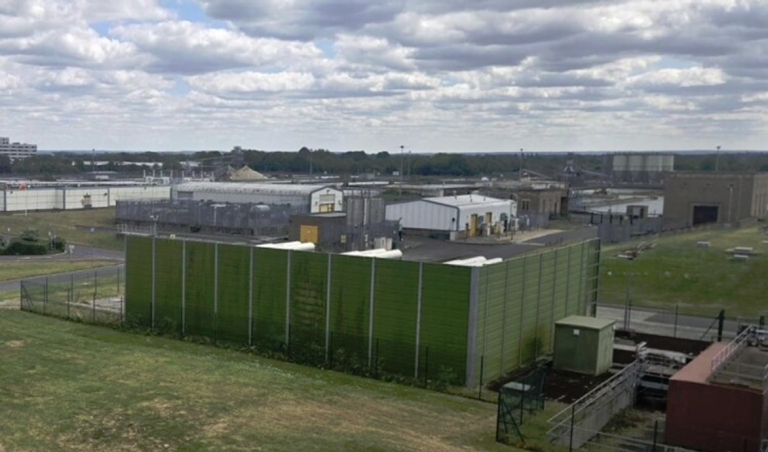
Barhale has secured a major infrastructure contract from Thames Water to undertake essential refurbishment works at Ashford Common Water Treatment Works in Surrey, helping to safeguard one of the capital’s most important drinking water supplies for years to come. The project will see Barhale reline a key abstraction tunnel that forms part of the West London Abstraction system, which supplies raw water from a network of reservoirs feeding the Ashford Common treatment works before distribution across London. The contract follows detailed inspections carried out by Barhale’s specialist Tunnels & Aqueducts team as part of the mandatory five-year inspection programme. Engineers identified inconsistencies within the Southern Inlet tunnel’s existing glass reinforced plastic (GRP) liner, which, if left unaddressed, could compromise the underlying wedgeblock tunnel structure. Following a successful Early Contractor Involvement (ECI) phase, Barhale worked closely with Thames Water to refine the engineering design and develop practical construction solutions capable of overcoming the significant access constraints created by the site’s complex network of underground tunnels and utilities. Construction will begin with the excavation of a three-metre-deep access point to expose the tunnel’s chimney and riser. Sections of the existing riser will then be carefully demolished to provide safe access to the tunnel invert, located almost 20 metres below ground level. Once access has been established, specialist scaffolding systems will be installed throughout the tunnel, enabling engineers to safely remove the existing GRP liner. The team will then excavate the surrounding grout and concrete before constructing a new reinforced concrete lining designed to restore the tunnel’s long-term structural integrity and resilience. The refurbishment forms part of Thames Water’s ongoing investment in maintaining critical water infrastructure and ensuring the long-term reliability of assets that support millions of customers across the capital. Barhale is already familiar with the site, having previously completed a localised repair within the Northern tunnel following issues identified during earlier proactive inspections. A more comprehensive relining programme for that tunnel is also planned as part of future investment works. The latest contract highlights the growing importance of asset renewal across the UK’s ageing water infrastructure, where proactive inspection, engineering expertise and targeted refurbishment are helping utility providers extend the lifespan of critical assets while maintaining resilient water supplies. By combining detailed structural assessment with specialist tunnelling capabilities, the project will ensure Ashford Common Water Treatment Works continues to play a vital role in delivering safe, reliable drinking water to London while supporting the long-term resilience of one of the UK’s most important water networks. Building, Design & Construction Magazine | The Choice of Industry Professionals

Read More »
National Safety Month: Why Lighting Remains a Critical Element of Workplace Safety`

National Safety Month: Why Lighting Remains a Critical Element of Workplace Safety

Dialight, the world leader in industrial LED lighting innovation, is marking the 30th anniversary of National Safety Month by highlighting how high-performing, industrial-grade LED lighting can help reduce risks, support compliance, and improve overall operational efficiency, particularly in harsh industrial worksites and conditions. National Safety Month, established by the National Safety Council, is a nationwide initiative focused on reducing preventable injuries, one of the leading causes of workplace and community fatalities. In industrial facilities, where employees operate around heavy machinery, hazardous materials, elevated workspaces and around-the-clock production schedules, visibility plays a critical role in reducing the risk of injury or even death. In these intense environments, lighting must do far more than simply illuminate a space. Lighting must perform reliably in challenging conditions, maintaining consistent light levels and supporting workers in making safe and accurate decisions throughout their shift. This year’s campaign continues to focus on practical, action-led safety improvements across workplaces, roads, and communities. Poorly lit environments are a key contributor to slips, trips, falls and contact with equipment, while inadequate illumination can make it more difficult for workers to identify hazards, navigate safely and perform tasks accurately. High-pressure sodium lights, in comparison to LED, can cause difficulty in distinguishing colors, putting workers at risk of misinterpreting color cues from warning placards, signs, or electrical wiring. Research has shown that clear visibility of workplace hazards can significantly reduce the likelihood of accidents and injuries by as much as 60%. LED lighting delivers appropriate levels of illumination for alertness, color perception, and reducing fatigue. Alongside the performance of lighting, reliability is equally important. Maintenance activities, such as frequently changing light bulbs, pose safety concerns for workers as many take place at heights with risks of electrocution and falls from elevation. Unlike traditional lighting technologies that often require frequent maintenance or experience lengthy restart times following a power interruption, industrial-grade LED systems are designed for long operating life and instant illumination. Reliability is particularly important in harsh and hazardous industries where environmental conditions can place significant demands on lighting infrastructure. Exposure to vibration, extreme temperatures, dust, moisture, corrosion and unstable power conditions can all affect lighting performance and, if not properly addressed, create additional operational and safety risks. In addition, HPS lighting emits high levels of unsafe UV radiation. Potent neurotoxin Mercury can be released by accidental breakage during use or disposal, particularly during maintenance. LED lighting fixtures are a safer alternative, containing zero hazardous materials.  Modern industrial LED lighting has transformed the way facilities approach these maintenance challenges. High-performance LED solutions provide bright, uniform illumination that improves visibility across work areas, walkways, stairwells and operational zones. Enhanced color rendering and near-daylight lighting conditions can help workers identify potential hazards more quickly and perform detailed tasks with greater accuracy. Beyond accident prevention, lighting also contributes to wider operational performance by supporting productivity, improving employee comfort and wellbeing, and helping organizations maintain compliance with industry safety standards and regulations. As businesses continue to modernize their operations, lighting increasingly forms part of broader initiatives focused on operational excellence, workforce welfare and sustainability. Dialight is proud to contribute to the performance of workplaces by providing industry-leading lighting solutions. Dialight offers a 10-year warranty and long LED fixture lifespan, which helps to significantly reduce the dangerous task of maintaining industrial lighting at elevated heights, while clear illumination helps to identify risks and prevent costly mistakes or accidents. For Dialight, National Safety Month provides an opportunity to highlight the important role that lighting plays in creating safer, more productive workplaces. Each week in June highlights a different safety priority, including slips, trips and falls, reinforcing the importance of visibility and hazard prevention in industrial environments. Diener Arellanes, the Head of Operations and Plant Manager – Ensenada, at Dialightsaid: “As National Safety Month encourages organizations to strengthen their commitment to safety, lighting remains one of the simplest yet most impactful ways to help create workplaces where employees can work safely, confidently and effectively. We believe that lighting is a critical component of any comprehensive workplace safety strategy, and a key consideration when implementing infrastructure. In harsh and hazardous applications, dependable lighting is an absolute necessity. By investing in the right environment, including reliable, high-quality lighting, organizations can protect their workforce while supporting compliance, improving operational efficiency and contributing to employee wellbeing.” Building, Design & Construction Magazine | The Choice of Industry Professionals

Read More »