BDC News Team

4D BIM finally unleashing its potential

4D BIM has long been hailed as the ‘magic bullet’ for project planning within digital construction, yet outdated perceptions have prevented the process from reaching its true potential. Now a new wave of thinking on the concept is revolutionising the sector’s approach. Mark Chapman, Head of Innovation at Elecosoft, explains

Read More »
Yanmar CE EMEA paints the town ‘Premium Red’ at Plantworx 2023

Yanmar CE EMEA paints the town ‘Premium Red’ at Plantworx 2023

An initial prototype of an all-new compact wheel loader will be one of many stars featured on Yanmar Compact Equipment EMEA’s exhibition stand at Plantworx 2023. Yanmar Compact Equipment EMEA (Yanmar) will be rolling out the red carpet for its disruptive and class-leading ‘Premium Red’ machines this June at Plantworx

Read More »
Lanes launches national highway drainage survey service

Lanes launches national highway drainage survey service

Wastewater and drainage specialist Lanes Group plc has launched a new national highways drainage surveying service backed by a dedicated data processing centre and advanced asset laser scanning technology. It means the company can provide clients with a safer, faster and more comprehensive highways drainage surveying service, integrated with its

Read More »
Latest Issue
Issue 339 : Apr 2026

BDC News Team

At least 100 social homes planned for regeneration of Fountainbridge

At least 100 social homes planned for regeneration of Fountainbridge

Over 100 new council homes have been approved as part of Edinburgh’s major regeneration of Fountainbridge. Formerly the site of the Fountain Brewery, the huge number of new homes for social rent will feature in a 49,000 square metre redevelopment overlooking the Union Canal. The area will be transformed as part of a development called Leamington Square – a joint venture between the City of Edinburgh Council as landowner and a partnership between Cruden Homes (East) Ltd and Buccleuch Property. They will deliver around 464 homes alongside landscaping and infrastructure improvements, over 2,700 square metres of retail space supporting the creation of a 20-minute neighbourhood approach and new local jobs. The Council will own 115 homes for social rent and 71 homes for mid market rent as part of the plans and support the delivery of additional, affordable new homes. It will also spearhead the creation of a community growing space and new integrated cycle ways. Over 1,000 cycle parking spaces are planned for the development in total. The Union Canal is a Local Nature Conservation Site and landscaping is planned to create a biodiverse area in harmony with the character of the waterway. Generous use of trees of varying species is also planned while the development will be designed to minimise greenhouse gas emissions and incorporate low carbon technologies, in line with Edinburgh’s ambitious net zero aims. Historic elements of the adjacent North British Rubber Factory will also be preserved and incorporated into the designs. It is envisaged that work will begin in 2024 and be fully built-out by 2027. Councillor Jane Meagher, Housing, Homelessness and Fair Work Convener, said: “For years, Edinburgh has desperately needed more new social housing. This council is determined to tackle that shortfall and I’m delighted that we’ve secured space for over 100 new homes for social rent at Leamington Square. “Just a stone’s throw away from the Union Canal, with great cycle links and amenities on the doorstep, the regeneration of the old brewery site is sure to prove a really popular place to live. “The demand we are seeing for affordable and social homes is only going to increase as our city grows. And, while the future is challenging, together with developers and others we are doing everything within our powers to make it fairer on residents and on our environment with high quality, affordable, sustainable homes.”  Carlo D’Emidio, Project Director of Cruden Homes, said:  “This is a significant milestone for this flagship new development, which will see the transformation of this former brownfield site in Fountainbridge into a vibrant new community.  “Subject to our development agreement with City of Edinburgh Council, Cruden and Buccleuch will deliver highly sustainable, Net Zero homes which will sit amongst a wealth of new amenities and community spaces in the Capital’s newest neighbourhood.” Ewan Anderson, Managing Director, 7N Architects, said: “7N Architects are delighted that planners have approved our latest plans for this new, mixed use, neighbourhood at Fountainbridge in Edinburgh. The development will provide 464 mixed-tenure homes, 30,000 sq.ft of mixed-use space and people friendly public realm which will reinvigorate this important canalside site. We now look forward to taking the project onwards with Cruden Homes, Buccleuch Property and the City of Edinburgh Council.” Building, Design & Construction Magazine | The Choice of Industry Professionals 

Read More »

4D BIM finally unleashing its potential

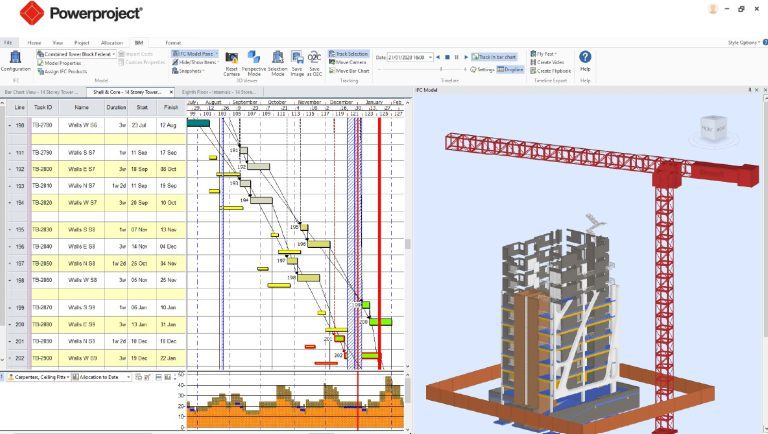
4D BIM has long been hailed as the ‘magic bullet’ for project planning within digital construction, yet outdated perceptions have prevented the process from reaching its true potential. Now a new wave of thinking on the concept is revolutionising the sector’s approach. Mark Chapman, Head of Innovation at Elecosoft, explains why the technology is at its ‘genesis moment’ and why it marks a new chapter in digital scheduling and project delivery.  The notion of 4D BIM is not a new idea within digital construction – it’s potential to achieve greater precision on construction timelines and minimise financial risk is well known by business leaders and planning teams alike. Yet despite high levels of awareness, the way 4D is currently being used remains fundamentally flawed. A reliance on outdated ‘2D’ processes and a lack of understanding of 3D models as effective planning tools has meant that 4D BIM has a perception problem – it’s no longer being seen to add ‘value’ to construction projects.  However, this is all about to change as teams look to ‘actively’ use 4D models to plan and forecast, updating as they evolve, rather than ‘passively’ using the designs as a visualisation tool. It’s an approach that, at its core, is objectively different to common working practices around 4D BIM. Yet despite going against the grain, it’s proving to be a ‘game-changer’ in terms of project deliverables – reducing risk and project overrun whilst increasing bottom lines.  2D tool in a 4D world To understand why passive 4D BIM needs to evolve, we must first take a look at the sector’s current approach to project forecasting and its use of 4D BIM. As it stands, construction teams are still opting for inaccurate planning methods. ‘2D’ Gantt chart-style formats, initially form the basis of 3D models. 4D BIM is then possible by integrating project scheduling information, turning 3D models into detailed planning tools.  The issue is that once projects progress, 4D BIM is quickly abandoned in favour of the ‘tried and tested’ but ultimately flawed ‘2D’ format. Should a client then request an updated 4D model further down the line, planning teams must then scramble to obtain a revised version. Previously, this has been a costly and timely exercise – as well as an illogical one.  It also means that 4D BIM is reduced to a mere visualisation tool. Not only does this create unnecessary expense for stakeholders, but for planning teams, it overlooks 4D’s ability to understand construction timelines and calculate risk. It’s 4D for the sake of it – or as I prefer to term it ‘Hollywood 4D’. The process of creating 2D Gantt charts can, in itself, take months, depending on the complexity of the project. Major infrastructure projects such as airports or nuclear power stations for example, require the creation of hundreds of data fields, each containing project specifics.  This ‘2D’ approach also requires time-intensive manual input from across multiple teams, be it the architect, engineer or contractor. This ‘lo-fi’ approach then fails to record the level of detail and nuance needed at each stage of construction. Staying active This is where what we at Elecosoft call Active 4D® comes into its own. By splitting it into two chains of thought – ‘passive’ and ‘active’, the sector is turning 4D BIM on its head. Passive being the use of a 3D model simply to visualise plans once data has been manually entered. Active on the other hand, takes a more dynamic stance and is fundamentally different.  This works by using the 3D model during the entirety of the planning process to ensure that the programme is correct, first time around.  It also allows for a deeper level of information to be attached to design plans, using data linked to digital objects for greater oversight and future gazing.  In the end, it means greater precision around risk and cost calculations as well as a more informed client, who understands the necessary timeframes for completion.  The root of the issue Given that the industry’s approach to project planning and scheduling hasn’t seen meaningful change in nearly a decade, it’s no surprise that widespread project overrun is now standard practice. In fact, a study by Cornerstone Projects, an underground utility provider, found that the main cause of project overrun in 2022 was poor original planning and unrealistic scheduling. What’s more, some nine in ten construction professionals had experienced project delays last year – a rise of 6% since 2016. If the sector is serious about fixing its productivity problems, then methods such as active 4D should be embraced with open arms.  It also presents another opportunity – the chance for construction leaders to become early adopters and spearhead this new, innovative approach.  By doing so, businesses may be able to ‘unlock’ the answer to time, money and risk, which is stifling construction growth. At a time of wafer-thin profit margins, 4D BIM, or more specifically, ‘Active 4D’, could be the tech they’re looking for.  Building, Design & Construction Magazine | The Choice of Industry Professionals 

Read More »
Mental Health Awareness Week: 82% of UK builders experience mental health problems due to work

Mental Health Awareness Week: 82% of UK builders experience mental health problems due to work

82% of UK builders experience mental health problems due to work-related issues, a new study has found.  The research was commissioned for Mental Health Awareness Week (15th-21st May) by IronmongeryDirect and ElectricalDirect, and the results have been published in the third edition of their annual industry report.  It found that 73% of builders experience some form of mental health problem, such as stress, anxiety or depression, every month, and sadly, 45% feel symptoms every single week. Furthermore, 92% say they do not feel comfortable talking about their mental health with others, and only 10% have spoken about it with their friends or family. Across all trades, while financial worries remain among the leading causes of stress, the wider Cost of Living crisis is now the number one concern, with almost two in five (39%) saying it’s affecting their mental health. Almost two in five (39%) workers are now doing extra shifts as a result, risking burnout.   The rising cost of materials is now also amongst the main stressors (36%), and tradespeople recently ranked the issue as the biggest challenge facing the industry in 2023.  In 2023, the most common cause of stress for builders is the cost of living crisis (44%). The top 10 most common causes of stress for tradespeople are:  Unfortunately, despite the benefits of doing so, more than four in five (84%) tradespeople don’t feel comfortable talking to others about their feelings. Just one in six (17%) have spoken to friends or family about their mental health.  Furthermore, one in ten (10%) worry what their colleagues would think if they told them what they were going through, and more than a quarter (27%) feel they can’t take time off work for mental health reasons.  Builders are the most likely tradespeople to feel stressed or anxious on a daily basis (16%), but overall, mental health problems are most common amongst surveyors. Almost all of those surveyed (98%) say they experience issues at least once a year.  The trades that are most and least likely to experience mental health issues at least once a year are:  As part of their campaign to raise awareness of mental health amongst tradespeople, IronmongeryDirect and ElectricalDirect are partnering with Basildon Mind, the mental health charity, and is donating over £5,000 to support its vital services.  Emma Mamo, Head of Workspace Wellbeing at Mind, said: “In male-dominated industries such as construction, employees are often less willing and able to open up about their mental health and ask for support. This can be problematic because mental health problems often become worse if left untreated, and the consequences can be fatal.   “We urge employers to create cultures where employees can speak openly and honestly about their mental health.”  Dominick Sandford, Managing Director at IronmongeryDirect and ElectricalDirect, said: “It’s been an incredibly difficult few years for the country, and the current Cost of Living crisis is certainly taking its toll on many people. Our research shows that the trade industry and its brilliant people have been hit hard, and mental health problems are common.  “As difficult as it might seem at first, it’s incredibly important that you talk to someone about your feelings, whether that’s your partner, a friend or family member, a colleague, or a professional. This can open the door to getting help and starting to address the problems you’re facing.”  To read IronmongeryDirect and ElectricalDirect’s Mental Health in the Trades: 2023 Report, visit: https://www.ironmongerydirect.co.uk/research/mental-health-in-the-trades/ Building, Design & Construction Magazine | The Choice of Industry Professionals 

Read More »
Sutherland-based GMG Energy switches on its huge solar array to provide energy for its burgeoning local business

Sutherland-based GMG Energy switches on its huge solar array to provide energy for its burgeoning local business

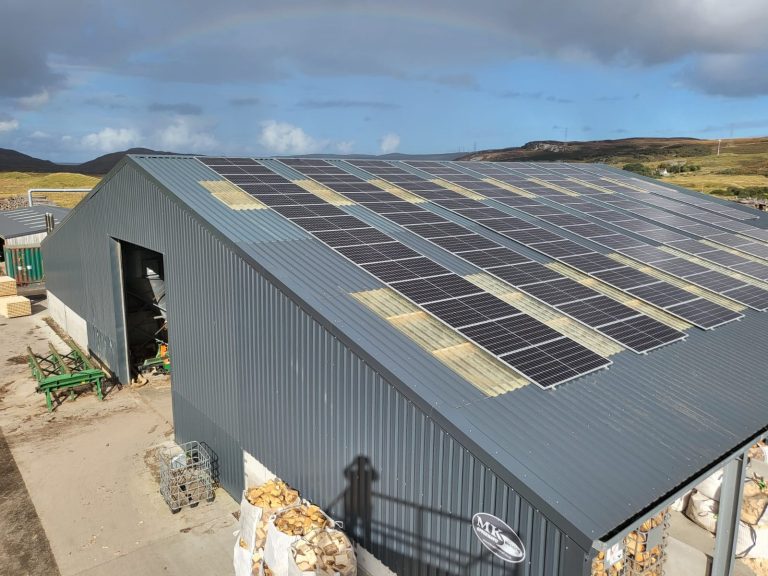
A sustainable timber products specialist which contributes significantly to the circular economy in the Highlands and the Northern Isles has become even more energy efficient after putting a massive solar array on the roof of its production facility into operation. The six-figure initiative means that biomass supplier GMG Energy can now move away from the use of expensive and polluting diesel generators for its energy-intensive activities and rely instead on electricity created from the long daylight hours of the north-east of Scotland. The £100,000 installation and commissioning of the new power system has been supported by a £70,000 loan from the Energy Saving Trust, repayable over nine years, and will allow GMG to substantially mitigate its heaviest fixed cost. In addition, the £34,000 introduction of three-phase power for GMG’s electric motors and other heavy loads has been supported by Highlands and Islands Enterprise with a 50% grant, and will allow the firm to provide surplus energy to the National Grid. Malcolm Morrison, Director of GMG Energy, said: “The team at GMG is very conscious that it operates in a pristine and beautiful part of the Highlands and everyone is pleased to be able to make a tangible contribution towards keeping it that way. “Now that the solar array – which consists of more than 100 panels which cover the roof of our production shed – is up and running, we can cut back dramatically on fossil fuel consumption and our aim is that solar will, in the near future, be responsible for 100% of our energy needs. “I would like to express my admiration for the efficient, understanding and professional way that Highlands and Islands Enterprise dealt with our application for support and also for the generous terms that the Energy Saving Trust offered to allow us to proceed with this major local initiative.” GMG Energy, which originated on a farm in the Strath of Halladale in Sutherland, processes in the region of 2,000 tonnes of timber a year. It has invested £150,000 in state-of-the-art sawmill equipment which takes its larger timber and processes it into posts, rail, cladding and purlins, or structural roof members. It has also recently spent in the region of £100,000 on timber treatment equipment which will open up new markets among construction companies and farm businesses which require treated and stress-tested products. It is on target for turnover of £2 million which it intends to maintain despite the effects of spiralling fuel, transport and labour costs. The supply and installation of the solar array was carried out in a single day by Dumfries and Galloway-based solar specialists RJW Electrical Services, which operates at domestic and commercial premises across the UK. It also maintains and services large scale solar panel farms. Building, Design & Construction Magazine | The Choice of Industry Professionals 

Read More »
Yanmar CE EMEA paints the town ‘Premium Red’ at Plantworx 2023

Yanmar CE EMEA paints the town ‘Premium Red’ at Plantworx 2023

An initial prototype of an all-new compact wheel loader will be one of many stars featured on Yanmar Compact Equipment EMEA’s exhibition stand at Plantworx 2023. Yanmar Compact Equipment EMEA (Yanmar) will be rolling out the red carpet for its disruptive and class-leading ‘Premium Red’ machines this June at Plantworx 2023. Get a closer glimpse at all Yanmar units on Stand B-FB10, ranging between its traditional mini excavator models and wheel loaders, to all-new and future-ready prototypes. Conventional tail swing excavators Yanmar’s presence at Plantworx 2023 wouldn’t be complete without its market-leading conventional tail swing excavators, including the urban and landscaping-ready SV26 (2,740kg operating weight / OW). It combines the largest cabin in its class with a 1,550mm width, delivering first-class performance and operator comfort in a surprisingly compact package. It will be joined by Yanmar’s ultra-tough and versatile SV15VT (1,685kg OW), with a unique track frame layout that features three bottom rollers and an extendable undercarriage. It is fully adaptable to the task at hand and rental ready.  The SV60-6B (5,655 – 5,685 kg OW) is also making an appearance, which uses technology and innovation to offer the performance of a midi excavator, with the benefits of a compact excavator. Designed to work effectively even in tight spaces – thanks to its 1,970mm width – the SV60-6B also features numerous design touches for operator and comfort (e.g., rear-view camera, adjustable air-suspended seat, progressive ViPPS hydraulic system). All conventional tail swing units will be accompanying their little brother at the show: Yanmar’s smallest conventional tail swing excavator, the SV08-1C (1,035 kg OW). Weighing less than one tonne, this ultra-mini (yet mighty) machine has an undercarriage that retracts from 840 mm to 680 mm, making it ideal for indoor tasks such as renovation or demolition, where it can easily access narrow areas and drive through almost any doorway. The minimum front swing radius with boom swing is 985 mm, and the rear swing radius just 725 mm.  Zero tail swing excavators The conventional tail swing units aren’t the only stars of the show – also present is a selection of Yanmar’s timeless zero tail swing excavators, including the ViO27-6 (2,770 kg OW). It’s highly advanced engine with an output of 15.8 kW at 2,500 rpm and excellent weight distribution offer standout-performance and stability. The ViO27-6 will be joined by the efficient and powerful ViO57-6B (5,505 kg OW), with its advanced 28.3kW TNV 4TNV86CT-PBV engine that meets all EU Stage V emission requirements, and electronic controls offering precision power as well as first-rate fuel economy. Completing the zero tail swing excavator trio is the low-emission ViO82 (8,200 kg OW), with a four-cylinder engine that delivers a net power of 39.3 kW at 1,900 rpm, as well as maximum stability and exceptional lifting strength. The ViO82 features direct injection and a common rail system, along with a range of other eco-friendly features to ensure it meets all EU standards for emissions. Tracked and wheeled units Compact tracked carrier C30R-3TV will also be making a red-cladded appearance, which comes mounted on a frame that turns 90° left and 90° right to maximise loading, carrying and unloading performance for operators. With a total width of just 1,390mm, it performs in even the toughest conditions and the smallest sites, and its 360° spin-turn offers greater efficiency and productivity. Despite its compact dimensions, the C30R-3TVpacks an impressive payload of 2,500kg heaped. Yanmar’s B95W wheeled excavator (9,100 – 9,500 kg OW) is also being showcased, with its precise hydraulic system that can transport and position heavy loads with precision. Ideal for moving materials, the B95W has applications that span road construction and horticulture, where the grab bucket is especially useful for loading trucks. It comes with various boom options, three steering modes; and with a road speed of up to 36 km/h, zooms from one job to another. Wheel loader prototypes Last but certainly not least, Yanmar will be giving visitors a sneak peek of its all-new compact V7HW wheel loader prototype – with its clever articulation/oscillation joint. Expected to be formally launched after September 2023, Yanmar’s initial V7HW prototype is based on a new platform that can support both diesel and electric power trains. It does not use rear exterior oscillation, but rather a features clever joint which lowers the height of the machine, meaning it can fit in standard containers and be transported on road more easily. Yanmar invites all attendees to visit Stand B-FB10 at Plantworx 2023, to experience its disruptive and future-ready construction equipment first hand. And with the latest thinking across the compact equipment landscape, there is plenty to look forward to. Building, Design & Construction Magazine | The Choice of Industry Professionals 

Read More »
Supply Chain Sustainability School Continues to Positively Impact A Sustainable UK Built Environment

Supply Chain Sustainability School Continues to Positively Impact A Sustainable UK Built Environment

The Supply Chain Sustainability School, a multi-award-winning initiative which represents a common approach to addressing sustainability within supply chains, yesterday released its 2023 Impact Report.  The report surveyed over one thousand of its members across the country to get their thoughts on what is important to their organisation and supply chain, plus offered insights into how the School has continued to positively impact organisations and supply chains, through its free practical learning and support.   The past few years have been challenging for the built environment industry; the pandemic made for a very unsure time, closely followed by the global economic downturn putting pressures on the industry with material shortages and steep rises in costs. However, sustainability remains firmly at the top of the agenda worldwide, meaning more opportunities for the School to continue to grow and widen its impact.  Reflecting this, the Supply Chain Sustainability School’s engagement figures are up significantly, with 24,160 (+44%) individuals from 5,503 companies (+30%) actively learning through the School. This has driven a 35% increase in resource views compared to the previous year. At the same time, quality ratings for the training received by the members remain very high, with 95% rating the training as good or excellent.  Shaun McCarthy OBE, Chair of the Supply Chain Sustainability School, commented: “It’s been another brilliant year for the School and we are thrilled to have over 24,000 individuals training through our learning platform. However, we recognise that there is still a way to go to achieve our vision of an industry where everyone will have the skills and knowledge to deliver a sustainable future. To achieve mass impact, technology will be a key focus moving forward. It is our hope that this additional technological investment and expertise will not only support the School’s growth, but ensure it is armed for arising opportunities so we can continue to provide membership with accessible and credible learning.”  Organisations are becoming increasingly interested in understanding sustainability and embedding more sustainable practices. Many members have identified the School as a powerful tool to help them do this. Almost three-quarters of members (73%) reported that the School has helped them to better understand their organisation’s sustainability impacts. The School has also helped 65% of members improve their understanding of modern slavery, and 54% to increase their understanding of Fairness, Inclusion and Respect.   Members also shared how the School has helped them to improve their sustainability impacts. This includes reductions in carbon emissions (52% of members) and total waste (50%), as well as increased community engagement (57%) and apprentice numbers (50%).  Julia Barrett, Chief Sustainability Officer at Willmott Dixon, commented: “The School continues to drive massive change for the industry by providing free virtual learning across a huge range of subjects. This year once again, it’s proven that through collaboration the industry can thrive. To increase our sustainability impacts further, we would love more members to register and learn through School, and more Partners to work with us to identify key issues and share new ideas.”  The School is part-funded by CITB and industry Partners, with over 190 Partners leading the direction of the School. Working in collaboration, Partners share knowledge and free resources to inspire the UK built environment to drive positive change. Last year, the School was awarded the Queen’s Award for Enterprise in Sustainable Development in recognition of the significant environmental, social and economic benefits it has delivered to its Members and Partners.  Sign up as a FREE member this Spring to benefit from over 400 training sessions, tailored assessments with action plans and a library of over 3,300 online resources. https://www.supplychainschool.co.uk/  The full Impact Report can be found on the Supply Chain Sustainability School’s website here.   Building, Design & Construction Magazine | The Choice of Industry Professionals 

Read More »
Lanes launches national highway drainage survey service

Lanes launches national highway drainage survey service

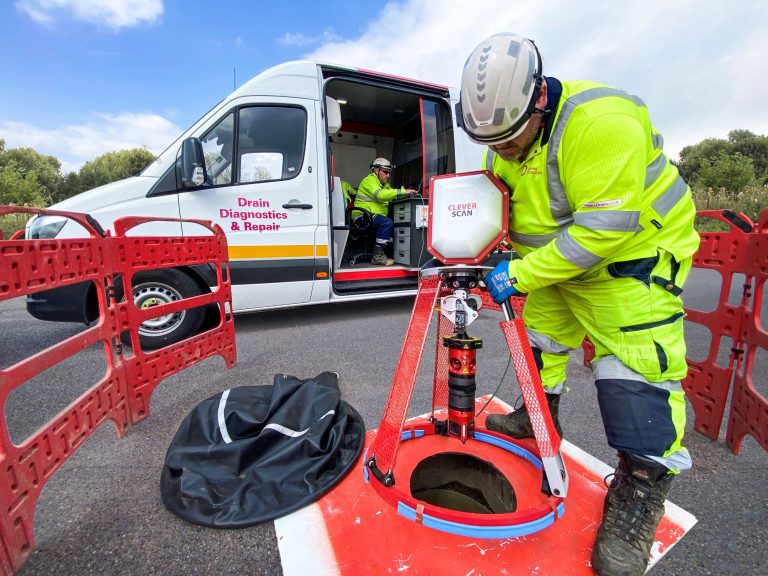
Wastewater and drainage specialist Lanes Group plc has launched a new national highways drainage surveying service backed by a dedicated data processing centre and advanced asset laser scanning technology. It means the company can provide clients with a safer, faster and more comprehensive highways drainage surveying service, integrated with its unrivalled drainage unblocking, cleaning, repair and rehabilitation services. One of the first major projects Lanes has supported with the new service has been A66 Northern Trans-Pennine, a scheme to improve the A66 between the M6 in Penrith and the A1(M) at Scotch Corner. Lanes Head of Highways Ben Forsyth said: “Developing our own in-house highways data capture and processing capability allows Lanes to deliver a faster, more agile, and safer surveying service for clients. “This can be coordinated with our drainage cleaning, repair and rehabilitation teams to give highway contractors and National Highways the best possible integrated drainage service.” Lanes can now deliver a broad range of highway survey services with in-house teams, including CCTV, GPS, full HADDMS and asset conditions surveys. It has also invested in the latest chamber laser scanning technology, so assets can be surveyed more safety and faster than ever before, with no need for confined space entry. The CleverScan inspection system is highly portable, fast and accurate. It creates a flat scan and a dense point cloud image of chambers up to 10 metres deep that can be merged into CAD and 3D applications. Using CleverScan, Lanes teams can carry out more than 30 chamber surveys per shift, twice as many as conventional methods. The laser scanner is lightweight and can be operated away from a vehicle. Data is added directly to National Highways shape files which are then sent via the cloud to a new dedicated highways drainage survey processing centre in Manchester. Its qualified and experienced highways drainage data technicians then compile reports precisely in line with client needs. The service meets National Highways targets for updating HADDMS, while providing detailed interim survey reports for client engineers. Lanes has proved the value of its new in-house service while working on the A66 scheme which is being progressed by contractors in a National Highways regional delivery partnership. Between January and March 2023, drainage engineers from the Lanes Newcastle depot completed 40 night shifts, working on the eastern section of the planned upgrade route. A team of Lanes drainage engineers from Preston and Manchester were due to begin a similar programme of works on a stretch of the A66 in Cumbria. All Lanes personnel hold the National Highways Passport and receive thorough in-house training on the new surveying systems. Lanes Contract Manager Andrew Lindsay said: “Combining the latest data capture technology like, CleverScan, with cloud data transfer and centralised processing is a game-changer for our clients. “We can give them more tailored reports that are more accurate and delivered faster than ever before. Then, if remedial work is needed, we have all the assets and skills needed as well. “It’s an end-to-end service that maximises operational effectiveness, sustainability – through multitasking and use of digital technologies – and value, through efficiencies created by service integration.” Lanes Group: www.lanesfordrains.co.uk Building, Design & Construction Magazine | The Choice of Industry Professionals 

Read More »
ACS Pioneers safe and sustainable construction with ‘Game Changing’ Intex™ product

ACS Pioneers safe and sustainable construction with ‘Game Changing’ Intex™ product

Leading Yorkshire manufacturer and designer of structural building components, ACS Stainless Steel Fixings (ACS) has today launched Intex™ Fire Protect – setting a new standard for masonry support. Intex™ is the first combined masonry support system combining four critical components in one easy-to-fit design – meaning it is over 40% faster to install, reducing congestion by to 60% and providing rock solid reliability. The product was launched at a packed industry event, attended by developers, contractors, architects and leaders from across the sector. It was centred around a Q&A on the Building Safety Act, with speakers from NHBC, Building Alliance and BBA all in attendance to discuss the role of the industry in creating safe and sustainable structures post-Grenfell. Speaking at the launch Paul Ruding, Strategic Specification Director at ACS, said: “It was a privilege to host so many of the industry’s leaders in one room, giving us the opportunity to debate and explore our role in creating safe high rise buildings that will stand the test of time. Our thanks to all who came along to engage, listen and find out about our new product – something we have invested heavily in in our pursuit of safer buildings.” Intex™ is a patented design combining wall tie, masonry support and cavity tray in one, with an added open state fire barrier mechanically fixed to the cavity tray for exceptional fire protection. The product has undertaken fire testing at Warrington Fire and achieved a test value of over 120 minutes integrity and over 90 minutes insulation. It is warrantied for an industry leading 12 years with a 60+ year design life. Paul continued: “Intex™ is a revolutionary and game changing system which brings peace of mind to everyone involved on a construction project – from installers to architects, main contractors to warranty providers. It helps to eliminate a host of problems that can lurk between masonry panels and the internal structure. “It has been created to overcome previous issues of overly complex design, cavity congestion, incompatible parts and incorrect installation, whilst Intex Fire Protect is also over 40% faster to install than traditional masonry support which means significant labour cost savings. It is ergonomically designed, making it easy for installers to handle and fit, with the added bonus of reducing deliveries and storage space onsite by up to 32%.  This doesn’t just dramatically speed up the installation process, it gives complete peace of mind that components are compatible and every one of them is doing its job.” ACS’ commercial director Gareth Twohey led the Q&A on the night, and was joined by Chris Hall, Innovations Services Manager at NHBC, Bill Hewlett, Technical Director at BBA, and Mike Leonard, Chief Executive at Building Alliance. Speaking on the night Mike Leonard said: “Among our key Building Alliance tenets is a commitment to articulating the benefits of the masonry building envelope, so I am delighted to see an organisation like ACS investing in R&D to give the industry a fantastic new masonry tool. Intex is a pioneering product that will help us build safer futures.” Made with 90% recycled steel, 100% recyclable, and with a 60-plus-year design life Intex™ Fire Protect is more reliable, effective, and efficient to install than anything that has come before. It sets a new standard for masonry support. Intex™ is also available as a 3in1 solution. In a further bid to pioneer safe and sustainable construction, ACS has also launched a free CPD programme for anyone in the sector, covering a range of masonry support topics. More than 400 delegates have already signed up for the courses. Renowned for its pioneering approach, award-winning ACS has developed its solid reputation in the market for providing patented innovative solutions, including masonry support and brick slip panel solutions – essential construction components used in construction of the largest modern-day projects in the UK. It reinvests its profits back into product research and development and creates A1 non-combustible, new products that can be used by developers looking to create high rise structures that meet changing Government legislation. Find out more at https://acsstainless.co.uk/landing_page/intex-4-in-1-masonry-support-system%20%20and%20%203-in1 Building, Design & Construction Magazine | The Choice of Industry Professionals 

Read More »
Record year in southeast for Holmes Miller architects as turnover doubles

Record year in southeast for Holmes Miller architects as turnover doubles

UK architecture firm Holmes Miller has recorded a 100% growth in turnover in the southeast of England over the past 12 months, helped considerably by the firm’s decision to shift its main studio in the region from central London to St Albans. Recent business wins since the move have included designing the new £30m City Learning Quarter for City of Wolverhampton College, the decarbonisation and refit contract at Watford Town Hall, which is being converted into a new cultural venue, alongside several new schools for local authority clients. Callum Houston, managing director at Holmes Miller, said: “Despite concerns about the wider economic landscape – particularly public spending – continued investment into community, leisure and education facilities across the area offers some definite optimism for the year ahead.  “Architects and other construction sector professionals will play a vital role when it comes to meeting long-term societal goals, particularly around retrofitting and decarbonising our existing public buildings in our pursuit of becoming a net-zero society.” The Glasgow-headquartered firm – which also has an office in Guangzhou in China – has grown its headcount within the region by 200% since moving to St Albans in the summer, including appointing Mariyam Afnida as new technical lead in November. The company plans to further grow the new office based on a strong pipeline of work particularly in higher and further education, stadium design and public sector building. One of its flagship wins last year was to design Buntingford First School in Hertfordshire, the county’s first school to be rated fully net-zero carbon, which is due for completion this summer. The school is being built to ‘Passivhaus’ standards – an energy rating Holmes Miller specialises in – which results in improved air quality, reduced carbon emissions and lower energy running costs. Holmes Miller’s southern projects also include the £27m London South Bank Technical College – a 4,000-student facility teaching practical subjects including science, technology, and engineering – which was handed over to the college for occupation in April. Mark Ellson, director and head of the new St Albans studio, said: “Creating a solid new base in St Albans has delivered very positive results. “The dynamic with many clients has changed because we understand their local needs better, we can share a greater knowledge of the region, and better understand the impact of projects such as those being provided for the community. Our clients are finding that invaluable, including some of the leading councils in neighbouring areas.” Building, Design & Construction Magazine | The Choice of Industry Professionals 
Read More »

Hear from Paul Morrell OBE on The Independent Review of the Construction Product Testing Regime

We are pleased to announce that Paul Morrell OBE will be delivering an Executive Summary of the Independent Review of the Construction Product Testing Regime at the FPA’s InfoZone Theatre at FIREX (Stand F11850) on Wednesday 17 May from 14:15 – 15:15. The Independent Review of the Construction Product Testing Regime was announced by government in April 2021 and was led by Paul Morrell OBE and Anneliese Day KC. In this talk for FIREX, hear from one of the co-authors for the first time since the much-anticipated report has been released. The purpose of the Review was to identify any potential weaknesses in the system and to make recommendations for improvement. It undertook a critical assessment of the system for testing and certifying construction products and how the system could be strengthened to provide confidence that construction products are safe and perform as labelled and marked.“This report marks a major step forward in mapping the complexity and opacity of the current construction product regime and also identifies ways in which significant improvements can and should be made” – Dame Judith Hackitt. REGISTER HERE….. About Paul Morrell OBE Paul is a chartered quantity surveyor and was formerly senior partner of Davis Langdon (now part of Aecom), where he had worked since graduating from university until retiring in 2007. He was awarded an OBE in the 2009 New Year’s Honour list for services to architecture and the built environment. He was subsequently appointed as the Government’s Fire Chief Construction Adviser, with a brief to champion a more coordinated approach to affordable, sustainable construction. Paul now practises as an independent consultant, principally concerned with governance and setting up major projects; and wider cross-industry issues. View the full InfoZone programme here Building, Design & Construction Magazine | The Choice of Industry Professionals 

Read More »