October 13, 2026
PLP Architecture Breaks Ground on ‘Tree House’: A 130-Metre Tall Vertical Ecosystem in Rotterdam’s Central District

PLP Architecture Breaks Ground on ‘Tree House’: A 130-Metre Tall Vertical Ecosystem in Rotterdam’s Central District

Global architecture and urban design practice PLP Architecture, together with developer Provast, has officially begun construction on Tree House – a 38-storey mixed-use tower next to Rotterdam Central Station. Rising 130 metres, the development integrates 299 residential apartments, 15,000 m² of office space, and an active public podium at ground

Read More »
CBRE Appointed to Explore Major Glasgow Growth Fund to Unlock City Centre Development

CBRE Appointed to Explore Major Glasgow Growth Fund to Unlock City Centre Development

Glasgow City Council has appointed global property consultancy CBRE, working alongside Mandala Partners, to develop a business case for a new city centre growth fund aimed at unlocking major development opportunities, attracting private investment and accelerating residential regeneration. The proposed investment vehicle could play a significant role in reshaping central

Read More »
Latest Issue
Issue 345 : Oct 2026

October 13, 2026

Orka Investments grows PBSA portfolio to more than 2,000 units after acquiring 226-bed scheme in Exeter

Orka Investments grows PBSA portfolio to more than 2,000 units after acquiring 226-bed scheme in Exeter

Orka Investments, the London-based real estate investment manager, has completed the acquisition of Hill View Place, a 226-bed purpose-built student accommodation (PBSA) scheme in Exeter, through its joint venture with a global institutional real estate investor. Hill View Place is adjacent to the University of Exeter’s Streatham Campus and a short bus ride from the city centre. Opened in 2022, the scheme offers a mix of en-suite rooms, studios, townhouses and penthouse apartments, alongside a gym, cinema lounge, games room, communal lounge and outdoor space. It is fully let for the 2026/27 academic year and boasts a strong historical occupancy. The University of Exeter is a member of the Russell Group and, according to UCAS data for the 2025 admissions cycle, recorded a 15.5% rise in applicants, the largest increase of any Russell Group university. Demand for the most selective universities continues to strengthen nationally. UCAS data for the 2026 cycle show applicants to higher tariff institutions rose 6.9% by the January deadline, well ahead of growth at medium and lower tariff providers. The acquisition was part funded with an acquisition loan from Investec Real Estate, with whom Orka has a long-standing relationship. The facility includes an accordion structure, which will support Orka’s growth ambitions. Orka’s joint venture launched in December 2025 with three acquisitions totalling c.1,300 beds in Birmingham, Glasgow and Aberdeen, with over 80% of beds catering to Russell Group university locations. Hill View Place is the joint venture’s first acquisition since this launch, taking the JV portfolio to 1,512 beds and adding a third Russell Group city alongside Birmingham and Glasgow. Like the seed assets, it is an established, high-quality, income-producing scheme, and it complements the portfolio’s growth into strong university markets. Including assets held outside the joint venture, Orka’s UK student housing platform now totals 2,080 beds across six schemes. Orka invests in operational real estate, principally student accommodation and hotels. Across both asset classes, income comes from individuals who stay in a building rather than from a long lease to a single tenant, so rents reset regularly and returns depend on how well each building is run. In student accommodation, Orka buys existing, income-producing schemes in cities with structural demand, at a discount to what they would cost to build today, and drives performance through active asset management and dedicated scheme-level operations. Raoul Malhotra, Founder and CEO of Orka Investments, said: “The years when student housing could rely on rapid rent growth are behind us, and that changes where returns come from. Students now choose between purpose-built accommodation, shared houses, build to rent and living at home. PBSA cannot always win that competition on price alone, so we win it on product, service and flexibility, and a well-located building like Hill View Place gives us everything we need to do that.” Philippe de Croÿ-Solre, Vice President, Investments at Orka Investments, said: “Hill View Place is a high-quality, fully let scheme in a Russell Group city where applicant numbers are rising faster than anywhere else in the group. We are pleased to have completed it efficiently alongside our partners and advisers, and we have further acquisitions in the pipeline.” Sebastian Walley, Investec Real Estate, said: “The UK remains a global higher education leader, which has underpinned our over 15-year track record funding high-quality, well-located student schemes. We are particularly comfortable supporting sponsors that understand the trends driving customer demand and manage leasing arrangements, as this usually results in a more reliable income stream that performs well across a cycle.” The joint venture was advised by Simmons & Simmons (legal) and Colliers (technical and environmental due diligence). Newmark acted for the vendor. Building, Design & Construction Magazine | The Choice of Industry Professionals

Read More »
McLaren Secures Gateway 2 Approval for £229m Ebury Bridge Regeneration in Westminster

McLaren Secures Gateway 2 Approval for £229m Ebury Bridge Regeneration in Westminster

McLaren Construction has secured a major building safety milestone for the £229 million second phase of Westminster City Council’s Ebury Bridge Estate regeneration, paving the way for construction to progress on 334 new homes in the heart of London. The Building Safety Regulator (BSR) has granted Gateway 2 approval across four separate applications covering five residential buildings, providing the regulatory clearance required for the next stage of the ambitious redevelopment. The approval represents a significant breakthrough for one of Westminster’s largest council-led housing regeneration programmes, which will ultimately transform the former 1930s estate into a modern, mixed-tenure residential neighbourhood. Phase two is the largest of three planned development stages and follows the successful completion of the first phase, as Westminster City Council continues its programme to increase housing supply and address the growing demand for affordable homes across the borough. The wider Ebury Bridge Estate masterplan will deliver 781 new homes, supported by a network of interconnected public squares, a new retail parade and community facilities designed to create a more attractive and accessible neighbourhood. The regeneration aims to establish a high-quality residential environment, combining new housing with improved public spaces and amenities while strengthening connections across the surrounding area. Securing Gateway 2 approval has required months of detailed technical coordination between Westminster City Council, McLaren Construction and the wider project consultancy team. Under the Building Safety Act regulatory framework, Gateway 2 approval is a critical requirement before construction work can commence on higher-risk residential buildings. The process requires developers and contractors to demonstrate that proposed designs and construction arrangements meet the necessary building safety requirements. For the Ebury Bridge development, the complexity of the five-building phase meant that four separate applications were required, each involving detailed design information and supporting documentation. Paul Woodhams, Managing Director for Regeneration at McLaren Construction, highlighted the scale of the achievement. “This is a complex project with five buildings which required four separate building safety applications and approvals,” he said. The milestone provides greater certainty for the construction programme and enables the project team to move forward with the next stage of delivery. Councillor David Harvey, Westminster City Council’s Cabinet Member for Housing and Regeneration, welcomed the decision and acknowledged the importance of collaboration between the local authority and its construction partner. “Collaboration with our main contractor McLaren has been key to achieving this milestone and it now gives the team the certainty needed to move ahead,” he said. He added: “I’m excited that this has been achieved and we can continue the momentum in delivering the largest council development in this part of Westminster in over 60 years.” The Ebury Bridge programme forms part of Westminster’s wider commitment to delivering new housing through the regeneration of existing estates, with an emphasis on creating mixed-tenure communities supported by improved local infrastructure. Alongside the residential accommodation, the planned retail and community facilities will play an important role in establishing a more active neighbourhood, while the interconnected public squares will provide additional outdoor space for residents and visitors. For McLaren Construction, securing the approvals represents an important achievement in navigating the increasingly demanding regulatory environment surrounding higher-risk residential developments. With Gateway 2 clearance now secured, the £229 million second phase can progress towards major construction activity, marking another significant step in the transformation of Ebury Bridge into a new residential neighbourhood for Westminster. Building, Design & Construction Magazine | The Choice of Industry Professionals

Read More »
Full refurbishment of 13,000 sq ft of Grade A office space in Southampton completes

Full refurbishment of 13,000 sq ft of Grade A office space in Southampton completes

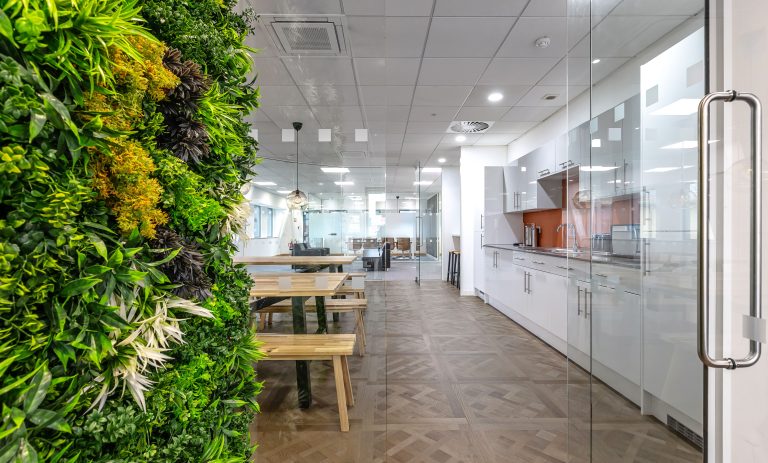
Crown House 1 has completed its transformation into a high-quality, Grade A workspace in the heart of Southampton. Landlord, Craigard, has invested heavily in Crown House 1 since their purchase in 2018 including new and energy-efficient HVAC systems throughout. The design and layout of the property provides a modern, attractive space to suit a variety of businesses. Spread across four floors, Crown House 1 boasts high-quality facilities close to the train station and within walking distance of parks and restaurants and has a secure car park. CBRE Southampton and Realest have been instructed to market the 13,000 sq ft opportunity, which can be let as a whole or as separate units. The ground floor (1,518 sq. ft.) provides a fully fitted, high-specification office suite, ready for immediate occupation. This space has been thoughtfully designed to create an inviting workspace to accelerate productivity and collaboration. The landlord’s attention to detail ensures a light and bright characterful space with a generous kitchen breakout space and zoom room. The suite has been designed using soft colours and a variety of different materials to break the space up and provide a relaxed environment. The first (4,031 sq. ft.) and second floors (4,026 sq. ft.) offer open-plan floor plates ready for a tenant fit-out. These have been refurbished with LED lighting, new carpets and fully redecorated. The first floor also benefits from its own dedicated shower and toilets. The Penthouse (3,670 sq ft) provides high-quality workspace with glass partitioning defining a fully fitted kitchen and breakout area, a dedicated boardroom/conference room and bespoke meeting pods. Workstations are provided throughout the space anda distinctive feature that sets the space apart is its dedicated private shower/changing and toilet facilities. Emma Lockey, Director at CBRE Southampton, said: “The attention to detail in Crown House 1 provides a specification rarely found in a city centre location. In a prime location, the space offers an exciting opportunity for any occupier.” Lauren Udall, Director at Realest said: “The short supply of quality office suites in the wider Southampton market, allows Crown House 1 to provide occupiers market leading space over a variety of suite sizes.” David Foster, Craigard said: “We are acutely aware that in order to let office space in today’s market a landlord needs to create a building and environment that occupiers and their employees want to come too and we believe we have done that at Crown House 1. Combined with highly competitive overall occupational costs, and its own secure car park, the building ticks all the boxes.” Building, Design & Construction Magazine | The Choice of Industry Professionals

Read More »
UK logistics market demand remains resilient amid sharp slowdown in new development

UK logistics market demand remains resilient amid sharp slowdown in new development

Constrained pipeline expected to support rental growth The UK industrial and logistics market continued to demonstrate resilience during Q3 2026, with occupier demand remaining ahead of long-term averages despite ongoing economic uncertainty and extended decision-making timelines. According to Colliers’ latest data, take-up of units over 100,000 sq ft reached 6.7 million sq ft during Q3, taking year-to-date (YTD) volumes to 21.8 million sq ft, slightly ahead of the pre-pandemic 10-year average. Activity remains concentrated among a core group of occupiers and locations and continues to be driven by retail, e-commerce and fulfilment businesses, which collectively account for 78% of YTD take-up. The Midlands remains the dominant logistics market, accounting for 63% of all space transacted so far this year. Several major deals completed during the quarter, including Super Smart Service expanding its Midlands footprint through a number of 15-year lease commitments, DIRKS Consumer Logistics pre-letting 306,000 sq ft at SEGRO Park Coventry, DHL pre-letting 450,000 sq ft at Westworks Corby, and TikTok committing to the recently completed Rugby 251 for its ecommerce platform. However, the defining trend in the market continues to be on the supply side, where development activity has fallen sharply. Although availability edged up slightly during the quarter, the UK vacancy rate held steady at 8.6%. Crucially, the quarterly increase has not been driven by new speculative development. Q3 speculative completions totalled less than 500,000 sq ft, marking the lowest quarterly delivery volume in nearly 10 years. Over the past 12 months, the amount of newly built space available across the UK has fallen by 10.3%, while second-hand availability has increased by 20%. New Grade A stock now accounts for just 36% of available space, down from 43% a year ago. Looking ahead, only 7.3 million sq ft of speculative space is currently expected to complete in 2026, representing a 45% shortfall against the five-year average, and the lowest annual delivery volume since 2018. Deirdre O’Reilly, Head of Industrial Research UK at Colliers, said: “The UK logistics occupier market continues to prove more resilient than the wider economic backdrop might suggest. While occupiers are taking a little longer to press the button, demand remains healthy and is well on track to deliver take-up of around 30 million sq ft this year. “Development activity has slowed considerably, resulting in a shrinking pipeline of new Grade A logistics space coming forward. Although vacancy has risen modestly again, the proportion of new and modern space available is falling, which means occupiers are facing a more competitive environment for the highest-quality space in the right locations.” The slowdown in development reflects a trend being seen across Europe, where industrial and logistics space under construction has declined significantly over the past year. At the same time, vacancy rates across many European markets are beginning to stabilise, supporting a more balanced outlook for the sector. Average rental growth remains positive across the UK, with rents increasing by 4.3% year-on-year in August, while prime big-box rents rose 2.7% annually to September. However, net effective rental growth continues to be moderated by increasing incentive packages, with average rent-free periods rising from 14.8 months last year to 15.8 months in 2026. Len Rosso, Co-Head of Industrial & Logistics at Colliers, added: “Retailers, e-commerce businesses and fulfilment operators continue to drive demand across the logistics sector, with Chinese occupiers remaining a particularly important source of activity. These businesses remain focused on core Golden Triangle locations that offer access to the majority of the UK’s consumer population. “With around 15 million sq ft currently under offer and the development pipeline becoming increasingly constrained, well-located logistics assets should remain well-positioned, not only supporting landlord confidence but reinforcing the importance of early decision-making for occupiers. The availability of new, high-quality space is becoming more and more limited, and that is likely to support rental growth prospects in the coming year.” Building, Design & Construction Magazine | The Choice of Industry Professionals

Read More »
Milton Keynes’ most sustainable office becomes only UK building to hold a 5 Star NABERS UK whole building rating

Milton Keynes’ most sustainable office becomes only UK building to hold a 5 Star NABERS UK whole building rating

The RO Group is delighted to announce that its flagship property in Milton Keynes, Silbury House, has achieved a 5 Star NABERS UK Energy for Offices Whole Building rating, recognising the building’s outstanding operational energy performance. Silbury House is currently the only building in the UK to hold a 5 Star NABERS UK rating, and is the third highest-rated Whole Building certified in the country. NABERS UK measures the actual energy use of office buildings, rather than their predicted performance at the design stage, providing independent verification of how efficiently a building is operating in practice. The rating represents the latest milestone in RO’s extensive refurbishment of Silbury House, originally constructed in 1998. The project set out to transform the existing building into the most sustainable office building in Milton Keynes, significantly improving its energy efficiency while avoiding the embodied carbon associated with demolition and redevelopment. The refurbishment has included the installation of 116 rooftop solar panels with a total capacity of 41 kWp, capable of generating up to 20% of the building’s energy demand. The building also benefits from an energy-efficient hybrid Variable Refrigerant Flow heating and cooling system with heat recovery technology, alongside LED lighting and advanced controls designed to reduce energy consumption. These measures have already helped Silbury House achieve an EPC A+ ( Net zero) rating. Silbury House’s sustainability credentials extend beyond energy performance. The building has secured a 3 Star Fitwel certification for health and wellbeing, making it the only building in Milton Keynes to hold the accreditation. Further reinforcing its focus on building performance, it is also the only building in the region to achieve and maintain RESET Air Certification, with indoor air quality continuously monitored, and independently verified against globally recognised standards, to ensure a healthy, comfortable and productive indoor environment for occupiers. Sustainability was also embedded in the materials and construction process. Existing materials were retained and repurposed wherever possible, including recovered raised access flooring, while carpet tiles contain 75% recycled content. No waste generated by the refurbishment was sent to landfill. Ana Bajri, Group Head of Sustainability at the RO Group, said: “Achieving a 5 Star NABERS UK Whole Building rating is a significant milestone for Silbury House and demonstrates what can be achieved through thoughtful investment in existing buildings. “What is particularly important about NABERS is that it measures actual operational performance. This rating provides independent evidence that the work undertaken at Silbury House is delivering lower energy consumption and greater efficiency for our occupiers. “We have shown that an existing building can be transformed to meet the standards expected of modern, high-quality office space. Being the only building in the UK currently holding a 5 Star NABERS UK whole building rating is a fantastic recognition. For us, this is not simply about achieving a certification; it is about using real performance data to create better buildings for occupiers and the environment. Silbury House demonstrates that sustainability, occupier experience and commercial performance can go hand in hand. We hope it provides confidence to other building owners considering how they can improve the performance of their existing assets.’’ NABERS UK was launched in 2020 and is administered by the Chartered Institution of Building Services Engineers (CIBSE). Its Energy for Offices ratings assess the measured operational energy performance of existing office buildings, enabling owners and occupiers to understand, track and improve energy efficiency. Silbury House provides Grade A office accommodation in central Milton Keynes, incorporating smart building technology, fitted office suites and upgraded amenities as part the RO Group’s comprehensive refurbishment of the property. Building, Design & Construction Magazine | The Choice of Industry Professionals

Read More »
The construction sector needs to do more to accommodate neurodiversity in the industry, here’s why

The construction sector needs to do more to accommodate neurodiversity in the industry, here’s why

With October marking ADHD Awareness Month, experts reveal how the trades sector can do more to accommodate neurodiverse tradies With October marking ADHD Awareness Month, Patricia Gardiner, trades expert for Trade Direct Insurance, has outlined the barriers that neurodiverse tradies still face, as well as how the sector can adjust to help affected tradespeople. “Tradies are significantly more likely to be neurodiverse than the general population. Research has found that whilst an estimated 15-20% of Brits are neurodiverse, over half (52%) of tradespeople consider themselves to have a neurodiverse condition1.  “For many people with neurodiversity, a practical career as a tradesperson offers many significant benefits over other career options that may lead them to pursue a career on the tools. Independence and flexibility, the nature of hands-on practical work, and individual learning in the form of apprenticeships and mentor schemes, are all positive factors that many people on the neurodiverse spectrum find appealing.  “However, the environment that attracts neurodiverse talent can also present challenges. If the sector wants to expand its current talent pool and secure a healthy future by growing the workforce, it must go further to accommodate the needs of all tradespeople.” The hidden obstacles facing neurodiverse tradies “It’s true that the trades play to many of the strengths associated with neurodiversity, but the day-to-day realities of working on-site also present unique challenges, particularly for those with ADHD. “For a self-employed tradie, their job extends beyond practical work. Invoicing, communication, managing quotes, tracking inventories, and scheduling demands high levels of organisation and effective time management. For a tradesperson with ADHD, tackling these tasks can be overwhelming, and could lead to forgotten admin or even friction with clients, due to communication challenges or missed deadlines. These administrative problems are not usually an indicator of a tradie’s ability to do their job to a high standard, but can cause doubt or a loss of confidence for customers.  “Insurance, that can be vital for tradies but can be complex and difficult to understand, also presents challenges for neurodiverse tradespeople. Fully understanding the details of a policy can be daunting and can leave tradies underprotected if they do not possess the right public liability insurance, their tools insurance does not cover the full value of their inventory, or if they plan to take on an apprentice but do not have the correct employer’s liability insurance policy.  “On-site communication is another hurdle. Many people with neurodiversity find it easier to follow written instructions or may need to clarify key points before they understand what is being asked of them, but asking for instructions to be written down or repeated can be perceived negatively. This could cause a tradie to choose not to ask for clarification in future, resulting in misunderstandings that could be avoided.”  Unlocking the overlooked potential for the industry “Addressing these challenges is vital for solving the construction skills shortage the UK is facing. Younger generations have a much greater awareness of their neurodiversity than previous generations. Combined with this, a perceived lack of attractive career options is driving many into unemployment, as individuals feel uninspired and unsuited to the world of work. Personal Independence Payment (PIP) claims for young people aged 16–24 with ADHD and autism have tripled in recent years2, an issue which is contributing to increasing numbers of young people being out of work, education or training, commonly known as NEETs (Not in Employment Education or Training).  “The construction industry should recognise this as a significant recruitment opportunity. If the sector can become more accessible to neurodiverse individuals, and if we can successfully highlight the many perks and benefits that make it a genuinely attractive career for young people, we can address youth unemployment and the skills shortage crisis at the same time. “Many young people claiming PIP or seeking adjustments are doing so because office jobs are not suited to their ways of working. Construction offers an environment that ticks many of the boxes that motivate neurodiverse individuals, such as variety and visible progress towards goals. By positioning the trades as a natural and rewarding path for young people, the industry can tap into a motivated pool of talent currently overlooked by office-based sectors. “What’s more, many of the required adjustments are universally beneficial to all tradespeople, as well as being particularly helpful for those who are neurodiverse. We can adjust regulatory and insurance language to ensure that it’s clear, to the point, and easy to understand. We can change apprenticeship curriculums to make them focused on practical learning, digital management and organisation.  “Changing how we promote the trades as a career choice for young people will allow us to appeal to talented individuals who are struggling to find direction, by giving them greater awareness of an option that might just be a perfect match for them.” Building, Design & Construction Magazine | The Choice of Industry Professionals

Read More »
Bosch Commercial & Industrial launches higher outputs for its dual-fuel boiler range

Bosch Commercial & Industrial launches higher outputs for its dual-fuel boiler range

The Uni Condens 8000F now offers outputs up to 1200kW, providing more flexible solutions for higher commercial heating demands Bosch Commercial & Industrial has today launched a new higher output for its Uni Condens 8000 F series, providing more flexibility for installers and specifiers looking for a solution for commercial, industrial or heat network applications. The UC8000F launched in 2024 and is a first-of-its-kind boiler in the UK, as well as being CE-certified. It is a dual-fuel boiler that can run on both natural gas or hydrogen, with the ability to seamlessly switch between both.  Outputs are available from 145kW to 1200kW, with the option to easily cascade multiple appliances to reach even higher outputs of multiple megawatts. Through a partnership with industrial combustion specialists Dunphy, customers can expect assured quality, with Dunphy providing the burner for the appliance. The UC8000F also offers low emissions due to an included flue gas recirculator, which keeps NOx emissions under 40mg/kWh. Pete Mills, Commercial Technical Operations Manager at Bosch Commercial & Industrial, said, “A mix of technology and fuel options for heating will be essential for us to reach the UK’s lofty decarbonisation targets – with hydrogen being a part of that. By introducing a new higher output for our UC8000F, we are now able to offer more options and hopefully remove barriers for early-adopters of hydrogen projects.” For more information on the UC8000F visit; https://www.bosch-industrial.com/gb/en/ocs/commercial-industrial/hydrogen-boilers-20753156-c/ Building, Design & Construction Magazine | The Choice of Industry Professionals

Read More »
Milton Keynes named UK’s top construction hotspot outside London as opportunity soars

Milton Keynes named UK’s top construction hotspot outside London as opportunity soars

New research reveals the UK locations where the construction industry is thriving, with Milton Keynes taking the top spot. Milton Keynes has been named the UK’s most thriving construction hotspot outside London, according to new research from construction branding specialists Monster-Mesh. The study analysed five key indicators across 95 UK locations to identify the towns and cities outside the capital where the construction industry is showing the strongest signs of activity, investment and future growth. While London continues to dominate the UK construction landscape, the research reveals a number of regional locations where a combination of established construction businesses, economic output, workforce growth, job opportunities and investment in construction branding is helping to drive a thriving local industry. The study by Monster-Mesh ranked locations according to: Each indicator was scored out of 100 before being combined to create an overall index score out of 500. To ensure a fair comparison between locations of different sizes, figures were standardised according to population or presented as percentages. The UK’s top 10 construction hotspots outside London  (index score out of 500)  1st) Milton Keynes, Buckinghamshire: 339  2nd) Rochester, Kent: 318  3rd) Canterbury, Kent: 312  4th) Tunbridge Wells, Kent: 310  5th) Dartford, Kent: 309  6th) Stevenage, Hertfordshire: 308  7th) Chelmsford, Essex: 297  =8th) Oxford, Oxfordshire: 296  =8th) Reading, Berkshire: 296  10th) Cambridge, Cambridgeshire: 279 Milton Keynes named the UK’s top construction hotspot Milton Keynes has taken the number one position in this year’s ranking, scoring 339 out of 500. The town benefits from the strength of the wider South East construction market, which accounts for 16.9% of the UK’s construction businesses. This is the highest proportion of any region included in the study. Construction in the South East also generates £41,319 in GVA per head, providing a strong economic backdrop for locations such as Milton Keynes. The city also stands out for the amount being invested in construction branding. Monster-Mesh data shows that £59,211 is spent on construction branding solutions per 100,000 people in Milton Keynes, giving it the highest branding spend among all locations analysed. That investment has also more than doubled year-on-year, with construction branding spend in Milton Keynes increasing by 103% compared with last year. However, the research suggests that Milton Keynes’ construction market is not simply being driven by branding investment. The region is forecast to see a 3% increase in its construction workforce between 2026 and 2030, while the city currently has five advertised construction jobs for every 100,000 residents. Mark McLennan, Founder at Monster-Mesh said, “Milton Keynes taking the top spot from Tunbridge Wells this year is a really interesting result. It demonstrates that a thriving construction sector isn’t necessarily about having the highest number of job vacancies or the fastest workforce growth in isolation. The combination of a strong regional construction base, economic output and business investment all play a part in a thriving local sector. “The particularly strong increase in construction branding spend is also worth highlighting. Businesses don’t generally invest in their visibility unless they see an opportunity to compete and grow, so this could be a useful indicator of the confidence within Milton Keynes’ construction sector.” Rochester takes second place Rochester has climbed into second place, scoring 318 out of 500. Like Milton Keynes, Rochester benefits from the wider strength of the South East construction industry, with 16.9% of UK construction firms located across the region and construction generating £41,319 in GVA per head. Construction branding investment is particularly strong in Rochester, reaching £44,246 per 100,000 people, and perhaps more significantly, branding spend has increased by 104% year-on-year. This suggests a rise in investment from construction businesses looking to increase their visibility and compete for new opportunities. Rochester currently has 12 advertised construction jobs per 100,000 people, while the regional construction workforce is forecast to increase by 3% between 2026 and 2030. Canterbury comes in at third place Canterbury takes third place with an overall index score of 312. The Kent location combines the strength of the wider South East construction market with significant investment in construction branding. Construction businesses in Canterbury are spending £37,356 per 100,000 people on branding solutions, representing a 14% increase compared with last year. The location also has 25 advertised construction jobs per 100,000 people, while the wider South East is expected to see construction workforce growth of 3% between 2026 and 2030. With 16.9% of the UK’s construction firms located across the wider South East and construction generating £41,319 in GVA per head, Canterbury’s position in the top three highlights the continuing strength of Kent and the wider South East as a construction hub. Mark said, “London will always be an enormous construction market, but it’s important not to overlook what’s happening elsewhere in the UK. “This year’s research shows some really interesting regional hotspots. Milton Keynes, Rochester and Canterbury are leading the way, while locations such as Dartford, Stevenage, Oxford and Reading are seeing particularly significant increases in construction branding investment. “The construction landscape is constantly changing, and looking beyond London gives us a much better picture of where businesses are investing, where employment opportunities are emerging and where the sector could be heading next.” Construction branding investment surges across UK cities Construction businesses across the UK are significantly increasing their investment in branding, with the number of construction branding units ordered over the past year rising by 89%, while total spend on construction branding has increased by an even greater 94%. The latest Monster-Mesh data reveals the cities where construction branding investment is growing fastest, with Bath recording the biggest increase in spending, up by an impressive 297% over the past year. Portsmouth follows closely behind, with construction branding spend increasing by 295%, while Slough saw spending rise by 285%. For further information about the study and to speak to the team, visit Monster-Mesh.co.uk. Building, Design & Construction Magazine | The Choice of Industry Professionals

Read More »
PLP Architecture Breaks Ground on ‘Tree House’: A 130-Metre Tall Vertical Ecosystem in Rotterdam’s Central District

PLP Architecture Breaks Ground on ‘Tree House’: A 130-Metre Tall Vertical Ecosystem in Rotterdam’s Central District

Global architecture and urban design practice PLP Architecture, together with developer Provast, has officially begun construction on Tree House – a 38-storey mixed-use tower next to Rotterdam Central Station. Rising 130 metres, the development integrates 299 residential apartments, 15,000 m² of office space, and an active public podium at ground and first floor, featuring cultural programming, dining, and retail. With residential units almost fully sold prior to breaking ground, the project enters construction with the majority of its homes already committed. Rather than separating functions into isolated structures, Tree House consolidates housing, workplaces, and public life into a single vertical ecosystem. At ground and first-floor level, the public realm podium opens the building to the city, with a café-bar, restaurant and an event space programmed by De Dépendance, a Rotterdam platform known for staging talks, live music and book signings. Residents and office workers reach their own separate entrances and lift lobbies from this same podium, so all three groups – residents, office workers and visitors – pass through it during the day. To promote sustainable mobility, the project provides 1,017 dedicated bicycle spaces. “Too often, tall buildings act as isolated islands, separate from the city around them. With Tree House, we wanted to flip that logic completely and so we approached the tower not as a standalone object, but as a participant of Rotterdam’s ecosystem – a vertical streetscape where biodiversity, public life, and working environments actively support one another.” – Ron Bakker, Founding Partner at PLP Architecture. The project’s ecological design is anchored to the site’s four mature plane trees that pre-date World War II, survived the 1940 bombing of Rotterdam and have been retained to form a key part of Tree House’s architectural design. The presence of these historic trees directly shaped the stepped geometry of the lower terraces, creating a physical and historical bridge between the new tower and Rotterdam’s broader network of green corridors. The architecture takes direct inspiration from how a mature tree functions within its environment – providing shelter, cooling the air, retaining water, and supporting local ecosystems. Nature-inclusive measures are embedded across the tower, including deep-soil green terraces, roof gardens, integrated solar balconies, and nesting habitats for birds and insects. An advanced rainwater harvesting system manages water retention during heavy rainfall events in tandem with the surrounding station area, helping to support biodiversity and mitigate the urban heat island effect. Tree House marks a major milestone in the ongoing regeneration of Rotterdam’s Central District, continuing the city’s long tradition of architectural innovation, from the historic Witte Huis (1897), widely recognised as one of Europe’s first skyscrapers to its celebrated post-war reconstruction skyline. With around 40 million people passing through or around Rotterdam Centraal each year, Tree House sits at one of the most vibrant crossing points in the city. Building, Design & Construction Magazine | The Choice of Industry Professionals

Read More »
CBRE Appointed to Explore Major Glasgow Growth Fund to Unlock City Centre Development

CBRE Appointed to Explore Major Glasgow Growth Fund to Unlock City Centre Development

Glasgow City Council has appointed global property consultancy CBRE, working alongside Mandala Partners, to develop a business case for a new city centre growth fund aimed at unlocking major development opportunities, attracting private investment and accelerating residential regeneration. The proposed investment vehicle could play a significant role in reshaping central Glasgow, supporting the delivery of new homes, commercial developments and wider regeneration projects as the city pursues its ambition to increase its city centre residential population to 40,000 by 2035. The appointment marks an important step in exploring alternative funding mechanisms capable of overcoming the financial viability challenges that can prevent development schemes from progressing, particularly within established urban locations. CBRE will lead the assessment, supported by economics, policy and strategy consultancy Mandala Partners, examining how public and private sector capital could be combined to stimulate investment and bring forward development opportunities. A central element of the study will be identifying potential funding structures that can address viability gaps, helping to make residential and mixed-use schemes more financially deliverable while encouraging further institutional and private sector investment. The work will also consider how a growth fund could be established, financed and operated, drawing on investment and regeneration models already developed by local and regional authorities elsewhere in the UK. These approaches will be assessed against Glasgow’s particular development requirements, economic priorities and the wider Scottish funding environment. Although the initial focus will be on central Glasgow, the Council has indicated that any future investment mechanism could potentially be expanded to support regeneration and development across the wider Glasgow region. The study comes as cities throughout the UK continue to examine new ways of financing urban regeneration, particularly where construction costs, infrastructure requirements and development viability present obstacles to bringing forward major projects. For Glasgow, increasing the number of people living in the city centre is a central part of its longer-term regeneration ambitions. Additional residential development could support greater demand for retail, leisure, hospitality and local services, while encouraging investment in existing buildings and underutilised urban sites. A dedicated growth fund could potentially provide a more coordinated approach to investment, helping public and private sector partners address the financial barriers associated with delivering new development. However, the establishment of such a fund remains at the feasibility stage, with no final decision taken on whether it will proceed. The business case is being prepared in accordance with HM Treasury’s Green Book guidance, which provides the framework for assessing the economic, financial and strategic justification of public sector investment proposals. A Glasgow City Council steering group, comprising elected members and senior officers, will oversee the preparation of the study, which is expected to be completed by the end of 2026. The findings will inform the Council’s consideration of whether a growth fund represents a viable and effective mechanism for supporting future investment. Any subsequent decision to establish the fund, including its financial structure, governance and potential investment priorities, will require further consideration and approval by the Council. The appointment of CBRE and Mandala Partners highlights Glasgow’s ambitions to strengthen its investment proposition and explore new partnerships capable of supporting long-term urban transformation. With residential growth, commercial investment and city centre regeneration increasingly interconnected, the proposed fund could become an important mechanism for unlocking development opportunities and supporting Glasgow’s next phase of growth. Building, Design & Construction Magazine | The Choice of Industry Professionals

Read More »