Kenneth Booth

NOVUS MAINTAINS RIVERSIDE GROUP WITH LATEST FRAMEWORK WIN

Novus Property Solutions has continued its longstanding relationship with The Riverside Group with a high-volume framework contract for works across England, at an estimated value of over £970,000. The two-year planned multi-void replacement works will see Novus carry out a variety of refurbishment works across a significant number of properties

Read More »

Five ways to support mental health in the workplace 

On World Mental Health Day which take place today, the 10th October 2022, Alex Minett, Head of Products and Markets at CHAS, offers five steps companies can take to make workplaces more inclusive for workers who have experienced mental health issues.  It’s fair to say the covid-19 pandemic has fuelled

Read More »

SIG building solutions enters solar car parking structure market

SIG Building Solutions has entered the solar car parking structure market with a range of designs developed to help private and public sector organisations with large parking facilities to capitalise on the opportunities the structures provide for generating solar energy and reducing their carbon footprint. Designed and manufactured in the

Read More »

HS2 celebrates as first giant London tunnelling machine is switched on

First of two 2,000 tonne TBMs (Tunnel Boring Machines) starts 5-mile journey towards Greenford from West Ruislip in West London  First machine named ‘Sushila’, after pupils nominated local teacher Sushila Hirani. Second machine named after ‘first professional’ female astronomer Caroline Herschel.   HS2 Ltd CEO Mark Thurston: “The launch of the

Read More »
Latest Issue
Issue 343 : Aug 2026

Kenneth Booth

£500 Million Regeneration of Glasgow’s Buchanan Wharf Reaches ‘Topping Out’ Milestone

Drum Property Group’s £500 million regeneration of Buchanan Wharf on Glasgow’s Clydeside has reached another significant development milestone with the completion of structural work for its final building phase. Construction of the new six-storey office headquarters for the Students Loans Company (SLC) has now reached its highest point, with the 75,000 sq ft building set for occupation in 2023.   Drum first announced the deal to bring SLC to the site in September 2021, which will accommodate up to 1,100 staff at the purpose-built complex as part of a 20-year deal. The build was subsequently forward funded by Legal & General Investment Management Real Assets, with construction starting in December 2021.  The completion of the SLC building represents the final piece in the jigsaw for the Buchanan Wharf site, one of Scotland’s largest ever development projects. The site is already home to Barclay’s state-of-the-art Northern European campus HQ, together with an 18-storey, 324-apartment residential complex for Legal & General which completes later this year. The site will also provide a mix of local amenities and landscaped public spaces.  Senior representatives from Drum, SLC, Legal & General and building contractor Graham Construction gathered to mark the occasion with a traditional ‘Topping Out’ ceremony celebrating the last concrete pour on the highest part of the building.   Graeme Bone, Group Managing Director at Drum Property Group said: “We are now witnessing Buchanan Wharf’s true scope and potential being delivered before us. In less than four years, and during challenging times, our exciting development vision has now been fully realised. The Topping Out ceremony is both a celebration of a superb building, and a fitting testament to the confidence, commitment and resilience shown by Drum and all its development partners in finally delivering the wider Buchanan Wharf – one of Scotland’s most important commercial and residential projects. We are proud to be bringing new investment, energy and excitement to Glasgow’s city centre, placing the River Clyde once again at the heart of the city’s economic, social and cultural renaissance.”  The SLC building supports the organisation’s ambition to become a more modern, responsive and sustainable organisation as part of its multi-year transformation programme to deliver an outstanding customer experience through the use of new technology.  Stephen Campbell, Chief Information Officer for the Student Loans Company said: “The Buchanan Wharf development has transformed the landscape of the city centre, and the River Clyde, providing a prominent, state-of-the-art campus. We are thrilled that the structural work of our building is now complete, which has marked a vital milestone of this project.  “We are now working more flexibly, spending time in the office and at home. This helps us harness the value of co-location – the social interaction, team connection, rich collaboration, enhanced quality of learning and sense of belonging we get from time spent in the office as well as the quiet focus and balance we get from working at home. We are creating an office experience, with the help of our colleagues, which encourages and facilitates collaboration as well as supports future ways of working. It will also allow us to continue to improve our customer experience to our eight million customers across the UK.”  The building’s forward funding by Legal & General cements the ongoing and strong relationship with Drum Property Group, providing LGIM Real Assets with another government office for its regional portfolio. Neil Dovey, Head of Annuity Transaction for LGIM Real Assets, added: “We are pleased to see the building develop at pace and look forward to its completion next year. Buchanan Wharf is a scheme of the highest quality and this new building will sit alongside our Build to Rent scheme which opened last month.  “The investment demonstrates our continued commitment to the regions, levelling up and the growing strength of regional hubs across the UK. Our Inclusive Capitalism purpose means we are uniquely positioned to deliver some of the UK’s most strategically important city centre and urban regeneration schemes that are fast transforming and reshaping Britain’s landscape, bringing jobs and services back into the centre of cities.”  For more information on Buchanan Wharf, visit www.buchananwharf.com 

Read More »

NOVUS MAINTAINS RIVERSIDE GROUP WITH LATEST FRAMEWORK WIN

Novus Property Solutions has continued its longstanding relationship with The Riverside Group with a high-volume framework contract for works across England, at an estimated value of over £970,000. The two-year planned multi-void replacement works will see Novus carry out a variety of refurbishment works across a significant number of properties up and down the country with the aim of getting families into homes, reducing existing voids and mitigating any rental losses. Novus and The Riverside Group have a pre-existing relationship with the leading maintenance and compliance contractor previously completing a variety of works for the housing association including fitting brand new kitchens, windows, doors and bathrooms on existing properties stretching across England. The Riverside Group is one of the leading registered providers of social housing within the UK, offering affordable housing as well as support to all of its residents regardless of their situation. It aims to transform lives through affordable home ownership and great value rent whilst adding to the local community’s wellbeing – closely linking with Novus’ own people-centric ethos which includes giving back to the communities in which it works. The Stoke-headquartered contractor will be supporting and working alongside the Direct Labour organisation to bring its expert solutions to allow more families to get into the homes they deserve at a much quicker rate. Commenting on the new framework win, Sam Frame, Head of Operations at Novus said: “We’re proud to have secured another multi-void framework contract with The Riverside Group and we’re looking forward to continuing to build on our existing relationship with The Riverside Group that allows us to work as one. “This contract comes as Novus continues to build on the success of our five-year growth strategy, which includes nurturing our relationship with our valued existing clients, as well as securing new high value, long term contracts.”

Read More »

Five ways to support mental health in the workplace 

On World Mental Health Day which take place today, the 10th October 2022, Alex Minett, Head of Products and Markets at CHAS, offers five steps companies can take to make workplaces more inclusive for workers who have experienced mental health issues.  It’s fair to say the covid-19 pandemic has fuelled a global emergency for mental health, and there’s no sign of letup with ongoing disruption to mental health services and access to treatment. This is compounded by the current cost-of-living crisis and the extra stressor this is putting on people’s everyday lives. A recent position statement published by The Royal College of Psychiatrists (RCPsych) calls for better workplace support when it comes to meeting mental health challenges to help people with mental health issues return to and stay in work. Indeed, latest statistics from the HSE put stress, anxiety and depression as the leading cause of sick leave, accounting for 50% of ill health absences. While this is a 6% increase on pre-pandemic levels, it’s worth noting that figures were already on the rise in 2019. What’s clear is that employers can play a significant role in providing mental health support not only to safeguard their workers’ wellbeing but to shore up business security and productivity too. 1. Create a culture of transparency One of the biggest barriers to addressing mental health is the ongoing stigma perpetuated by it being an invisible problem, particularly in the workplace. It stands to reason that the best way to create normalcy is to get people talking. The RCPsych report puts the onus on workplace leaders to start the conversation, recommending “that those in supervisory positions, from the most junior upwards, feel confident enough to identify potential mental health difficulties in their staff and to speak with them about such difficulties.” Whether this message is communicated through one-to-ones, informal forums, structured training or toolbox talks, the aim is to open up discussions around mental health so that an employee doesn’t suffer in silence and allow the problem to grow. 2. Offer flexibility and support According to mental health charity, Mind, studies consistently show that employees who feel valued and supported at work will have higher health and wellbeing levels leading to fewer mental health challenges. Being able to offer an improved work-life balance is within the remit of the employer. Where possible, consider offering remote or flexible working that balances employees’ individual needs with the business’s running. It is worth pointing out, however, that loneliness and isolation can be a key factor in mental health issues, so remote work comes with its own risk assessment requirements.  Other positive steps employers can take include pointing employees in the direction of recommended counselling and support services and enabling access to them during working hours like they would for other medical appointments. As with any illness, employees returning to work following mental health-related sickness absence should be offered phased returns, return to work assessments and access to training to catch up on any career development they may have missed. 3. Review policies and procedures All relevant HR policies (including health and safety, sickness absence, grievance policies etc) should be joined up in their inclusion and approach to mental health. HR leaders should bear in mind that mental health issues might contribute to incidents leading to disciplinary action and performance management. They should also consider the impact of dismissal and redundancy on individuals by ensuring that appropriate support and access to advocates are available for those who need them. In terms of legislation, the Equality Act 2010 considers it a disability if someone has “a mental impairment that has a substantial, adverse, and long-term effect on [their] ability to carry out normal day-to-day activities.” This means that employees with a mental health disability have the legal right to request reasonable adjustment changes to their job and receive protection from discrimination, victimisation and harassment.  4. Lead from the top Managers and leaders are in a unique position to send a clear message to staff about the importance of workplace wellbeing. In the first instance, they should prioritise understanding the triggers for workplace mental health issues, which may include working long hours without breaks, to overly pressurised working environments. They can then take steps to tackle where these issues may arise in their organisations by, for example, actively encouraging and role modelling healthy working habits such as taking full lunch breaks and annual leave as well as working sensible hours.  Employee engagement is also crucial for employers to identify what they may need to do regarding challenging mental health issues. Staff forums and surveys are all useful for employers to take stock of their current approaches to mental health and identify where improvements are needed. 5. Strive to be better Promoting an organisation-wide mental health strategy signals a serious commitment to the issue of mental health, particularly when looking at it through the lens of a broader fairness, inclusion and respect (FIR) approach to working practices which include mental health among its many other topics. A strategy should centre around promoting staff wellbeing, identifying the causes of work-related mental health problems and what support staff need.  Where employers are looking to strengthen their approach to this issue, undertaking the CHAS FIR growth assessment will set a benchmark for what they are doing now against what more they need to do to achieve industry best practice and ultimately become industry leaders in supporting mental health challenges in the workplace. Conclusion Positive employment has a vital role to play in promoting better mental health. Where, according to RCPsych, a ‘good workplace’ offers “benefits such as job security, an appropriate wage, positive work-life balance, opportunities for career progression, and supportive mental health and wellbeing policies”, employers can look to be rewarded by a loyal, more productive workforce contributing to better business performance.

Read More »

SIG building solutions enters solar car parking structure market

SIG Building Solutions has entered the solar car parking structure market with a range of designs developed to help private and public sector organisations with large parking facilities to capitalise on the opportunities the structures provide for generating solar energy and reducing their carbon footprint. Designed and manufactured in the UK from UK held steel stock, SIG Building Solutions’ structures can be developed, manufactured and delivered in a matter of months, depending on planning approvals.  SIG works in conjunction with the solar system provider to provide the structure element. With a number of solar car parking structure projects already in the pipeline for SIG Building Solutions, including large commercial and industrial schemes, the business is well positioned to continue to meet the growing demand. Guy Chilvers, SIG’s Solar structural canopies business development manager, has spent ten years in the market, including five years specialising in car parking structure design with involvement in projects such as Bentley Motors, Crewe, and Falkirk Council’s EV Hub, which has 200 parking spaces and was officially opened in September 2020. He says, “With solar car parking structures, any organisation with a significant area of parking space, can generate power and save money.  At the same time, the watertight canopies help to protect vehicles from the elements.  Our structures are designed to have a fully watertight canopy, guttering and cable containment.” In 2017 SIG Building Solutions company Steadmans manufactured the steel framing for the Bentley Motors solar car parking structure in Crewe, which covers 1,200 car parking spaces and provides 25 per cent of the electricity demand for the factory.  Darren Hall, Steadman’s commercial director, said, “Having supplied the steelwork for the Bentley project we are excited to have re-entered the market.” During 2022 SIG Building Solutions has developed a range of structure designs for the commercial market with the aim of providing an ‘off-the-shelf’ solution at a viable price.  The investment has resulted in unique structural designs that require less steel, so reducing the cost, and can be installed efficiently to minimise disruption to car parking during installation. SIG offers a choice of canopies depending on clients’ requirements and on-site analysis.  The options are based around three main designs: a double gull wing design ideal for east/west facing panels; a double mono version providing maximum area for south facing panels; and a single row structure specifically designed for EV charge points. To specify the most effective structure, SIG Building Solutions undertake a complete analysis of potential car parks, looking at location, shading, drainage and power requirements.  The location of the canopies within the car park and orientation is vital to obtaining a good return on investment, says Guy Chilvers.  Renders of the site are produced to support the quotation and these can be used for planning applications. “Hospitals, schools, leisure centres, airports, office complexes, factories, shopping centres and railway station car parks – really the scope for solar car parking structures is tremendous,” adds Guy Chilvers. SIG Building Solutions SIG Building Solutions group businesses produced over three million metres of profiled steel sheeting in 2021.  Across its six sites the business sold over 800,000 metres of insulated panel.  SIG Building Solutions is part of SIG plc, a leading supplier of specialist insulation and sustainable building products and solutions with an emphasis on expertise and service.  SIG plc has 6,800 employees, 432 sites and 250,000 product lines.  SIG plc is committed to supporting customers to make tangible steps towards a greener future. For more information, contact Guy Chilvers, SIG Building Solutions, on 07528 777513 Email: GuyChilvers@SIGbuildingsolutions.co.uk

Read More »

Zero Carbon Sustainability event launched by housing association at WWF headquarters, Woking

A local affordable housing association serving Surrey, East and West Sussex is relaunching its sustainability event series, with the first event taking place at the WWF Living Planet Centre in Woking. Greenoak Housing Association which owns and manages 550 homes, is reaffirming its commitment to sustainability through the event, which will take place on 14 October 2022, and is relaunching its commitment to share good practice with others through periodic briefings prior to Covid. The event will see representatives from Greenoak collaborate with speakers from architects, Studio Partington, and fellow housing association Stonewater. The session, which runs from 12:30pm to 4pm, will cover topics such as building standards for low carbon projects, the urgent transition to becoming a zero-carbon housing provider as well as a panel discussion. The relaunch of the series follows the announcement earlier in 2022 of a proposed partnership between Greenoak and Stonewater, with the aim of delivering more sustainable new homes and driving the net zero agenda as sector leaders. Vicki March, Director of Development and Sustainability at Greenoak said: “Climate change mitigation has been at the centre of Greenoak for over 20 years. We adopted our first sustainability policy in 1999 where we moved away from developer-led and design and build schemes to developing low environmental impact housing using expert design teams. “Our previous series of sustainability events came to an end in 2017 and with delays due to the Covid-19 pandemic, now is the perfect opportunity for us to revive our sustainability series to really focus on transitioning to a zero-carbon organisation and sharing our insight from this process. “By bringing in the expertise from Stonewater, which shares our ambition to grow with a commitment to sustainability, we’re further strengthening the relationship following our partnership proposal.” Adam Masters, Assistant Director of Environment and Sustainability at Stonewater said: “We’re excited to be participating in the inaugural relaunch of Greenoak’s sustainability series as the relationship between our two organisations is based on a shared commitment to environmental sustainability. “With a wide range of challenges facing the sector, a partnership with Greenoak will enable us to be at the forefront of combatting environmental issues and the sustainability series is just one of the steps we’re taking to build collaboration.” Vicki added: “We look forward to welcoming delegates from other housing associations, Councils and organisations across the sector to the event at this highly sustainable and beautiful building, which is the world headquarters of the World Wildlife Fund (WWF). We hope the discussions that take place will help inspire others to continue on their own pathway to the important actions needed.” To register to attend the event, visit https://www.greenoakha.org/news.html or contact ericka.gastaldon@greenoakha.org for more information.

Read More »

PUBLIC CONSULTATION LAUNCHING ON PLANS TO REGENERATE AREA AROUND NORTHAMPTON TRAIN STATION

Views are being sought on a scheme that will transform the station gateway and enable more people to travel sustainably by train. blocwork – a partnership between Network Rail and bloc Group – is hosting a public consultation ahead of the submission of a planning application on its proposals to regenerate an area surrounding Northampton Train Station.  The plans will see a new multi-storey car park constructed to allow for an increase in passengers using the station. Once complete, a further two sites will then be developed in a second phase which will provide a hotel and new homes. These will be developed on the area of land where the existing surface and deck car park currently sit. A covered walkway is also planned for pedestrians travelling between the station and the car park. The site currently consists of two areas of open surface car-parking, alongside an adjoining single deck car park. The current parking provision fails to meet demand resulting in many people choosing instead to commute to London and other areas by car rather than by train, despite the town enjoying good rail links that offer far more environmentally sustainable journeys and the opportunity for commuters to avoid road traffic congestion. The current use of the whole area for parking means the area lacks vibrancy and can feel unwelcoming. The new proposals will change this and deliver a new gateway into Northampton. The new homes and hotel are intended to bring more people to the station area, helping to stimulate the local economy and facilities around the station, while making the area feel more welcoming by day and night. The new car park, to be built ahead of the hotel and apartments in a first phase, will increase the total amount of parking available, improving the capacity for people to travel by train, while also providing a new modern parking facility. By constructing the new car park first, parking provision for the station can be maintained throughout the delivery period of the project. As part of the regeneration of the site, new public realm improvements, such as new planting and paving, are planned to improve the access to the station and passenger access to the wider project. Commenting on the proposals, Chris Byrne from Network Rail said: “It’s really exciting to be able to share these plans with local people so they can shape how we transform the area around Northampton station and make it fit for the future. We know that there have long been calls for better parking at the station and with the railway at the centre of this redevelopment we believe it will encourage more people to make long distance journeys by using the greenest form of public transport and encourage passengers to make more sustainable travel choices.” The consultation will run from Monday 10 October to Friday 28 October 2022. A consultation website is available to view the plans and provide feedback at www.northamptonstationgateway.co.uk and an email address is also available for people to comment or ask questions (info@northamptonstationgateway.co.uk). The team will be on hand to answer questions about the plans between 3pm and 7pm on the concourse level at Northampton Station on Monday 17 October. The consultation displays will then remain in situ until Sunday 23 October. We want to hear local people’s views on our plans for the Northampton Station Gateway. You can leave feedback by: Filling in our feedback form on our website www.northamptonstationgateway.co.uk Ringing us and telling us your thoughts 0808 175 3293 Emailing us info@northamptonstationgateway.co.uk

Read More »

Panattoni starts on-site with 710,000 sq ft speculative logistics development in Rotherham

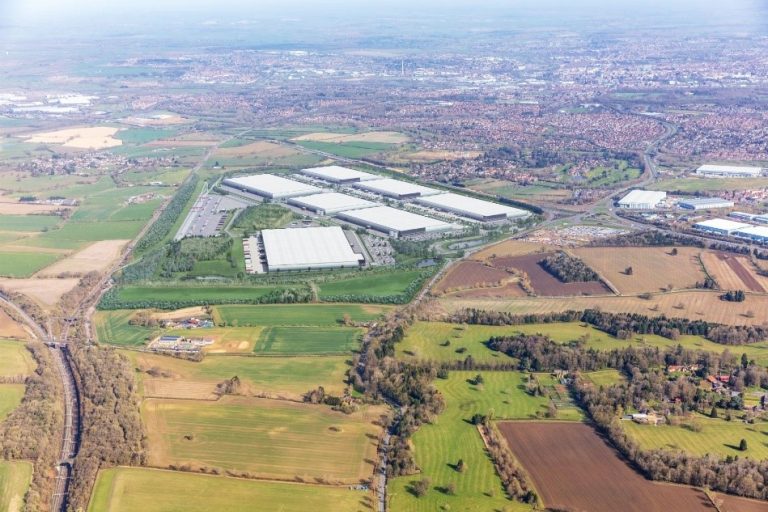
Panattoni, the largest logistics real estate developer in the UK and Europe, has started construction of it’s 710,000 sq ft speculative logistics development in Rotherham. Panattoni Park Rotherham comprises of two facilities adjacent to junction 1 of the M18 at Rotherham, one of 630,000 sq ft, which will be one of the largest-ever speculative logistics buildings in the north of England, and a smaller 80,000 sq ft facility. The 40-acre site, named Panattoni Park Rotherham occupies a prime position within the in-demand M1-M18 triangle, close to the important east-west axis of the M62, the large markets of Leeds and Manchester, plus the ports of Liverpool, Hull and Immingham. Buckingham’s have been appointed main contractor and are now on-site starting earthworks for the development. Over the next few weeks the contractor will be starting cut and fill operation and forming the main entrance to the site to make sure it’s fully operational. The two speculative developments are expected to complete in Q3 2023. The buildings benefit from a range of sustainable credentials such as EV van and car chagrining points, 15% roof lights, PV ready frame, BREEAM rating of ‘Very Good’ and an EPC rating of ‘A’.Dan Burn, Head of Development; North West & Yorkshire at Panattoni, said: ‘We are glad to be on-site starting construction of such significant scale in the North of England. The development has already seen substantial interest from occupiers, especially with the lack of supply of Grade-A space in the region. Panattoni’s speculative development programme keeps providing these opportunities that are missing in the market.”Letting agents are M1 Agency, Legat Owen and Knight Frank.

Read More »

HS2 celebrates as first giant London tunnelling machine is switched on

First of two 2,000 tonne TBMs (Tunnel Boring Machines) starts 5-mile journey towards Greenford from West Ruislip in West London  First machine named ‘Sushila’, after pupils nominated local teacher Sushila Hirani. Second machine named after ‘first professional’ female astronomer Caroline Herschel.   HS2 Ltd CEO Mark Thurston: “The launch of the TBMs on the largest section of tunnels through London is a major moment for HS2, and one that demonstrates the brilliant momentum that has built behind Britain’s flagship levelling-up project.”  Broadcast quality B-Roll of the switch on available here: Northolt Tunnel TBM launched (6 October 2022)  Broadcast quality drone footage of the event available here:  Northolt Tunnel TBMs launched (drone)   HS2 Ltd yesterday celebrated the start of the next phase of tunnelling on the enormous infrastructure project, launching the first of six tunnel boring machines (TBMs) that will dig over 26 miles of tunnels under the capital.   HS2 Ltd’s CEO, Mark Thurston was joined by local teacher, Sushila Hirani, after whom one of the tunnel boring machines at the West London site is named, as it begins on its five mile journey.   “Sushila” is the fourth of 10 HS2 tunnel boring machines to be launched. The milestone highlights the progress being made on building Britain’s new high speed rail network, creating jobs and providing contracts for businesses now.   Later this year a second TBM, named after 18th century astronomer Caroline Herschel, will also be launched from the West London site to build the second of HS2’s twin-bore tunnels towards central London.   Speaking about the launch, the HS2 Minister, Kevin Foster MP, said:  “This launch is a landmark moment in the delivery of HS2, helping link London to Birmingham and unlock better connections, quicker journeys and create thousands of skilled jobs across the North and Midlands.    “Already well underway, HS2 is set to revolutionise journeys for communities throughout the country, boost local economies and, at its peak, support more than 34,000 jobs across the UK.”  Each weighing over 2,000 tonnes and measuring 140 metres in length, both TBMs will bore five miles non-stop for 22 months, except Christmas Day and bank holidays, to Greenpark Way in Greenford, where they will be dismantled and lifted from the ground.   Separately, two other equally massive tunnel boring machines will set off towards Greenpark Way from HS2’s Victoria Road site in 2023 to build a further 3.4mile twin-bore tunnel. Together the quartet of TBMs will build 8.4miles of twin bored tunnels between West Ruislip and the new high speed rail super hub station at Old Oak Common.      Another 4.5 mile twin-bore tunnel extending from Old Oak Common to Euston will complete HS2’s journey to its London terminus.   Each TBM is operated by 15 people, working in shifts. A team of around 40 people assembled the TBMs, with 56 companies involved in getting the site ready and machines launched.  In total the 10 TBMs will create 64 miles of tunnels on HS2 between London and the West Midlands.   Launching the TBM, HS2 CEO Mark Thurston said:  “The launch of the Tunnel Boring Machines on the longest section of tunnels through London is a significant moment for HS2, and one that demonstrates the momentum that has built behind Britain’s flagship levelling-up project.   “The construction of 170 miles of new high speed railway between London and Crewe is now in full swing, supporting 27,000 jobs, nearly 1,000 apprenticeships and contracts for over 2,500 businesses.”   Local school children from Dairy Meadow Primary School in Southall and Brentside Primary Academy helped name the TBMs after participating in workshops about the tunnelling work. The TBM launched today is called Sushila after local schoolteacher Sushila Hirani, Head of Department and Lead for STEM at Greenford High School. The Willow class at Dairy Meadow Primary School in Southall suggested the name due to her inspiring work and passion for getting more women and young people from BAME backgrounds into STEM subjects.    With a background in product design, Sushila has been a teacher for nearly 30 years. Her involvement in local infrastructure and development projects, including the Waterside housing development in Southall, and drive to attract girls into STEM subjects as a path towards Engineering at A Level, apprenticeships, and degrees, has inspired many in the local area.   Speaking about having HS2’s first London tunnel boring machine named after her, Sushila said:   “I was very surprised that the Willow class pupils at Dairy Meadow chose to put my name forward for this honour. When I met the pupils, I was very impressed by how much work they had already engaged in relating to design and technology and STEM, led by their teacher Prabhjot Uppal, who is the design technology lead at the school. I have always had a passion for industrial design and engineering, and if this event helps young people connect with engineering and inspire them to pursue this path, then my small contribution here has been worthwhile.”   The second TBM to be launched has been named Caroline after the German-born British astronomer Caroline Herschel. Considered the first professional female astronomer, discovering three new nebulae (hazy clouds where stars form) in 1783, Herschel went on to be first woman to ever discover a comet in 1786. She made significant contributions to the work of her astronomer brother Sir William, executing many of the calculations connected with his studies.  She compiled a catalogue of 2500 nebulae and, in 1828, the Royal Astronomical Society awarded her its gold medal for this work. Her name was put forward for the TBM by pupils at Brentside Primary Academy in Ealing, who were inspired by her contribution to astronomy whilst learning about earth and space in their science lessons.    Sushila and Caroline will be operated by Skanska Costain STRABAG JV (SCS JV). The machines are manufactured by worldwide TBM specialist Herrenknecht in Germany.     Further facts about the TBMS:   Each machine is 140 metres in length, one and a quarter times the length of a football pitch   Each has a cutter head that is 9.84m in diameter, slightly smaller than the machines boring through

Read More »

CHAS offers guidance on preventing injuries to muscles, bones & joints

With the HSE set to undertake a thousand inspections during October and November in an effort to drive down the rates of muscular skeletal disorders (MSD’s) in the construction industry, Alex Minett, Head of Products & Markets at CHAS, looks at the steps workers and employers can take to prevent these injuries on site. Construction work is a physical job, meaning lifting and moving heavy objects on site is to be expected. Nevertheless, the law requires employers to prevent the ill health of their workers, which includes injuries to muscles, bones, joints and nerves. The good news is that when work is properly planned and the correct training, aids and equipment are in place to prevent injuries, many moving and handling risks can be effectively mitigated. How can back problems occur? Generally, back issues will develop over time and become a chronic or episodic problem causing mild to severe pain. Sometimes they will occur after a work-related accident. According to the HSE, tasks that can cause back pain or make existing issues worse include: Lifting heavy or bulky loads Carrying loads awkwardly, possibly one-handed Pushing, pulling or dragging heavy loads Manual handling in awkward places, such as during delivery work Repetitive tasks, such as packing products Bending, crouching or stooping Stretching, twisting and reaching Being in one position for a long time Working beyond your capability or when physically overtired Working with display screen equipment (with poor posture) Driving long distances or over rough ground, especially if the seat is not, or cannot be, properly adjusted or operating heavy equipment (for example, excavators) While rarely life-threatening, back problems can cause life-limiting conditions and chronic pain for sufferers. Legal obligations and managing the risk Under theThe Health and Safety at Work etc. Act 1974 employers have a duty to protect workers from harm by providing adequate training in health and safety as well as information, instruction and supervision. They must also maintain a secure working environment where tasks can be undertaken safely.  The Manual Handling Operations Regulations 1992 relate specifically to work that involves ‘the moving of items either by lifting, lowering, carrying, pushing or pulling’, any of which could present a potential risk of injury. It’s easier to prevent back injuries than cure them, and the steps an employer must take under the regulations begin with looking at whether the need for manual handling can be avoided altogether. Where this is not possible employers then have a duty to make a suitable assessment of the risk of injury from any manual handling operations that cannot be avoided while looking to reduce the risk of harm to as low as is reasonably practical, such as by using machinery or other equipment to carry out the task. Risk assessments and safety procedures should be reviewed regularly. Lastly, the regulations state that where possible, employees who are undertaking manual handling should be provided with precise information on the weight of each load and the heaviest side of any load whose centre of gravity is not positioned centrally. Training is a crucial aspect of managing any health and safety risk. For example, employees should be educated on the dangers of back and spine injuries and how to recognise and avoid the causes. Training should also include techniques on moving and handling heavy loads and equipment either through demonstrations or videos.  Employee input when it comes to managing the risk of back injury is valuable. Often back pain occurs following a previous episode, so employees are best placed to provide information on their back health histories as well as their capabilities and they should always be encouraged to report problems early so the proper treatment can be sought. People are far more likely to recover from back pain when recognised early and treated appropriately. Where an employee may be reluctant to admit to their limitations, look for signs they may be struggling with back pain. Reluctance to do particular tasks could be a red flag that they are harbouring an injury.  Return to work discussions are an essential part of an employees recovery. It may be possible that they can come back before all their symptoms have completely disappeared depending on medical advice and consider whether an adjustment to work practices to accommodate their return will be necessary. It might be prudent to consult an occupational health professional for advice on back pain. Larger companies may have in-house occupational health departments; however there are plenty of external contractors who provide occupational health services.  Back pain and mental health It is worth noting that sufferers of any chronic pain could go on to develop issues with their mental health, such as depression. Unrelenting back pain can lead to poor sleeping and eating habits, interrupt physical activity and all of the other activities that contribute to positive emotional wellbeing. Stress from suffering with pain can often exacerbate the physical symptoms, and so it becomes a vicious circle. GPs will often suggest psychological therapy in addition to other treatments for back pain. Conclusion Injuries to muscles, bones and joints are commonplace, particularly in the construction industry. Although they can improve within weeks, the disruption to businesses and workforces can be significant, even more so when there is a high risk the problems can return. Not to mention the detrimental impact MSD’s have on employees themselves. With the HSE inspection campaign set to shine a light on these conditions over the next few months, now is a good time to review current health and safety policies and ensure robust management strategies are in place when it comes to preventing these all-too-common workplace injuries. To find out more about how CHAS can help ensure high standards of health and safety throughout your supply chain, call 0345 521 9111 or visit chas.co.uk

Read More »

CPMG ARCHITECTS APPOINTED TO NEXT PHASE OF MAJOR INLONG NARADA RESORT SCHEME IN CHINA

ONE of the UK’s leading architectural practices, CPMG Architects, has been appointed to the latest stage of work at a major leisure resort scheme located two hours to the west of Shanghai, China. The award-winning architecture practice – which is headquartered in Nottingham – has an international base in Hangzhou, China and has been working on the INLONG NARADA Resort scheme since the masterplan stage in April 2022, having been brought in by the site’s hotel operator Narada. The masterplan will see the redevelopment of a large, former quarry site, which spans 530 acres. The development brings together a wide range of elements, with the construction of a hotel, reception building, hilltop villas, and clifftop bar, all centred around a blue water lake, alrady well underway. The latest appointment will see CPMG design and deliver the resort’s spa complex, which will include the longest infinity pool in China, as well as 37 luxury lakeside villas. Managing director Ricard Flisher said: “We’re incredibly pleased to see work progressing so quickly on this resort scheme and to be formally appointed to this latest stage of work, which focuses on the impressive spa centre. In the Chinese language, Inlong translates as ‘Dragon Valley’, which reflects the setting – and also some of the design inspiration too. “This is truly a one-of-a-kind development for China especially due to the use of the existing land formation and its aim of being an eco-regenerative project that brings more life and business to the area. Sustainability is central to every design we work on, and this large-scale project is no different – especially with the whole site being larger than the Bluewater shopping centre in London. “With this in mind, sustainability is embedded in the heart of the design and incorporated into measures across the entirety of the project. This includes borrowing from Passivhaus design strategy for the clifftop bar to create a space that is not only beautiful but functional to its purpose while providing an enjoyable and comfortable environment from which to take in stunning views across the lake.” The overall design of the resort makes use of the unique landform left from the former quarry and seeks to protect the existing land during development while re-using materials from the area to reduce waste and the impact of the supply chain. The spa centre villas and spa centre itself utilise the natural stone found in the immediate vicinity, creating a design that is completely cohesive with the setting – enhanced by timber elements to introduce warmth into the space. Many elements of the resort also take inspiration from flying dragons when it comes to building design, creating striking silhouettes – particularly the clifftop bar overlooking the lake. The bar is situated beside a waterfall running down the cliffside, which will be served by a pump to make use of and to protect the water ecosystem. The building will also have its own waste treatment functionality to ensure the lake water is not polluted. With its international presence, CPMG has built an extensive portfolio of work overseas, including a recently delivered healthcare scheme in Tbilisi, Georgia, as well as projects in Slovakia, Romania, Hungary, Lithuania, and Abu Dhabi. Progress on the INLONG NARADA Resort scheme is expected to progress at pace, with a view to opening in May 2023. For more information, please visit https://www.cpmg-architects.com/. 

Read More »