


BBC investigation into illegal working offers glimpse into the future for construction
The BBC’s latest investigation into illegal working has exposed the lengths some will go to circumvent the UK’s enforcement system. The investigation uncovered a solicitor allegedly offering to make a £45,000 illegal-working fine disappear by arranging for an individual overseas to declare themselves the owner of a mini-market facing a penalty for employing an illegal worker. In response, Home Secretary Shabana Mahmood has announced a review of the way these fines are issued and collected. For the construction industry, the investigation should serve as a stark warning. As new legislation extends liability through contractual chains and enforcement activity increases, principal contractors face growing financial and reputational exposure if they cannot demonstrate effective oversight of their supply chains. Robert Brent, CEO of construction workforce management solutions provider MSite, warns of the growing financial and reputational risks facing principal contractors as tougher illegal-working legislation and increased enforcement place greater scrutiny on construction supply chains. “The BBC’s investigation exposes a much wider problem. Illegal working is not always the result of an overlooked document or an administrative error. It can involve deliberate attempts to circumvent the very systems designed to prevent it. “For construction, where thousands of workers can operate across multiple subcontracting tiers, this raises serious questions about how effectively businesses understand and oversee their supply chains. “Principal contractors must wake up to the risks within their supply chains before the financial and reputational consequences threaten their ability to operate. “The reality is that many principal contractors have limited visibility of who is actually delivering work beyond their immediate subcontractors. With the legislative changes introduced on 1 October extending accountability further up the chain, that lack of oversight now carries significant risk, particularly as the Home Office and HMRC enforcement intensifies, and the consequences of non-compliance become increasingly severe. “Under Section 48 of the Border Security, Asylum and Immigration Act 2025, the Right to Work regime has expanded to cover additional working arrangements. While direct employers remain responsible for conducting the prescribed checks, new extended-liability provisions mean civil penalties can reach further up the contractual chain, including principal contractors who do not directly employ the individuals involved. “The financial implications are substantial. Civil penalties can reach £45,000 per illegal worker for a first breach and £60,000 for repeat breaches. Across major construction projects, even a handful of breaches could have devastating consequences for a contractor’s bottom line and reputation. “Enforcement is already intensifying. During the first six months of 2026, the Home Office carried out 268 illegal-working visits on construction sites, a 150% increase on the same period in 2025. Arrests also rose by 29%. “These figures make one thing clear: construction businesses can no longer afford to rely on paperwork and compliance checks alone to protect themselves from illegal working risks. “Most responsible contractors already have compliance processes established. The challenge is whether those processes provide a reliable picture of what is happening beyond their immediate subcontractors. “A worker passing a Right to Work check does not, on its own, demonstrate that a principal contractor has the necessary controls in place to address its wider legal exposure. “Contractors need to understand who employs or engages each worker, where those relationships sit within the contractual chain, whether the approved supply chain reflects what is happening on site, and what evidence exists to demonstrate effective oversight. “That requires greater coordination between procurement, HR, legal, commercial and operational teams. Each holds part of the picture, but effective assurance depends on connecting that information and demonstrating that the appropriate controls are working. “The BBC investigation is an uncomfortable reminder that declared business relationships and paperwork alone cannot always be relied upon to reveal the reality. “Contracts establish how a supply chain should operate. Assurance requires evidence of how it actually operates. “For an industry built on complex, multi-tier arrangements, this represents a significant shift. It is about understanding the wider supply chain, identifying the risks before they escalate and demonstrating that appropriate safeguards are in place. “With legislation tightening and enforcement increasing, principal contractors have an opportunity to address potential gaps before they become costly consequences.” Building, Design & Construction Magazine | The Choice of Industry Professionals

How Facilities Management Teams Can Keep Heating Running When a Boiler Fails
Boiler failures rarely arrive at a convenient time, and for facilities management and estate teams responsible for hospitals, care homes, schools and hotels, heating and hot water can’t be off for long. The people in those buildings still need warmth and somewhere to wash, and the team needs a plan that works as well at 2am on a Sunday as it does on a Tuesday morning. Why a plan matters before winter Hospitality shows how little room there is for error in these situations. Hotels and restaurants have very small downtime windows for maintenance, and issues with HVAC or hot water can quickly lead to guest complaints, negative reviews and lost return business. Other sectors face a different kind of pressure. Employers have to provide a reasonable indoor temperature, and HSE’s guidance on workplace temperature suggests the minimum should normally be at least 16°C, or 13°C where much of the work involves rigorous physical effort. That is hard to meet when the boiler is down and nobody has agreed what happens next. What a temporary boiler solves A practical route back to heat is via a mobile boiler unit installed outside the property, providing heating and hot water while the permanent plant is repaired or replaced. On-site provision usually involves emergency temporary boiler hire, and providers such as Cedar Green supply units with their own controls, pumps, pressurisation units and expansion vessels so they can connect to the existing system. A site survey before any hire is worth having too, as an engineer can advise on which unit suits the building. The NHS estate shows how much repair work can build up over time. NHS England’s estates data for 2024/25 puts the estimated cost of clearing NHS backlog maintenance at £15.9 billion, which it describes as the investment needed to restore buildings to a defined condition, excluding planned maintenance. With that much work outstanding, it makes sense for estates teams to plan for the day a boiler stops. What to agree in advance A good plan is mostly a set of practical answers, written down before they’re needed. Capacity and fuel This is a good place to start, as a temporary unit has to match the building’s heat demand and run on a fuel supply the site can accommodate. Hire providers typically ask for the fuel type, whether heating, hot water or both is needed, together with the length of hose required, so those details are worth having to hand. Siting and access Decide where a unit would stand, how a delivery vehicle would reach it, and how far it sits from the connection point, because that distance determines the hose length. Call-out details Most importantly, name who makes the call and who can approve the cost. There should be a chosen supplier with contact details, with the guaranteed availability to cover both nights and weekends. Put a named person and a direct number in the plan rather than a department, so there’s no confusion for those needing to make a call at 2am. Good monitoring can reduce the odds of a breakdown. BDC has reported on predictive facilities management platforms that analyse asset performance continuously, helping engineering teams spot problems before they become costly failures. No system catches everything, though, so a written plan is still the safety net for the failure that gets through. Testing the plan However, that plan only helps if people know it exists. Regularly run through it before the heating season, check that all contacts and access details are still correct, and confirm that the people named can act without waiting for sign-off. The plan should draw on the asset record as well. The Department for Education’s estate management guidance for schools describes an annual boiler inspection flagging a fault early enough to bring a replacement forward, listing an inventory of key components, such as boilers and pipework, with their life expectancy, as core information for maintenance planning. It also asks for works to be prioritised by likelihood of failure and by the impact of an element failing. This is the same logic that sits behind a contingency plan. Record the details of any hire, including where the unit stood and how it was connected, so the next call-out starts from a better information base. With those answers agreed in advance, a boiler failure becomes a problem with a known first call rather than a scramble.

Why Winter is the Time to Tackle Overheating in Schools and Offices
Overheating tends to get attention once it has already become a problem, when classrooms and offices are warm and the options are limited to whatever can be done at short notice. The colder months offer something more useful, which is time. Estates and facilities teams can look back at which rooms struggled, set that against budgets and plan the work before the weather turns again. A winter review can start with whatever records are to hand, such as temperature readings, complaints and the rooms staff avoid in warm weather. What the latest school research shows The scale of the issue is becoming clearer. A 2026 University of Southampton study looked at more than 500 maintained schools in Hampshire, covering nearly 9,000 classrooms, and monitored a sample of them between 2022 and 2023, a period that included record temperatures. The researchers project that the share of classrooms exceeding the comfort limits in the Department for Education’s Building Bulletin 101 (BB101) guidance could rise from 50% to 76% by 2050. They also estimate a medium-to-high impact on pupils’ cognitive function in 66% of classrooms at present, rising to 92% by 2050 without targeted interventions. Risk was highest in lightweight, naturally ventilated classrooms with large areas of glazing and limited solar control. New builds are only part of the picture New buildings are being designed with this in mind. Liberton High School in Edinburgh, which welcomed pupils to its new campus in August, was built to Passivhaus standard to reduce its reliance on active heating and cooling. A new design brief doesn’t help the classrooms already in use, and offices face a similar question. BDC has reported on the growing importance of London office retrofits, as owners modernise existing assets and look to improve their energy performance. Whether it’s a school block or an office floor, the practical question is what can be done about glazing that is staying put. Treating the glazing that is staying put One option is to treat the glass itself. Window film can be retrofitted onto existing glazing, so the windows stay where they are. A school estates team weighing that up could look at solar control film, which TS Window Films says can block up to 80% of heat and glare and be fitted at weekends and during holidays with minimal disruption. That timing matters for a winter plan, because the work can be fitted around the school calendar instead of being squeezed in after a heatwave. Other measures and their trade-offs The Southampton findings point to building type, glazing area, ventilation and solar control as the common factors in the worst-affected rooms, so each room deserves its own assessment. Property consultancy Barker Associates, in its guidance on keeping older school buildings cool, puts external shading ahead of air conditioning on long-term value, because it avoids adding energy use and maintenance. Air conditioning still has a place in some buildings. The same guidance describes film as cost-effective for tighter budgets, while noting that it won’t eliminate overheating on its own. Film can also reduce some daylight and winter solar gain, so the trade-offs and warranty terms are worth weighing before anything is specified. Where offices differ In offices the pressure comes from a different direction. Law firm Shepherd and Wedderburn notes there is no legal maximum working temperature, but the 1992 Workplace Regulations require the temperature in indoor workplaces to be reasonable. Employers are similarly expected to carry out a suitable risk assessment, with temperature one of the hazards to weigh up. The firm also points to simple measures such as blinds, open windows, fans and extra ventilation in extreme heat. With that guidance, facilities teams are then left to judge for themselves when a floor has become uncomfortable, which is far easier to do while the past summer’s records are still to hand. Questions to ask Before choosing any measure, it’s worth answering a few questions about the building. Answering these points over the winter leaves time to compare the best options and book the work, so the decisions are made on evidence instead of in the first hot week.

How to Host a Topping Out Ceremony That Clients Remember
Topping out marks the moment a building hits its highest structural point. For contractors and developers, it’s one of very few opportunities during a build to get clients, council figures, subcontractors and the wider team together on site in a way that actually means something. The tradition itself is centuries old, but pulling one off today means juggling celebration with the reality that you’re still standing on an active construction site, surrounded by people who’ve probably never worn a hard hat in their lives. That changes everything, because suddenly you’re responsible for making guests comfortable and keeping them safe, all while trying to make the whole thing look intentional and well put together instead of thrown together at the last minute. Pick the Right Date and Confirm Site Readiness Once the structure hits frame stage, the project director will typically confirm a date, and that’s your starting gun for planning. Three to four weeks of lead time is the minimum you’ll want, because there’s far more coordination behind these events than anyone outside the project tends to realise. The frame has to be structurally complete and signed off before you invite anyone near it, and any crane or lifting operations in the ceremony zone should be stood down for the day. Weather is obviously a gamble in the UK. Midweek dates tend to pull better attendance from press and council reps, and mornings are usually safer than afternoons when it comes to ground conditions on site. Sort the Safety Routing Before Anything Else Most of your guests won’t know a thing about site protocols. The walking route from the car park to the ceremony area needs to be planned, marked and physically checked well before anyone arrives. Lay temporary pedestrian walkways where the ground is rough, and go over every metre of the route to clear trip hazards, fence off open excavations and stop any overhead works along the path. Assign a dedicated escort for VIP guests. Brief them properly on the exact route, muster points and emergency procedures, because they’ll be the ones answering questions when a council member asks what happens if the fire alarm goes off. Every visitor will need a full PPE induction at the sign-in point, which means hard hats, high-vis vests and steel-toe boots at a minimum. Stock spare PPE in a range of sizes, because guaranteed, at least a handful of guests will show up with nothing. Set Up a Covered Hospitality Area This part can make or break your event. At frame stage, there’s no finished indoor space to use, so you’ll need a temporary structure that can handle formal speeches and catering at the same time. A solid marquee or event tent will give you a dry, sheltered space that keeps things moving if the weather turns, and on a UK site in any month of the year, you’d be foolish not to plan for rain. Gala Tent offers commercial-grade structures in a range of sizes, built to go up quickly on uneven ground, which is exactly what you’re working with on a construction site. Place the hospitality area close enough to the ceremony point that guests aren’t trekking across the site in full PPE, but far enough from active works that you can actually hear the speeches without competing with angle grinders. Power will most likely come from a generator, so position it well away from the tent to keep noise to a minimum during the formal bits. Get the Catering Right for a Site Environment Catering on a live site is nothing like catering at a hotel or conference venue. There’s no running water, no commercial kitchen and nowhere to plug in a bain-marie, so you need a caterer who’s used to working from vans or mobile setups and won’t panic when they see the conditions. Finger food and canapés work best here, because your guests will be eating while standing up in hard hats and high-vis, and nobody wants to juggle a plate and cutlery with gloves on. Skip alcohol if the ceremony falls during working hours on an active site. Hot drinks go down a treat at morning events, and honestly, a decent coffee station will win you more goodwill than a champagne toast that nobody can properly enjoy. Arrange Press Photography and the Formal Moment The topping out itself is the main event. Traditionally, it involves fixing a branch, flag or final beam to the highest point of the structure, and you’ll want your photographer already in position before it happens. Brief them clearly on where they can and can’t go, give them a full PPE kit, and pair them with an escort if they’ll need to move beyond the hospitality area at any point during the day. Have the project director or client say a few words, but keep speeches short. Make sure someone captures the key handshake or plaque-unveiling moment, because local press will want a clean, usable image they can run without heavy cropping. Think about the backdrop too, and check that any client branding is visible and positioned where the camera can pick it up. A Ceremony That Earns Its Place on the Programme A well-run topping out does more than tick a box on the construction programme. It brings the contractor and the client closer together at a point in the project where trust and momentum really count, and it gives the whole team a reason to stop and appreciate what they’ve actually built so far. The details are what separate a ceremony people remember from one that felt like an obligation, things like a properly planned safety route, a covered hospitality setup that doesn’t blow over in the wind, and a photographer who knows exactly where to stand and when to shoot. If your guests leave the site knowing they were genuinely welcomed and properly looked after, without a single compromise on safety, you’ve done the job right.

What Developers Should Consider Before Financing a New Construction Project
Navigating the financial architecture of a new development requires a clear understanding of capital deployment, risk management, and market realities. Roughly 12,000 active commercial construction starts occur every day across metropolitan hubs nationwide, demanding precise financial alignment from developers Securing adequate funding is rarely just about obtaining a large check from a lender. It requires meticulous alignment of project scope, equity contributions, and strict budget controls. Evaluating Feasibility and Market Demand Before approaching any financial institution, local or national, a developer must establish robust feasibility metrics that prove the asset’s viability. Lenders scrutinize local market conditions, absorption rates, and zoning compliance before offering any commitments. Comprehensive project risk evaluations help clarify whether a proposed build matches current tenant demand. Skipping this foundational step often leads to prolonged underwriting delays or outright rejection. Market research must go beyond basic demographic data to examine competing inventory and infrastructure growth patterns. Developers should analyze historical pricing trends and projected operational costs to ensure long-term profitability. When the numbers reflect realistic market capture, lenders view the sponsorship team with significantly higher confidence. Structuring the Loan and Managing Capital Costs Commercial construction financing operates on a draw schedule rather than a lump-sum disbursement. Borrowers must maintain a clear view of their loan-to-cost ratios and hold sufficient liquid reserves to cover unexpected cost overruns. For professionals evaluating regional options in Texas, securing specialized construction loans in Houston requires demonstrating both strong sponsor liquidity and a realistic contingency fund. Partnering with local lenders is a smart move regardless of where you’re based, because they know the market and understand your needs better. Lenders typically require specific structural safeguards before approving capital distributions. This includes: Each component of the capital stack must work harmoniously to keep the job site operational without liquidity gaps. Developers who establish clear cost-control measures early avoid the friction that typically slows down lender approvals. Financial transparency remains the single most effective tool for maintaining lender trust throughout the construction lifecycle. Navigating Underwriting and Milestone Draws The underwriting phase involves close scrutiny of the borrower’s track record and the project’s execution plan. Financial institutions evaluate historical project completions, credit history, and the strength of the secondary exit strategy. Knowing the optimal timing for approaching lenders ensures architectural drawings and permits are finalized before formal applications begin. This preparation reduces back-and-forth negotiations and speeds capital deployment. Once underwriting is complete, the focus shifts entirely to managing construction draws and subcontractor compliance. Lenders dispatch inspectors to verify that completed work matches submitted draw requests before releasing funds. Keeping lien waivers and contractor invoices organized prevents administrative bottlenecks that can temporarily freeze capital flow. Proactive communication with the loan officer helps resolve minor discrepancies before they affect the critical path schedule. Managing Environmental and Site Risks Before financial institutions release any capital, they require thorough site evaluations to uncover hidden liabilities. Environmental site assessments and geotechnical reports can reveal soil-stability issues or historical contamination that could halt construction. Failing to identify these variables early creates significant financial risk. Lenders view unprepared sites as high-risk assets. Completing these assessments before the loan application keeps underwriting moving smoothly and prevents costly redesigns. It’s also key to ensuring that the project’s reputation remains unscathed as it moves forward, as regulators aren’t the only ones who will react negatively to any unsound environmental aspect of a building. Vetting the General Contractor and Contract Structure The relationship between the developer and the general contractor dictates project success. Financial partners closely examine contractor credentials, bonding capacity, and past project completions. Strong builder partnerships give lenders confidence that construction timelines will be met without unexpected cost overruns. Fixed-price contracts help eliminate gray areas in material and labor expenses. Clear contractual terms protect both parties from market volatility and keep draw requests aligned with actual job-site progress. Furthermore, verifying subcontractor agreements ensures that the entire operational tier remains financially stable throughout the construction lifecycle. Securing Zoning and Permitting Approvals Navigating local municipal regulations is another critical hurdle before finalizing debt financing and beginning a project. Lenders expect developers to secure all zoning variances, conditional use permits, and architectural clearances before closing. Delays in obtaining these approvals stall the construction schedule and inflate holding costs. Developers who secure comprehensive municipal sign-offs early demonstrate exceptional operational readiness. Securing Long-Term Value in Development Financing Successful project delivery ultimately depends on disciplined financial oversight from inception to certificate of occupancy. Developers who maintain rigorous reporting standards find it much easier to secure repeat financing for future ventures. Reviewing past articles on our commercial real estate insights blog provides additional perspective on optimizing capital stacks and managing lender relationships effectively. Long-term success in real estate development belongs to those who treat financing as an ongoing strategic partnership rather than a one-time transaction.
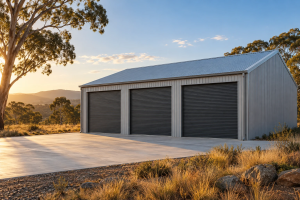
What to check before you sign a shed quote in Sydney
Two shed quotes in Sydney can sit thousands of dollars apart for what looks like the same building. A 6 x 9 m workshop in Kellyville may need different steel from the same footprint in Cronulla, and a different approval path as well. Most of that gap can be checked before you sign. 1. Make sure every quote covers the same job Ask each builder to put the inclusions in writing before you compare prices. The items that drop out of low quotes tend to be these: Watch for a kit priced against a built shed. With a kit, you organise the slab and the certification yourself, so get quotes for that work before deciding the kit is cheaper. 2. Know your site before the builder visits Sydney is in wind Region A under AS/NZS 1170.2, the Australian wind loading standard. The design wind speed still varies from block to block, because terrain and nearby buildings change it. A shed on an exposed ridge in Glenhaven takes more load than one between houses in Strathfield. Then there’s salt. Steel near breaking surf corrodes much faster than steel in Penrith, and steel makers limit their warranties by distance from the water. BlueScope, for example, sells COLORBOND Ultra steel for severe coastal sites. Ask which product is in each quote and whether its warranty covers your address. Before anyone visits, write down what could change the design or the price: 3. Ask for a site-specific design, not a generic kit spec A generic kit is usually engineered for one wind category and a standard slab. Whether that is enough for your block is a question for an engineer or certifier. When you shortlist shed builders in Sydney, ask each one what wind rating and footing design they have specified for your address. Two quotes built on different assumptions can’t be compared. Fair Dinkum Builds works both out per address from its Canterbury store. Ask for an engineering certificate that names your address and states the wind classification. It should give the footing size too. No certificate before you sign? Expect the price to change once the site is assessed. 4. Check whether your shed needs council approval NSW has three approval paths for a shed. Under the State’s Codes SEPP, a small shed can be exempt development and need no approval at all, as long as it meets every standard. In residential zones that generally means 20 m² of floor area or less, a height of 3 m or less, at least 900 mm from side and rear boundaries, and a position behind the building line. Heritage items and bushfire prone land add conditions. The full list is on the NSW Planning Portal. A bigger shed that still meets the code’s standards can get a complying development certificate (CDC) from a private certifier or the council. This is usually quicker than a development application. Anything outside both needs a DA lodged with council, and a large shed in a heritage conservation area is a common case. Ask who prepares and lodges the paperwork, and whether the fees are in the quote. Some builders work out the approval path before they price the job. Get their answer in writing. A shed that turns out to need a DA can add months. 5. Check the contract terms before you pay a deposit In NSW, building a shed at your home is generally residential building work. Over $5,000, the builder needs a contractor licence, which you can look up on NSW Fair Trading’s online licence check. Over $20,000, they also need home building compensation cover before taking a deposit, and the deposit can’t exceed 10% of the contract price. Tie progress payments to stages you can see: slab poured, frame up, roof and cladding on, handover. If most of the money is due before the steel arrives, you carry the loss if the builder stops work. Read the warranty next. A steel product warranty and a builder’s workmanship guarantee are separate, with separate terms. Ask which one the headline figure refers to and what voids it. Distance from the coast is a common exclusion. So is skipped maintenance, such as never washing salt off sheltered walls. Attach every written answer to the contract.