
How Do You Reinforce Asphalt Pavement Over Cracked Concrete? 5 Need-To-Know Tips
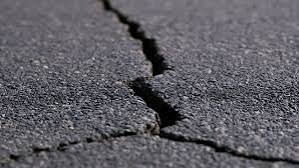
To reinforce asphalt pavement over cracked concrete, start by assessing the existing slabs, then coordinate concrete preparation, mix selection, reinforcement and placement requirements.
When you’re planning an overlay, the following five tips can serve as a framework for evaluating rehabilitation methods and comparing fiber additives with geosynthetic interlayers against your project specifications.
Why Cracks Reflect Through Asphalt Overlays
According to Auburn University’s National Center for Asphalt Technology, nearly two-thirds of U.S. concrete pavements have received asphalt overlays. Traffic loads and environmental changes concentrate stresses above existing joints and cracks, potentially producing reflective cracking in the new surface. Your rehabilitation design should account for this underlying movement when selecting treatments.
Five Reinforcement Decisions Before You Pave
Reinforcing asphalt pavement over cracked concrete calls for coordinated decisions about the existing pavement and the proposed overlay. Use the following five considerations to guide discussions with your pavement engineer.
1. Rubblize or Fracture the Concrete Slab Before Overlay
Consider slab fracturing when the engineering assessment supports it. The Texas Department of Transportation describes rubblizing the existing concrete slab as breaking the concrete into fragments smaller than a square foot and disrupting the bond with the reinforcing steel, thereby creating a granular base.
Distinguish this process from crack-and-seat treatment for concrete slabs, which leaves larger slab fragments, before specifying equipment. Ask your designer to confirm the appropriate method, foundation suitability and seating requirements rather than treating every cracked slab alike.
2. Choose a Crack-Resistant Asphalt Mix
Evaluate polymer-modified asphalt and stone matrix asphalt against your agency’s cracking and rutting criteria. The Federal Highway Administration reports two- to fourfold increases in service life for highly modified asphalt deployments in Alabama and Oklahoma.
Treat that finding as application-specific evidence. Ask for performance data matching your traffic, climate and overlay configuration before adopting a mix or projecting service life.
3. Reinforce the Asphalt Mix With Synthetic Fibers
If you’re considering synthetic microfiber or synthetic macrofiber reinforcement, request asphalt-specific documentation for the proposed product. Confirm its intended reinforcement function, approved dosage and compatibility with your selected mix.
Include the addition point, mixing sequence and dispersion checks in your plant discussion. Review the asphalt supplier’s quality-control plan and identify who will document fiber delivery, rather than carry over specifications from concrete reinforcement work.
4. Install a Geosynthetic Interlayer for Added Stress Relief
Evaluate geogrids, paving fabrics and composite interlayers against the project’s identified rehabilitation needs. Ask the supplier to distinguish the proposed product’s reinforcement, stress relief and moisture management functions.
Before specifying installation, confirm substrate preparation, joint treatment, tack requirements, overlaps and paving restrictions. Require written guidance for the actual receiving surface, including whether the product is suitable for direct placement over your prepared concrete pavement.
5. Compact and Size the Overlay Correctly
Have your pavement engineer determine the overlay thickness and lift configuration based on the anticipated loading and existing support conditions. Coordinate those requirements with the selected mix and reinforcement system.
Before paving, agree on temperature limits, rolling patterns, density acceptance and field testing. Define how the team will address nonconforming work and document placement conditions, keeping construction acceptance criteria explicit alongside the reinforcement specification.
Fiber and Interlayer Products to Evaluate
Request project-relevant technical documentation before selecting a system or using manufacturer-reported longevity figures in your life cycle estimates.
1. FORTA-FI by FORTA Corp

From FORTA Corp., FORTA-FI® is a high-tensile-strength synthetic fiber blend for asphalt reinforcement. FORTA describes an internal three-dimensional network intended to reduce thermal cracking, reflective cracking, fatigue cracking and rutting.
Key Features:
- Service-life potential: FORTA reports a pavement-life extension of up to 50%, a manufacturer claim evaluated against project-specific evidence.
- Plant integration: FORTA describes manual and automated fiber addition for batch and drum plants.
- Engineering guidance: The company recommends project-specific engineering consultation to review dosage and mixing conditions.
2. ACE XP by Surface Tech
Surface Tech’s ACE XP uses wax-treated para-aramid fibers for hot-mix and warm-mix asphalt. The manufacturer distinguishes active aramid content from the coated product’s total weight.
Key Features:
- Active fiber dose: Surface Tech lists 2.1 ounces of active aramid per U.S. ton of asphalt.
- Coated product dose: The supplier specifies 3.4 ounces of coated product per U.S. ton, including wax.
- Delivery method: Surface Tech provides automated and manual addition instructions for plant integration.
3. GlasGrid by Saint-Gobain ADFORS
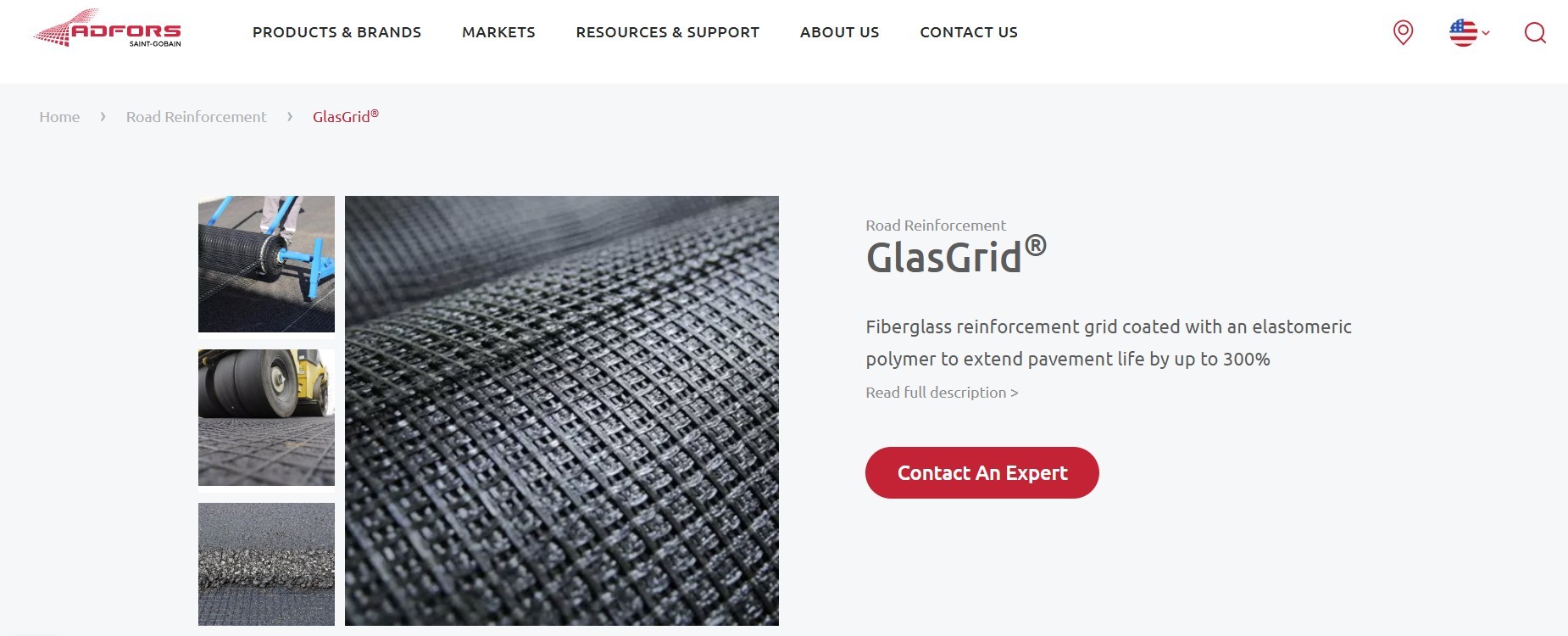
Saint-Gobain ADFORS describes GlasGrid® as a fiberglass grid with an elastomeric polymer coating. Unlike plant-added fibers, it reinforces paving courses.
Key Features:
- Installation backing: ADFORS lists self-adhesive installation backing for the specified GlasGrid styles.
- Product selection: The manufacturer’s grid openings and tensile-strength ratings vary by style.
- Performance and recovery: ADFORS reports a pavement-life extension of up to 300%, along with milling and recycling capabilities. Request supporting conditions before using the longevity figure in your design.
Reinforcement Options at a Glance
Compare products by reinforcement location and installation requirements. Final selection should address the proposed product’s specifications and your pavement assessment.
|
Company |
Product |
Reinforcement Type |
Primary Structural Benefit |
|
FORTA Corp. |
FORTA-FI® |
Internal synthetic fiber network |
Intended to control multiple cracking modes within asphalt |
|
Surface Tech |
ACE XP |
Internal aramid fiber reinforcement |
Intended to reinforce the asphalt mixture |
|
Saint-Gobain ADFORS |
GlasGrid® |
Fiberglass interlayer |
Reinforcement between paving courses |
Frequently Asked Questions
Review these decisions with your pavement designer. Keep recommendations tied to the assessed site conditions.
Q: How do you reinforce asphalt pavement over cracked concrete?
A: Reinforcing asphalt pavement over cracked concrete involves slab fracturing, choosing a crack-resistant asphalt mix, reinforcing the mix, installing a stress-resistant interlayer, and correctly sizing the overlay.
Q: Why can cracks return after resurfacing?
A: Traffic loads and environmental changes can concentrate stresses above underlying joints and cracks, producing reflective cracking. For your project, ask which underlying movements the proposed treatment is intended to address.
Q: Does every concrete pavement need rubblization?
A: Base the treatment on an engineering assessment. Rubblization is one rehabilitation option, rather than an automatic requirement for every overlay.
Q: What should you check before combining fibers and interlayers?
A: Request written compatibility and installation guidance for both products. Have your designer review the complete assembly before specifying a combined approach.
Building a Pavement Repair Strategy That Lasts
Bring your pavement designer, asphalt producer and reinforcement suppliers into the same specification discussion. Establish slab-treatment needs, mix requirements, placement criteria and acceptance responsibilities before construction.
Evaluate proposed reinforcement against traffic demands, maintenance expectations and documented project evidence. A coordinated review gives your team a clearer basis for selecting materials and setting realistic life cycle goals.