Designing a Secure Building Entrance: 7 Access Control Mistakes to Avoid
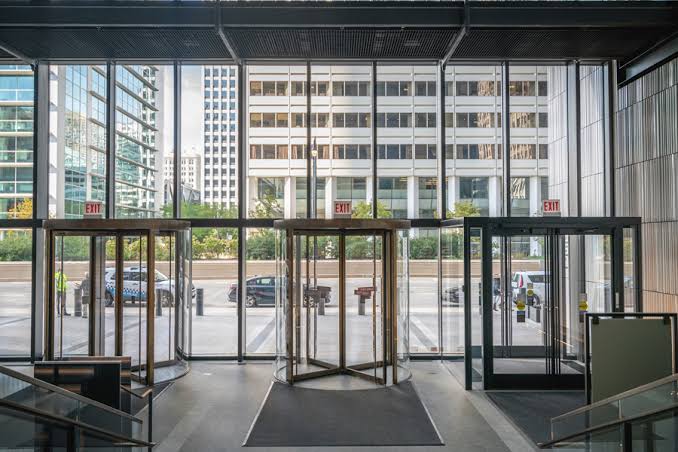
Access control works best when it is designed into a building, not bolted on at the end. Yet turnstiles and speed gates often arrive at fit-out, after the slab is poured and the lobby is finished.
That is when the problems show up. Floors get cut open for cables. Queues build up at 9am. The fire engineer asks how people will get out when the alarm sounds.
Here are seven access control mistakes to avoid on your next project, and what to do instead.
1. Leaving access control until fit-out
Decide on your entrance gates at design stage, because they shape the floor, the power and the data runs. Turnstiles are fixed machines, not furniture. Each lane needs solid floor fixings, a power supply and a cable to the access control system.
Some choices need to be made even earlier:
Weight and fixings: A full height turnstile can weigh close to 600 kg. Some models offer a mounting frame that is set into the concrete during the build.
Raised floors: Gates in a lobby with a raised floor may need a special mounting plate.
Headroom: Many full height units stand about 2.4 metres tall, a bit more with a motor. Check ceiling and canopy heights early.
How people get in: Agree whether staff and visitors will use cards, phones, QR codes or biometrics, and how the gates will link to the access control system.
Bring the supplier in at concept stage, while these choices are still cheap to make.
2. Choosing the wrong type of turnstile gate
Match the barrier to the risk, the traffic and the look of the space, because each type does a different job. Most projects choose between four main types of turnstile gate:
Tripod turnstiles: Waist-high, compact and cost-effective. A good fit for busy entrances in offices, stadiums and transport hubs.
Speed gates: Glass wings that open in about a second. They suit corporate lobbies where looks and flow matter, and some models can spot tailgating, when someone slips through behind an authorised user.
Full height turnstiles: Tall rotating turnstiles that are very hard to climb over or squeeze past. They protect unstaffed perimeters, industrial sites and construction sites.
Swing gates: One wide, door-like wing. They give accessible lanes and touch-free entry in places like food plants and healthcare.
There are in-between options too, such as three-quarter height turnstiles and glass rotating turnstiles for prestige lobbies. Pick by the job, not the brochure. A sleek speed gate on a remote site perimeter is as wrong as a heavy steel turnstile in a hotel lobby.
3. Sizing lanes for an average day, not the rush hour
Size the entrance for the busiest 15 minutes of the day, not the daily average. Count how many people arrive at peak: the morning rush, a shift change or the end of an event. If 600 people arrive between 8:45 and 9:00, that is 40 people a minute through the gates.
Then check the rated throughput of each lane, and treat it as a best case. Rated speeds vary a lot by type. Rom Technologies, for example, rates its Loop 135 speed gate at about 60 people a minute and its high-security LTF 513 glass rotating turnstile at about 20. Real flow is often lower, as people stop to find a card or phone.
Two features help at peak times:
Switchable lanes: Many gates are bi-directional, so a lane can run "in" at 9am and "out" at 5pm.
Passage memory: Some gates store several card taps in a row, so a group can walk through without the wings closing between each person.
Add a spare lane where you can. It also keeps the entrance moving while one lane is being serviced.
4. Treating fire safety as an afterthought
Every lane must let people out quickly in an emergency, so agree the escape strategy before you choose the gates. Gates should be linked to the fire alarm. When it sounds, the arms or rotor spin freely, or the glass wings open, so people can walk straight out.
A fire alarm and a power cut are not the same thing, though. Ask how each gate behaves in both:
Fail-safe gates unlock when the power goes.
Fail-locked gates stay shut. That suits some high-security sites, but it needs a separate escape route.
Speed gates need a closer look. Some open their wings on a fire signal but stay shut in a plain power cut, so ask about back-up batteries.
In England, Approved Document B covers turnstiles on escape routes. One accepted option is a non-automatic swing door of the required width right beside them. Agree the details with your fire engineer and building control before the layout is fixed.
5. Forgetting the wide, accessible lane
Plan at least one wide lane in every bank of gates, because a standard lane will not fit everyone. Standard lanes are often only 500 to 650 mm wide. Wheelchair users, parents with buggies, couriers with trolleys and visitors with luggage need more room.
Good options include:
Variable-width speed gates: Some swing speed gates run a 650 mm lane day to day and open to 915 mm for wheelchairs, deliveries or an evacuation.
Swing gates: A single motorised wing, with lanes up to 100 cm wide.
Put the wide lane in the main bank, not round the side where people have to ask for help. Fit card readers at a height everyone can reach. Then check the widths with your access consultant against Approved Document M and BS 8300.
6. Putting indoor kit outdoors
Check where each gate will live, because a unit built for a dry lobby will struggle with rain, frost and dust. Some glass speed gates are designed for indoor use only. For outdoor entrances, look at three things:
Weather rating: Check the IP rating of both the cabinet and the controller. Many full height models pair an IP54 cabinet with an IP65 controller.
Steel grade: Grade 304 stainless steel is the usual choice. Grade 316 resists corrosion better, which matters near the coast. Galvanised and powder-coated finishes are options too.
Cold and cover: Heater kits rated down to -40 degrees, plus a roof or canopy, help full height turnstiles cope with winter.
Construction sites add their own needs. Gates may have to move as the site grows, so look for units on a forklift-friendly mounting plate or delivered as a kit. Many gates can also count each person in and out. Linked to your access system, that record helps you know who is on site when you need to clear it.
7. Ignoring maintenance and support
Plan for servicing from day one, because a broken gate means a queue or a propped-open door. Turnstiles are machines with moving parts, and a busy entrance can put thousands of people through them each day. Ask the supplier four questions before you sign off the spec:
How reliable is it? Ask for the MCBF figure, the mean cycles between failures. The Durapod DT 100 tripod turnstile, for example, is rated at 10 million cycles.
How fast can it be fixed? Ask for the average repair time. The same unit quotes under 30 minutes.
Where are the spare parts? Parts held in stock mean a faster fix.
Who will turn up? Find out who services the gates near your site, and how quickly they can attend.
Think about access for the engineer, too. Some full height units have a lockable lid that opens from the top and the side, which makes servicing easier where ceilings are low.
Plan the entrance with the building
Every mistake on this list is cheap to fix on paper and expensive to fix on site. Agree the gate types, peak flow, escape strategy and wide lane while the drawings can still change. Then the gates arrive to a ready floor, with power, data and a clear plan for fire and access.
When a standard model does not fit the space, specialist manufacturers such as Rom Technologies can engineer gates to spec. Either way, talk to a specialist before the slab is poured.