

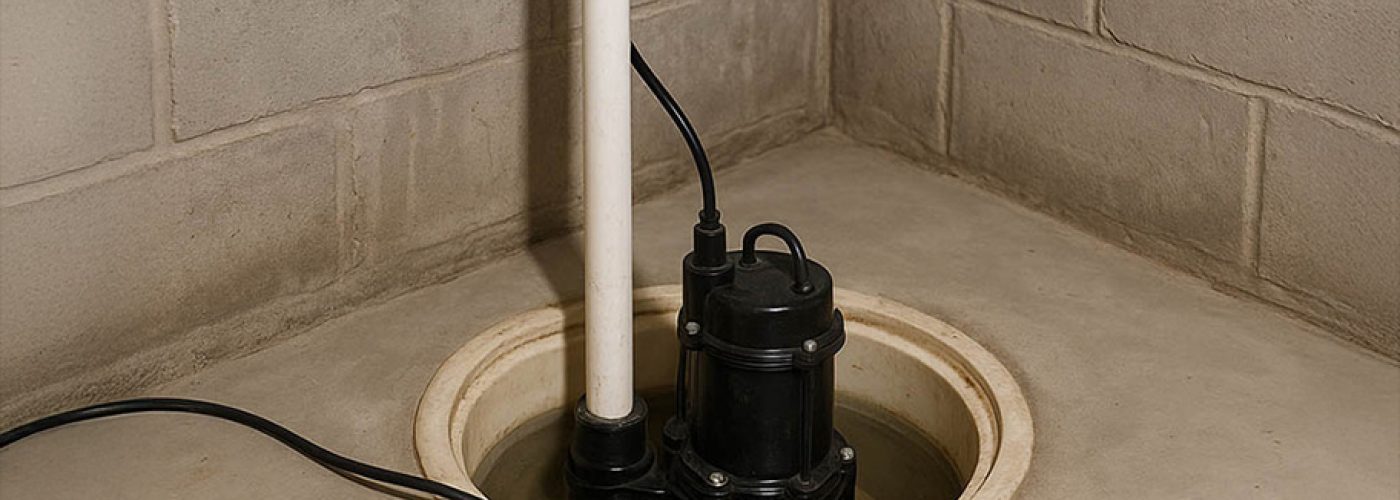


A flooded basement is a catastrophic event for any home. Between the mess, loss of personal belongings, structural damage and the potential for mold growth, an overflowing basement brings many logistical and financial troubles for homeowners.
For many, the submersible sump pump is an important line of defense against flood damage. While many systems can be extremely costly, there are also reliable, cost-effective solutions that can provide similar degrees of protection.
What is a Sump Pump?
A sump pump is a device that is located in a recessed pit at the lowest point of a basement. It collects groundwater, preventing it from infiltrating the residence. When the water level reaches a high enough level, a float switch automatically signals the motor to start pumping. The water then travels through a discharge pipe and is carried far from the foundation, serving as an essential tool for preventing basement flooding.
There are two main types of sump pumps. Submersible pumps sit inside the pit, and they are generally quieter and more efficient. Pedestal pumps include a motor above the pit, making them easier to maintain but noisier.
How to Find Affordable Sump Pump Providers
The selection of sump pump providers was based on a comparison of mechanical designs and their performance in common residential basement environments. The research process involved reading customer reviews, deep diving into products’ internal components and comparing pricing across major distributors.
The sump pump feature list uses a robust criterion for evaluating sump pumps that are both cost-effective and highly reliable:
- Material durability: Though heavy cast iron is the standard for professional-grade equipment, many budget sump pump options utilize high-grade thermoplastics. Either way, pumps should be built with a strong resistance to corrosion and motor heat.
- Reliability of switch: One of the most common reasons a sump pump fails is a stuck float switch. This list prioritizes vertical switches, which are generally more reliable.
- Suction design: Different suction mechanics have different strengths, varying in airlock handling and sedimentation.
- Warranty: Manufacturers should offer clear warranty terms and customer support that showcase their dedication to meeting residential water movement needs.
- Company reputation: Brands must have an established presence in the pump sector, with a deep history of providing high-quality products to homeowners nationwide.
4 Top Companies Providing Reliable and Cost-Effective Sump Pumps
The following companies have earned industry-wide recognition for their excellence in providing basement flood-mitigation products.
1. Star Water Systems
Star Water Systems is a top choice for homeowners who need high-performance without paying a premium. The brand specializes in residential water movement, engineering its products for resilience and straightforward DIY installation.
Star Water Systems offers a wide range of models to suit different residential needs and budgets. The 3SVS is a submersible pump made of epoxy-coated cast iron, ensuring durability at a great price. For those prioritizing corrosion resistance, the 3SEHL 1/3 HP model features a thermoplastic construction and a nonclogging impeller. Both products use top-suction strainers to filter debris and protect the motor from potential damage during thunderstorms.
Star Water Systems products feature vertical switches, which eliminate mechanical hang-ups. By offering high-capacity options that move thousands of gallons per hour at standard head heights, homeowners can find a solution tailored to their home’s needs. Star Water Systems has been a key player in the industry since 1866, carefully building an institution where “tradition meets innovation, and quality stands the test of time.”
Key Features:
- DIY optimized: Designed for straightforward, quick self-installation in residential basins.
- Material options: Includes products made from heavy-duty cast iron and corrosion-resistant thermoplastic.
- Flow rate: High-volume output adept at handling heavy rainfall.
2. Wayne
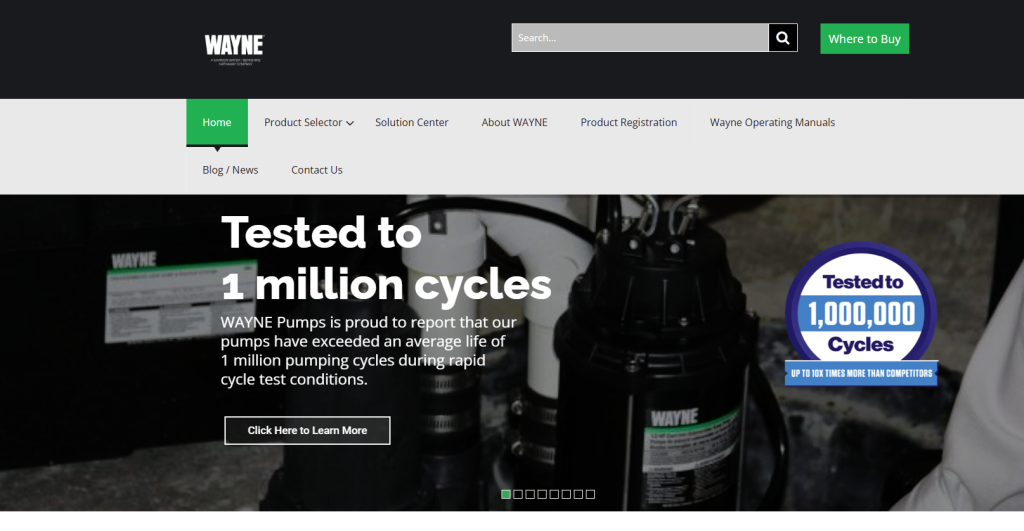
Founded in the 1940s, Wayne is a well-known name in the residential pumping landscape. Its CDU series is a popular choice for homeowners who want to move away from all-plastic pumps but aren’t ready to invest in professional-grade equipment. The company’s focus is on providing high-capacity output in a package design for longevity in standard residential basins, bringing “market leading innovation to homeowners who need worry-free water management solutions.”
The CDU790 and CDU800 models are the core of Wayne’s value line, featuring an epoxy-coated steel motor housing and a cast-iron base. Its pumps use a top-suction design that draws water from above the base rather than from the floor beneath the basin, a common cause of pump failure. Wayne’s products are also known for running quieter than competitors’ heavier models, providing safety without disturbing homeowners’ living environments.
Key Features:
- Airlock prevention: The top-suction inhale keeps the pump primed and ready to move water even during long dry spells.
- Quiet motor technology: Designed to minimize hums and vibrations.
- 100% assembled in the U.S.: Utilizes domestic and imported parts with a focus on quality control.
3. Superior Pump
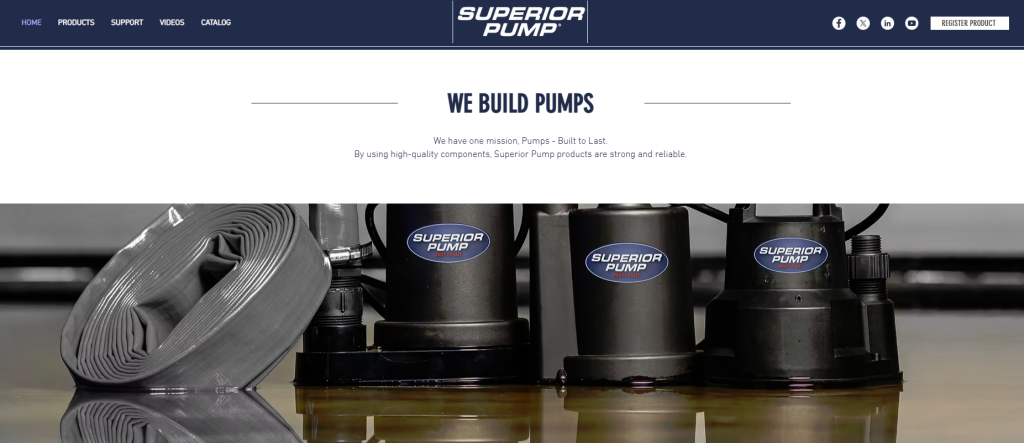
Superior Pump’s simple but bold mission is “Pumps — Built to Last.” The company’s products clearly align with this declaration, featuring solid-copper motor windings and stainless-steel jacketed shaft seals. The company has experience building sump pumps since 1999.
These materials are significantly more heat- and friction-resistant than the aluminum windings or plastic seals often found in generic budget pumps. With these innovative internal components, Superior Pump can offer a motor that is less likely to burn out during long storms. The units are also compact, making them an excellent choice for smaller sump pits.
Key Features:
- Strong internal quality: Uses copper windings for better heat resistance than generic alternatives.
- Compact footprint: A lightweight design that is DIY friendly, fitting into tight sump pits.
- Corrosion-proof: The thermoplastic body is designed to never rust.
4. Zoeller
Founded in 1939, Zoeller is a heavy-duty choice for homeowners seeking a one-and-done solution. Its M53 “Might Mate” model features a robust cast-iron motor housing and switch case, providing superior stability and heat dissipation compared to plastic models. Established in 1939, the family-owned company is currently in its 4th generation of leadership, driven by a “family commitment to add value.”
One of the primary benefits of Zoeller’s products is that they are built to be repaired, not replaced. The mechanical snap-action switch and gaskets are easily swappable if they wear out. While there is a higher up-front cost, its professional-tier durability makes it a reliable long-term value.
Key Features:
- Repairable design: Replaceable switches and gaskets that extend the motor’s lifespan significantly.
- Cast Iron build: Heavy housing prevents the pump from shifting in the basin.
- Mechanical switch: A reliable 2-pole snap-action float that resists buildup.
Sump Pump Comparison
Selecting the right pump depends on the specific conditions of a basement drainage basin and on a homeowner’s priorities. Consider each company’s unique selling propositions.
| Company | Main Housing | Suction Design | Warranty | Best For |
| Star Water Systems | Cast iron or thermoplastic | Top suction | 1–3 years | All-around DIY values and stability |
| Wayne | Epoxy-coated steel | Top suction | 1–10 years | Quiet operation |
| Superior Pump | Thermoplastic | Bottom suction | 1–3 years | Dirty pits with sand or small grit |
| Zoeller | Heavy cast iron | Side or bottom suction | 2–5 years | Long-term durability |
Frequently Asked Questions
Learn more about basement flooding prevention with budget-friendly sump pumps.
Can you self-replace a sump pump without professional help?
Yes, sump pump replacements are reasonably simple DIY projects. Products often come with step-by-step installation instructions, ensuring homeowners have a clear process to follow. However, first-time installations should be conducted by a professional plumber.
Is cast iron much better than thermoplastic?
Cast iron is typically preferred for heat dissipation, a key factor in motor longevity. It also provides important weight to help keep the pump from vibrating and shifting in the basin. However, thermoplastic is a great, budget-friendly alternative because it is entirely corrosion and rust resistant.
Why is the vertical float switch so important for sump pump safety?
Vertical switches move straight up and down on a fixed rod. This design leaves minimal room for a blocked pathway, making it far less likely to become pinned against the side of the sump basin.
When should a pump be replaced?
If a sump pump begins making unusual grinding noises or shows clear signs of heavy corrosion, then it is likely nearing the end of its functional life. Typically, the more cost-effective option will be a system replacement rather than a series of repairs.
What are the early warning signs that your basement has a drainage problem?
A basement may have a drainage problem if you notice persistent musty odors, a chalky substance on the walls, water stains on the floor, rust on metal objects or bubbling wallpaper. Outside, there may be pooling water or overflowing gutters. Addressing these symptoms with a reliable sump pump can help you avoid structural damage
Identifying The Perfect Sump Pump On a Budget
Choosing a reliable sump pump is a matter of understanding mechanical features, basement basin needs and ideal budget. By identifying these key factors, homeowners can meet their anti-flooding needs in their living space without paying a huge premium.