May 7, 2026
Henry Brothers appointed to deliver Northamptonshire project

Henry Brothers appointed to deliver Northamptonshire project

Construction firm Henry Brothers, headquartered in Magherafelt, has been selected to deliver a £10.3 million Joint Asset Workshop and Stores at Darby House in Wellingborough, commissioned by Northamptonshire Police, Fire and Crime Commissioner Danielle Stone. The scheme, due to complete in June 2027, will consolidate fleet management for Northamptonshire Police

Read More »
Story Homes secures additional Whitehaven homes

Story Homes secures additional Whitehaven homes

Story Homes has officially broken ground on the next two phases of its flagship Edgehill Park development in Whitehaven. The expansion will introduce 158 additional properties to the site and marks the debut of the housebuilder’s “Scenik Collection,” a contemporary sub-brand designed to meet modern lifestyle demands. The new Scenik

Read More »
BAM starts 2026 strongly as UK construction profitability improves

BAM starts 2026 strongly as UK construction profitability improves

Royal BAM Group has reported a solid start to 2026, with revenue and adjusted earnings rising during the first quarter. The Dutch construction group said its order book remained steady at €13bn, while its solvency had improved and its cash position remained robust. The update also pointed to stronger profitability

Read More »
Reds10 Group announces strategic investment in steel fabrication specialist ESL, bringing critical technical capability in-house

Reds10 Group announces strategic investment in steel fabrication specialist ESL, bringing critical technical capability in-house

Reds10 Group has completed a strategic investment in steel fabrication specialist ESL Fabrication Engineers (ESL).  The partnership strengthens Reds10’s vertically integrated, industrialised construction model by bringing critical steel fabrication in-house, enhancing delivery strength and support the business’s next phase of growth. Founded in 2010 by father and son Paul and

Read More »
Latest Issue
Issue 341 : Jun 2026

May 7, 2026

Henry Brothers appointed to deliver Northamptonshire project

Henry Brothers appointed to deliver Northamptonshire project

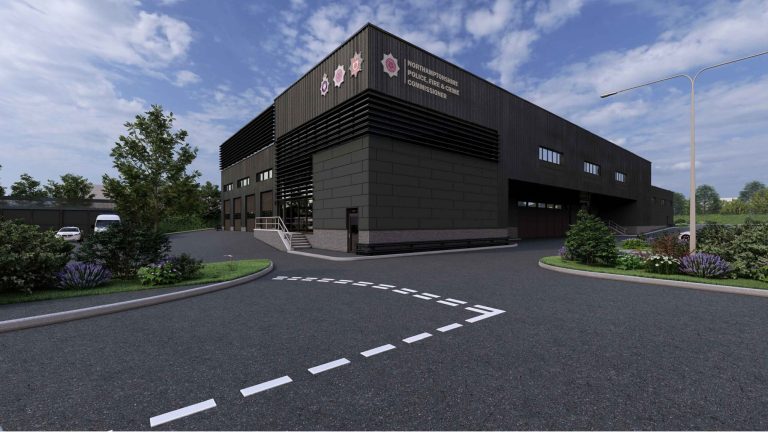
Construction firm Henry Brothers, headquartered in Magherafelt, has been selected to deliver a £10.3 million Joint Asset Workshop and Stores at Darby House in Wellingborough, commissioned by Northamptonshire Police, Fire and Crime Commissioner Danielle Stone. The scheme, due to complete in June 2027, will consolidate fleet management for Northamptonshire Police and Northamptonshire Fire and Rescue Service into one modern facility on the current Darby House car park. Ian Taylor, Managing Director of Henry Brothers, said: “We are pleased to have been appointed to deliver this important project for Northamptonshire Police, Fire and Crime Commissioner. Work on the project started at the end of March, and we are already making good progress.” The development centres on a substantial two-storey building. At ground level, multiple industrial access doors will lead to vehicle bays for mechanical works, supported by welfare amenities including toilets and showers. The upper floor will accommodate a combination of office accommodation and storage. Sustainability is embedded in the design, with measures intended to cut energy use and carbon emissions, while also reducing whole-life maintenance and operational costs. Danielle Stone, the Northamptonshire Police, Fire and Crime Commissioner, said: “I am pleased that we will be working with Henry Brothers to deliver the new joint asset and workshops stores building. “Sharing facilities for Police and Fire, where it makes sense to do so, offers best value for money for the taxpayer and both organisations. The new building will offer first class facilities for our staff to help them give the best service to the public, and I am looking forward to seeing it open next summer.” The delivery team includes Gleeds as project and cost manager, Corporate Architecture as architect and principal designer, Millward providing civil and structural engineering, and Anderson Green responsible for MEP services. The project was procured through the Crown Commercial Service Framework on a single-stage basis and will proceed under a traditional construction contract with contractor design elements. Ian added: “This project demonstrates our continued commitment to delivering complex, multi-service facilities that support vital community services. Our team is proud to contribute to a sustainable, efficient workspace that will benefit both the Police and Fire services for years to come. We look forward to working closely with all partners to successfully deliver this scheme.” Building, Design & Construction Magazine | The Choice of Industry Professionals

Read More »
Glencar completes Tech Foundry 3, expanding life sciences infrastructure at Harwell

Glencar completes Tech Foundry 3, expanding life sciences infrastructure at Harwell

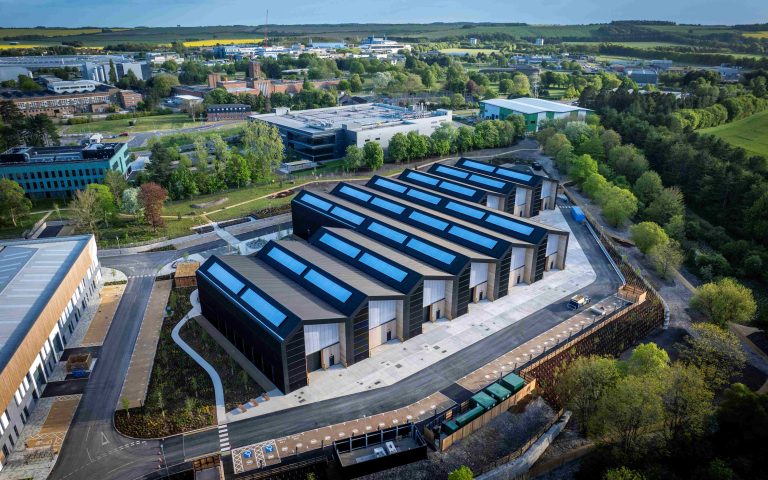
A 70,000 sq ft multi-occupier development designed to support innovation, research and advanced manufacturing within one of the UK’s leading science campuses. Glencar is proud to announce the successful completion of Tech Foundry 3, a new 70,000 sq ft multi-occupier technology development at the Harwell Science and Innovation Campus in Oxfordshire, marking another key milestone in the company’s expanding portfolio within the UK’s life sciences and advanced technology sectors. Delivered on behalf of Harwell Science and Innovation Campus, the scheme provides flexible mid-tech units designed for research, innovation, and advanced manufacturing occupiers. The speculative development has been constructed to a shell specification, enabling future tenants to tailor the spaces to meet their specific operational and laboratory requirements. Located at Tech Edge West, Curie Avenue, Harwell, the project forms part of the campus’ continued expansion to support a growing community of scientists, engineers and technology businesses within the Oxford–Cambridge innovation corridor. Designed for Innovation and Flexibility Tech Foundry 3 has been designed as a multi-use, multi-occupier facility, providing high-quality space that can accommodate a range of R&D and light industrial uses. The development comprises multiple units arranged within a distinctive architectural form and has been designed to provide flexible letting opportunities for mid-tech occupiers. Construction commenced in February 2025, with an initial six-week enabling works phase, followed by a 50-week main construction programme, with practical completion achieved in April 2026. Key features of the development include: The design also incorporates a sawtooth roof profile, allowing for the integration of solar panels on south-west facing roof sections to support the campus’ sustainability ambitions. Strengthening a Long-Standing Partnership The completion of Tech Foundry 3 marks Glencar’s third project for Harwell, further strengthening the company’s partnership with the campus and its role in delivering specialist infrastructure for the UK’s rapidly expanding life sciences sector. Roy Jones, Managing Director – South at Glencar, said: “We are delighted to have successfully delivered Tech Foundry 3 at Harwell Science and Innovation Campus. As an established contractor in the life sciences and advanced technology sectors, projects such as this demonstrate Glencar’s ability to deliver high-quality, flexible facilities that support innovation and scientific advancement. Working closely with the Harwell team and our project partners, we have created a development that will provide forward-thinking businesses with the space and infrastructure they need to grow and thrive. We are proud to continue strengthening our relationship with Harwell and to contribute to the campus’ ongoing expansion as one of the UK’s leading centres for scientific discovery and innovation.” Jason Stafford, Development and Construction Director at Harwell, said: “We’re delighted to complete the latest addition to Harwell’s development pipeline. Tech Foundry 3 complements our existing portfolio while providing highly flexible, future-ready space for science, innovation and technology focused occupiers. Its high quality design, significant sustainability achievements, including the connection to the Campus’ innovative Smart Grid, and its nature sensitive landscape setting, is credit to the developer, consultant and contractor team that have worked hard on its delivery.” Supporting the UK’s Life Sciences Growth Harwell Science and Innovation Campus is one of the UK’s leading science clusters and home to world-leading research organisations, technology companies and national laboratories. Developments such as Tech Foundry 3 play a crucial role in providing the next generation of flexible, design-led laboratory, research and technology space required to support continued growth across the sector. Glencar has established a strong track record in the delivery of specialist facilities for the life sciences sector, supporting the development of research, laboratory and advanced manufacturing environments across the UK. Recent projects include the delivery of a 60,000 sq ft fully fitted laboratory and office building at Chesterford Research Park in Cambridge for Aviva Investors. As demand for specialist laboratory, R&D and advanced manufacturing space continues to accelerate, Glencar remains committed to delivering high-quality, sustainable developments that enable scientific discovery, innovation and economic growth. Building, Design & Construction Magazine | The Choice of Industry Professionals

Read More »
Story Homes secures additional Whitehaven homes

Story Homes secures additional Whitehaven homes

Story Homes has officially broken ground on the next two phases of its flagship Edgehill Park development in Whitehaven. The expansion will introduce 158 additional properties to the site and marks the debut of the housebuilder’s “Scenik Collection,” a contemporary sub-brand designed to meet modern lifestyle demands. The new Scenik range focuses on a modern approach to terrace living, featuring adaptable internal layouts and distinctive architectural details. Aimed primarily at first-time buyers and those looking to downsize, these homes emphasise low-maintenance living alongside private outdoor spaces and access to communal green areas. The start of construction follows the granting of planning permission earlier this year and coincides with a significant company milestone: the legal completion of 500 homes across Story Homes’ various developments in Whitehaven. Over the last 16 years, the developer has become a mainstay in the town’s growth, supporting local employment and economic activity. Hayley Blair, Operations Director for Story Homes Cumbria & Scotland, said: “We’re delighted to have started work on the next phases at Edgehill Park. This is a significant moment for the development and for Whitehaven, which has been an important location for Story Homes for many years. Reaching 500 legal completions across our developments locally is something we’re incredibly proud of, and it reflects the strength of the communities we’ve helped to create.” While Phase 6 introduces the Scenik Collection, Phase 7 will continue to deliver a range of homes designed to complement the established character of the existing Edgehill Park neighbourhood. The project continues to prioritise energy-efficient design and connectivity for its residents. Phil Fell, Senior Land Manager for Story Homes Cumbria & Scotland, added: “The introduction of our Scenik Collection in Phase 6 is particularly exciting. It builds on our experience and responds directly to how people want to live today—with thoughtfully designed, flexible homes set within attractive, well-connected neighbourhoods.” With work now underway on-site, the first properties from these new phases are expected to be released for sale in summer 2026. Building, Design & Construction Magazine | The Choice of Industry Professionals

Read More »
British Land unveils major Glasgow Fort expansion with Scotland’s biggest M&S planned

British Land unveils major Glasgow Fort expansion with Scotland’s biggest M&S planned

British Land has submitted plans for a major 60,000 sq ft extension at Glasgow Fort, in a move that could significantly expand the shopping park’s retail and leisure offer. The proposals include a major enlargement of the existing M&S store, adding more than 32,000 sq ft of space. If approved, the upgraded store would become the retailer’s largest in Scotland, creating a flagship destination for shoppers at one of the country’s busiest retail parks. The wider plans also include an improved leisure offer, with new attractions such as bowling and arcades proposed as part of the development. British Land said the expansion has been shaped by feedback from two public consultation events held last year, as well as growing demand from visitors. Glasgow Fort has seen strong trading momentum, with the retail park recording its highest-ever visitor numbers in 2025. Footfall has risen by 8% over the past 12 months, supported by demand across fashion, health and beauty, food and drink, and wider lifestyle categories. M&S said the proposed extension would allow it to provide a larger and more modern store for customers in Scotland. Rachel Rankine, regional manager at M&S, said the plans would create a standout destination at Glasgow Fort, with more space to showcase the retailer’s food, fashion, home and beauty ranges. British Land said the application reflects its confidence in Glasgow Fort’s long-term growth and the continued strength of well-located retail parks. The company said the scheme would be one of the first significant retail and leisure developments to come forward in the UK in recent years, pointing to renewed confidence in the sector. Matt Reed, head of asset management at British Land, said the company is continuing to invest in and evolve Glasgow Fort to meet changing consumer habits. He said the aim is to create a vibrant environment that supports retailers while giving visitors more reasons to spend time at the destination. If approved, the expansion would further strengthen Glasgow Fort’s position as one of the UK’s leading retail park destinations, combining larger-format shopping with leisure and food and drink uses. Building, Design & Construction Magazine | The Choice of Industry Professionals

Read More »
Arc & Co. structures debt and equity funding package for £40m Bristol PBSA scheme

Arc & Co. structures debt and equity funding package for £40m Bristol PBSA scheme

Arc & Co. has successfully structured a debt and equity facility for a landmark 135-bed purpose-built student accommodation (PBSA) development in Bristol. The complex transaction brings together Downing LLP as senior debt provider and Hame Capital as equity partner in a strategic joint venture with the sponsor Colico Living. The finalised financing package includes a circa £26 million senior development facility from Downing alongside a preferred equity investment from Hame Capital. Structured at approximately 68% LTGDV and 77% LTC, the facility is designed to support the full delivery of the scheme through to completion and stabilisation. This project marks a major achievement for Arc & Co., representing the culmination of more than a year of dedicated advisory work led by Senior Broker Corey Dennis. To bring this scheme to fruition, the team navigated a particularly selective capital markets environment and overcame a series of significant hurdles. This intensive process included managing intricate valuation challenges and facilitating a total redraft of the planning application to address amenity space requirements before successfully securing approval. This case represents a significant period of intensive advisory work and highlights the value of deep industry relationships when a borrower’s capital is heavily concentrated in the planning phase. Led by Senior Broker Corey Dennis, the team navigated a selective market to engineer a 100% funding solution via a £26m senior facility and preferred equity. Demonstrating a holistic commitment to client comfort that went well beyond the standard remit, the team aligned these terms with the 43-month build plan. In doing so, Arc & Co. solved a major developer pain point and provided the sponsor with essential long-term security. Corey Dennis, Senior Broker at Arc & Co., commented: “This was a complex, multifaceted transaction given the scale of the project and the extensive planning process. We carefully structured the funding package to ensure the scheme was fully capitalised while supporting the sponsor’s overall strategy. It was about finding that specific alignment between Downing and Hame Capital that truly recognised the project’s long-term value.” “We are seeing a market shift where developers are moving towards asset stabilisation over disposals, due to the slower sales market, which naturally impacts liquidity. In this environment, success depends on having a partner who understands the nuances of the entire capital stack and which senior and equity partners to approach. That depth of specialist knowledge played an important role in delivering the transaction.” Will Powell, Investment Director at Downing, commented: “We were delighted to close this significant funding package for an experienced and capable sponsor delivering a well-designed student scheme in central Bristol. The financing came with a number of complexities concurrent with this type of deal, and we are looking forward to seeing the project progress over the coming months. A big thanks to all involved.” The development is ideally positioned to serve Bristol’s two leading universities and is now in a position to progress through Gateway 2, with construction slated to begin in early 2027. Key contributions to the transaction included Scott Harvey at Hame Capital and Will Powell at Downing LLP. Building, Design & Construction Magazine | The Choice of Industry Professionals

Read More »
UK property management revenue passes £37bn as growth begins to slow

UK property management revenue passes £37bn as growth begins to slow

The UK property and facilities management sector generated more than £37.7bn in revenue in 2025, according to new research from Property Inspect. The figure represents annual growth of 4.1% and marks the first time the sector has passed the £37bn revenue milestone. The increase also signals a recovery from 2024, when the industry recorded an unusual decline of 1.7%. Property Inspect’s analysis covers both residential and commercial assets, including services such as maintenance, rent collection, waste management, security and renovation activity. Over the past decade, between 2015 and 2025, the sector has achieved average annual growth of 2.5%. However, while revenues are still rising, the pace of expansion is expected to ease. Forecasts suggest the market will grow by a further 1.5% in 2026, taking annual revenue to around £38.3bn. Property Inspect said the slower rate reflects mounting operational pressures across the industry, including tighter regulation, more complex property portfolios and rising expectations around performance and transparency. The company warned that headline revenue growth does not necessarily mean stronger margins. As portfolios expand and compliance requirements increase, operators are having to manage higher costs and greater day-to-day complexity. Siân Hemming-Metcalfe, operations director at Property Inspect, said passing the £37bn mark was significant, but added that the sector should be viewed as a high-responsibility industry rather than a high-growth one. She said operators are managing larger portfolios and stricter compliance demands, often without a matching increase in margins. She added that inspections are becoming increasingly important as a way to manage risk, maintain standards and support better decision-making. Property Inspect said efficiency, consistency and strong operational control will become key priorities as growth across the sector continues to moderate. Data tables and sources Building, Design & Construction Magazine | The Choice of Industry Professionals

Read More »
BAM starts 2026 strongly as UK construction profitability improves

BAM starts 2026 strongly as UK construction profitability improves

Royal BAM Group has reported a solid start to 2026, with revenue and adjusted earnings rising during the first quarter. The Dutch construction group said its order book remained steady at €13bn, while its solvency had improved and its cash position remained robust. The update also pointed to stronger profitability in the company’s UK construction division, supported by disciplined tendering and strong project delivery. Chief executive Ruud Joosten said BAM’s revenue and adjusted EBITDA had increased further in the first quarter, with both main divisions and Belgium contributing to the improved performance. He added that Construction UK had continued to strengthen its contribution, helped by the company’s selective approach to bidding and focus on execution. BAM said it is seeing strong opportunities across several key markets, including energy transition, infrastructure, defence, and sustainable and affordable housing. The group said these areas are being supported by government investment and initiatives in the Netherlands, the UK and Ireland. In the UK, BAM’s civil engineering arm continued to perform strongly, while the wider Construction UK business secured a number of new projects during the quarter. These included a contract for Wales High School in Sheffield, which is designed to meet net-zero operational standards, as well as the Eastwood Park Leisure Centre, theatre and library scheme for East Renfrewshire Council in Scotland. BAM has also been selected for the Department for Education’s multi-year CF25 school framework, strengthening its pipeline in the education sector. In addition, BAM’s Civil Engineering UK business secured a place on the refreshed Procurement Partnerships North West Framework. The results suggest BAM is entering 2026 with a stable order book, improving UK performance and a clear focus on sectors with long-term growth potential. Building, Design & Construction Magazine | The Choice of Industry Professionals

Read More »
Reds10 Group announces strategic investment in steel fabrication specialist ESL, bringing critical technical capability in-house

Reds10 Group announces strategic investment in steel fabrication specialist ESL, bringing critical technical capability in-house

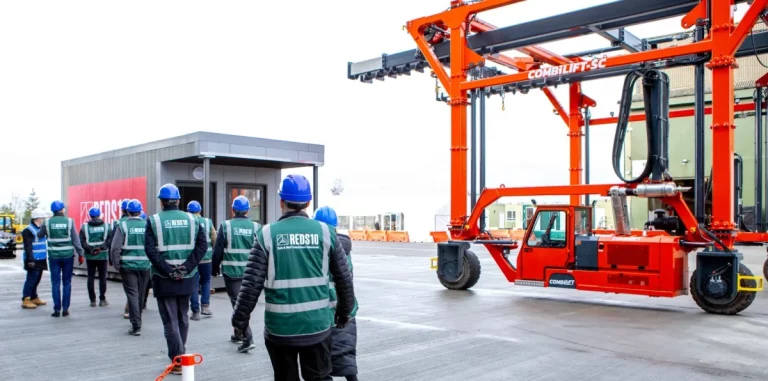
Reds10 Group has completed a strategic investment in steel fabrication specialist ESL Fabrication Engineers (ESL).  The partnership strengthens Reds10’s vertically integrated, industrialised construction model by bringing critical steel fabrication in-house, enhancing delivery strength and support the business’s next phase of growth. Founded in 2010 by father and son Paul and Gareth Thompson, ESL specialises in the comprehensive delivery of steel fabrication across the UK, from manufacture and installation to repair and maintenance works. The business has grown steadily since its inception, growing its turnover to £7 million in 2026, becoming one of the fastest growing engineering companies in East Yorkshire. The business now employs just under 50 people from its purpose-built factory facility in Kingston upon Hull. ESL will become part of the recently established Reds10 Group, bringing the total number of companies in the group to ten, including Reds10 and its sister companies. The creation of Reds10 Group brings a family of businesses together under one roof to further drive the wholesale industrialisation of design, production and construction, with AI integrated at every stage. ESL has a well-established relationship with Reds10, having worked together for the last five years to deliver high-quality sustainable buildings for the public sector, with a particular focus on defence, education, justice and health. With steel structures being an integral part of industrialised construction, ESL’s specialist technical design capabilities will enhance Reds10’s offering to maximise efficiencies in-house. The companies’ factory locations are geographically complementary, with Reds10 manufacturing off‑site in Driffield, East Yorkshire, and ESL’s purpose‑built facility just 20 miles away in Kingston upon Hull. Speaking of the partnership, Paul Ruddick, chief executive of Reds10 Group, said: “Having worked with ESL for several years, we’ve seen first‑hand the consistent quality of their service and their ambition for excellence and growth, values that closely align with our own. Bringing steel fabrication into the Reds10 Group adds a critical piece of the jigsaw as we launch our next phase of strategic growth to exploit advancing technologies, while integrating AI at every level of the business.” Gareth Thompson, co-founder and managing director of ESL said: “We’ve come a long way since ESL’s inception in 2010 and our partnership with Reds10 feels like a natural next step that will bring clear benefits to both businesses. This marks an exciting next phase in our evolution, and we look forward to building on the strong working relationship we’ve developed with Reds10 in recent years and maximising the opportunities ahead.” The partnership comes after Reds10 reported robust financial results for the 2024/25, with revenue of £144.7m and an industry-leading operating margin of 4.8%. Reds10 has set out an ambitious plan to grow its revenue to £500m and is targeting an expansion into the healthcare sector, as well as the affordable housing and temporary accommodation sectors, providing high quality sustainable homes for local authorities to help them tackle the housing crisis in their communities. Reds10 manufactures all its buildings off-site at its advanced construction facility in Driffield, East Yorkshire, where it has five factories totalling 300,000 sq ft. By investing in its own workforce, the company is able to deliver sustainable and innovative buildings in modern manufacturing facilities which are then transported and assembled on site to the most exacting standards. Building, Design & Construction Magazine | The Choice of Industry Professionals

Read More »
Pagabo combines infrastructure and demolition frameworks under innovative new £4bn framework

Pagabo combines infrastructure and demolition frameworks under innovative new £4bn framework

LEADING digital framework specialist Pagabo has begun an open procedure by inviting contractors to compete for a place on its largest infrastructure procurement offering to date – the National Framework for Civil Engineering, Infrastructure and Enabling Works 2026. Once launched in September, the new framework with an estimated total value of up to £4.15bn will run for a term of four years and is compliant with the Procurement Act 2023 and Procurement Regulations 2024. The new offering will combine the scopes of the National Framework for Civils and Infrastructure and the National Framework for Demolition and Land Preparation, which both helped to establish Pagabo’s presence in the infrastructure sector and support public sector organisations with procuring transformational schemes. Following the formation of a 10-year strategic delivery partnership that will see resources, reputation and expertise combined to establish a new benchmark for construction procurement, this is one installment in a series of new frameworks being brought to market by Pagabo and YPO in 2026. YPO is the centralised procurement authority for the framework, while Pagabo is the framework manager responsible for design, delivery and ongoing management. Created to connect public sector bodies and private organisations with appointed contractors that will collaboratively deliver quality service and value for money outcomes, the framework agreement can be used by sectors such as local government, NHS and health service providers, blue light, housing and education. David Llewellyn, construction and infrastructure director at Pagabo, said: “Significant consideration has gone into the decision behind merging two of the existing frameworks that we manage. In doing so, we are able to streamline the procurement of important works covering civil engineering, infrastructure and enabling works, while ensuring the compliance, transparency and impactful delivery that our clients expect from us. “This open procedure is set to be a competitive opportunity for contractors across the UK, with the new procurement regulations and our own commitment to SME inclusion meaning that the very best quality businesses are able to deliver the public sector’s infrastructure ambitions. From new roads and rail routes, through to brownfield regeneration and energy supply transformation, this latest framework is going to be a vital procurement offering in helping the UK create new infrastructure that will improve connectivity and economic prosperity.” The closed framework includes 13 main lots, as well as geographical sub-lots that cover areas including England, Wales, Scotland, and Northern Ireland. Lots 2 to 9 and 11 to 13 will also be split into value bands, from £0 up to more than £5m. The core lot structure includes: Lot 1 and Lot 10 are for suppliers able to cover all project types in their respective services.   Operating a digital-first, end to end delivery model, the national procurement specialist’s Pagabo+ system will be used as a central platform through which all framework activity will be managed. The single environment will play host to information on and management of new opportunities, call-off activity, performance monitoring and reporting, as well as compliance assurance. Supporting with enhancement of the full lifecycle of procurement and project delivery, appointed contractors will also be able to use Pagabo Group’s social value and contract management platforms Loop and Sypro. The framework’s tender submission deadline is set for 12 June at 12pm, and interested parties can find more information online via https://in-tendhost.co.uk/pagabo/aspx/ProjectManage/1282 To learn more about Pagabo, visit www.pagabo.co.uk. Building, Design & Construction Magazine | The Choice of Industry Professionals

Read More »
Getting the fundamentals right: Why early-stage discussion determines data centre success

Getting the fundamentals right: Why early-stage discussion determines data centre success

By Rob Davies, chapmanbdsp The rapid expansion of digital infrastructure has put unprecedented pressure on the delivery of data centres. As programmes shorten and power constraints intensify, projects are increasingly judged on speed to market and megawatt yield. Yet, according to Rob Davies, the industry’s greatest risks still arise long before construction begins. Due diligence, he explains, is where risk is cheapest to resolve; once a project pushes past concept delivery, every change costs both time and money. Data centres are fundamentally investment-led developments, and return on investment is directly linked to IT load and available power. This naturally encourages clients to maximise capacity wherever possible. However, that pressure often results in “max packing”, designing maximum yield before constraints are properly understood. The consequences frequently emerge later in the programme: deliverables are over-promised, designs prove unusable, yield is lost through redesign and all stakeholders expend significant fees correcting issues that could have been prevented. Naturally, decisions taken at the outset lock in cost, programme and flexibility far more than those made later, and Davies stresses that doing the work properly first time avoids costly reversals. In the current race to secure ever-greater power capacity, there is a growing temptation to accelerate these early steps to claim headline megawatts. Yet rushing the foundations of a project rarely improves returns; in practice, it often hinders ROI by forcing redesign, delaying delivery and reducing the very capacity developers were trying to maximise in the first place. Central to this is technical due diligence, which Rob Davies argues must be carried out rigorously at the very outset of a project rather than rushed through or treated as a procedural step under pressure to progress quickly into delivery. Early investigation establishes the direction of the project, informing whether a site is viable before major commitments are made. Aside from Power availability, flood risk, connectivity, environmental constraints (EIA requirements) and planning considerations all directly affect investment. Communication in these early stages prevents delays further down the line, particularly as competition for grid capacity intensifies. In an environment where speed is increasingly strategic, a site without a clear path or ‘ramping plan’ to power may never proceed regardless of design quality. Rob Davies, with his architectural background, also highlights the importance of holistic thinking during the feasibility stage. Early studies are often undertaken by a single discipline due to limited budgets, but this can create bias and downstream problems. Instead, bringing together architecture, engineering, planning and civils/site considerations from day one creates clarity for clients and investors. Looking at mechanical and electrical capabilities, site adjacencies, civils, power and planning together, rather than sequentially, enables clearer decisions and reduces redesign. Within chapmanbdsp’s integrated model, fewer handovers mean design, engineering, cost and delivery thinking remain aligned from the outset, while buildability and spatial efficiency can be assessed immediately alongside IT yield and power capabilities, the usual drivers. Rob’s architectural background shapes this approach. He focuses on translating technical constraints into clear commercial options, building strong relationships with clients and avoiding over-promising. Clients, he says, do not want drawings; they want certainty. Early conversations must therefore centre on outcomes and honest advice, even when that requires difficult discussions about achievable capacity. As demand grows and infrastructure becomes more complex, early collaboration must extend beyond consultants. Shorter programmes and constrained utilities mean the supply chain, modular manufacturers and alternative energy providers increasingly need to be engaged from the start. Phased and modular delivery strategies can accelerate deployment, while future power solutions may require new ways of thinking about grid reliance. Getting the right people involved early allows projects to move faster later. Trust plays a defining role in this highly specialised sector. Clients rely heavily on advisors because delivery is everything, and confidence is built through clarity and consistent outcomes. Under-promising and over-delivering, Rob Davies argues, remains more valuable than ambitious projections that cannot be achieved. Early-stage transparency not only supports better decisions but encourages repeat collaboration across developers, funds and operators. Rob Davies believes success is determined much earlier. Early-stage design is not simply preparation, it establishes whether a project works at all. As data centre demand accelerates and infrastructure pressures grow, competitive advantage will come less from how quickly facilities are built and more from how intelligently they begin. Building, Design & Construction Magazine | The Choice of Industry Professionals

Read More »