BDC News Team
Digital Twins: What’s in it for the Construction Industry?

Digital Twins: What’s in it for the Construction Industry?

César Flores Rodríguez, Chief Division Officer Planning & Design, Operate & Manage Division and Digital Twin Business Unit at Nemetschek Group assesses what the AEC/O industry can learn from other industries and how it can accelerate the adoption of digital twins. Digital twins have undergone a significant transformation in recent

Read More »
Kingston regeneration begins with LABC Warranty’s support

Kingston regeneration begins with LABC Warranty’s support

The first phase of a regeneration programme in the London borough of Kingston-upon-Thames is getting underway with inspection support and structural warranty cover from LABC Warranty. A joint venture between Kingston Council and Countryside Partnerships will see the Cambridge Road Estate area revitalised with 2,170 new homes in total, across

Read More »
Green light for major £25m investment at Westway, Glasgow Airport

Green light for major £25m investment at Westway, Glasgow Airport

Canmoor secures planning consent for 300,000 sq ft of speculative industrial development Canmoor has secured planning consent from Renfrewshire Council to develop 300,000 sq ft of brand new speculative space on a 13-acre site at Westway, next to Glasgow Airport. The £25m development will consist of two high-quality industrial/warehouse units

Read More »
David Lloyd Fulham to undergo £6.5 million makeover

David Lloyd Fulham to undergo £6.5 million makeover

New-look club will relaunch in Q1 2024 David Lloyd Leisure, the UK’s largest health, fitness and wellness group, has announced that its Fulham club will soon undergo a major transformation, with £6.5 million to be invested in extensive works over the coming months. Set to reopen in the first quarter

Read More »
Doka expands its product portfolio with Ringlock modular scaffolding

Doka expands its product portfolio with Ringlock modular scaffolding

Doka has expanded its product portfolio with the addition of Ringlock modular scaffolding. Customers worldwide can now obtain formwork and scaffolding from a single source and benefit from seamless planning, reliable assembly and disassembly, rapid availability, and a professional rental process. This allows construction projects to be realized even faster

Read More »
Introducing the award winning... Guardsman Fire Door from ODL Europe

Introducing the award winning… Guardsman Fire Door from ODL Europe

A fire door with impressive, consistent fire resistance Unlike most composite fire doors on the British market, the Guardsman Fire Door has been independently tested to the European fire test standard of EN 1634-1:2008, the more demanding test standard required by Part B of the building regulations. Results show the

Read More »
Latest Issue
Issue 338 : Mar 2026

BDC News Team

Digital Twins: What’s in it for the Construction Industry?

Digital Twins: What’s in it for the Construction Industry?

César Flores Rodríguez, Chief Division Officer Planning & Design, Operate & Manage Division and Digital Twin Business Unit at Nemetschek Group assesses what the AEC/O industry can learn from other industries and how it can accelerate the adoption of digital twins. Digital twins have undergone a significant transformation in recent years, evolving from being just a concept to becoming increasingly advanced and influential systems. They have a broad range of industry-specific applications, including manufacturing, aerospace, healthcare, and energy, and are designed to generate new value by integrating physical and digital processes. A digital twin basically is the digital replica of a physical object. And, more importantly, this virtual replica is continuously fed with real-time information from the physical object, reflecting its current state. Many industries are seeing significant benefits from the adoption of digital twins. In manufacturing, digital twins for example support the virtual prototyping and remote product diagnosis and optimize the production processes. In healthcare, simulations for complex operation rehearsals can be run, as well as non-intrusive predictive diagnostics. In aerospace digital twins can increase safety through predictive analysis’ and the optimization of design and engineering. And in the energy sector, power grids can be replicated using digital twins and the remote operation of offshore facilities can be enabled. Also, the logistics, agriculture, and retail industries already benefit from leveraging digital twins. So what’s in it for the construction industry? Our industry needs a digital transformation, that’s for sure. The goal must be to create more efficient, sustainable, and user-friendly buildings that can adapt to changing needs and environments. This will help improve productivity, reduce waste, and enhance collaboration between different teams and departments. Through real-time monitoring of physical assets, predictive maintenance can be undertaken, and the risk of errors is reduced. Furthermore, the data accumulated from digital twins can be used for better, i.e., data driven decision making to improve building efficiency. But why is there such a delay in the AEC/O industry around digital twin adoption? The most obvious answer is the siloed nature of construction project information, as the maturity and connectivity of AEC/O data sources is still developing. Construction and building management companies also have to deal with unpredictable variables that are difficult to optimize: the uniqueness of each construction project and the preferences of the building occupants. Furthermore, as the value proposition of digital twins in the AEC/O industry has been less obvious until recently, businesses leaders have been reluctant to invest the time and capital required to adopt them. Yet as real-time connectivity and automation tools have become more accessible, digital twins have moved from static representations to “smart” replicas. A static twin – such as a BIM model – already acts as a central data repository, offering an easily accessible, centralized source of data about a building’s assets. This improves productivity by providing the necessary backbone for removing data siloes and integrating assets with various systems. When that twin is enhanced with real-time connectivity – a smart twin – the result is a comprehensive building management system that enables increased responsiveness to issues and enhanced data analytics capabilities. Maintenance activities are expedited and building management is easier to forecast and optimize. The ultimate goal is to develop an “autonomous twin” through the adoption of technological advancements. The concept of an autonomous twin would enable the creation of fully bi-directional systems that allow buildings to automatically control and adjust the function of various elements, such as environmental controls, elevator movements, and access to specific areas. While this outcome is a longer-term goal, it is a viable possibility. In the meantime, business leaders can optimize the value generated by individual digital twin solutions by integrating them into a comprehensive process known as Building Lifecycle Intelligence (BLI). BLI refers to the accumulation of data across the entire construction lifecycle, which is then converted into a single, reliable source of information. This approach enables all parties involved in a project to have immediate access to the information they require, regardless of the project’s current stage in the overall lifecycle. Not only does the BLI methodology optimize processes in the short term, but it also provides several long-term benefits. For instance, the insights gained from accumulated data can inform future design decisions. For example, if a correlation is discovered between employee productivity and sunlight exposure, this information could act as the basis for future renovations or the design of new workspaces. Furthermore, the BLI model allows for cost comparisons of specific design choices. By evaluating costs against outcomes, developers can identify new strategies for improving building efficiency and reducing costs associated with specific stages of the building lifecycle. The construction industry may be lagging behind in the adoption of digital twins, but this allows its stakeholders to leverage the learnings from other industries, leading to quick and profound benefits for the entire building lifecycle. Building, Design & Construction Magazine | The Choice of Industry Professionals 

Read More »
FPA announces ABBE-accredited passive fire protection and fire door inspection qualifications

FPA announces ABBE-accredited passive fire protection and fire door inspection qualifications

With accreditation from the Awarding Body for Building Education (ABBE), the FPA has launched three new qualifications for fire safety professionals as part of its ever-expanding training services. Covering passive fire protection at both foundation and intermediate levels, along with fire door inspection training, the qualifications are awarded by ABBE and regulated by the Office of Qualifications and Examinations Regulation (Ofqual). The emphasis on the need for competency has been rising steadily in the fire safety sector, with many calling for better regulation of professionals in all areas of the industry. With that in mind, the FPA is offering recognised and accredited qualifications, catering to varying job roles and responsibilities and offering fire safety professionals the opportunity to acquire knowledge and gain much-needed skills to help them progress in their careers. Speaking about the independently accredited qualifications, FPA Fire Safety Trainer and Coordinator, Richard Nicholson said: “The FPA is pleased to launch FPA-designed Passive Fire Qualifications registered with Ofqual through ABBE, the awarding body. “Based on industry and employers’ needs, our qualifications support the competency agenda and focus on providing industry professionals with key knowledge and understanding through the robustness of qualification standards.” The new courses from the FPA include: Further details about the courses, including upcoming dates, locations, and booking and availability can be found here. FPA Members receive a 15% discount on all training courses. Not an FPA Member? You can join today to access a range of exclusive member benefits. Building, Design & Construction Magazine | The Choice of Industry Professionals 

Read More »
Kingston regeneration begins with LABC Warranty’s support

Kingston regeneration begins with LABC Warranty’s support

The first phase of a regeneration programme in the London borough of Kingston-upon-Thames is getting underway with inspection support and structural warranty cover from LABC Warranty. A joint venture between Kingston Council and Countryside Partnerships will see the Cambridge Road Estate area revitalised with 2,170 new homes in total, across a mix of home types and tenures, including 941 affordable homes and a minimum of 114 additional council homes. Block E on the site of a former community centre will benefit from LABC Warranty’s support. This £55m development within Phase 1 of the regeneration masterplan will create 206 new homes across six core buildings, including a 12-storey structure. The development consists of 134 private homes, 64 homes for social rent and eight for shared ownership, with all buildings joined by a shared green podium space accessible to all residents. LABC Warranty’s London Sales Director Julian Roper said: “In Kingston as in many other London boroughs, a tremendous amount of work is underway to provide new homes and spaces better designed for modern living, as well as more affordable homes so urgently needed. “It is very rewarding to be part of this work and I am delighted LABC Warranty will support Countryside Partnerships and Kingston Council in the construction of this part of the Cambridge Road Estate regeneration project.” Building, Design & Construction Magazine | The Choice of Industry Professionals 

Read More »
Green light for major £25m investment at Westway, Glasgow Airport

Green light for major £25m investment at Westway, Glasgow Airport

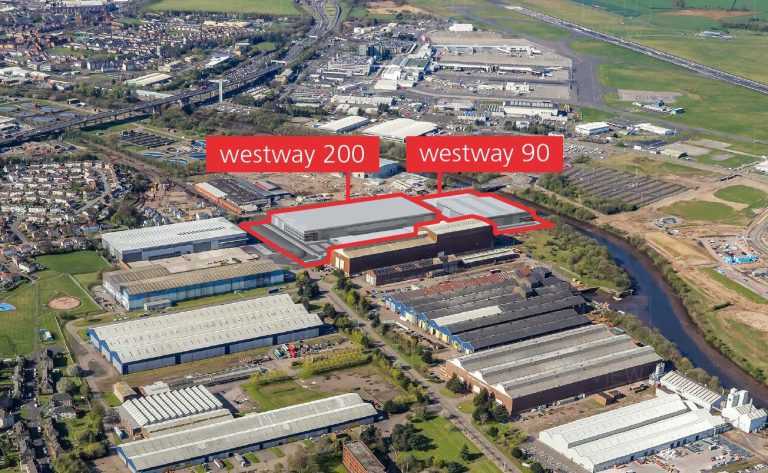
Canmoor secures planning consent for 300,000 sq ft of speculative industrial development Canmoor has secured planning consent from Renfrewshire Council to develop 300,000 sq ft of brand new speculative space on a 13-acre site at Westway, next to Glasgow Airport. The £25m development will consist of two high-quality industrial/warehouse units of 86,630 sq ft and 202,230 sq ft, to be known as “Westway 90” and “Westway 200” respectively. The larger unit will be capable of being split into two units of 91,110 sq ft and 118,140 sq ft. The development will provide quick and direct access from Westway to Junction 28 of the M8, via the recently opened Barnwell Street Bridge, as well as to Glasgow Airport and across the Advanced Manufacturing Innovation District Scotland (AMIDS). It will be adjacent to the recently opened Filshill distribution centre and has the potential to attract further new businesses and bring employment opportunities to the area. The units will be designed to a high specification, of steel portal frame construction, with eaves heights of 12.5m. Each will feature ample dock leveller loading bays and also provide high quality offices. There will be dedicated car parking, generous HGV parking and an extensive yard, of up to 50 metres deep. Sustainability is at the heart of development at Westway, with each unit designed as all electric, targeting BREEAM “Excellent” and EPC ratings of “A”. Further green credentials include electric car charging points, provision for PV panels and air source heat pumps. This all combines well with further ESG initiatives across the entire estate. A preferred main contractor has been identified and the development is expected to commence in July, with the units being available for occupation in Q4 2024. Gregor King, Canmoor’s Asset Manager at Westway said:  “We are committed to continually improving the standard of accommodation at Westway, through ongoing  investment and firmly believe the development of this “best in class” high quality sustainable industrial/logistics space will be very well-received in the Scottish market. “The exceptional connectivity, including convenient access to Glasgow Airport and the M8, further adds to its appeal. Westway stands out as one of Scotland’s most well-connected industrial and logistics parks, benefiting from 24-hour security. “With this outlook, exciting times lie ahead as Canmoor continues its ongoing investments.” Gavin Newlands, MP for Paisley and Renfrewshire North added:             “Having the capacity to provide additional quality industrial and logistics space is incredibly positive news for Renfrewshire and the wider west of Scotland region. “This development will attract more businesses to establish their presence here, fostering job creation in the process.” Westway is Scotland’s largest fully enclosed industrial park and currently offers over 1,700,000 sq ft of multi-let space. Set on a 135-acre self-contained site next to Glasgow Airport and within the Advanced Manufacturing Innovation District Scotland (AMIDS), it is home to a range of local, national and international businesses including Altrad, Babcock, Malin Group, Renewable Parts, DSV Logistics, AMG Group, Steder Group, Star Refrigeration, Kintetsu World Express, The National Manufacturing Institute Scotland, Boeing and Bullet Express and JW Filshill.  Situated in a spacious landscaped site, Westway is easily accessible by car, commercial vehicle and public transport. Conveniently positioned only 10 miles west of Glasgow city centre, the park has direct access to an extensive transport infrastructure. It offers quality accommodation within a 24-hour secure environment. Iain Davidson, Director of Colliers added: “Westway stands as a premier industrial and logistics destination in Scotland, consistently drawing substantial interest from local and regional businesses seeking occupancy. The Scottish market eagerly awaits such developments, and with its prime location and exceptional connectivity, we expect strong demand for this highly sought-after speculative project.” Canmoor’s joint leasing agents are JLL and Colliers, with management by Knight Frank. Further information on can be found at: (BROCHURE) Building, Design & Construction Magazine | The Choice of Industry Professionals 

Read More »
FSi leads the way by adding new UKCA quality mark to fire stopping products

FSi leads the way by adding new UKCA quality mark to fire stopping products

Passive fire protection specialist FSi has added the new UK mark of compliance to all its qualifying products more than two years ahead of the deadline – offering customers further assurance of its high standards. Although the date for compliance has been pushed back to June 2025 for construction products as the UK transitions aways from the European CE scheme, FSi has already secured this for the majority of their range; including their Sealants (Pyrocoustic, Pyrolastic, PyroPro HPE and LST), Stopseal Batts, PipeBloc PCP Collars and PipeBloc PWP Wraps.  From June 2023, the company’s fire stopping products will be labelled bearing the UKCA mark. This follows successful technical assessments by a Government-approved body, following work within FSi to provide the comprehensive documentation and control processes required.   The UK Conformity Assessment (UKCA) mark has been introduced by the Government to show that manufactured products are fit for the market in Great Britain and meet relevant requirements relating to health, safety and the environment.  The CE mark was originally set to be replaced by UKCA on January 1, 2021, which was then pushed back to January 2022. However, for products used in the construction industry, which includes passive fire protection, the date was extended even further until June 30, 2025. Based in Measham, in Leicestershire, FSi manufactures a range of fire stopping systems that are used in the envelope of a building to limit the spread of a fire. Fire stopping is a process of adequately sealing imperfections in the building, or breaches to walls or floors by penetrations or linear gaps to create a compartment.  Matt Metcalfe, Firestop Manager at FSi, said: “FSi takes responsibility for the quality, safety and performance of its products at every level, and this means showing compliance and backing that up with technical data and proof of performance.  “In adding the UKCA mark of compliance to our products as early as possible we underline that commitment to standards, accountability and taking responsibility for the products that we manufacture. “Compliance, testing and thorough documentation are second nature to us as a passive fire protection manufacturer and we will always go that extra step to show that we meet requirements, legislation and testing related to our products. “The technical team worked hard to ensure that all the relevant documentation was in place to support the checks and testing required to achieve compliance.” “As FSi manufactures products for the global market we understand the need for product confidence, particularly in fire protection products and are happy to have been able to show our compliance.” Building, Design & Construction Magazine | The Choice of Industry Professionals 

Read More »
Panattoni instructs Glencar to build new multi-unit, speculative industrial facility at Brighton City Airport

Panattoni instructs Glencar to build new multi-unit, speculative industrial facility at Brighton City Airport

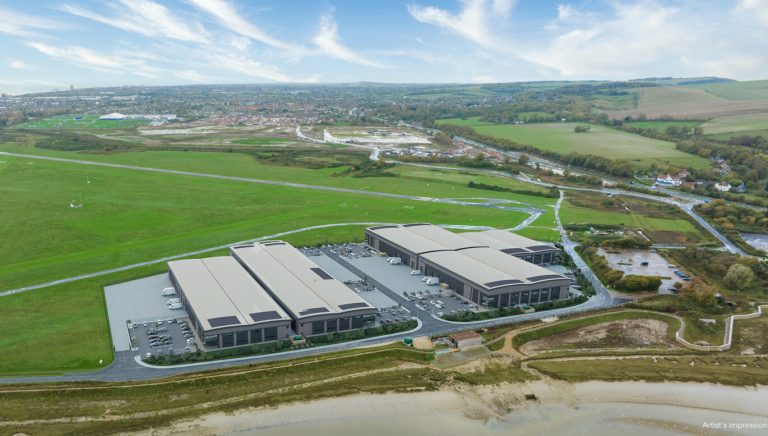
This project serves as the inaugural development awarded to Glencar and comprises of five separate units that range from 19,000 sq. ft to 53,700 sq. ft in size. Glencar, a leading UK construction company that was recently ranked amongst Europe’s fastest growing businesses, has today announced that it has been appointed by leading international real estate developer specialising in industrial real estate and warehouses, Panattoni, to build a multi-unit industrial scheme at Brighton City Airport. The development, being marketed as Panattoni Park Brighton is being developed speculatively and comprises of five new build industrial and logistics units ranging from 19,000 to 53,700 sq. ft.  The works which commenced at the start of June will comprise of the design and build of each of the industrial units, including associated external works, services, infrastructure and landscaping.  The project is situated adjacent to Brighton City Airport and includes works to the public highway.  It is also targeted to be a BREEAM excellent development. The development is expected to complete by May 2024. Commenting on the announcement, Eddie McGillycuddy Glencar CEO said: “As Europe’s largest developer of logistics property, Panattoni have an extensive development pipeline and we are very happy to be working together and to be appointed for the first time on this standout south coast development. It’s also a hugely significant appointment for us as it once again confirms that Glencar is the preferred partner for all of the major industrial and logistics real estate developers as a result of our industrial leading credentials and consistently high performance and delivery. We very look forward to working with Panattoni and full project team, including project managers KAM Project Consultants and architects HTC Architects to deliver an outstanding final product”. Situated adjacent to Brighton City Airport and the A27 dual carriageway, Panattoni Park Brighton will deliver much-needed Grade-A space within this fast-growing region ideally set-up for last mile delivery operations looking to address consumer markets clustering the south coast. Building, Design & Construction Magazine | The Choice of Industry Professionals 

Read More »
David Lloyd Fulham to undergo £6.5 million makeover

David Lloyd Fulham to undergo £6.5 million makeover

New-look club will relaunch in Q1 2024 David Lloyd Leisure, the UK’s largest health, fitness and wellness group, has announced that its Fulham club will soon undergo a major transformation, with £6.5 million to be invested in extensive works over the coming months. Set to reopen in the first quarter of 2024, the new-look club will offer a new luxurious Spa Retreat which is set to be a destination for pure relaxation.  The Spa Retreat will feature 5 breath taking experience rooms including citrus steam room, Himalayan salt sauna, ice experience room plus a peppermint ice rainforest experience shower, hydrotherapy pool and heated relaxation beds where members will be able to drift away, relax and rejuvenate.  The state-of-the-art gym, boutique designed studios for group classes plus a stunning Clubroom and business lounge, will result in David Lloyd Fulham becoming one of London’s leading premium health and wellness facilities.  Due to the level of disruption involved to members in a rapid transformation of this scale, the club will be closed for a number of months from Friday 30th June 2023 and re-open in early 2024.  All existing David Lloyd Fulham membership fee payments will be automatically frozen on the day the club closes.  However, members wishing to carry on their membership, can choose to use Clubs nearby with a 50% reduction in fees.  The nearest Club is David Lloyd Kensington, which is just two miles away.      David Lloyd Clubs are ensuring existing team members are well looked after and there will be no compulsory redundancies during this period. Team are being redeployed to other local clubs or a club within commutable distance. David Lloyd Clubs are committed to delivering market leading facilities to their members by investing in clubs throughout the UK and Europe, and this transformation of David Lloyd Fulham is yet another example of this commitment. Kristen Westwood, General Manager, David Lloyd Fulham said: “There’s a lot of buzz and excitement about the refurbishment and rightly so, as the new club will be a luxurious and highly premium destination for our members and their families to work, rest and play. “We’re grateful that our team and members – some of whom have been with us for nearly 20 years – are happy to go to other nearby clubs while we are closed for works. We are anticipating a lot of interest in new memberships and can’t wait to unveil the new-look David Lloyd Fulham early next year.” Those interested can register for updates on the works as well as membership packages when they come available on the David Lloyd Fulham website www.davidlloyd.co.uk/fulham. Building, Design & Construction Magazine | The Choice of Industry Professionals 
Read More »
Doka expands its product portfolio with Ringlock modular scaffolding

Doka expands its product portfolio with Ringlock modular scaffolding

Doka has expanded its product portfolio with the addition of Ringlock modular scaffolding. Customers worldwide can now obtain formwork and scaffolding from a single source and benefit from seamless planning, reliable assembly and disassembly, rapid availability, and a professional rental process. This allows construction projects to be realized even faster and more efficiently. At bauma 2022, the world’s largest trade fair for the building industry, it was clear: Doka stands for formwork and scaffolding. The impressive 30-metre Ringlock scaffolding tower was a remarkable example of this. By expanding its portfolio to include scaffolding solutions, Doka is responding to current challenges in the construction industry, such as high transport costs, bottlenecks in the supply chain and increased organisational and coordination efforts. “Following the full acquisition of the global scaffolding manufacturer AT-PAC at the beginning of 2023, we are now the one-stop shop for all our customers’ formwork and scaffolding needs. This reduces the number of interfaces. Especially when it comes to renting formwork and scaffolding from a single source, valuable synergies are created for our customers,” explains Robert Hauser, CEO of Doka. The latter was of great interest to bauma visitors, as Hauser reports: “Our customers showed great interest. The conversations were extremely positive.” The Ringlock scaffolding system offers all of the operational advantages that contractors have come to expect from the Doka brand. Customers benefit from seamless planning, rapid availability and a professional rental process underpinned by a quality reliable product. By providing a single point of contact for both formwork and scaffolding trades, customers can minimize organizational and coordination efforts, thus saving time and resources. Furthermore, Doka’s worldwide sales network ensures a streamlined ordering process and reliable delivery, while a global service network guarantees fast and flexible support. Fully rentable from a single-sourceDoka offers its customers an efficient and high-quality rental network for formwork and scaffolding. Robert Hauser adds: “We ensure that our customers benefit from a smooth and simple rental process, allowing them to concentrate on what really matters – their construction project.” With Doka’s supplementary rental service, even larger construction projects can also be realised quickly and easily without high investments in new material. Doka customers are thus able to respond flexibly to requirements and remain economically efficient. Maximum flexibilityThe Ringlock scaffold is a versatile all-rounder on construction sites, offering best quality at an attractive price-performance ratio. Thanks to its modular capabilities, the system can be used flexibly for different construction site requirements. Established for decades on the scaffolding market, this tried-and-tested system solution is the ideal complement for performing reinforcement and formwork quickly and safely. In addition to use as a facade scaffold, Ringlock can also be used as a rebar scaffold, trench bridge, stair tower, rolling scaffold, as well as a suspended or birdcage scaffold. Moreover, the Ringlock scaffold is also extremely robust, easy to assemble and fully compatible with other widely used and tested Ring-type systems on the market. In addition, the Ringlock scaffold is DIBt certified and complies with all common safety standards. All in all, a safe and lasting choiceRinglock is an ideal solution for working scaffold in construction projects, offering exceptional safety and durability. Its robust design ensures stability and reduces the risk of accidents, providing workers with the confidence to perform their tasks effectively, and this means both the scaffolders and end-users of the structure. On top of it, Ringlock’s galvanised finish reduces maintenance costs and provides long-term reliability, which, combined with its modular design, enables versatile configurations and long-term reusability. By adopting Ringlock scaffolding, customers can be confident that they are investing in a safe and durable solution for their construction needs. Building, Design & Construction Magazine | The Choice of Industry Professionals 

Read More »
Introducing the award winning... Guardsman Fire Door from ODL Europe

Introducing the award winning… Guardsman Fire Door from ODL Europe

A fire door with impressive, consistent fire resistance Unlike most composite fire doors on the British market, the Guardsman Fire Door has been independently tested to the European fire test standard of EN 1634-1:2008, the more demanding test standard required by Part B of the building regulations. Results show the Guardsman Fire Door achieves an average of 100% overrun past the 30-minute mark on both glazed and unglazed doors. An environmentally friendly fire door The Guardsman Fire Door uses Agrifiber, a board material made from resin bonded agricultural fibres. It’s stronger and more stable than the phenolic foam that most other composite fire doors use within the market. It’s also a green building product, which will help buildings achieve better environmental credentials. Adaptable door range The Guardsman Fire Door can be manufactured to suit any structural door aperture in a range of door styles from just two base designs. More importantly, its use of Agrifiber means it offers very consistent material densities which delivers the same consistently exceptional fire resistance results every time. An award-winning fire door The Guardsman Fire Door uses Agrifiber, a board material made from resin bonded agricultural fibres. It’s stronger and more stable than the phenolic foam that most other composite fire doors use within the market. It’s also a green building product, which will help buildings achieve better environmental credentials.The Guardsman Fire Door won Best New Product of the Year at the G Awards 2021. The prestigious industry award is for an outstanding product that will significantly improve overall building performance. The judging panel said: “Achieving a 30-minute fire door with both glazing, a letterplate and with PAS 24:2016 performance is remarkable.” A low maintenance fire door The 2mm GRP skin means the Guardsman Fire Door is low maintenance and robust enough to stand up to high-traffic areas, reducing maintenance and replacement costs. Guardsman Fire Door Accreditations TestingGuardsman Fire Door has been independently tested to the European fire test standard of EN 1634-1:2008 SecurityThe Guardsman Fire Door has been tested and complies to PAS24:2016 accreditation. Environmental StandardsTimbers used in the manufacturing of the Guardsman Fire Door slab are subject to FSC chain of custody certification, ensuring they are from sustainable sources. ManagementCapstone and ODL Europe operate certified management systems to ISO 9001 and ISO 14001. ManufacturingThe Guardsman Fire Door slab is manufactured as part of the BM Trada Q-Mark scheme, which means we have full manufacturing traceability. MembershipsODL Europe are members of the Association of Composite Door Manufacturers (ACDM), which means that all our door slabs are tested to and comply with all current UK standards. FIND OUT MORE ON THE GUARDSMAN FROM ODL Building, Design & Construction Magazine | The Choice of Industry Professionals 
Read More »
Approved Document B: Fire Safety Volumes 1 and 2 Incorporating Insurers’ Requirements

Approved Document B: Fire Safety Volumes 1 and 2 Incorporating Insurers’ Requirements

In December 2022, the Secretary of State at the Department for Levelling Up, Housing and Communities (DLUHC) published amendments to both volumes of Approved Document B Fire Safety: Approved Document B: Fire safety – Volume 1: Dwellings, 2019 edition incorporating 2020 and 2022 amendments – for use in England Approved Document B: Fire safety – Volume 2: Buildings other than dwellings, 2019 edition incorporating 2020 and 2022 amendments – for use in England. Approved Document B (ADB) for Fire Safety is statutory guidance authorised under Section 6 of the Building Act 1984 to give practical guidance on ‘common building situations’ about how to meet the legal requirements and regulations of the Building Regulations 2010 for England. ADB is concerned with: • Requirement B1: Means of warning and escape• Requirement B2: Internal fire spread (linings)• Requirement B3: Internal fire spread (structure)• Requirement B4: External fire spread• Requirement B5: Access and facilities for the fire service• Regulations: 6(3), 7(2) and 38. ADB is only required by Section 1 of the Building Act 1984 to address health and life safety in the event of fire in or about buildings, confirmed in Regulation 8 of the Building Regulations 2010. The health and life safety objective of the law of the Building Act 1984 and the Building Regulations 2010, addressed by the statutory guidance of both Volumes of ADB, is discussed in BDM01 A to Z of Essential Principles for the protection of buildings. BDM01 is an orderly recommendation to investors, on behalf of insurers, not to design and build solely down to the ‘life safety before collapse’ objective on the assumption that the project is a ‘common building situation’. Instead, to define and insist upon the resilience their investment requires, beyond statutory guidance or Building Regulations, it calls for resilient construction innovation to improve health and life safety with measures anticipating likely events involving fire and water. Two volumes of the Insurer ADB have been developed by RISCAuthority and published (as graphical reproductions under Open Government Licence) by the Fire Protection Association, both referencing the Essential Principles:• Approved Document B: Fire Safety – Volume 1 Dwellings – Incorporating Insurers’ Requirements for Property Protection• Approved Document B: Fire Safety – Volume 2 Buildings other than Dwellings – Incorporating Insurers’ Requirements for Property Protection. READ GUIDANCE FROM THE FPA Building, Design & Construction Magazine | The Choice of Industry Professionals 

Read More »