Kenneth Booth
Grassroots Glory Beckons For Rugby League Clubs

Grassroots Glory Beckons For Rugby League Clubs

Grassroots rugby league clubs are being given the chance to win building materials to spruce up their facilities and receive a visit from England stars in a new campaign. Selco Builders Warehouse, one of the UK’s leading builders merchants, has launched its ‘Growing Grassroots’ campaign in conjunction with the Rugby

Read More »
3t Energy Group secures training contract with Wales & West Utilities

3t Energy Group secures training contract with Wales & West Utilities

3t Energy Group, the global training powerhouse that provides the highest-impact learning solutions for safety-critical industries, has secured a contract with gas distribution firm, Wales & West Utilities.  The seven-figure contract will run for three years and provide a complete workforce management solution for Wales & West’s 1,900 colleagues. It

Read More »
Gilbert-Ash appointed to deliver Ireland’s first citizenM hotel

Gilbert-Ash appointed to deliver Ireland’s first citizenM hotel

Project will preserve iconic Brutalist landmark facade for the ‘affordable luxury for the people’ hotel Award-winning construction and fit out contractor, Gilbert-Ash, has been appointed as the main contractor to develop Ireland’s first citizenM hotel: citizenM Dublin St Patrick’s. Molyneux House on Bride Street has a long and varied past

Read More »
‘Customisation culture’ holds back digital maturity in the construction industry

‘Customisation culture’ holds back digital maturity in the construction industry

Construction technology provider Causeway Technologies has revealed the key findings from its Causeway Insights 2023 survey of construction industry professionals.  Evidence from the survey suggests digital transformation remains high on the agenda, with the vast majority of those surveyed reporting that their organisation is currently implementing initiatives to digitalise aspects

Read More »
Latest Issue
Issue 342 : Jul 2026

Kenneth Booth

Team of Greater Manchester firefighters supporting search and rescue efforts in Morocco

Team of Greater Manchester firefighters supporting search and rescue efforts in Morocco

FIVE firefighters from Greater Manchester Fire and Rescue Service (GMFRS) have landed in Morocco as part of national research and rescue efforts following a devastating earthquake in the country.  The GMFRS team flew out to Marrakech on Sunday evening (10 September) and are part of a UK International Search and Rescue (UKISAR) team made up of 60 operational crew members from 14 fire and rescue services. The team has been deployed through the Foreign, Commonwealth and Development Office following a request for support from the Moroccan government after a 6.8 magnitude earthquake stuck on Friday (8 September.) The GMFRS team consists of Station Manager Martin Foran who is acting as Operations Commander and who also travelled to Turkey earlier this year to support the UKISAR search and rescue operation following the earthquake on the Turkey-Syria border. He is joined by Watch Manager Gavin Kearsley from Ashton Technical Response Unit, who will be a crew leader; Watch Managers John Hughes and Simon Cording from Leigh TRU, and Crew Manager Ross Strother from GMFRS’s Technical Training team, who will all be technicians. They are being supported back in Greater Manchester by Watch Manager Mike Hirst who is coordinating the GMFRS response and who also joined the Turkey response in February. GMFRS Assistant Chief Fire Officer, Barry Moore, said: “GMFRS is pleased to be supporting the national search and rescue operation in Morocco and we send our thoughts to the people of Morocco and everyone affected by this devastating event. “Our team of five highly skilled search and rescue technicians have safely arrived in Marrakesh where they have set up a base of operations and we expect to hear more from the team in the coming days, but we are grateful to them and to their families.” National Fire Chiefs Council Chair, Mark Hardingham, said: “The thoughts of the UK’s fire and rescue services are with all those affected by the devastating earthquake in Morocco. “A team of specially trained firefighters and medics from the UK has been deployed to assist following a request from the Moroccan government to the British government. “They will be providing specialist technical support where it is needed most to save lives and support local emergency service teams”. For updates, follow @Manchesterfire Building, Design & Construction Magazine | The Choice of Industry Professionals 

Read More »
The Benefits of Buying Real Estate in New Buildings from the Developer in Turkey

The Benefits of Buying Real Estate in New Buildings from the Developer in Turkey

Recently, the Turkish real estate industry has experienced a surge in growth; with demand for modern, high-end housing on the rise. This trend is expected to continue, as more people seek out luxurious residential properties. To meet the high demand for housing, developers in Turkey have rolled up their sleeves and built residential complexes. Buying off-plan in Turkey by Yekta Homes directly from the developer can offer significant advantages to buyers, including access to off-plan residential complexes, better prices and deals, and the ability to customize your living space. Advantages of Buying Directly from the Developer Purchasing from the developer offers a huge advantage, since you have access to off-plan residential complexes. This allows for more flexibility than what other purchasing options provide. These are properties that are still under construction, which means that buyers can purchase their desired property before it is completed. This option allows buyers to secure their ideal property at pre-construction prices and benefit from greater flexibility in choosing their preferred layout and design. Another advantage of buying directly from the developer is access to better prices and deals. Developers often offer early bird discounts or other promotions to attract buyers during the pre-construction phase. These incentives can help buyers save money on the overall cost of the property and provide them with an excellent return on investment when they decide to sell in the future. Finally, buying directly from the developer also gives buyers the ability to customize their living space. In many cases, developers will offer buyers the opportunity to make alterations to the original design plans, such as choosing finishes, appliances, and other features. This customization allows buyers to create a space that suits their individual needs and preferences. Benefits of Buying Property in New Buildings New buildings offer several benefits over older buildings, including modern amenities and facilities, energy efficiency, and increased property value over time. Modern amenities and facilities include features such as gyms, swimming pools, and outdoor spaces, which are becoming increasingly important to buyers looking for a comfortable and convenient lifestyle. Many people take energy efficiency into account when purchasing a home, to save on utility costs and create a more sustainable environment. This can make a huge difference in terms of cost savings and environmental impact. New buildings are also likely to appreciate in value over time, providing buyers with a strong return on investment. Why Choose Turkey for Real Estate Investment Turkey is a great place to invest in property – it has robust economic expansion, political dependability, beneficial policies & taxes for foreign investors and competitive prices compared to other countries in Europe. The Turkish economy has been growing at a steady pace, with GDP increasing by 5% in 2022 despite the challenges such as pandemic. With the growth of this market expected to persist in the future, investors have an opportunity to yield a reliable and profitable return on their investment. Furthermore, Turkey has a beneficial legal framework for real estate investments that safeguards foreign investors and simplifies the transaction process for properties. Investors from abroad are especially encouraged by the country due to its attractive tax benefits. These include reduced VAT charges and exemptions on some properties purchased in the region. Finally, the property sector in Turkey is highly competitive, with prices that are significantly lower than other European countries, such as Spain or Italy. Different Types of Turkish Real Estate Available for Sale People looking to buy real estate in the country can find a range of options including flats, apartments and duplexes. Each type of property has its own unique features and amenities, making it important for buyers to carefully consider their preferences and needs when choosing a property. Flats and apartments are generally smaller and more affordable, while duplexes offer more space and flexibility for larger families or those who need additional living space. When considering specific properties, buyers should also take into account features such as location, access to public transport & schools, shopping, and other amenities. Other considerations might include the orientation of the property, the number of bedrooms and bathrooms, and the presence of outdoor space. What to Consider When Buying Real Estate from the Developer in Turkey When buying real estate from a developer in Turkey, there are several key considerations to keep in mind. Before making any purchase decisions, it is essential that buyers thoroughly investigate the background of the developer. This should include looking into their past performance when it comes to completing projects on time & within budget. It is also important to understand the payment schedule and financing options available, as well as review the contract and legal documents carefully to ensure that there are no hidden clauses or fees. When purchasing a property, it is highly recommended that buyers consider seeking assistance from an experienced real estate agent. This can ensure that you have the right support throughout the process, from choosing a property to successfully navigating any contract negotiations and closing the deal. With the help of an expert agent, it is likely to experience a seamless and anxiety-free property purchasing process in Turkey. They have the necessary skill set to assist you through the intricate legal & financial formalities of such a transaction. Conclusion Generally speaking, buying real estate from the developer in Turkey is a great idea. It provides many advantages for the buyer such as access to off-plan residential complexes, great prices and deals, and customizing your living space just the way you want it. New buildings also offer modern amenities and facilities, energy efficiency, and increased property value over time. With its strong economic growth, political stability, attractive legal & tax incentives, and competitive prices, Turkey is a desirable market for real estate investment. It would be wise to take some time to think through the different factors that could affect your choice when buying real estate from a developer in Turkey. This includes considerations such as property type, location, and amenities. Considering all the advantages,

Read More »
The final workplace taboo? Stigma is stopping effective suicide prevention, warns MHFA England

The final workplace taboo? Stigma is stopping effective suicide prevention, warns MHFA England

Many employees lack the knowledge and skills to help prevent suicide in the workplace, reveals new research by MHFA England ahead of World Suicide Prevention Day on the 10 September. Over 1 in 20[1] people make a suicide attempt at some point in their lives. Data shows as many as 650 suicides in the UK each year could be work related – this is approximately 10% of all suicides.[2] MHFA England’s new research, among 2,000 people in work, found many don’t know what to do if they’re concerned a colleague is thinking of suicide. A third of people surveyed (33%) believe incorrectly that asking about suicide can put the idea in someone’s head. Only one in ten (13%) know to ask a colleague they are worried about whether they have a plan to end their life and nearly 40% admitted they didn’t know if asking this question was the right thing to do.  However, all the evidence[3]  shows that asking someone, who has a plan to take their own life, a direct question about suicide can save their life. Despite positive shifts in how we talk about mental health at work and in wider society, suicide is still stigmatised. MHFA England’s research shows a third (33%) of employees would speak to their manager if they were experiencing poor mental health but less than 1 in 5 (19%) would discuss having suicidal thoughts. The top reasons are, not feeling comfortable (61%), being worried it would impact their job (36%) or that they would be judged (35%). This research shows over 75% of employees do not believe suicide prevention is part of their organisation’s wellbeing strategy so MHFA England is calling on employers to explicitly include suicide awareness, prevention and support in their plans. One part of the solution is Suicide First Aid training. Suicide is preventable through education and intervention, which is why MHFA England has partnered with the National Centre for Suicide Prevention Education and Training (NCSPET) to deliver Suicide First Aid (SFA) training to workplaces. MHFA England also offer consultancy to help employers develop and implement plans to support those having thoughts of suicide and those impacted by suicide. Suicide First Aid training provides people with a greater understanding of suicide, including how to spot the signs of someone who may be thinking about suicide and the confidence to intervene and help create a suicide-safety plan.  Simon Blake, MHFA England’s Chief Executive said, “The stigma and silence surrounding suicide is harmful.  To prevent deaths by suicide, we must do everything we can to eliminate stigma. Workplaces have the potential to play such an important role, yet our research shows a large number of people are unsure how to approach a colleague they are worried may be considering suicide. This means they may not ask the lifesaving question – ‘are you thinking about ending your life?’ Workplaces can help prevent suicides through awareness raising, education and ensuring support. Many people experiencing a suicide crisis are in workplaces day in day out. In addition, it is estimated that when someone dies by suicide, 135 people are affected [4]. “At MHFA England we want a society where everybody has the knowledge, skills and confidence to discuss suicide including at work. That is why we have produced a free resource to raise awareness about how we can support someone who may be experiencing a suicide crisis.” Jamie Compton-Rea, Chief Operating Officer at the National Centre for Suicide Prevention Education and Training said,“As two leading organisations dedicated to suicide prevention, the partnership between the National Centre for Suicide Prevention Education and Training and Mental Health First Aid England has expanded the reach of the lifesaving skills taught in Suicide First Aid. By merging our expertise, we’re not just delivering training – we’re fostering a proactive approach to suicide prevention that empowers individuals with the skills they need to have effective conversations that could save a life.” One organisation that has already trained a number of staff in Suicide First Aid is Colas Ltd, who deliver sustainable solutions for the UK’s transport infrastructure. Part of the international Colas Group, the organisation has 1,460 employees across 20 UK locations. Christian Veritas, Business Unit Manager Colas Ltd based in Leeds completed the Suicide First Aid training, he said, “For me, one of the main takeaways from the course was the importance of language – I’d never really thought the language around suicide and am so much more aware of the power of language in breaking down stigma. “I’ve also really noticed the change in how people are checking in on each other. In our working environment, there can be quite a lot of bravado, so it can be hard to break through to a more personal level, but the training has really taught us to ask the right questions, in the right way.  I’ve noticed that people are talking more and looking out for each other which is just incredible to see.” To find out more about MHFA England’s Suicide Prevention offer and to access a free resource to learn how to talk about suicide in the workplace, visit:  visit https://mhfaengland.org/mhfa-centre/campaigns/world-suicide-prevention-day-2023/ If someone is at immediate risk of attempting suicide, dial 999. If someone is having thoughts of suicide encourage them to call Samaritans on 116 123. [1] https://www.samaritans.org/about-samaritans/media-guidelines/suicide-facts-journalists/ [2] https://www.hazardscampaign.org.uk/wp-content/uploads/2021/02/The-Whole-story-2021.pdf [3] https://www.mind.org.uk/information-support/helping-someone-else/supporting-someone-who-feels-suicidal/talking-about-suicidal-feelings/ [4] https://lifeinmind.org.au/suicide-prevention/approaches/postvention/postvention-australia-guidelines Building, Design & Construction Magazine | The Choice of Industry Professionals 

Read More »
Grassroots Glory Beckons For Rugby League Clubs

Grassroots Glory Beckons For Rugby League Clubs

Grassroots rugby league clubs are being given the chance to win building materials to spruce up their facilities and receive a visit from England stars in a new campaign. Selco Builders Warehouse, one of the UK’s leading builders merchants, has launched its ‘Growing Grassroots’ campaign in conjunction with the Rugby Football League (RFL), of which it is an official partner. Any grassroots rugby league club is entitled to enter the competition for the chance to win a top prize of £2,000 worth of building materials, a visit to the club from England players and tickets to one of the national team’s Autumn Series internationals against Tonga. Clubs must explain in no more than 100 words how the £2,000 donation would benefit them and entries can be made at https://www.selcobw.com/info/growing-grassroots-rugby-league-competition Carine Jessamine, marketing director of Selco Builders Warehouse, said: “We have a long and proud record of supporting the sport of rugby league over the last decade. “We’ve backed a number of different professional clubs, including Salford Red Devils currently, are supporting the national team through the RFL and were an official partner of the Rugby League World Cup last year. “Throughout our time being involved in rugby league, we have always looked at different ways we can support local clubs because they are the lifeblood of the sport. “Our Growing Grassroots campaign is designed to help a local rugby league club which does outstanding work in its local community carry out vital work to its playing or training facilities. “Each of our branches has thousands of products under one roof so, whatever the needs of the club, we will be able to supply the materials to get the job done. “We know money is tight across all amateur sports so we have no doubt there are many clubs across the country for which this prize would make a huge difference to the way it operates, both now and in the future.” Bobby Bahadori, head of partnerships for Rugby League Commercial, said: “This is a fantastic opportunity for grassroots clubs and typifies Selco’s commitment to supporting rugby league at all levels. “An injection of £2,000 into a grassroots club will create opportunities for vital work to be done which, without this funding, may otherwise be left to go into a state of disrepair. “With the England player visit and tickets to one of the big games against Tonga included in the prize, it’s a fantastic all-round package for a grassroots club to win.” With hundreds of trade brands always in stock, Selco’s 75 UK branches are firmly focused on helping tradespeople complete their jobs as quickly and effectively as possible. As well as offering trade services, Selco also has a strong digital presence including Click & Deliver and Click & Collect services and a new app – as well as a ‘Dial & Deliver’ telephone service – to make life as convenient as possible for tradespeople. For more information on Selco visit www.selcobw.com Building, Design & Construction Magazine | The Choice of Industry Professionals 

Read More »
3t Energy Group secures training contract with Wales & West Utilities

3t Energy Group secures training contract with Wales & West Utilities

3t Energy Group, the global training powerhouse that provides the highest-impact learning solutions for safety-critical industries, has secured a contract with gas distribution firm, Wales & West Utilities.  The seven-figure contract will run for three years and provide a complete workforce management solution for Wales & West’s 1,900 colleagues. It will leverage 3t’s capabilities across its industry-leading businesses including the UK’s number one energy training provider, AIS Survivex, leading utility training specialist, Utilities Construction Training (UCT) and software and technology firm, 3t Transform.  Wales & West Utilities operates the gas distribution network for 2.5m homes and businesses and more than 7.5m people across Wales and South West England. It also provides the gas emergency service whilst investing £2 million a week to ensure communities receive a safe and reliable gas supply in those areas.  Practical training in safety-critical areas will be delivered through AIS Survivex and UCT, and key contract partners. The training contract will also include 3t Transform’s cloud-based training management platform and digital learning technologies such as eLearning, with a view to incorporating more blended learning such as virtual reality and gamified learning in the future. These solutions will help digitise and streamline the management of training for Wales & West Utilities.  Charlie Guthrie from 3t Energy Group said: “Winning this contract is fantastic news and represents a significant strategic step forward as our first truly integrated contract combining the expertise of AIS Survivex, UCT and 3t Transform.  “AIS Survivex has more than a decade of experience delivering training for high-risk, compliance-led industries such as oil and gas and renewables and UCT is one of only a handful of providers to offer training across the entire utility sector and is unique in delivering apprenticeships to new utility industry entrants. 3t Transform is also market-leading having won a number of awards for its innovative workforce management software and digital learning solutions. Together we will focus carefully on providing a complete workforce development package with technology-driven solutions to ensure we maximise efficiencies for the team at Wales & West Utilities.”  Rhiannon Williams from Wales & West Utilities said: “Following an extensive tender process, we are delighted to award our provision of training services contract to AIS Survivex. The Group demonstrated an in-depth understanding of our needs and offered flexible and innovative solutions which will help our workforce operate at the very highest levels of safety, competency, and efficiency.”   Building, Design & Construction Magazine | The Choice of Industry Professionals 

Read More »
Beard embarks on multi-million pound renovation of historic Trowbridge Town Hall

Beard embarks on multi-million pound renovation of historic Trowbridge Town Hall

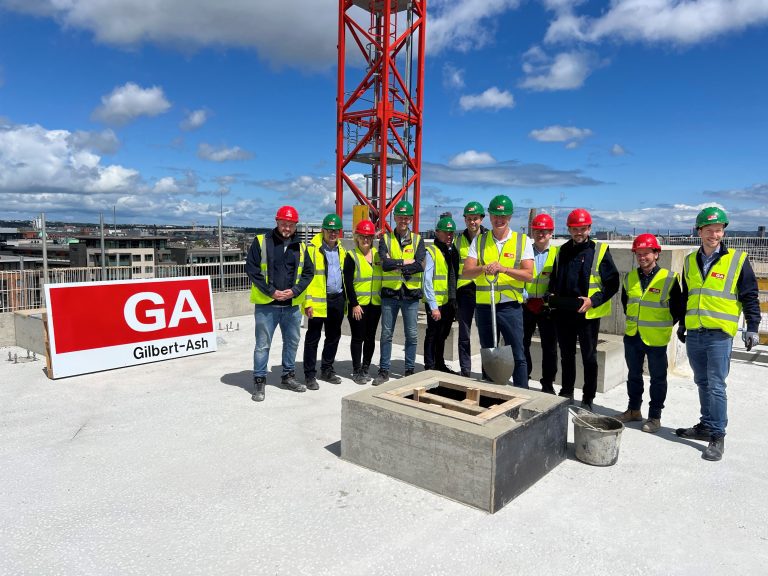
Award-winning contractor Beard has started work on the multi-million pound refurbishment and remodelling of the historic Trowbridge Town Hall.  The £7.15 million contract will see Beard transforming the Grade II listed building into an eye catching music hall for live concerts. This will include the demolition of existing offices and workshop spaces, as well as the removal of the suspended ceiling to expose the hall’s impressive vaulted ceiling. This will be paired with a brand new roof installed by Beard. The remaining floors of the building will also see significant remodelling to create recording studios, offices, performance spaces and breakout rooms which will be open to the public and used by local community groups. In addition, essential repairs and restoration work will take place including the exterior stonework, internal stone archways and exposed timber trusses. The hall’s stained glass windows will also be repaired and retained. Beard is also tasked with improving access to the building, installing an exterior ramp for disabled users and an internal lift to the new music hall. This will be the largest part of demolition to make space for both the lift shaft and new lift. The 18-month project will commence this month and is set to complete in 2025, ready to reopen in the summer. With plans to scaffold the entire building, access the roof and manage deliveries, the town hall’s central location presents significant logistical challenges for Beard to overcome.    In preparation, the team at Beard has spent the past six months working closely with the local council, highways and all major stakeholders to minimise disruption and keep the public safe. As part of both its management plan and enabling works package, Beard has engaged with all parties to plan hoardings, suspend one bus stop and relocate another, and rationalise scaffolding to not impact the highways. Ahead of work beginning, Beard will be setting up hoardings and site boundaries over the course of three nights to avoid disruption to bus services and the local community. One of the suspended stops will also serve as a drop-off point for daytime deliveries. The team also attended a ‘meet the contractor’ event as part of its engagement with the local community, allowing residents and interested parties to find out more about the project and the measures Beard has put in place. Jamie Harwood, director at Beard, said: “We are proud to be supporting the Trowbridge community once again and playing our part in safeguarding the future of the historic town hall. We will call upon our expertise in the heritage sector and with complex listed buildings to ensure the town hall will continue to support the community for many more generations to come. “While the project does present challenges, our team has worked incredibly hard to maintain an open dialogue with all parties to mitigate these and ensure all work can be conducted safely. As a result, we’re confident we can deliver the necessary changes to realise the council’s exciting vision, bringing the quality of construction Beard has become synonymous for over our 130-plus year history.” Cllr Phil Alford, Cabinet Member for Strategic Assets at Wiltshire Council, added: “We are delighted to be working with a renowned local company such as Beard Construction. Their extensive knowledge of working sensitively on historic buildings will ensure the Town Hall remains a landmark community asset for future generations to treasure.” Beard has completed a number of projects in Trowbridge and the surrounding areas, including the complete refitting of the Grade II listed Mill Building at Trowbridge Museum and the sensitive refurbishment and extension of both the Grade II listed Corsham Mansion and the multi-award-winning Corinium Museum, which has doubled exhibition space and improved visitor facilities. For more information, please visit www.beardconstruction.co.uk. Building, Design & Construction Magazine | The Choice of Industry Professionals 
Read More »
Gilbert-Ash appointed to deliver Ireland’s first citizenM hotel

Gilbert-Ash appointed to deliver Ireland’s first citizenM hotel

Project will preserve iconic Brutalist landmark facade for the ‘affordable luxury for the people’ hotel Award-winning construction and fit out contractor, Gilbert-Ash, has been appointed as the main contractor to develop Ireland’s first citizenM hotel: citizenM Dublin St Patrick’s. Molyneux House on Bride Street has a long and varied past including spells as a Huguenot Church, a bird market and the offices of well-known Irish architect, Sam Stephenson. The distinctive façade of the building, originally designed by Stephenson, is set to be retained as Gilbert-Ash transforms the site into a 245-room, nine-storey hotel featuring citizenM’s signature bedrooms, inspiring workspaces, a living room filled with art, designer furniture and a 24/7 canteenM serving breakfast, coffee, cocktails, and grab-and-go food. It will also feature a double-height open air art gallery accessible from the ground floor, a terrace courtyard, and four societyM rooms – citizenM’s take on meeting rooms but with a twist. All of these spaces will be open to the public, with societyM rooms available to book for full- or half-day use. The project, designed by citizenM’s long-standing architecture firm partner concrete Amsterdam, will get underway in August 2023 with completion set for early 2025. Known for its hybrid hotel concept that answers to the common frustrations of modern travellers by not only providing a great place to sleep but also to work and play, citizenM currently has 31 hotels across the UK, North America, Europe and Asia. The new Bride Street project next to St Patrick’s Park marks the brand’s first venture into Ireland, although it is actively seeking further opportunities in Dublin city centre. citizenM Dublin St Patrick’s will be Gilbert-Ash’s second project with citizenM, having last year completed the fully modular construction of its London Victoria Station hotel. Gilbert-Ash Managing Director, Ray Hutchinson, said the company is pleased to be continuing its excellent working relationship with the hotel brand. He said: “citizenM is known for disrupting the traditional hotel model with a real focus on lifestyle, guest-centric technology, efficiency, value and genuinely great customer service. “Gilbert-Ash takes on a lot of niche projects which require innovation to succeed, and we share a lot of the same values as citizenM, therefore, we feel there is a real synergy between our companies. We are excited to be working with citizenM once again and we are delighted to be taking on another project in the heart of Dublin.” Klaas Van Lookeren Campagne, CEO of citizenM, says: “Dublin has been high on our list of target cities for some time, and we are thrilled to have secured this location as our first entry into the Irish market. We believe our affordable luxury concept is a great fit for the city, appealing to both visitors and locals alike, and look forward to connecting with this vibrant community.” Gilbert-Ash has a unique approach to construction, fit out and refurbishment based on the belief that great buildings come about through hard work, inspired innovation and genuine collaboration. Sustainability is a key focus for Gilbert-Ash with a number of initiatives underway to help the company to drive down its carbon footprint. To find out more about Gilbert-Ash visit www.gilbert-ash.com, and for more about citizenM visit www.citizenM.com. Building, Design & Construction Magazine | The Choice of Industry Professionals 

Read More »
Are solar batteries a viable alternative to exporting to the Grid? Not at the moment, but the technology landscape is changing fast

Are solar batteries a viable alternative to exporting to the Grid? Not at the moment, but the technology landscape is changing fast

By Steven Dale Sometimes there are straws in the wind which can make you reassess the way the future of a particular technology or trend is likely to shape up. I have come across some of them recently in this corner of the North of Scotland. Over the course of carrying out energy performance certification in my area, I have noted an increase – small, but significant – in the number of homeowners with solar PV panels who are buying and installing solar batteries rather than exporting their excess electricity production to the National Grid. Now there are arguments both for and against this kind of considerable investment in the energy future and, at first glance, it just does not seem at the moment that solar batteries are worth the substantial financial outlay that they require. But as electricity rates remain high – more than double what can be made by supplying to the Grid using the Smart Export Guarantee – does it make sense to store excess energy for later personal consumption? Are battery adopters simply future-proofing their homes? For now, the numbers are on the side of those solar panel users who export their excess generation for a financial return of around 15p per kWh. More than 1.2 million UK households have panels on their roofs but the number using batteries is only around 10,000. This is understandable, since the average cost of a battery is prohibitive for many at between £4,000 and £8,000, and most people will have to buy two over the lifespan of their system. In a typical home, it could take more than 20 years to break even. But what the early adopters are perhaps seeing in advance of everyone else is that the cost of solar batteries is decreasing at the same time as energy prices rise, meaning that, in the foreseeable future, saving the electricity they generate may well become profitable. A recent study by academics in Finland suggested that battery prices would need to drop to about one-third of their current levels for them to be a viable investment for residential power systems. Looking to the future, this is perhaps not inconceivable. There is growing optimism not only for the UK battery manufacturing industry, but also for production world-wide. By 2030, according to the Faraday Institution, around 100 GWh of supply will be needed in the UK to satisfy the demand for batteries for private cars, commercial vehicles, heavy goods vehicles, buses, micro-mobility and grid storage. This demand is equivalent to five gigafactories, with each plant running at a capacity of 20 GWh per annum. By 2040, demand rises to nearly 200 GWh and the equivalent of ten gigafactories. As production gathers pace, prices will almost certainly fall. Depending on circumstances, batteries could make sense for homeowners, and certainly in my part of the country increasing numbers of people are betting on them. But, like all nascent technologies, solar advances are fast-moving and what may seem like the most attractive option now may be less so a few years down the line. Whatever develops, though, it’s pretty certain that green energy will be better than what went before. Steven Dale is a Surveyor in the Peterhead office of DM Hall Chartered Surveyors.

Read More »
Suds, Sabs and Statutes: How England can tackle its Surface Water Problem

Suds, Sabs and Statutes: How England can tackle its Surface Water Problem

FLOODING is an age-old consideration when it comes to urban development, but it has historically been most commonly associated with rivers, the sea or groundwater. However, recent research has shown just how big a threat surface water is, making up the lion’s share of the UK’s flood risk. Dave Bathurst, regional director at Rodgers Leask, says that a wider implementation of sustainable urban drainage systems (SuDS) is the most natural remedy to the issue, and that the latest government review into existing legislation could be the catalyst for increasing their usage in urban planning. As a country with more than its fair share of rainfall, flood risk assessment has traditionally been a key part of the planning process, but the sheer scale of the UK’s surface water problem has only really come to light in the last decade or so. When the summer of 2007 saw England and Wales suffer 414mm of rainfall – more than in any period since records began in 1766 – more than 55,000 properties were damaged by flooding. When these figures were analysed, the findings showed that two-thirds were understood to be flooded by surface runoff overloading drainage systems. This was backed up by the government including it on its national risk register in 2016, and subsequently by the Environment Agency, with its chief executive Sir James Bevan stating that more than three million properties in England are at risk of surface water flooding. While it took a historically wet period for this to be identified as an issue that is as, if not more, threatening than fluvial flooding, dealing with the drainage of surface water is a long-standing problem that needs creative approaches to solve. This is where sustainable urban drainage systems (SuDS) come in. Prompted by the 2007 floods, the SuDS Manual was first published to provide guidance on planning, design, construction and maintenance of sustainable urban drainage systems. SuDS are generally accepted to be the most efficient way to implement successful surface water drainage, minimising run-off in an environmentally friendly way by mimicking natural water systems such as ponds, wetlands, swales and basins. While engineers often disagree about the approach to a lot of different challenges, almost all would agree that integrating SuDS at the earliest opportunity of a scheme is crucial to its success. CHALLENGING THE APPROACH Despite the obvious benefits of SuDS, it has been a long journey to inform and educate on their virtues, especially as the enforcement of legislation supporting their use – especially in England – hasn’t been especially forthcoming. Schedule 3 of the Flood and Water Management Act 2010 provides a framework for the widespread adoption of SuDS and gives local authorities the role of sustainable drainage approval body (SAB), with responsibility for checking compliance and approving their use. Despite this, there has been a real reticence in England to push beyond a planning-led approach – where the use of SuDS is recommended but not enforced – to a more legislative one. Previous efforts to implement Schedule 3 met particularly strong resistance from the National Housing Federation. However, this has not been the case in Wales, where the devolved government has taken strong action in commencing the enforcement of Schedule 3. Since 2019, all new developments in Wales of more than one dwelling, or with a construction area of 100 square metres or more, must include sustainable drainage systems for surface water, and these must be designed and built in accordance with statutory standards. The success of this approach – along with the findings of David Jenkins’ report into responsibilities around surface water and drainage – have prompted Westminster to belatedly reconsider its approach to Schedule 3, leading to the decision earlier this year to implement it across England – essentially making it the default for almost all new developments. This process is being led by the Department for Environment Food and Rural Affairs (Defra) in consultation with the Association of SuDS Authorities, with an initial consultation set to take place this year ahead of implementation in 2024. RIGHTING THE WRONGSThere is a feeling across the flood risk assessment community that this decision is a case of “better late than never”, but there is still a long way to go. If you look at a 2012 Defra consultation, the results show that while government policy actively encouraged developers to build SuDS, only an estimated 40% of new developments were drained by them.   New plans appear to outline that SABs will check that detailed design of SuDS comply with the principles agreed at the planning stage, and if they are approved for adoption inspections will be carried out by SABs at key stages of construction – such as backfilling of underground attenuation tanks. Developers I have spoken to recently have voiced concerns that where there is ambiguity there is going to be further delays to an already slow approvals process, which favours nobody but at present is merely speculation. Though uncertainty over who is responsible for maintenance and the fees that will be charged for the application process to get SAB approval will also create a sense of unease in the build-up to legislative change. Furthermore, from a local authority perspective, recruitment will be required to help process applications and carry out inspections, but not knowing the application fee makes it difficult to budget. Currently, most local authorities only have the resources to respond to surface water drainage proposals for major planning applications, but Schedule 3 will require them to respond to all proposals above a 100m2 threshold – so there is clarity needed as far as in advance possible to make the transition smoother. Time will tell, but the implementation of Schedule 3 in England could well be the catalyst that pushes SuDS up the list of key masterplanning components. Getting everybody on board with a new statutory standard, which is expected to include a couple of amendments from the current non-statutory standard, begins with education, and developers need to be advised by engineers who

Read More »
‘Customisation culture’ holds back digital maturity in the construction industry

‘Customisation culture’ holds back digital maturity in the construction industry

Construction technology provider Causeway Technologies has revealed the key findings from its Causeway Insights 2023 survey of construction industry professionals.  Evidence from the survey suggests digital transformation remains high on the agenda, with the vast majority of those surveyed reporting that their organisation is currently implementing initiatives to digitalise aspects of their business process.  However, while 71% of C-suite executives believe their organisation to be digitally mature, feedback from those in less senior positions suggests that progress might not be advanced as bosses think.  Causeway found manual spreadsheets are still ubiquitous: 94% of organisations in the survey still use them, despite the adoption of technology designed to supersede them.   Meanwhile, 87% of respondents said that inconsistent processes and technologies pose a challenge to their organisation, and a third said administrative tasks remain among their businesses’ biggest productivity challenges.   As Rob Christie, head of finance at EKFB and one of the experts who reviewed this research for Causeway, says:  “The perception is that ‘it’s all digital’. But I’d argue that it’s only truly digital if all the inputs and processes behind the raw data and the collection of data are also digital.   “If your teams are manually inputting data from paper into an Excel file and uploading this file to create a power BI dashboard – in my opinion, this isn’t ‘digital’. It’s only when you understand the source of the data and its inputs that you can be confident that controls and processes are in place to allow the digital thread to flow through.”  Integration woes  Despite 95% of those surveyed agreeing that integrated or automated processes and technologies are key for driving success, no one reported that their organisation’s software solutions were fully integrated with one another at present.   On average businesses are using seven different industry-specific solutions, the majority (57%) of which are not integrated or talking to each other.   One of the most shocking results from the research was that respondents thought employees are spending an average of 48% of their time moving data between industry-specific software solutions.   Every organisation surveyed also said that they customise these software solutions to some degree to meet their needs – and 54% say the products are completely customised. This is even when customising solutions frequently leads to higher costs, compromised quality, and a lack of data cohesion.  Rob Ramsay, Product Director at Causeway said:  “The headlines from this research confirm that, although every business we spoke to considers itself somewhat or very digitally mature, the reality is less clear-cut, with common challenges across the sector when it comes to the consistent adoption and use of new technology.      “Industry-specific software solutions lack integration, with employees spending a shocking amount of time moving data between different systems, rather than making use of their time for more productive tasks.   “Meanwhile, the over-customisation of software and the lack of integration present big challenges to construction companies, including increased costs to maintain and update software, reduced data visibility and continuity, and security concerns.   “Customisation culture is holding us back. The UK construction industry urgently needs a more integrated, standardised approach that covers all aspects of an organisation’s processes.”    Sustainability goals  The survey also explored the relationship between digitalisation and sustainability targets.   A third of respondents reported that meeting sustainability and ESG goals are among their organisation’s greatest challenges and the survey results suggest many are looking to digital technologies to support this.  94% say that technical innovations are key to driving decarbonisation and 96% of respondents agree that their organisation would benefit from the use of digital tools to help drive decarbonisation and energy efficiency.  David Emery, a consultant at the Supply Chain Sustainability School, comments:  “People really struggle to calculate a return on investment for digital tools, particularly in terms of sustainability. And it’s really hard to make the business case sometimes. But what we often hear from our members is that, when they do invest in digital tools, they usually exceed the return on investment because things happen that you didn’t anticipate.”  To support this move towards digitalisation in sustainability reporting, Causeway is currently working on a collaborative venture with major contractors and suppliers to develop an automated, real-time solution for Scope 3 emissions reporting.  The Causeway Insights research was conducted in April 2023 among 175 respondents, all of whom authorised or influenced the purchase of software in their organisation. Companies ranged from SMEs to Tier 1 contractors, spanning construction, housebuilding, building services, infrastructure and civil engineering.  The research data was then reviewed by three experts, including Rob Christie at EKFB, David Emery at the Supply Chain Sustainability School, and Barry Desmond, finance director at John Craddock Ltd.  Full findings of the research have been published in a report called ‘Beyond the Basics – how UK construction is using digital solutions to achieve efficiency, integration and sustainability’.  The report unlocks a deeper understanding of the current state of play in terms of digitalisation in the construction industry. It features data and analysis, with feedback and commentary from industry experts, and looks at how principal contractors and large subcontractor companies are approaching the common challenges that come with digital transformation.  ‘Beyond the Basics’ is available to view and download at: https://campaign.causeway.com/beyond_the_basics_report_2023  Building, Design & Construction Magazine | The Choice of Industry Professionals 
Read More »