


Asphalt pavements have to handle far more stress today than they did decades ago. Heavier freight traffic, fluctuating temperatures, moisture intrusion and tighter municipal budgets have all placed additional pressure on road networks.
Therefore, building asphalt pavements that last can be challenging. You need the right product that can extend pavement life, reduce maintenance costs and improve long-term return on investment. Here are the top-rated solutions for improving the durability of asphalt pavements.
1. Reinforcement Fiber by FORTA
FORTA introduced synthetic reinforcement fibers to the U.S. in 1978 and has been developing the technology ever since. Its asphalt solution, FORTA-FI, remains one of the most recognized solutions for improving the durability of asphalt pavements.
Designed for airports, highways, streets, and industrial parking lots, FORTA-FI creates a three-dimensional reinforcement matrix within asphalt mixes to help reduce thermal, reflective, and fatigue cracking, as well as rutting and raveling. The synthetic fiber blend can extend pavement life by up to 50% and has a tensile strength five times that of steel. It also integrates into existing batch and drum plant operations without disrupting production efficiency.
Key Features
- Automated delivery systems like Voyager, Big Shot and Ranger
- Compatible with existing batch and drum plants
- Recommended dosage of one pound per ton to help maintain production efficiency
2. Polymer Modified Asphalt Binders by Dow
Dow offers polymer-modified asphalt technologies, ideal for roads that need to survive heavy traffic, changing climates and constant wear without demanding endless maintenance. Its award-winning ELVALOY RET Polymers improve asphalt flexibility, cracking resistance and rutting performance.
The company also incorporates post-consumer recycled plastics into its asphalt solutions, turning waste into high-performance pavement additives that support circular-economy goals. These technologies are already used in projects across the U.S., Indonesia and India as part of its ambition to help collect, reuse or recycle a million tons of plastic by 2030.
Key Features
- Reduced moisture damage in the asphalt structure
- Compatible with conventional paving equipment and installation methods
- Sustainable paving through recycled polymer integration
3. Geogrid Reinforcement Systems by Tensar
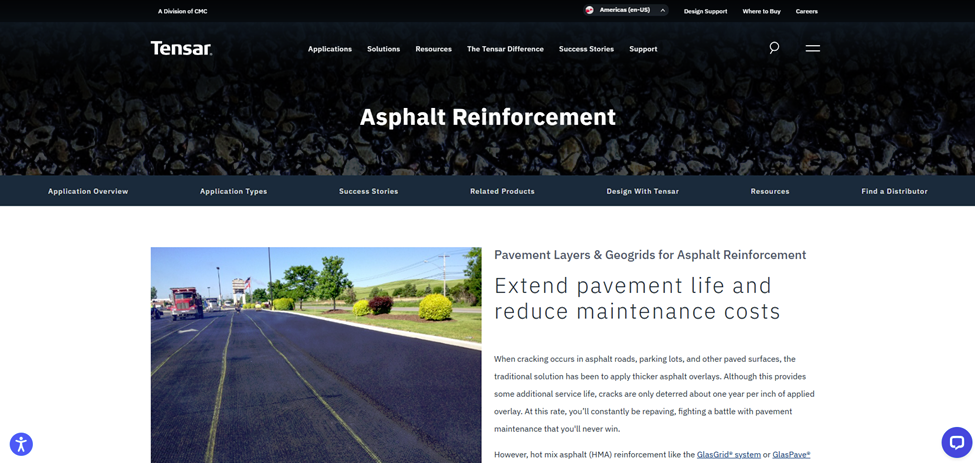
Tensar is improving the durability of asphalt pavements by strengthening what sits beneath the surface. Its GlasGrid and GlasPave systems act as a hidden reinforcement layer between asphalt courses, helping pavements resist reflective cracking, moisture intrusion and long-term fatigue.
Traditional overlays typically delay cracking by only about one year per inch of asphalt applied, but Tensar’s interlayer systems may extend service life far more efficiently. The open grid structure allows strong bonding between asphalt layers and transfers stress more efficiently across the pavement system. GlasPave paving mats also create a moisture barrier by limiting water infiltration into lower pavement layers.
Key Features
- GlassGrid TF system allows immediate hot-mix overlay installation
- Webinar-based guidance helps your team select the right interlayer system
- Designed for roads, parking lots and other paved surfaces under heavy stress
4. Warm Mix Asphalt by BoDean Company
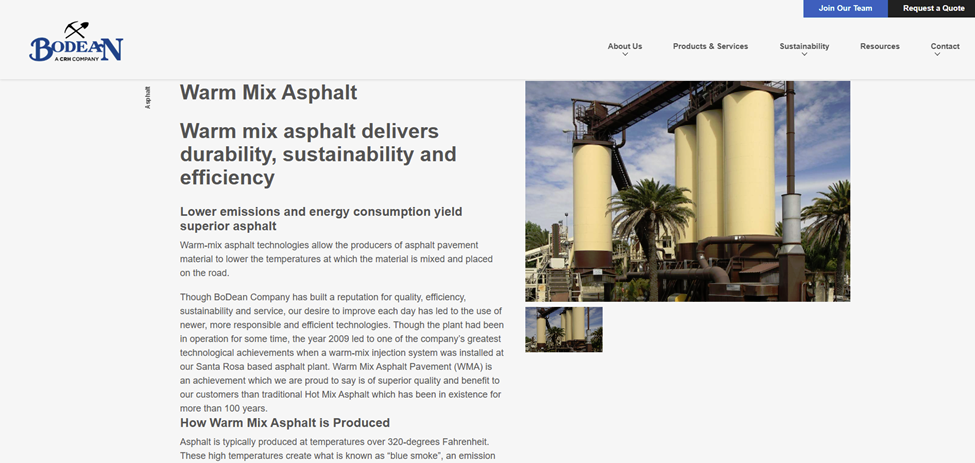
BoDean Company’s Warm Mix Asphalt (WMA) technology proves that cooler can sometimes be better. While traditional asphalt is typically produced at temperatures above 320° Fahrenheit, the company lowers production temperatures to below 275° Fahrenheit by injecting atomized water molecules into hot binder oil. That reduction helps eliminate blue smoke, cuts CO2 emissions and lowers energy consumption, but still preserves the asphalt binder against excessive oxidation.
Because WMA cools more slowly than traditional hot mix asphalt, your crews can pave more effectively in colder weather and transport material farther without worrying about rapid temperature loss. Plus, it requires fewer roller passes for compaction, which enhances productivity and worker safety.
Key Features
- Lower paving temperatures by more than 50° Fahrenheit
- Better workability across different pavement thicknesses
- Fewer roller passes to achieve compaction
5. Asphalt Rejuvenators by Pavement Technology, Inc.
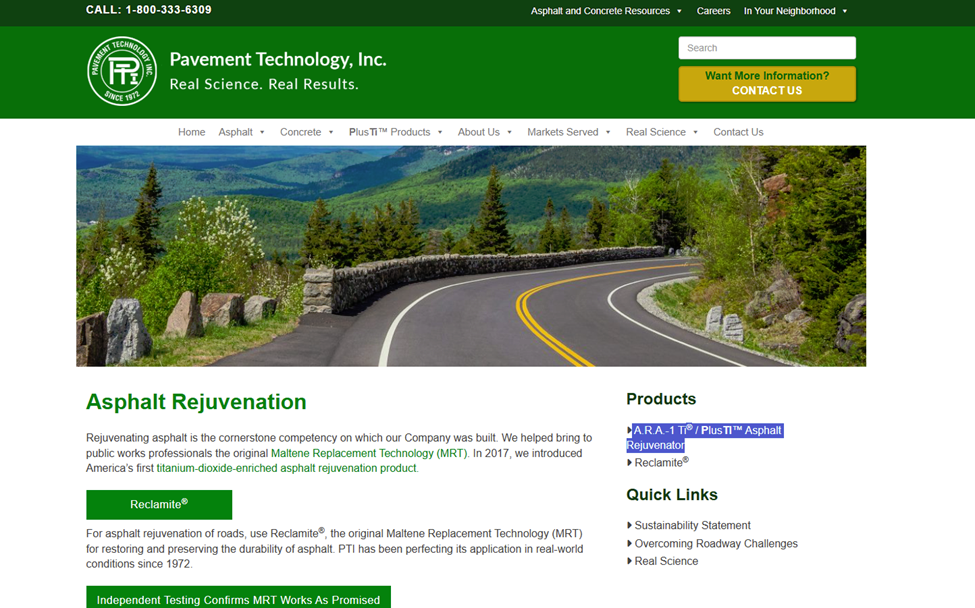
Pavement Technology, Inc. has focused on asphalt rejuvenation since 1972, when it began refining the application of Reclamite, the original maltene Deplacement Technology. Instead of simply coating pavement surfaces, Reclamite chemically restores the maltene components that asphalt loses over time. Therefore, it helps improve flexibility, adhesion and durability.
The company later expanded into sustainability-focused preservation with A.R.A.-1 Ti/PlusTI Asphalt Rejuvenator, introduced in 2017 as America’s first titanium-dioxide-enhanced asphalt rejuvenator. Along with slowing pavement oxidation, the technology can reduce nitrogen oxides, volatile organic compounds and heat absorption linked to urban heat effects.
Key Features
- Reclamite technology manufactured to original specifications for over half a century
- PlusTi solutions can contribute toward LEED and Envision credits
- PTI technologies are distributed across the U.S., including Alaska and Hawaii
Quick Comparison Table of the Top Asphalt Durability Products
The following is how the top-rated solutions for improving the durability of asphalt pavements compare side by side.
| Company | Solution Type | Product | Main Benefit |
| FORTA | Reinforcement Fiber | FORTA-FI | Tensile strength is five times that of steel, and can extend pavement life by up to 50% |
| Dow | Polymer Modified Asphalt Binders | ELVALOY RET | Improves flexibility and resistance to aging |
| Tensar | Geogrid Reinforcement Systems | GlasGrid and GlasPave systems | Reinforces overlays and mitigates reflective cracking |
| BoDean Company | Warm Mix Asphalt | Warm Mix Asphalt | Lowers oxidation and improves compaction |
| Pavement Technology, Inc. | Asphalt Rejuvenators | Reclamite/PlusTi | Restores asphalt flexibility and slows oxidation |
Criteria of the Solutions for Improving the Durability of Asphalt Pavements
The companies and solutions in this list meet several factors, including:
- Long-term pavement performance: Products can reduce common forms of pavement distress, such as rutting, cracking, fatigue and moisture damage.
- Compatibility with existing workflows: Solutions integrate into conventional paving operations without requiring major equipment overhauls, making it easier for contractors to adopt at scale.
- Life cycle cost efficiency: Durability improvements are most valuable when they reduce maintenance frequency and extend pavement replacement cycles.
- Sustainability benefits: Many modern paving solutions contribute to lower emissions, reduced material waste or improve recycling capabilities.
- Industry adoption: The companies offer technologies with established use across highways, municipal roads and industrial paving projects.
Frequently Asked Questions
Here are some commonly asked questions about asphalt pavements.
Q: How long should a well-designed asphalt pavement last?
A: A well-designed asphalt pavement can last anywhere from 15 to 30 years, depending on traffic loads, climate conditions, drainage quality and maintenance practices. Preventive maintenance and reinforcement technologies can significantly extend service life.
Q: What causes asphalt pavements to fail prematurely?
A: Poor drainage, insufficient compaction, heavy traffic loads, thermal cracking, oxidation and weak subgrade conditions typically cause premature pavement failure.
Q: Why is compaction important for asphalt durability?
A: Proper compaction reduces air voids within the pavement. Excessive voids allow moisture infiltration and oxidation, both of which accelerate pavement deterioration.
Paving the Way Forward
The five solutions for improving the durability of asphalt pavements on this list can help roads last longer while facing heavier traffic, harsher environmental conditions and tighter maintenance budgets.
Choosing the right one for your needs can lead to fewer repairs, lower life cycle costs and more resilient infrastructure that performs better for years to come.