Kenneth Booth
Wetter winters and major infrastructure drive demand for temporary roadway mats

Wetter winters and major infrastructure drive demand for temporary roadway mats

Large UK infrastructure projects, particularly across the renewables and water sectors, are driving increased demand for temporary roadway mats as more frequent and prolonged wet ground conditions continue to affect site access and construction programmes. Ground engineering and geotechnical specialist Spencer Quantum, part of RSK Group, has expanded its temporary

Read More »
Landmark Properties Wins Approval for Major Durham PBSA Regeneration Scheme

Landmark Properties Wins Approval for Major Durham PBSA Regeneration Scheme

Landmark Properties has secured approval for revised plans to transform Durham’s Prince Bishops Place into a major mixed-use destination centred around a significant new purpose-built student accommodation development. The scheme represents a major milestone in the long-awaited regeneration of the city centre shopping complex and will see the introduction of

Read More »
Firethorn breaks ground at 80-acre Bardon logistics site

Firethorn breaks ground at 80-acre Bardon logistics site

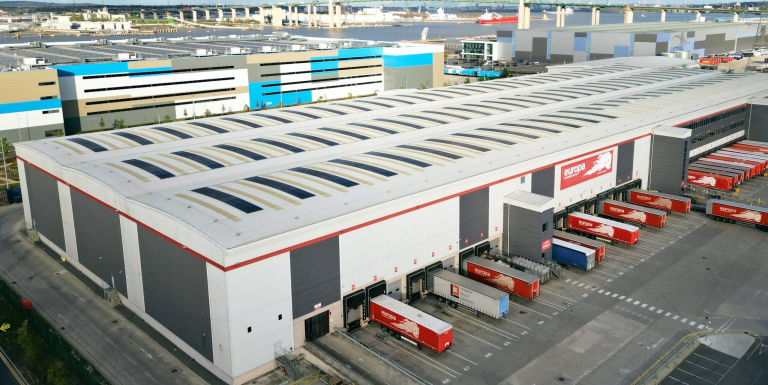
Work is now underway at Bardon III, J20/M1, Leicestershire, where UK real estate investor and developer, Firethorn plan to deliver 947,650 sq ft of Grade-A industrial and logistics space. Having been appointed as the enabling works contractor, BlueEarth Construction has now commenced on-site access and infrastructure works, preparing the site

Read More »
OP reimagines CBRE’s workspace at 3 Chamberlain Square, Birmingham

OP reimagines CBRE’s workspace at 3 Chamberlain Square, Birmingham

Leading office interior design consultancy, OP, has completed the fit out of CBRE’s new Birmingham office at 3 Chamberlain Square, Paradise Birmingham. The project spans 16,549 sq ft within one of the city’s most architecturally striking new buildings.  When CBRE made the decision to relocate from their previous home at

Read More »
Latest Issue
Issue 341 : Jun 2026

Kenneth Booth

Rothera Research Station's construction season upgrades safeguard future polar science

Rothera Research Station’s construction season upgrades safeguard future polar science

British Antarctic Survey has completed a significant phase of construction at Rothera Research Station in Antarctica, delivering new infrastructure that will power cutting-edge polar science for decades ahead. The Discovery Building, which came into full operation on 7 May, marks a significant milestone for the UK’s largest research station on the Antarctic Peninsula and BAS’s long-term polar research. Part of the Antarctic Infrastructure Modernisation Programme (AIMP), the new hub brings together day-to-day operations, power and healthcare under one roof, allowing the station to run more efficiently and with a smaller environmental footprint than ever before. The Discovery Building made history as the first in Antarctica to achieve BREEAM Outstanding accreditation, awarded to fewer than 1% of projects worldwide. This surpassed its original BREEAM Excellent target, setting a new benchmark for sustainable construction in extreme environments. David Brand, Rothera Modernisation Senior Project Manager, said: “This transition is an important step in ensuring that the infrastructure at Rothera can support science in the long-term. What matters now is that these systems perform reliably, supporting people and sustaining the UK’s presence in Antarctica.” The end of the Antarctic construction season coincides with the 48th Antarctic Treaty Consultative Meeting (ATCM) – the annual forum of signatories to the Antarctic Treaty, which governs how Antarctica is protected and managed. BAS is fundamental to the UK’s role in this international framework, providing world-leading research that informs global policy on the polar regions, while championing the highest standards of environmental protection across the Southern Ocean. Through sustained investment in its stations, vessels and aviation capability, the UK ensures its Antarctic operations continue to offer a safe, sustainable and effective role to one of the world’s most important scientific and strategic partnerships. A season supporting scientific advancements Alongside construction activity, BAS scientists continue to carry out vital marine research at Rothera, with long-term monitoring programmes tracking decades of environmental change to help distinguish the signals of climate change from natural variability. This work, including studies of blue carbon stocks and marine biodiversity, informs government advice on the health of polar ecosystems and contributes to the protection of the waters around UK Overseas Territories. This season is demonstrating how modernised infrastructure is supporting scientific output. Projects such as POLar Ocean Mixing by INternal Tsunamis (POLOMINTS) and the long‑running Rothera Time Series (RaTS) rely on consistent power, logistics and environmental stability to generate high‑quality, long‑term datasets. POLOMINTS is investigating how underwater tsunamis triggered by glacier calving influence ocean mixing. Meanwhile, RaTS, one of the longest‑running ocean monitoring programmes in the Southern Ocean, continues to track physical and biological changes in one of the fastest‑warming regions on Earth. Engineering and efficiency A significant focus has been on optimising the engineering systems that enable Rothera to operate continuously under extreme conditions. A major programme of work this season has centred on the temperature stabilisation and the heat recovery from the Combined Heat and Power (CHP) system. Heat is captured and reused that would otherwise be lost and the CHP units improve overall energy efficiency while reducing fuel consumption. Work was completed on the Building Management System (BMS) so that the mechanical and electrical systems could communicate with a central control computer interface. This has transformed BAS’ way of working as operators can now see what is going on in legacy building plant rooms and across the Discovery Building. Work across the wider site has also made Rothera more resilient. The structure over which overground pipes and cables sit have been strengthened while the Discovery Building has been further weatherproofed to help prevent water ingress. Preparing for Winter As the station prepares for winter, there has been large‑scale demobilisation across Rothera. Containers have been consolidated and prepared for return to the UK, heavy equipment including a crawler crane dismantled, and materials have been prepared for shipment during the annual logistics window, supported by the cargo vessel MV Stevie. Temporary and legacy infrastructure has been removed, and former working areas reinstated through completed groundworks, with land reshaped and returned to operational use. Elen Jones, AIMP Programme Director said: “Seeing the containers removed and the natural landscape re-emerge has been a symbolic moment. From consolidating materials to removing temporary infrastructure, this work is essential to ensuring the station can operate safely and continue supporting science through the winter. It’s all part of delivering infrastructure fit for the future.” Huw Jones, Executive Director at BAM UK & Ireland, adds: “This achievement is so much more than another completed project. The handover of the Discovery Building marks a major milestone for the programme and reflects seven years of collaboration, commitment and expertise from teams across Antarctica and the UK. I’d like to thank our partners, supply chain and everyone involved in helping bring this phase of the project to completion in one of the world’s most demanding environments. We are immensely proud to have played our part and look forward to seeing what inspiring work comes out of the new hub.” Building, Design & Construction Magazine | The Choice of Industry Professionals

Read More »
McPhillips invests in Cat® mini excavator fleet in strategic alliance with Finning

McPhillips invests in Cat® mini excavator fleet in strategic alliance with Finning

Civil engineering company McPhillips has added its first Cat® machines to its fleet in a partnership with Finning UK & Ireland. McPhillips is currently working on site at Finning headquarters in Cannock, Staffordshire, as the delivery partner responsible for constructing a new workshop. Due to complete later this year, the 1,230 m² Rebuild Centre of Excellence will provide purpose-built facilities for Cat Certified Rebuilds, inspections and major repairs as more customers look to extend the life of existing fleets. McPhillips has already put one of its new machines, a Cat 308 Mini Excavator, to work on the scheme with a further three Cat 305 Mini Excavators delivered to the Shropshire-based firm. Designed to be compact yet powerful, the machines offer the reliability and performance needed to navigate a range of complex job sites across the construction industry. Helen Day, Product Manager at Finning UK & Ireland, said: “Connecting customers with the machinery that supports their ambitions is very important to us. There is a clear synergy between the efficiency and sustainability goals of both McPhillips and Finning.  “McPhillips is a forward-thinking company and relies on a modern fleet of plant equipment to meet the demands of its schedules. The versatility and agility offered by the Cat 308 and 305 models mean they are real assets to construction companies working with a diverse range of clients. “With multi-functioning performance, they are ideal for manoeuvring across work sites, easy to transport and offer low operating costs. In terms of efficiency, the lift and dig capabilities help to power through jobs while in-built sustainability features support lower fuel burn, emissions and noise. This investment by McPhillips will bring multiple long-term benefits to its operations.” Cat mini excavators from 5-10T are designed to support Ease Of Use software packages to enhance safety, accuracy and productivity. These assist operators in controlling the machine to optimise performance and simplify operation. The cab supports a healthy working environment with air conditioning, comfortable seat and adjustable wrist rests, while the control display includes a Next Generation Monitor for easy to read information and customisable preference settings. Neil Surridge, Site Manager at McPhillips said: “The new machine has been one of the most valuable pieces of plant on this project, allowing operators to work confidently in restricted areas. Its reliability, precision, and versatility have been essential in keeping the build moving smoothly and safely.” McPhillips works across a variety of sectors with clients including local authorities, businesses, housebuilders, highways agencies and retailers. Paul Inions, Managing Director of McPhillips, said efficiency through collaboration was essential for continuous improvement. He said: “We are committed to being at the forefront of environmentally low impact construction. Investing in our fleet not only means we have equipment that produces the most efficient output in terms of sustainability, it also means we have reliable access to the right machines for the job at hand. “We deliver projects that meet the highest standards and partnering with Finning on its new workshop it is clear to see we share the same goals of having a positive impact and making a meaningful difference through the way we work. “It was a very natural next step to strengthen our partnership further through the addition of Cat machinery to our fleet.” Building, Design & Construction Magazine | The Choice of Industry Professionals

Read More »
Wetter winters and major infrastructure drive demand for temporary roadway mats

Wetter winters and major infrastructure drive demand for temporary roadway mats

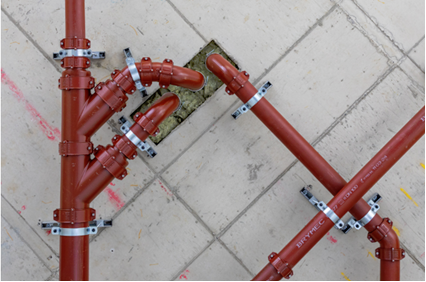
Large UK infrastructure projects, particularly across the renewables and water sectors, are driving increased demand for temporary roadway mats as more frequent and prolonged wet ground conditions continue to affect site access and construction programmes. Ground engineering and geotechnical specialist Spencer Quantum, part of RSK Group, has expanded its temporary mat fleet over the past decade. This includes an accelerated investment of more than £5 million in the last three years in response to sustained demand and increasingly challenging ground conditions. The business now operates one of the UK’s largest temporary access mat stocks, supporting projects across the highways, utilities, and environmental sectors, with around 12,000 mats creating up to 15 miles (24 km) of roadway. Managing director Ross McDermott said growth in solar farm development across the UK is a key driver, alongside wider major infrastructure activity. The business has also supplied temporary roadway mats for music and arts festivals. The versatile mat system is manufactured from strong, durable high-density polyethylene (HDPE), enabling it to withstand significant loads and high volumes of traffic while remaining light enough for efficient handling and transport. This makes the system suitable for a wide range of applications, including temporary pedestrian walkways, special events, concerts, film sets, heavy construction, and crane lift pads. Ross said: “In the past, creating access routes often required excavation of topsoil, extensive use of plant and machinery, importing hauled stone and subsequent reinstatement works. Temporary roadway mats provide a more efficient alternative, reducing both programme time and cost. “With a lifespan of 15 years or more when used correctly, the mats are also a more sustainable option than traditional haul roads, with less impact on the environment. “Each mat weighs around 219 kg, and our installation teams can lay up to 150 mats per day, enabling rapid creation of access routes and haul roads. This is particularly valuable on constrained or environmentally sensitive sites, as well as for emergency or reactive works. “The system works by distributing loads across a wider surface area, helping to reduce ground pressure and minimise rutting, settlement and damage to underlying soils during construction and installation.” Ross added that the mats maintain ground integrity even under significant plant and vehicle movements on soft or unstable ground, with the capacity to support loads of up to 280 tonnes per square metre. Building, Design & Construction Magazine | The Choice of Industry Professionals

Read More »
Landmark Properties Wins Approval for Major Durham PBSA Regeneration Scheme

Landmark Properties Wins Approval for Major Durham PBSA Regeneration Scheme

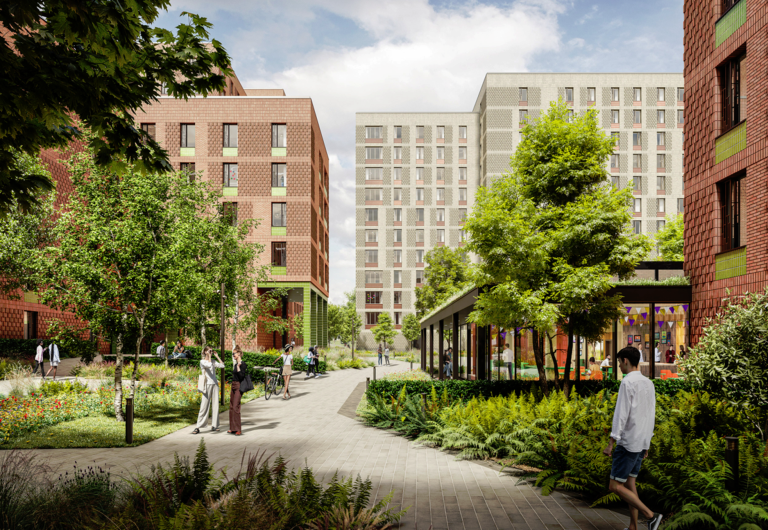
Landmark Properties has secured approval for revised plans to transform Durham’s Prince Bishops Place into a major mixed-use destination centred around a significant new purpose-built student accommodation development. The scheme represents a major milestone in the long-awaited regeneration of the city centre shopping complex and will see the introduction of 504 student bedrooms alongside enhanced retail, leisure and public spaces. The approval follows amendments to an earlier consented scheme, replacing a proposed hotel with additional student accommodation to better reflect current market demand. Located in the heart of Durham, Prince Bishops Place has faced increasing challenges in recent years as retail habits have evolved and footfall patterns have changed. The redevelopment aims to reposition the site as a vibrant mixed-use destination that combines modern student living with improved commercial opportunities and public realm enhancements. The project is being brought forward through a partnership between Landmark Properties, Citrus Group and Galliard Homes. Landmark, one of the largest student housing developers and operators in the United States, exchanged contracts on the site earlier this year as part of its growing UK expansion strategy. The company currently manages more than 74,000 student beds globally and has identified Durham as a key market where demand for high-quality accommodation continues to outstrip supply. Beyond the student accommodation element, the development will deliver upgraded retail and leisure units, improved pedestrian routes through the site and a new public square overlooking the River Wear. New connections will also open up views towards Durham’s historic cathedral and castle, enhancing the city centre environment and strengthening links across the area. The existing multi-storey car park will be retained as part of the plans. Developers believe the project will play an important role in revitalising Durham’s city centre economy, creating a more diverse and sustainable destination that supports local businesses, attracts investment and meets the growing needs of the city’s student population. With approval now secured, the scheme moves a significant step closer to delivery and marks another major investment in Durham’s ongoing urban regeneration programme. Building, Design & Construction Magazine | The Choice of Industry Professionals

Read More »
McLaren Chosen for Landmark £1bn Data Centre Development in Buckinghamshire

McLaren Chosen for Landmark £1bn Data Centre Development in Buckinghamshire

McLaren Construction has secured a leading role in the delivery of a major new £1bn data centre campus in Buckinghamshire, as investment in the UK’s digital infrastructure sector continues to accelerate. The contractor has been appointed by US developer Corscale to help deliver the Court Lane Data Centre Campus in Iver, a strategically located site close to the M25 and within one of the country’s fastest-growing data centre markets. Working alongside mechanical and electrical specialist Phoenix ME, McLaren has secured a pre-construction services agreement for the 14-acre development, which will transform an ageing industrial estate into a state-of-the-art hyperscale data centre campus. The scheme will comprise two large-scale data centre buildings alongside a dedicated 140MVA substation, creating a significant new digital infrastructure hub within West London’s expanding technology corridor. Enabling works are scheduled to begin in July and will include site clearance, utility diversions and extensive remediation activities ahead of the main construction phase. One of the first priorities will be the relocation of two major 36-inch Affinity Water mains that currently cross the site. The wider project team includes international architecture practice Gensler, engineering consultancy Cundall providing MEP design services, and L&P Group supporting the engineering delivery strategy. Julian Michalski, Head of Development at Corscale Europe, described the project team as a collaboration of leading specialists with extensive experience in delivering complex, mission-critical facilities. He said the collective expertise of the team would help ensure programme certainty, technical excellence and successful delivery through to completion in late 2029. McLaren’s Managing Director for Data Centres, David McDonnell, highlighted the technical complexity of modern hyperscale facilities, noting that the project would require advanced construction methods and innovative delivery techniques to meet evolving customer requirements. The development comes at a time of unprecedented growth within the data centre sector, driven by increasing demand for artificial intelligence, cloud computing, high-performance computing and digital services. Industry analysts continue to forecast substantial investment in new facilities as organisations seek greater processing power and data storage capacity. Once completed, the Court Lane campus will add 140MW of capacity to the UK market, reinforcing the country’s position as a leading European destination for digital infrastructure investment and next-generation technology development. Building, Design & Construction Magazine | The Choice of Industry Professionals

Read More »
Mercury building renewal accelerates as Faithdean appointed to deliver 98,000 sq ft sustainable Holborn workspace

Mercury building renewal accelerates as Faithdean appointed to deliver 98,000 sq ft sustainable Holborn workspace

This summer will see the thoughtful refurbishment of Mercury – a prominent 1950s building on Theobalds Road – move forward at pace, in a positive signal to the London office market.  Originally designed by Stanley Gordon Jeeves, Orms Architects, in collaboration with Note Design Studio, are now breathing new life into the building to create 98,000 sq ft of design-led sustainable workspace that both embraces a contemporary, adaptable approach to office design and honours the building’s mid-century heritage.  Planning permission was granted in late 2024 and 2026 marks another key milestone for the project, with Faithdean appointed as the main contractor.  Once complete in late 2027, Mercury will provide 11 exceptionally refurbished floors of flexible workspace, alongside street level activations including enhanced public realm and a public cafe on the south west corner.  Central to the scheme is a circular sustainability strategy, focused on re-use and repurpose, with retention of 90% of the existing structural frame and 80% of the original stone façade. Low-quality 1990s additions will also be removed to further restore the neoclassical modern appearance of the original building.  Inside, the building has been reconsidered to prioritise flexibility, connectivity and natural light, including a six-story central atrium. Enhanced floorplates and integrated ceiling track systems will create a series of adaptable office suites that enable occupiers to evolve layouts as and when needed. All windows open, supporting mixed-mode ventilation and fresh air. The scheme is intentionally designed to deliver a beautiful, high-quality working environment and a lifestyle space, responding to the fundamental shifts in occupier needs as businesses navigate the return to the office and place greater value on the need for in-person experience. A curated ecosystem of shared amenity spaces sits at both the top and bottom of the building. These include a top-floor pavilion with terrace, a sunken courtyard lounge, a gym and cycle facilities, and newly landscaped external spaces to the front and rear, designed as integral parts of the building rather than add-ons. Sam Elliott (Development Director), comments: “Mercury is a clear statement of confidence in Midtown. By retaining and enhancing a remarkable 1950s structure, we are delivering nearly 100,000 sq ft of design-led workspace that blends heritage, sustainability and the flexibility that modern occupiers demand. The building has been carefully reimagined to provide light-filled, adaptable floorplates anchored by a dramatic central atrium and a curated amenity offer. With Faithdean appointed as main contractor, we are now firmly focused on delivering that vision to the highest standard.” Mercury is due to open its doors in late 2027. The appointed agents are Cushman & Wakefield, Farebrother and Levy Real Estate. Building, Design & Construction Magazine | The Choice of Industry Professionals
Read More »
Manchester Innovation District Set for 1,000-Bed Student Accommodation Landmark

Manchester Innovation District Set for 1,000-Bed Student Accommodation Landmark

Plans have been submitted for a major new purpose-built student accommodation (PBSA) development in Manchester that would deliver more than 1,000 student beds and create a striking new gateway to one of the UK’s most ambitious innovation districts. RG Real Estate has lodged proposals to redevelop the existing Charles Street Car Park site with a large-scale student living scheme featuring a landmark 38-storey tower. The project forms part of the wider regeneration of the former UMIST campus, which is being transformed into the £1.7bn Sister innovation district by Bruntwood SciTech and The University of Manchester. The proposed development would provide 1,041 student bedrooms across a combination of studios and cluster apartments, helping to meet growing demand for high-quality student accommodation in the city. Designed by Hodder + Partners, the scheme would comprise buildings of eight, 10 and 38 storeys located on the corner of Charles Street and Sackville Street, adjacent to the railway viaduct within what is known as Plot H of the Sister masterplan. The plans follow an extensive public consultation process undertaken last year and have been shaped by a multidisciplinary project team that includes Buro Happold, Deloitte, Layer Studio, Roscoe, Tyler Grange and Civic Heritage, among others. In addition to delivering modern student accommodation, the proposals include more than an acre of new public realm, improved pedestrian connections and active ground-floor uses designed to enhance the surrounding neighbourhood and support the wider regeneration vision. RG Real Estate Development Director Darren Simmons said the scheme would transform an underutilised site into a vibrant new destination, while helping to reactivate Altrincham Street and strengthen connections across the evolving innovation district. The development is strategically positioned close to major transport links and within easy reach of Manchester’s universities, making it well suited to support the city’s growing student population. The proposals also sit alongside a number of other significant residential developments planned for the area, underlining Manchester’s continued emergence as one of the UK’s most active student accommodation and urban regeneration markets. If approved, the scheme will become another major addition to the city’s expanding skyline and a key component of the wider transformation of the former UMIST campus into a world-class hub for science, technology and innovation. Building, Design & Construction Magazine | The Choice of Industry Professionals

Read More »
Firethorn breaks ground at 80-acre Bardon logistics site

Firethorn breaks ground at 80-acre Bardon logistics site

Work is now underway at Bardon III, J20/M1, Leicestershire, where UK real estate investor and developer, Firethorn plan to deliver 947,650 sq ft of Grade-A industrial and logistics space. Having been appointed as the enabling works contractor, BlueEarth Construction has now commenced on-site access and infrastructure works, preparing the site which will be brought forward on a speculative and build-to-suit basis.  Firethorn expects to invest £125 million into the 80.2-acre site, which benefits from detailed planning consent for two units with B2 and B8 use. The recent ‘breaking ground’ ceremony was attended by key local members who played influential roles in seeing the project realised, including the Leader of Leicestershire County Council Dan Harrison alongside Rebecca Henson, Head of the Growth Service at Leicestershire County Council, and Chris Brown, Assistant Director of Planning & Regeneration for Hinckley & Bosworth Borough Council, reflective of the significance of the development to the local economy. Located within the Midlands’ “Golden Triangle”, the site sits at the heart of the UK’s logistics network, providing direct access to the strategic national highway network at Junction 22 of the M1. The new development will follow previous phases delivered by Mountpark, which are now occupied by established distribution and manufacturing businesses, including Amazon, DHL, Eddie Stobart, VF, Vistry, and Pharmacy2U. James Sanders, Head of Industrial and Logistics at Firethorn, said: “Bardon is one of the UK’s most established and sought-after logistics locations, with a strong supply of local labour and direct connectivity to the strategic network making it ideally placed for leading occupiers operating national and international supply chains. “Breaking ground marks a significant step in the development process and a chance to provide recognition to those who played a role in the project coming forward. We’re delighted to mark the occasion and to be working with the BlueEarth team to deliver the first stage of what promises to be a modern, sustainable and high-quality product that will not only respond to a shortage in supply, but deliver lasting economic benefit to the region.” Councillor Dan Harrison, leader of Leicestershire County Council, said: “We’re working hard to build the Leicestershire of the future, with prosperity, jobs and economic growth at the heart. “This £125m investment is significant, offering opportunities for big companies to set up shop, as well as a 37-acre country park and over 2km of walking routes. “Bardon is a top UK location for logistics. We really are leading the way in Leicestershire and we’re shouting from the rooftops that we’re open for business.” Kirk Farrow, Construction Director at BlueEarth Construction Ltd, said: “The entire team at BlueEarth has worked incredibly hard and is absolutely delighted to be progressing this development with Firethorn, following our completion of the preliminary enabling phase with Mountpark. “The site has presented a number of significant challenges, particularly the major overhead cable diversion works required to underground and reroute services around the development. In addition, the design of the large screening bund has been a very complex and demanding aspect of the project. “We at BlueEarth Construction Ltd are extremely proud to be working in partnership with Firethorn to help bring this development forward.” The new development targets practical completion in late 2027 and will deliver a BREEAM ‘Excellent’ rating with net-zero carbon in construction. Building, Design & Construction Magazine | The Choice of Industry Professionals

Read More »
Villa Park’s £100m North Stand Transformation Moves into Construction Phase

Villa Park’s £100m North Stand Transformation Moves into Construction Phase

Work has officially begun on Aston Villa Football Club’s landmark £100m redevelopment of the historic North Stand at Villa Park, marking the start of one of the most significant stadium improvement projects currently underway in UK football. Kingscote Construction has broken ground on the scheme, which will transform the stand and substantially increase capacity from 6,537 seats to 12,516 seats, helping the club accommodate growing demand from supporters while enhancing the overall matchday experience. The project is scheduled for completion in time for the start of the 2027/28 football season, when the new stand is expected to be fully operational. The redevelopment will deliver far more than additional seating. Plans include extensive upgrades to the club’s football infrastructure, with around 500 sq m of new first-team facilities being created. These will include modern changing rooms, enhanced medical and physiotherapy areas, and improvements to player-focused competition spaces designed to support elite-level performance. Supporters will also benefit from a range of improvements, including upgraded hospitality facilities, enhanced concourse areas and a more vibrant matchday atmosphere within the expanded stadium. The project is being delivered by Kingscote Construction alongside a number of specialist companies from across the wider Morrisroe Group. Morrisroe Demolition, GSS Piling, Morrisroe Limited, Houston Cox, Piper Joinery, Kingscote Plant, Kingscote Design and Kingscote Haulage will all contribute to the development programme. Two key external partners have also been appointed, with J&D Pierce Contracts responsible for the structural steelwork package and King & Moffatt delivering the mechanical and electrical installations. The investment reflects Aston Villa’s continued ambitions both on and off the pitch, following a period of significant growth and success for the club. Andy Beckett, Managing Director of Kingscote Construction, said the teamwork and collaboration required to deliver a project of this scale mirrored the collective approach that drives success in professional sport. He added that breaking ground represented an important milestone for Aston Villa, its supporters and the project team, as work begins on a stand designed to help secure the long-term future of one of English football’s most historic stadiums. Building, Design & Construction Magazine | The Choice of Industry Professionals

Read More »
OP reimagines CBRE’s workspace at 3 Chamberlain Square, Birmingham

OP reimagines CBRE’s workspace at 3 Chamberlain Square, Birmingham

Leading office interior design consultancy, OP, has completed the fit out of CBRE’s new Birmingham office at 3 Chamberlain Square, Paradise Birmingham. The project spans 16,549 sq ft within one of the city’s most architecturally striking new buildings.  When CBRE made the decision to relocate from their previous home at Temple Row, OP supported them through the entire journey – from the initial location review through to design and delivery. The resulting space draws heavily on the architecture of the building itself, with its distinctive red terracotta façade, fluted cladding and signature OGEE arches all reinterpreted within the interior. Terracotta tones, arched forms and tactile finishes create a clear visual connection between outside and in, giving the office a strong sense of place that feels authentically connected to the city. The design takes CBRE’s workplace philosophy and roots it firmly in Birmingham, creating something grounded and entirely specific to the city and the building. The workplace includes nine meeting rooms, three two-person focus rooms, eight call pods and a dedicated Clientology client engagement space with carefully considered sightlines across Chamberlain Square. Wellbeing is embedded throughout, with a dedicated Parents’ Room and a separate wellness room. Sustainability is central to the design story. Standout features include sculptural trees 3D printed from HS2 clay, the Altrock reception desk formed from reclaimed waste marble, a bespoke terrazzo worktop handcrafted from reclaimed Birmingham materials, and cork flooring. Recycled leather and Impact Cotton acoustic panels alongside cradle-to-cradle certified carpet tiles complete a rigorous material palette. The vast majority of CBRE’s existing furniture was also retained, refurbished and reintroduced – significantly reducing the embodied carbon of the fit out. Bespoke signage throughout tells the story of each element, giving staff and visitors a tangible connection to the thinking behind the space. The building holds BREEAM Excellent and WELL certifications and is the first in Birmingham to achieve a NABERS UK 5 Star Design Reviewed Target Rating. “Our vision was to create a workspace that feels genuinely of Birmingham – drawing on the architecture of the building, the character of the city, and the culture of the people within it. We’re incredibly proud of what this project has become.” Claire Stant, Creative Designer at OP “The new office has truly exceeded our expectations. OP have created a space that feels like a genuine reflection of both Birmingham and our business – full of thoughtful details that our team have really connected with. The feedback from staff and visitors alike has been overwhelmingly positive and we couldn’t be prouder of the result.” Will Ventham, Head of Midlands at CBRE Birmingham Building, Design & Construction Magazine | The Choice of Industry Professionals

Read More »