May 27, 2026
TCC gets in bed with Travelodge

TCC gets in bed with Travelodge

A new 82-bedroom hotel is taking shape in Greater London, with help from a leading Birmingham-based construction consultancy. The Construction Consultants (TCC) has been appointed to support the development of a new £8.6 million Travelodge in Upminster in the London Borough of Havering. TCC is providing contract administrator and quantity

Read More »
Game on for Harlequin Watford as Activate signs

Game on for Harlequin Watford as Activate signs

Harlequin Watford, Hertfordshire’s leading retail and leisure destination owned and operated by SGS UK Retail, has announced the signing of immersive gaming concept Activate, further strengthening its position as the region’s premier all-day destination for shopping, dining and leisure. The fast-growing competitive socialising brand will bring a major new experiential

Read More »
Volvo Construction Equipment and Hitachi Energy announce collaboration to accelerate zero-emission construction sites

Volvo Construction Equipment and Hitachi Energy announce collaboration to accelerate zero-emission construction sites

The Memorandum of Understanding brings together the capabilities needed to make electric construction equipment a practical, on-site reality. By addressing power supply, charging, energy management and operational integration as a single system, the collaboration responds directly to rising sustainability and productivity pressures and the industry’s shift from standalone technologies to

Read More »
Signify and Liverpool City Council pioneer traffic adaptive lighting to drive energy efficiency and sustainability

Signify and Liverpool City Council pioneer traffic adaptive lighting to drive energy efficiency and sustainability

Signify (Euronext: LIGHT), the world leader in lighting, has delivered an advanced smart lighting solution for Liverpool’s waterfront area. The project, completed in collaboration with McCann Ltd (Street Lighting Maintenance contractor for Liverpool City Council with support from LiveLabs, a three-year, UK-wide £30 million programme funded by the Department for

Read More »
Latest Issue
Issue 340 : May 2026

May 27, 2026

Barbican Renewal Programme Swells Beyond £350m as Major Retrofit Push Accelerates

Barbican Renewal Programme Swells Beyond £350m as Major Retrofit Push Accelerates

The landmark renewal of London’s iconic Barbican Arts Centre is gathering pace, with the value of planned upgrade works now exceeding £350m as the City of London Corporation prepares for the next phase of the ambitious regeneration programme. A series of new procurement notices released this week has revealed the scale of the investment planned across the Grade II-listed Brutalist complex, with major contractors and specialist consultants now expected to be lined up for a range of high-profile packages. Among the largest elements is a £143m MEP Infrastructure Phase 2 contract focused on the replacement and renewal of ageing mechanical, electrical and public health systems throughout the arts centre. Alongside this, an additional £80m infrastructure package is also being prepared, while a further £70m programme will focus on the overhaul of the Barbican Conservatory — one of the capital’s most recognisable indoor gardens and public attractions. Other planned works include a £42m refurbishment of foyers and circulation areas aimed at improving accessibility and visitor experience, as well as a separate £8m upgrade package for the Barbican’s specialist Concert Hall performance spaces. The procurement drive follows planning approval earlier this year for the wider first phase of the Barbican Renewal Programme, a £231m retrofit-led scheme designed by Allies and Morrison alongside Asif Khan Studio and engineering consultancy Buro Happold. The broader programme aims to modernise the internationally recognised arts and cultural venue while preserving its historic architectural character through a sensitive refurbishment approach focused on repair, restoration and infrastructure renewal. Plans include significant improvements to accessibility, environmental performance and public spaces, alongside the replacement of outdated building systems that have supported the complex since the 1980s. Major construction works are expected to begin in late 2027, with many Barbican activities temporarily paused between 2028 and 2029 during the most intensive stages of the programme. The project represents one of the UK’s largest and most technically complex retrofit and cultural infrastructure programmes currently in development, highlighting the growing focus on preserving and modernising nationally important heritage assets through long-term sustainable investment. Building, Design & Construction Magazine | The Choice of Industry Professionals

Read More »
Legrand UK & Ireland Opens New Electronics Manufacturing Facility in Cramlington

Legrand UK & Ireland Opens New Electronics Manufacturing Facility in Cramlington

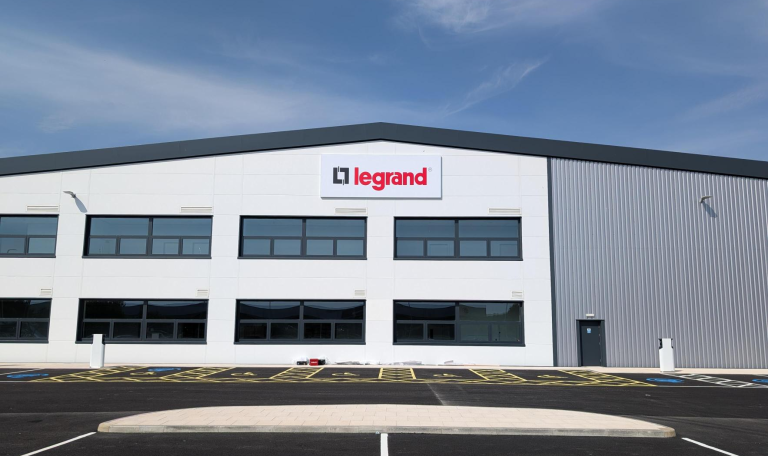
Legrand UK & Ireland has opened a new 43,000 sq. ft. electronics manufacturing facility at Nelson Park in Cramlington, Northumberland, establishing a new centre of excellence for the Legrand Group in Europe. The purpose-built site is home to Legrand’s CP Electronics lighting controls and Legrand Care brands, positioned close to the North East’s growing clean energy sector and skilled workforce. The new manufacturing site will extend Legrand’s presence in the UK, which spans more than 40 years. Designed and built with Net Zero principles at its core, the facility is entirely gas-free. A high-efficiency air source heat pump system provides heating and cooling across the site, eliminating direct Scope 1 emissions. A rooftop solar PV array with an installed capacity of 163 kilowatt-peak (kWp) is expected to generate close to 128,000 kWh annually, significantly reducing reliance on grid electricity. The site also incorporates EV charging infrastructure, sustainable drainage, permeable paving and high-performance insulation. Wherever possible, the facility has been equipped with Legrand’s own products, including its Linea 5000 door entry panels, cable management solutions and digital energy metering technology. These systems contribute to the site’s connectivity and energy efficiency while serving as a working showcase for the company’s product portfolio. Paolo Murdocca, COO at Legrand UK & Ireland, said: “This facility represents a significant milestone for Legrand in the UK. We have built a site that not only strengthens our manufacturing capability but also reflects the standards we set for our customers. “Cramlington gives us a modern, sustainable base from which to grow our CP Electronics and Legrand Care brands, and it demonstrates that high-quality electronics manufacturing and genuine environmental responsibility can go hand in hand. The North east offers exactly the skills and supply chain we need, and we are proud to be investing here for the long term.” Legrand UK & Ireland continues to invest in its UK operations, and this investment highlights its commitment to powering technological advancements and providing exceptional value to customers. For more information, see Legrand.co.uk. Building, Design & Construction Magazine | The Choice of Industry Professionals

Read More »
The AI data centre boom is putting commissioning and verification standards under unprecedented pressure

The AI data centre boom is putting commissioning and verification standards under unprecedented pressure

The data centre industry is sprinting to build the necessary infrastructure to support the next phase of the AI buildout. This year, the five biggest AI infrastructure companies will spend somewhere between $660 billion and $690 billion on building AI data centres, almost twice what they spent in 2025. Worldwide data centre power consumption is forecast to grow by 50% between 2025 and 2027, rising by as much as 165% by the end of the decade.  The hurdles that have arisen as the result of meeting this generational surge in infrastructure demand are well documented. From securing the necessary access to power from ageing grids to securing skilled engineers and technicians, many challenges inherent to executing the AI boom are being widely discussed. But the accelerated pace and sheer scale of data centre demand poses other problems that, as yet, aren’t getting the attention they deserve from the industry. As AI demand pushes for faster data centre construction and compresses delivery timelines, the race to deliver the next generation of digital infrastructure is putting unprecedented pressure on the commissioning process. This is happening at a time when new data centre designs, bigger facilities, and shorter project windows are making independent verification and certification more critical than ever. The industry’s focus on speed-to-market is ramping up pressure on testing and validation processes, and the resultant incentive to cut corners is raising the potential operational and commercial risk if the need for speed compromises verification. Ahead of Datacloud Global Congress, Global Commissioning is sounding the alarm that, as AI demand accelerates data centre construction and compresses delivery timelines, commissioning and independent verification are becoming more critical than ever. They will be hosting a panel discussion on the topic at the upcoming event. Commissioning: the invisible, invaluable last line of defence  Commissioning rarely makes headlines. But when it goes wrong, the consequences certainly do. The commissioning process is widely understood as a set of tests that take place close to the completion of a project. Its technical and regulatory necessities are broadly agreed upon, but ask why commissioning matters at a business level, and many people in the industry will struggle to articulate their answers. In practice, commissioning is so much more than an exercise in compliance. A rigorous commissioning programme begins at design review, long before a cable is pulled, and runs through every layer of a building’s systems, from the component level up to integrated performance under full operational load. It is the process that determines whether a data centre actually does what its designers intended. The industry shorthand for this is L0 to L6: a structured testing methodology that progressively validates each system layer, culminating in integrated systems testing and operational readiness. When it’s done properly, it produces a test record that is a genuine risk management instrument. That record protects developers, operators, and investors alike. When that process is compressed, deferred, or treated as a box-ticking exercise, that protection disappears, and the consequences tend to surface at the worst possible moment. This is the moment to centre commissioning, not set it aside Commissioning is not just a technical exercise or final-stage checklist. It is a critical risk management and accountability process that protects long-term data centre performance, resilience and investor confidence. The data centre sector is building faster than at any point in its history. Hyperscale demand, AI infrastructure investment, and energy transition pressures are all compressing timescales and raising the stakes on every delivery decision. In that environment, the tolerance for substandard commissioning, for incomplete test records, deferred defect resolution, and integrated testing that never quite happened, is shrinking fast. Operators who have been through difficult handovers are restructuring how they procure commissioning authority. Developers are being asked harder questions about what their documentation actually reflects. And the wider market is converging around a new understanding of what credible, independent verification looks like: one that integrates commissioning, certification, and operational validation into a single, accountable chain. The data centre industry is engaged in an infrastructure buildout of generational scale and significance to the fabric of the modern world. The industry responsible for certifying and verifying that infrastructure is fit for purpose should not be relegated to a box-ticking exercise. Building, Design & Construction Magazine | The Choice of Industry Professionals

Read More »
TCC gets in bed with Travelodge

TCC gets in bed with Travelodge

A new 82-bedroom hotel is taking shape in Greater London, with help from a leading Birmingham-based construction consultancy. The Construction Consultants (TCC) has been appointed to support the development of a new £8.6 million Travelodge in Upminster in the London Borough of Havering. TCC is providing contract administrator and quantity surveying services to the creation of the new hotel in Station Road. It will be Travelodge’s 86th hotel in London, and add to the hotel chain’s portfolio of 600 hotels around the UK. The new hotel will feature 24 family rooms, 49 double rooms with showers and nine wheelchair accessible rooms. The project also includes ground floor retail units along with car parking and landscaping. As contract administrator TCC has the responsibility of acting on behalf of developers Eastern Iron Works Ltd alongside construction manager Stack London Ltd to see the project through to completion. TCC co-founder and director Sandeep Sunner said, “We are delighted to have been appointed to this project which will provide high quality accommodation for business and leisure visitors to the area, contributing to the local economy of Upminster.” TCC has a wealth of experience across public and private sectors including industrial, commercial, retail, leisure, care and residential projects. Headquartered in Bennett’s Hill, TCC is a multi-disciplined consultancy providing specialist project management, quantity-surveying, employers agent, building surveying and health and safety services to a wide range of sectors. Building, Design & Construction Magazine | The Choice of Industry Professionals

Read More »
New whitepaper from Bradstone reveals extent of challenges in creating safe public realm spaces

New whitepaper from Bradstone reveals extent of challenges in creating safe public realm spaces

Bradstone, a member of Holcim UK, has launched a major new whitepaper, Promoting Safety in the Public Realm, calling for a more coordinated, evidence-based approach to designing and managing safer public spaces across the UK. It is the first output from a new working group assembled by Bradstone, comprising landscape architects, academic partners, NGOs and industry professionals to examine how safety is understood, experienced and delivered in the built environment. The whitepaper pulls in recent research from the University of Leeds and West Yorkshire Combined Authority which reveal that fences and walls around park edges make parks feel less safe due to reducing escape routes, while busier parks feel safer due to passive surveillance from other people. Meanwhile, stats from the Office for National Statistics (ONS) show 37% of women stop walking in quiet places after dark due to safety concerns. Contributors to the whitepaper include Jo Roberts (Holcim UK), Dr Anna Barker (University of Leeds), Romy Rawlings (Landscape Institute / Deep Green), Ben Gill (One Planet), and Iwonan Kossek (Ask for Angela). Together, they argue there is a growing urgency to tackle safety in public spaces as, despite having a direct influence on each, the issue continues to receive less attention than other urban issues, such as decarbonisation, regeneration and public health. A central theme of the whitepaper is the need for a shared, cross-sector understanding of what ‘safety’ actually means. The working group emphasises the distinction between actual safety (objective risk) and perceived safety (subjective experience), noting that perception often shapes behaviour more strongly than reality. Jo Roberts, Head of Product Management at Holcim UK, said: “We are now reaching a point where familiar ideas of ‘safety’ are being re-examined – not only as a matter of physical design but as a measure of how people feel and belong in the places they share with others. This whitepaper is about creating a shared language, grounded in evidence, that helps the industry design environments where everyone feels safe, connected and confident to move freely.” Also identified in the paper are barriers that currently impede progress – from the sheer volume of unstructured guidance to persistent misconceptions, such as the belief that safety is solely about crime reduction or that more lighting or CCTV are always the most effective solutions. Drawing on successful work across the country, the report sets out a suite of practical, evidence-based interventions for landscape architects, planners and local authorities. These include clearer sightlines, passive surveillance, typology-specific design, improved wayfinding, and co-production with communities – particularly groups who may feel excluded or unsafe. Alongside this, it emphasises the importance of robust data, pointing to emerging tools such as the Safer Parks Dashboard, which brings together spatial and safety data to help practitioners prioritise interventions. Jo said: “Improving safety in the public realm is essential for healthier communities, stronger local economies and more inclusive cities. We’re calling for closer collaboration between industry, academia and the public sector to ensure that safety becomes a core pillar of built-environment decision-making.” Building, Design & Construction Magazine | The Choice of Industry Professionals
Read More »
Game on for Harlequin Watford as Activate signs

Game on for Harlequin Watford as Activate signs

Harlequin Watford, Hertfordshire’s leading retail and leisure destination owned and operated by SGS UK Retail, has announced the signing of immersive gaming concept Activate, further strengthening its position as the region’s premier all-day destination for shopping, dining and leisure. The fast-growing competitive socialising brand will bring a major new experiential attraction to Watford town centre, located across a 15,592 sq ft unit. Activate’s newest location is launched by experiential leisure operator We Do Play, the group behind Flip Out, the UK’s largest trampoline and indoor park operator, which is also located at Harlequin and has welcomed thousands of visitors since its opening in December 2024. The Harlequin venue will combine immersive gaming with technology-driven challenges, designed for groups of visitors to move through a series of interactive game rooms, including all of Activate’s flagship experiences, featuring lasers, grids, hoops, portals and reaction-based challenges. The upcoming arrival of Activate marks another significant step in Harlequin’s evolution, with a rejuvenated leisure focus delivering a diversified destination. It also reflects the brand’s rapid growth and sustained consumer demand, perfectly paired with visitors seeking social, activity-based leisure experiences. Richard Beese, Co-Founder of We Do Play, said: “Watford is a thriving, well-connected town with a strong retail and leisure offer, making Harlequin a natural choice for Activate. Retail destinations that invest in immersive leisure experiences are encouraging increased dwell time and repeat visits, particularly among younger audiences and families. Activate is designed to tap into that demand with a high-energy, bookable experience that delivers something genuinely different.” Robert Jewell, Managing Director of Asset Management at Pradera, commented: “Harlequin has evolved into far more than a traditional shopping destination, and the signing of Activate will continue the momentum of bringing fresh and contemporary concepts that complement the centre’s growing leisure and hospitality offer.  This is another strong example of our long-term strategy coming to life, creating more reasons for visitors to stay longer, spend more and return more frequently.” Harlequin’s dominant position as the region’s first-choice retail and leisure offer brings together flagship stores from leading brands including Zara, Uniqlo and Next under one roof, alongside a strong mix of hospitality and experience-led attractions. With continued investment, the scheme continues to evolve in line with changing consumer demand and visitor expectations. Time Retail and LM are Harlequin’s retail leasing agents, and Metis and LM lead the leisure leasing.  Pradera asset manages Lakeside on behalf of SGS UK Retail.  LM acted for Activate. Building, Design & Construction Magazine | The Choice of Industry Professionals

Read More »
Volvo Construction Equipment and Hitachi Energy announce collaboration to accelerate zero-emission construction sites

Volvo Construction Equipment and Hitachi Energy announce collaboration to accelerate zero-emission construction sites

The Memorandum of Understanding brings together the capabilities needed to make electric construction equipment a practical, on-site reality. By addressing power supply, charging, energy management and operational integration as a single system, the collaboration responds directly to rising sustainability and productivity pressures and the industry’s shift from standalone technologies to integrated, ready-to-deploy solutions. Hitachi Energy, a global leader in electrification, and Volvo Construction Equipment (Volvo CE), a leading manufacturer of construction equipment machinery, have signed a Memorandum of Understanding (MoU) to collaborate on developing end‑to‑end approaches that support the deployment of zero‑emission construction sites. The collaboration brings together electric construction equipment with clean power supply, energy management, and system integration capabilities to help address one of the construction industry’s most pressing challenges: decarbonization. Customer and investor demand for lower‑emission, more productive construction operations is reshaping the industry. At the same time, regulatory and permitting frameworks increasingly require projects to address emissions and environmental performance throughout the planning and approval process. While electrification, automation, and efficient resource and asset planning offer clear pathways to reduce emissions, transitioning from individual electric machines to fully functioning zero‑emission construction sites requires a coordinated ecosystem of solutions and effective system integration across equipment, power infrastructure, and energy management systems. Under the agreement, Volvo CE and Hitachi Energy will work on a non-exclusive basis to assess potential technical and commercial concepts supporting zero-emission construction and manufacturing operations, with a focus on system integration and site-level operational execution. The scope includes joint work on business models, go‑to‑market approaches, and aftermarket and support considerations, supported by joint teams from both companies. “Strategic partnerships such as this with Hitachi Energy are key to accelerating the transition to zero-emission construction,” said Melker Jernberg, President of Volvo CE.  “By combining complementary expertise and delivering a complete, integrated solution, we are giving customers the confidence, security, and peace of mind they need to adopt emission-free operations today.”  “Electrification is a game changer in the decarbonization puzzle, particularly for hard‑to‑abate environments such as construction sites,” said Niklas Persson, CEO of Grid Integration at Hitachi Energy. “As construction operations become more electric and more complex, success depends less on individual technologies and more on system‑level integration, strong execution, and close collaboration with partners like Volvo CE who share our ambition to enable zero‑emission construction at scale.” Zero-emission construction requires a coordinated ecosystem of solutions and seamless integration between machines, electrical infrastructure and energy management systems (Illustration: Volvo CE/Hitachi Energy) The initial focus is business and go‑to‑market‑oriented, emphasizing practical, plug‑and‑play approaches to help customers simplify the transition to zero‑emission construction sites. At the same time, the agreement establishes a foundation for deeper technical engagement over time, with the potential to explore more advanced capabilities such as connected machines, digital integration, and expanded service offerings. Volvo CE has long been at the forefront of the construction industry’s move toward electrification and digitalization, while Hitachi Energy brings deep expertise in power systems, energy management, and system integration. Together, the collaboration represents an important next step in providing customers with a comprehensive solution to help navigate and accelerate this transition. Building, Design & Construction Magazine | The Choice of Industry Professionals

Read More »
Signify and Liverpool City Council pioneer traffic adaptive lighting to drive energy efficiency and sustainability

Signify and Liverpool City Council pioneer traffic adaptive lighting to drive energy efficiency and sustainability

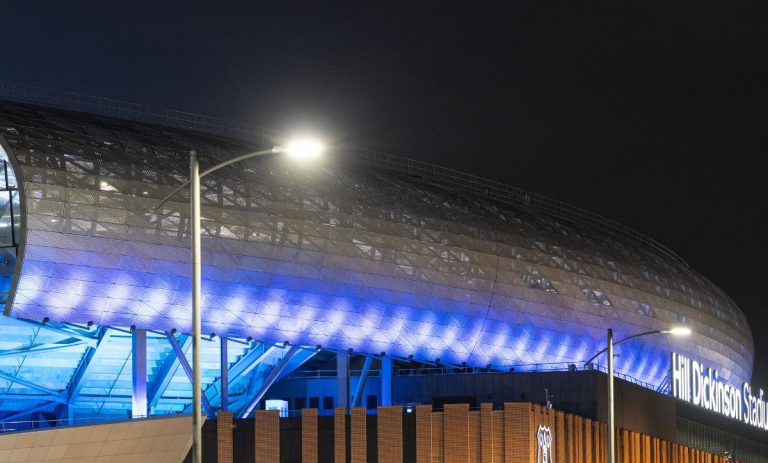
Signify (Euronext: LIGHT), the world leader in lighting, has delivered an advanced smart lighting solution for Liverpool’s waterfront area. The project, completed in collaboration with McCann Ltd (Street Lighting Maintenance contractor for Liverpool City Council with support from LiveLabs, a three-year, UK-wide £30 million programme funded by the Department for Transport that aims to decarbonise the local highway network and UpCiti, that uses connected lighting technology to reduce energy use, lower carbon emissions, and enable smart infrastructure management across the city. The installation covers key routes linking the city center to the new Hill Dickinson Stadium, home to Premier League club Everton FC. Like many cities, Liverpool faces the challenge of reducing emissions and improving sustainability while continuing to deliver reliable public services. The switch can bring upto 30% in energy savings over the next 10 years. The city also needed to increase safety for pedestrians on match days as routes leading to Everton Stadium experience significant surges in traffic during events, requiring brighter, adaptive lighting for safety and crowd management. In addition, in the past, the council has relied on public reports to identify lighting failures, leading to delays in repairs and potential safety risks. As budgets tighten and energy costs rise, the city is pursuing innovative, efficient ways to invest in the future. Liverpool City Council partnered with Signify and McCann Ltd to pilot adaptive street lighting, controlled in real time by an intelligent software solution. The system uses Signify LumiStreet Gen2 luminaires which are connected to the Signify Interact City central management system, and which in turn is linked via API’s to traffic count sensors. These sensors monitor the traffic volume allowing the system to automatically adjust lighting levels based on traffic density and thus providing the right light when and where it is needed. The result is improved energy efficiency without compromising safety or visibility. At the center of the project is Signify’s Interact City lighting control system, which continuously monitors performance and automatically detects faults to minimise downtime and maintenance costs. This proactive approach enhances public safety and streamlines management of lighting assets across the waterfront area. Interact City connects both new and existing luminaires, creating a unified lighting network that reduces energy use and supports future citywide upgrades. On high-demand days, such as matchdays at Everton’s nearby stadium, Liverpool City Council can respond more effectively to increased requirements for lighting, operational efficiency and public safety. Lighting levels can be increased to maintain optimal visibility and support safer public spaces. With each luminaire connected to Signify’s central management platform, the council can proactively manage the lighting network using real-time data and insights. This smart approach helps minimise energy waste by ensuring lighting is only used when and where it is needed, avoiding the inefficiencies of fixed schedules that can create a disconnect between planned lighting and actual conditions. “We’re proud to be among the first UK local authorities to deploy traffic-adaptive lighting at scale,” said Ali Zahran, Principal Street Lighting Engineer at Liverpool City Council. “This investment is helping us reduce energy consumption, improve operational efficiency, and build a more sustainable, future-ready city. The upgrade responds to the evolving needs of residents while supporting the ambitions of a growing city, delivering smarter infrastructure that enhances safety, efficiency, and the overall urban environment for everyone.” Councillor Dan Barrington, Cabinet Member for Transport and Connectivity said: “Since the Hill Dickinson Stadium opened, we’ve listened closely to fans who want a safe, well-lit route back towards the city centre and key transport links. The new adaptive lighting along the busiest roads around the stadium means pavements are brightly lit when people need it most, helping everyone feel safer as they move through the area. Because the system responds in real time, we can also spot and fix faults quickly, keeping the route reliably lit on matchdays and beyond. And by adjusting the lighting to actual traffic levels, we’re cutting unnecessary energy use and delivering real savings for the city.” John McCann, Managing Director at McCann, added on the awarding of the contract, “We’re proud to be working alongside Liverpool City Council and Signify to ensure the city’s street lighting infrastructure is safe, reliable, and future-ready. Delivering this project as part of our maintenance service for Liverpool is a major win for our business as it reinforces our approach to collaboration, innovation, and consistency. This installation is a step in the right direction towards making Liverpool 2040 a reality.” “Every growing city must ensure that infrastructure is fit for purpose and meets the needs of its residents. Public lighting plays a critical role in creating spaces where people feel safe, while also helping cities manage energy consumption and reduce emissions,” said Simon Wilkinson, Commercial Leader Public UK, Signify. “Our collaboration with Liverpool City Council delivers immediate benefits through energy savings and improved visibility, while also serving as a blueprint for a safer, smarter, and more sustainable cities across the UK. As one of Europe’s most culturally significant and forward-thinking cities, Liverpool continues to demonstrate its commitment to innovation and enhancing quality of life for its residents through projects such as this.” Building, Design & Construction Magazine | The Choice of Industry Professionals

Read More »
Keylite strengthens housebuilder focus with appointment of new National Account Director

Keylite strengthens housebuilder focus with appointment of new National Account Director

Keylite Roof Windows (Keylite), an award-winning manufacturer renowned for its quality and innovation, has appointed Paul Stephens as its new National Account Director to support the continued growth of its housebuilder division in the UK.   With over 20 years of experience across the housebuilder sector, Paul brings a strong background of sales leadership, national account management and strategic business development. Paul joins Keylite following a successful career with Kingspan, SIG Distribution, SIG Energy Management and Miller Pattison where he held senior positions.  In his new role, Paul will lead the development of Keylite’s housebuilder offering, supporting national and regional developers to deliver compliant and high-performance new build homes. A key focus will be driving awareness and adoption of Keylite’s ModuLite System, recently recognised with a Housebuilder Product Award for Best Building Fabric Product.  Paul’s appointment comes at a critical time for the industry, as housebuilders continue to navigate evolving regulations and the demands of the Future Homes Standard. Working closely with key customers, Paul will help ensure Keylite continues to meet the changing demands of both large-scale developments and smaller self-build projects.  Paul commented: “Keylite has built a strong reputation within the housebuilder sector through its customer focus, innovation and long-standing industry relationships. I’m thrilled to be joining the business at such a crucial time and look forward to helping strengthen our offering, support our customers and drive continued growth across the housebuilder market.”  The appointment follows a period of sustained growth for the housebuilder team, with investment in the graduate sales programme increasing regional customer support and sector-focused initiatives such as the Keystone Group Innovation Day helping strengthen relationships across the industry.   Jim Blanthorne, Managing Director at Keylite, added: “We’re delighted to welcome Paul to the team. His extensive experience, industry knowledge and strong relationships within the sector will be invaluable as we continue to grow the Keylite brand and expand our support for housebuilders.”  For more information on Keylite Roof Windows, visit www.keyliteroofwindows.com, call 01283 200 158 or email info@keyliteuk.com. To find out more about career opportunities within the Keystone Group, visit Keystone Group Careers. Building, Design & Construction Magazine | The Choice of Industry Professionals

Read More »